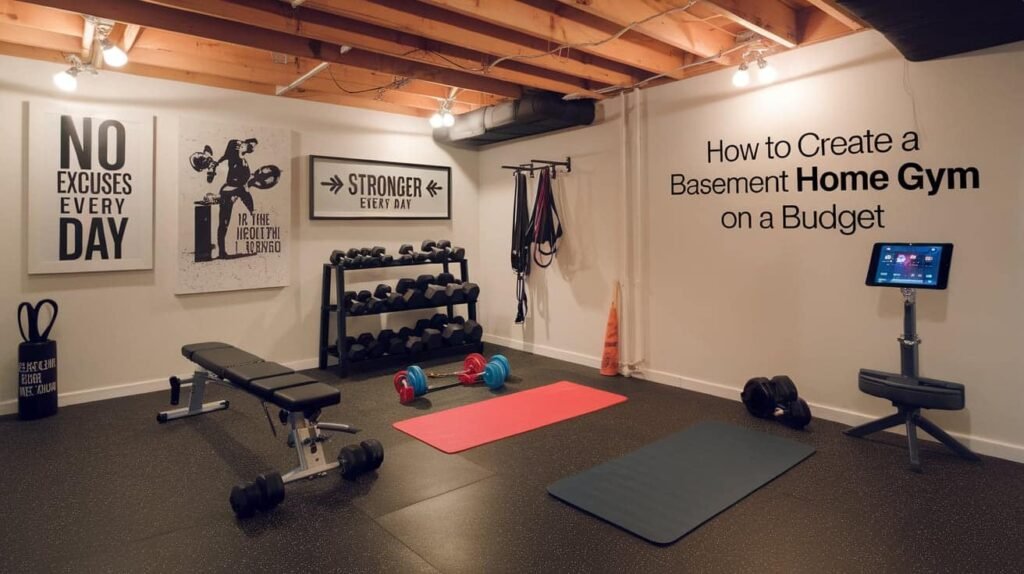
If you’re asking “What do I need for a small home gym?”, you’re in the right place. I’ve built compact setups for studio apartments and helped clients design budget home gyms that deliver real results. In this guide, I’ll show you how to cover strength, cardio, mobility, and recovery without wasting space or money. We’ll focus on gear that works hard, stores small, and supports long-term progress. Let’s build a small home gym that you’ll love using every week.

Source: plankandpillow.com
Plan Your Space And Budget First
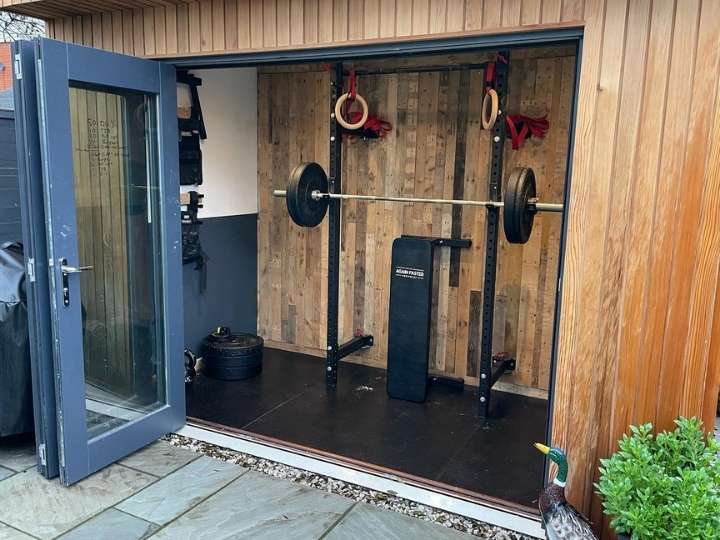
Before buying a single dumbbell, define your goals, space, and budget. A clear plan prevents clutter and regret. Measure your workout area, check ceiling height for overhead presses or a pull-up bar, and note floor type for shock and sound. Decide your core goal: strength, fat loss, mobility, or a blend. Then set a budget you can grow over time. I often suggest a phased approach so you learn what you’ll actually use.
Use this quick checklist:
- Goals Identify your top two outcomes, such as build strength and improve cardio.
- Space Measure length, width, and ceiling height. Note any doors and windows.
- Floor Assess for noise and impact. Plan for mats and protection.
- Storage Plan wall hooks, a small rack, or under-sofa bins.
- Budget Set a starter budget. Leave a little room for one upgrade later.
Pro tip from experience: buy once, cry once for essentials like adjustable dumbbells and a solid mat. Cheap gear breaks, wobbles, or collects dust. Quality gear gets used.
Source: againfaster.eu
Essential Equipment Checklist For A Small Home Gym
You need tools that hit full-body strength, safe movement, and basic cardio. This core kit covers 90% of workouts and stores in a closet.
Strength and mobility:
- Adjustable dumbbells Replace multiple pairs and save space. Choose a set with fast adjustment and a secure lock.
- Kettlebell One bell can train power and conditioning. Start with a weight you can swing with control.
- Resistance bands Get a light, medium, and heavy loop. Add a long pull-up assist band for rows and presses.
- Pull-up solution Use a doorway pull-up bar or a sturdy wall-mounted unit if you can install one.
- Suspension trainer Anchor to a door. Great for rows, push-ups, and core with minimal space.
Flooring and support:
- Quality exercise mat Choose dense, non-slip foam or rubber. If you lift heavier, add interlocking tiles for shock and noise control.
- Collapsible bench Optional but helpful. A flat, folding bench expands your exercise options.
Cardio that fits small spaces:
- Jump rope Low cost and high return. Great warm-up and conditioning.
- Compact machine Choose one: folding treadmill, small rowing machine, or an under-desk cycle if noise is a concern. If budget is tight, stick with jump rope, step-ups, or brisk walks.
Recovery and extras:
- Foam roller A medium-density roller helps you move better and recover faster.
- Lacrosse ball or massage ball Targets tight spots around hips, glutes, and shoulders.
- Timer Use a simple interval timer app to keep workouts efficient.
Why this works: these tools stack. Dumbbells plus bands create progressive load. A suspension trainer plus a pull-up bar handles upper back and core in tiny spaces. A mat makes every session safer.
Source: www.reddit.com
Smart Upgrades As You Progress
Once you’ve trained for 8 to 12 weeks and built consistency, consider strategic additions. Upgrade only if it fixes a real limit in your training.
Targeted upgrades:
- Heavier adjustable dumbbells If your current set tops out fast, move to a higher range.
- Second kettlebell Allows double-bell work, loaded carries, and stronger legs.
- Adjustable kettlebell Saves space and money if you love swings, cleans, and presses.
- Compact squat stands If you have room and lift heavy, pair stands with a short barbell and plates.
- Weighted vest Great for push-ups, lunges, walks, and step-ups without bulky machines.
- Rowing machine If you prefer low-impact cardio with full-body engagement, a rower stores upright and is quiet compared to most treadmills.
My rule: if a new item won’t be used at least twice a week, wait. Space is your most precious asset in a small home gym.

Source: www.blesserhouse.com
Space-Saving Storage, Layout, And Safety
A tidy setup is safer, faster, and more inviting. Keep the floor clear and gear within reach. Good storage extends the life of your equipment.
Practical layout ideas:
- Vertical space Use wall hooks for bands, jump rope, and a suspension trainer.
- Under-furniture storage Slide mats, adjustable dumbbells, and a folding bench under a bed or sofa.
- Corner zone Place a small rack or bin in a corner for kettlebells and recovery tools.
- Doorway anchor Keep your pull-up bar or suspension trainer near a sturdy door you rarely open during workouts.
Safety musts:
- Check anchors Test doorway bars and straps before every workout.
- Protect floors Use dense mats under heavy gear and during dynamic moves.
- Leave clearance Keep two to three feet of space around you for swings, presses, and burpees.
- Mind noise If you have neighbors, skip dropping weights and favor controlled tempo work.
From coaching in small apartments, I’ve learned that easy access increases use. If it takes more than 60 seconds to set up, you’ll do it less often.

Source: inspirationformoms.com
Sample Small-Space Workouts For Any Level
You can train hard and smart without big machines. Here are simple, proven templates you can repeat. Warm up first with two minutes of jump rope, 10 bodyweight squats, and light band work.
Full-body strength, 30 minutes:
- Circuit A 8 dumbbell goblet squats, 8 push-ups, 8 suspension rows. Rest 60 seconds, repeat 4 times.
- Circuit B 10 kettlebell swings, 10 half-kneeling presses, 30-second plank. Rest 60 seconds, repeat 4 times.
- Finisher 2 minutes of jump rope.
Minimalist EMOM, 20 minutes:
- Minute 1 10 kettlebell swings.
- Minute 2 8 dumbbell overhead presses.
- Minute 3 10 walking lunges.
- Minute 4 8 suspension rows.
- Repeat for 5 rounds.
Low-impact cardio, 20 to 30 minutes:
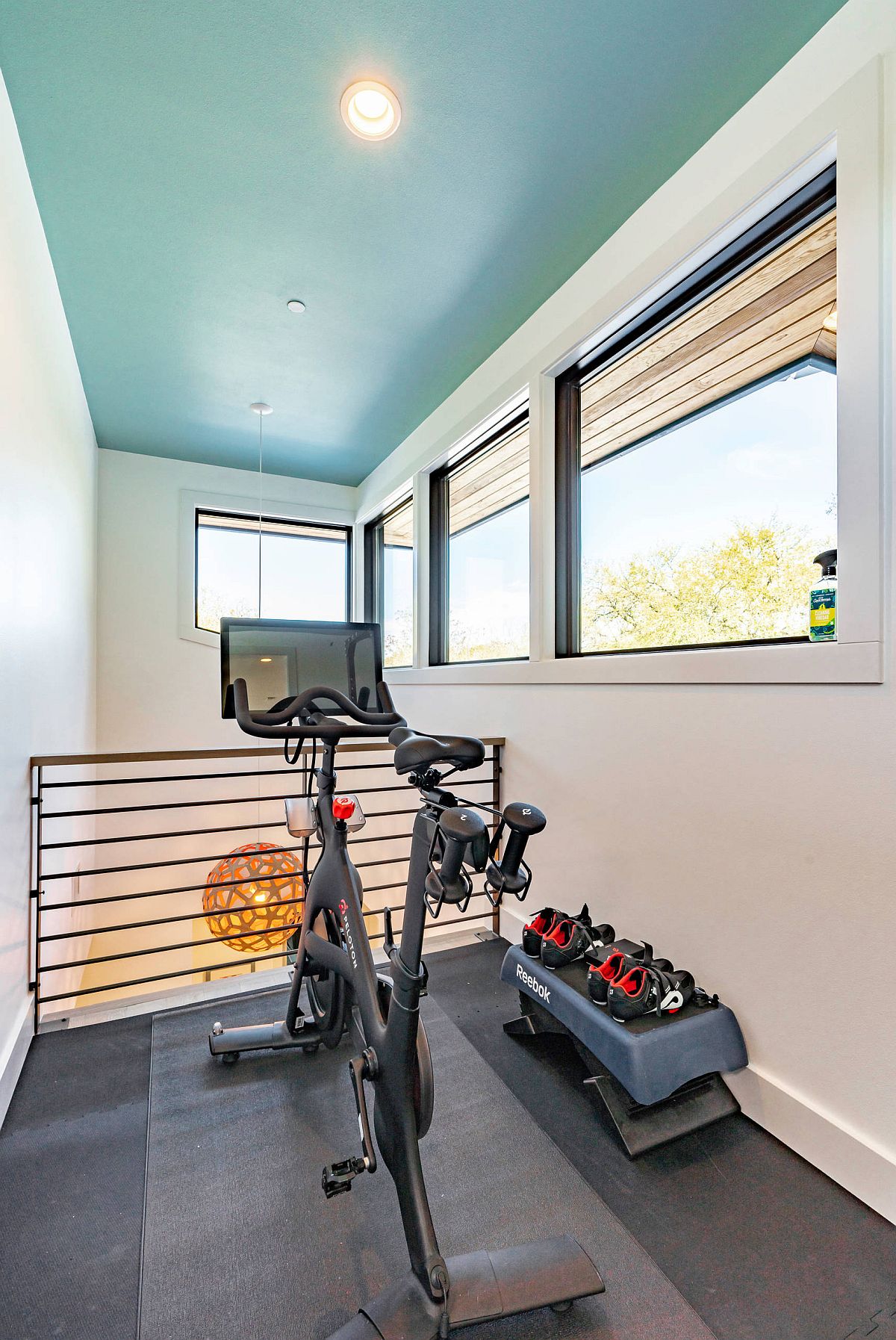
- Rower or cycle 3 minutes easy, 1 minute strong. Repeat 5 to 7 times.
- No machine 30 seconds fast stepping on a sturdy step, 30 seconds easy, for 20 rounds.
Mobility and recovery, 10 minutes:
- Hips 30 seconds each of hip flexor stretch and glute stretch.
- Thoracic spine 10 slow open books per side.
- Ankles 15 calf raises and 30-second ankle rocks.
Track what you do. Progressive overload works at home too. Add reps, add sets, or add a little weight each week.
Source: www.decoist.com
Maintenance, Hygiene, And Longevity
Clean gear lasts longer and keeps your space fresh. Simple care goes a long way.
Easy upkeep checklist:
- Wipe surfaces After each session, wipe mats, dumbbell handles, and kettlebell horns.
- Air out Let your mat and shoes dry before storing.
- Inspect monthly Check bolts on benches, doorway bars, and anchors.
- Band care Keep bands out of sunlight and away from sharp edges. Replace if cracked.
- Floor health Vacuum or sweep weekly under mats to prevent grit from wearing them down.
Evidence from product testing is clear: routine cleaning and inspections reduce failures and extend equipment life. A five-minute reset after training keeps your home gym ready for the next session.
Frequently Asked Questions Of What Do I Need For A Small Home Gym?
How much space do I need for a small home gym?
You can train well in as little as a 6-by-6-foot area. Aim for two to three feet of clearance around you for safe swings, presses, and lunges. Ceiling height matters for overhead moves and pull-ups.
What is the best first purchase on a tight budget?
Start with a quality mat, a medium kettlebell, and a set of resistance bands. This combo covers strength, cardio, and mobility with minimal cost and storage needs.
Are adjustable dumbbells worth it?
Yes if you lift often and want to progress. They replace many pairs, save space, and make tracking load easy. Choose a reliable set with firm locks and a comfortable handle.
Do I need a cardio machine?
Not always. Jump rope, step-ups, brisk walks, and bodyweight circuits work well. If you prefer low-impact options or live in extreme weather, a compact rower or folding treadmill helps.
Can I build muscle at home without a barbell?
Yes. Use progressive overload with dumbbells, kettlebells, bands, tempo control, pauses, and added sets. Track your numbers and increase the challenge over time.
How do I reduce noise for neighbors?
Use dense rubber mats, avoid dropping weights, choose rowing or cycling over running, and train with controlled tempo. Soft-soled shoes and slow eccentrics help too.
What should I avoid buying early on?
Skip niche machines and single-use gadgets. If it won’t be used at least twice a week, wait. Build habits first, then upgrade with purpose.
Wrap-Up And Next Steps
A small home gym can be simple, powerful, and tidy. Start with a smart plan, add core tools like adjustable dumbbells, a kettlebell, bands, a mat, and a pull-up or suspension option, then grow with intent. Keep your space clean, your setup quick, and your training focused. The best home gym is the one you use.
Pick one essential this week, set up your space, and do your first 20-minute session. Momentum beats perfection. If you found this guide helpful, subscribe for more small-space training tips or drop a comment with your setup and goals.
