
Kayaking is more than just a sport—it’s a way to explore nature, improve fitness, and enjoy peaceful moments on the water. For many beginners, kayaking can seem challenging at first. There are new terms, many types of kayaks, and important safety tips to learn.
But starting does not have to be hard. With the right guidance, anyone can experience the freedom and adventure that kayaking offers.

Today's Exclusive Deals
Limited-time Exclusive Deals. Check current discount on Amazon.
Check Price on Amazon As an Amazon Associate I earn from qualifying purchases.This article will walk you through every step to start kayaking confidently as a beginner. You’ll discover what equipment you truly need, how to choose a kayak, basic paddling techniques, safety practices, and tips to make your first trips enjoyable. If you’re ready to try something new and rewarding, let’s get started.
Why Try Kayaking?
Kayaking is growing in popularity worldwide. In the United States alone, over 18 million people enjoyed kayaking at least once in 2022. People love kayaking for its versatility: you can paddle on calm lakes, gentle rivers, or even the open sea. Whether you want adventure or relaxation, kayaking fits all ages and fitness levels.
Benefits of kayaking include:
- Full-body exercise: Paddling works your arms, shoulders, core, and back.
- Stress reduction: Being on the water naturally calms the mind.
- Easy to learn: Most beginners can master basic paddling in just a few hours.
- Social activity: Kayaking is fun alone or with friends and family.
Choosing The Right Kayak
One of the first decisions for beginners is selecting a kayak. The right kayak depends on where you plan to paddle, your budget, and your storage space.
| Kayak Type | Best For | Pros | Cons |
|---|---|---|---|
| Recreational | Lakes, calm rivers | Stable, easy to use | Not for fast water |
| Touring/Sea | Long trips, open water | Faster, tracks well | Expensive, needs skill |
| Inflatable | Travel, small storage | Portable, light | Less durable |
| Sit-on-top | Warm climates, beginners | Easy to enter/exit | Get wet easily |
Key Factors When Choosing
- Stability: For beginners, a wider kayak offers more stability. Try to test a few before you buy.
- Size and Weight: Make sure you can carry and load the kayak yourself. Most beginners find kayaks between 9–12 feet (2.7–3.7 meters) easy to handle.
- Material: Plastic kayaks are affordable and tough, while fiberglass is lighter but costs more.
- Budget: New kayaks range from $300 to $1,500. Renting or buying used is a smart way to start.
Non-obvious insight: Inflatable kayaks have improved a lot. Modern ones from trusted brands are stable and puncture-resistant, making them a great choice if you lack storage space.
Essential Gear For Beginners
Starting with the right gear is crucial for both safety and enjoyment. Here’s what you need:
- Paddle: Choose a paddle that matches your height and kayak width. Most adults need a paddle 210–240 cm long.
- Personal Flotation Device (PFD): A properly fitted life jacket is mandatory. Never kayak without it.
- Clothing: Wear clothes suitable for getting wet. Avoid cotton; it stays wet and can get cold.
- Footwear: Water shoes or sandals with straps protect your feet.
- Dry Bag: Keeps your phone, keys, and snacks safe from water.
- Safety Whistle and Light: For signaling in emergencies.
- Sunscreen and Hat: Water reflects sunlight, so you burn faster.
Extra tip: Bring a change of clothes in your car or dry bag. Even if you don’t fall in, launching and landing often get you wet.
Basic Kayaking Skills And Techniques
Learning the right technique early makes kayaking safer and more enjoyable. Here are the essentials every beginner should master.
Sitting And Holding The Paddle
- Sit upright with your feet on the footrests and knees relaxed.
- Hold the paddle with hands slightly wider than your shoulders.
- The paddle’s curved side should face you.
Forward Stroke
- Dip one blade into the water near your toes.
- Pull the paddle alongside the kayak toward your hip.
- Repeat on the other side in a smooth, relaxed rhythm.
Turning And Steering
- To turn left, paddle forward on the right side, or do a reverse stroke on the left.
- For small corrections, use gentle strokes.
Stopping
- Use short backward strokes on both sides to slow down or stop.
Non-obvious insight: Many beginners use only their arms. Instead, rotate your upper body with each stroke—this uses your core muscles, reduces fatigue, and increases power.
Safety First: Staying Safe On The Water
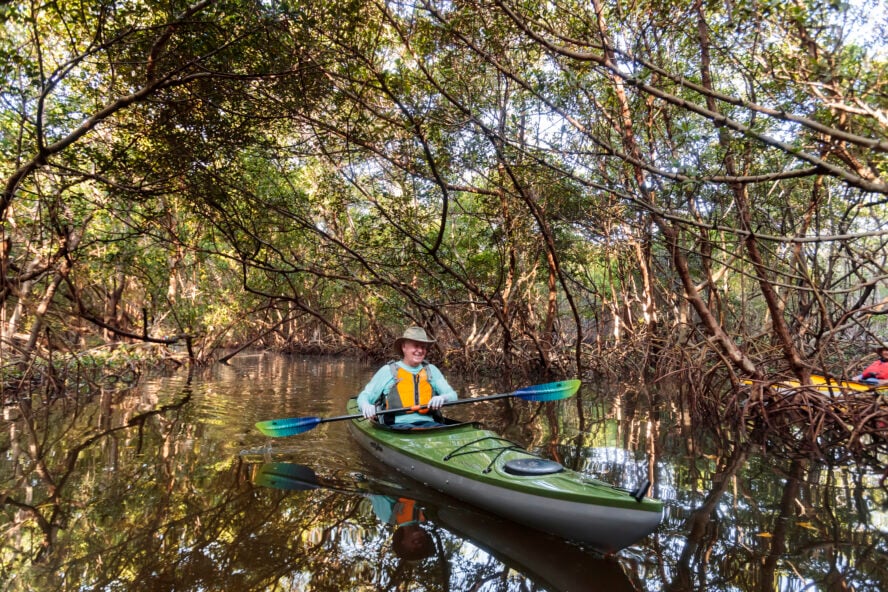
Water sports carry risks, but most can be avoided with smart habits.
- Always wear your PFD—even if you’re a strong swimmer.
- Check the weather before heading out. Wind and storms can make kayaking dangerous.
- Tell someone your plan: Where you’re going and when you’ll return.
- Stay near the shore on your first trips. Avoid fast-moving rivers or open sea until you gain experience.
- Know the water: Learn about local currents, tides, or hazards.
- Practice self-rescue: Learn to get back in your kayak after a capsize.
- Never paddle alone—especially as a beginner.
Common Safety Mistakes
- Overestimating your skills and going too far
- Not wearing a life jacket
- Ignoring weather changes
Planning Your First Kayak Trip
Good planning makes your first experience enjoyable and stress-free.
Where To Go
- Choose calm, shallow waters for your first outing—small lakes or slow-moving rivers are best.
- Avoid busy boat traffic areas.
How Long
- Start with a short trip—1–2 hours is enough for beginners.
- Paddle against the wind or current first, so returning is easier.
What To Bring
Pack light, but bring water, snacks, a phone (in a waterproof case), and a basic first aid kit.
Joining A Group Or Class
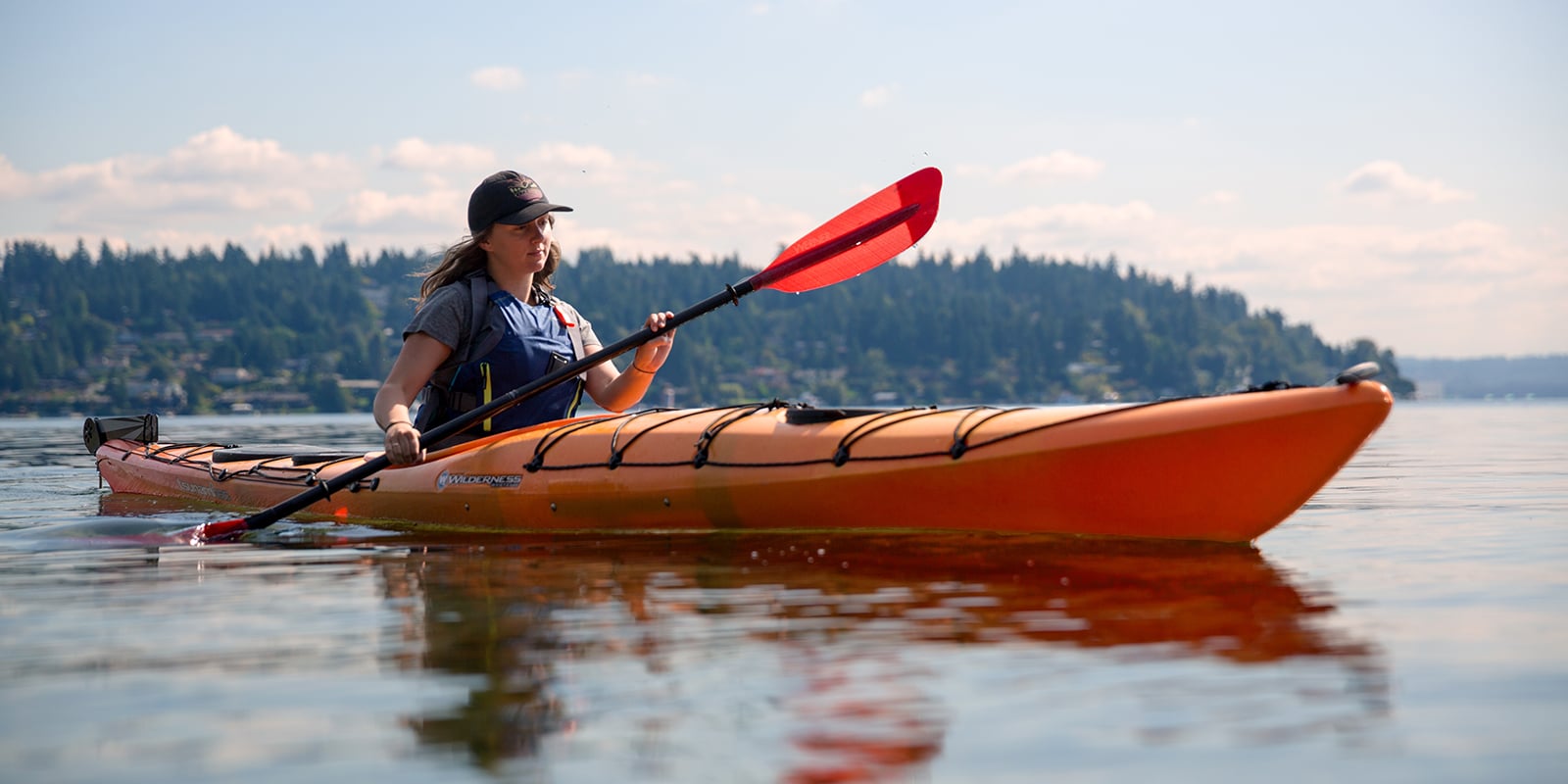
A beginner course or guided group paddle is the safest way to start. Instructors can teach you correct techniques and handle emergencies.
Kayaking Etiquette And Environmental Care
Respect other water users and nature. Here’s how:
- Yield to larger boats—they can’t always see or avoid you.
- Don’t block ramps or docks with your kayak.
- Leave no trace: Take your trash with you.
- Avoid wildlife: Watch from a distance, do not chase birds or animals.
Practical tip: Use environmentally friendly sunscreen and avoid dragging your kayak across plants.
Building Skills And Confidence
The more you practice, the more confident you’ll become. Try these steps:
- Practice basic strokes and turns near shore.
- Learn to paddle in gentle wind or waves.
- Ask experienced kayakers for tips—many are happy to help.
Extra insight: Keep a kayaking journal. Note what worked well, what was hard, and ideas for next time. This helps you improve quickly.

Renting Vs. Buying Your First Kayak
Not sure if kayaking is for you? Renting is a smart way to try different kayak types without a big investment.
| Option | Cost | Best For | Downsides |
|---|---|---|---|
| Renting | $20–$50 per day | Trying, short trips | Costs add up if done often |
| Buying Used | $200–$600 | Budget, long-term use | May need repairs |
| Buying New | $300–$1,500 | Commitment, best quality | High upfront cost |
Check local kayak shops or outdoor centers for rentals. Some even include basic lessons.
Common Beginner Challenges—and How To Overcome Them
Many new kayakers face similar hurdles. Here’s how to deal with them:
- Fear of capsizing: Most recreational kayaks are very stable. Practice getting in and out near the shore to build confidence.
- Sore arms or back: Use your core, not just arms. Take breaks and stretch before and after paddling.
- Difficulty steering: Practice makes perfect! Short, gentle strokes help you keep a straight line.
- Nervous about water: Start in shallow, calm areas. Bring a friend for support.
Advanced Tips For Faster Progress
Once you’re comfortable, these ideas help you improve faster:
- Video yourself paddling: Watching your technique can reveal easy improvements.
- Join a kayaking club: Clubs often organize trips and teach new skills.
- Try different waters: Lakes, rivers, and sea kayaking all offer unique challenges.
- Learn basic navigation: Understand maps, compasses, and weather forecasts.
- Upgrade gear gradually: Start simple, then add things like spray skirts or better paddles as you improve.
Pro tip: Don’t rush. Take time to enjoy your progress and celebrate small wins.
Frequently Asked Questions
What Should I Wear For Kayaking?
Wear quick-drying clothes like synthetic shirts and shorts. Avoid cotton, which stays wet and cold. In cooler conditions, layer with a waterproof jacket and bring a hat for sun protection. Water shoes or sandals with straps are best for your feet.
How Fit Do I Need To Be To Start Kayaking?
You don’t need to be an athlete to start kayaking. Most beginners can paddle for an hour or two with basic fitness. If you have concerns about your health or mobility, talk to your doctor first. Start with short trips and build up over time.
Is Kayaking Safe For Children And Older Adults?
Yes, kayaking is suitable for all ages. Children should always wear a life jacket and paddle with an adult. Older adults can enjoy kayaking by choosing stable kayaks and avoiding strong currents or long trips. Safety comes first for everyone.
How Do I Transport A Kayak?
Most people use a roof rack on their car to carry a kayak. Inflatable or folding kayaks can fit inside many vehicles. Make sure to tie your kayak down tightly and follow local transport laws. Some outdoor centers offer kayak delivery to your paddling location.
Where Can I Learn More About Kayaking Skills And Safety?
Local outdoor centers, clubs, or online resources are great places to start. The American Canoe Association provides reliable courses and safety information. You can visit their website at American Canoe Association for more details.
Kayaking opens a new world of adventure, fitness, and relaxation. With the right preparation and a spirit of curiosity, you’ll soon discover why so many people fall in love with this sport. Paddle safe, respect nature, and enjoy your journey on the water.

