The right baseball bat depends on the player’s age, league rules, height, strength, hitting style, and comfort. Start by choosing the correct bat length and weight, then select a material and certification that match the player’s needs.
Deal
Today's Exclusive Deals
Limited-time Exclusive Deals. Check current discount on Amazon.
In the United States, baseball players choose bats based on organized league standards, personal ability, and the type of game they play. A Little League player, a high school athlete, and an adult recreational player usually need different bat specifications because their swing speed, strength, and competition rules are not the same.
Choosing a baseball bat is not only about finding the longest or most expensive option. A bat that is too heavy can slow a swing, while one that is too light may reduce control and power. The best choice creates a balance between speed, control, confidence, and legal requirements.
Source: coachmingle.com
Understand Baseball Bat Size Before Buying
Bat size is determined mainly by length and weight. These two measurements affect how easily a player can move the bat through the strike zone. A correct size helps a hitter maintain balance and make consistent contact.
Baseball bats are usually measured by length in inches and weight in ounces. The difference between these numbers is called the drop weight. For example, a 30-inch bat that weighs 20 ounces has a drop weight of -10.
Source: m.media-amazon.com
Length
Longer bats can provide more reach, but they require more control and swing strength.
Weight
Heavier bats may increase potential power but can reduce swing speed if they are difficult to control.
Drop Weight
A larger negative number usually means a lighter bat that is easier to swing.
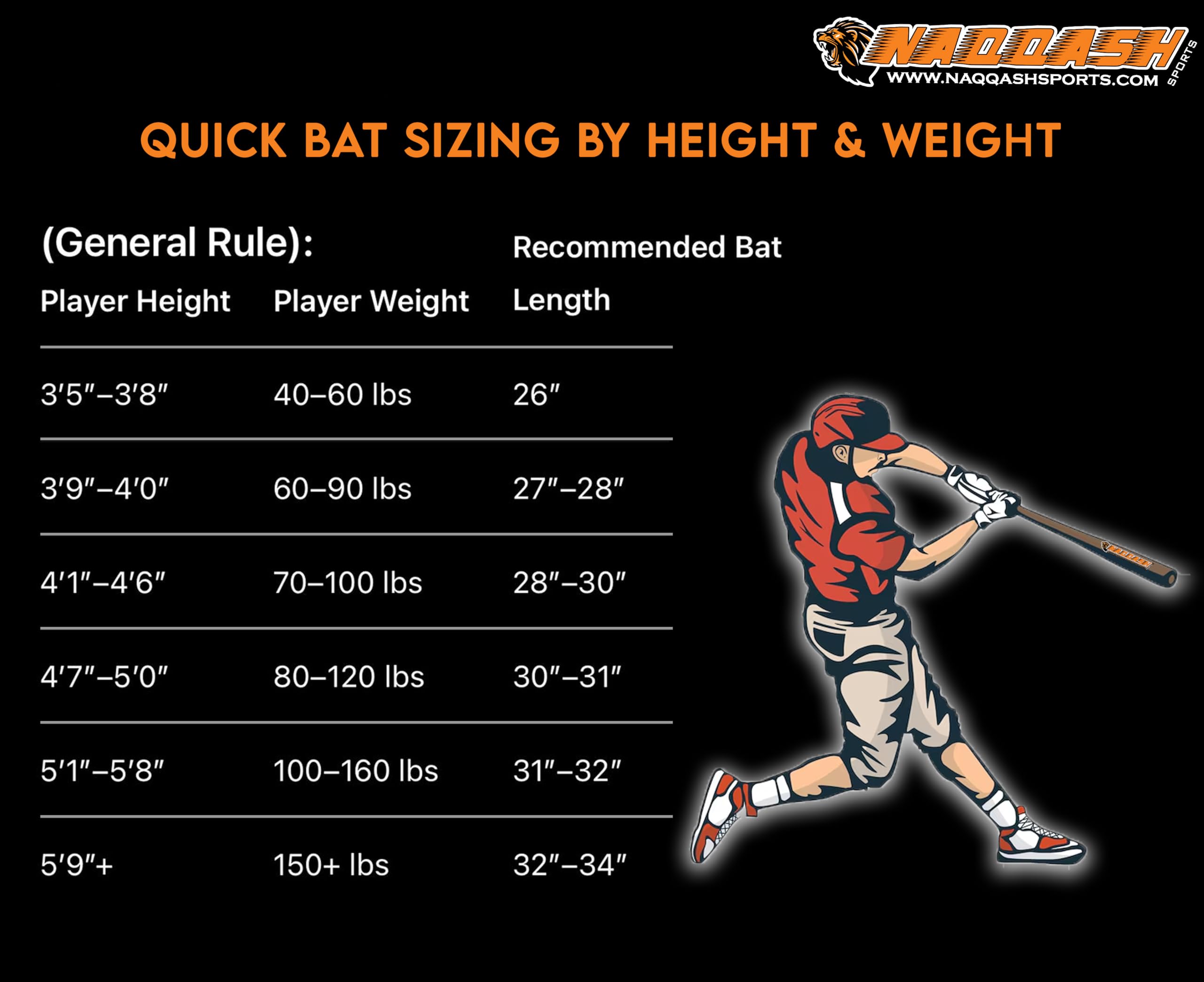
The correct bat length depends on the player’s height, weight, age, and hitting style. Younger players often use shorter bats because control and swing speed are more important during skill development.
A simple fitting method is to place the bat beside the player. The knob should generally reach around the player’s wrist area when the player stands naturally with arms relaxed.
May use longer bats when they have enough strength to maintain swing speed.
Choose The Correct Baseball Bat Weight
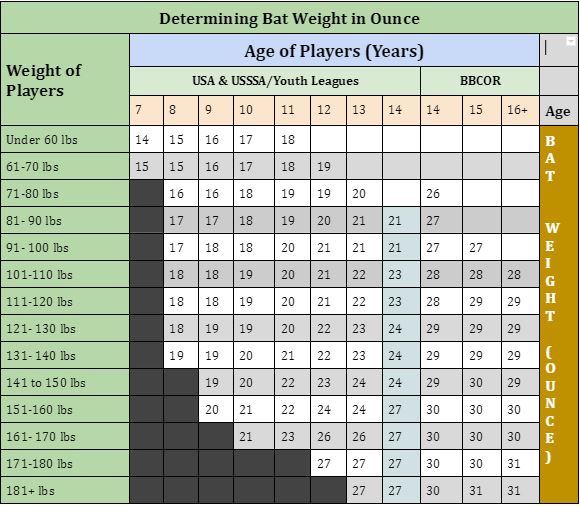
Bat weight is one of the most important choices because it directly affects swing mechanics. Players need enough weight to generate force while still keeping the bat under control.
A good test is whether the player can hold the bat comfortably and complete a smooth swing without losing balance. If the swing feels slow or the player drops the barrel during the swing, the bat may be too heavy.
Source: i.pinimg.com
Light bats
Usually help with faster swings and better control, especially for developing players.
Heavy bats
Can provide more mass behind contact but require greater strength and timing.
Balanced bats
Distribute weight evenly and are often easier for players who value speed and control.
Balanced Bat Versus End-Loaded Bat
Balanced bats place more weight toward the handle, making them easier to move quickly. End-loaded bats place more weight toward the barrel, which some stronger hitters prefer because they can handle the additional mass.
Neither design is automatically better. The right choice depends on the player’s strength, swing style, and ability to control the barrel.
Balanced design
A practical option for players who want quicker bat movement and easier control.
End-loaded design
Often preferred by stronger hitters who can maintain swing speed with extra barrel weight.
Select The Right Baseball Bat Material
Baseball bats are commonly made from wood, aluminum alloy, composite materials, or combinations of materials. Each type creates a different feel, sound, and performance profile.
The right material depends on where the bat will be used. Many youth and amateur players use metal or composite bats because they are durable and designed for league play, while professional baseball uses wood bats under specific rules.
Source: baseballmonkey.com
Aluminum bats
Provide durability, a lighter feel, and are commonly used in youth and amateur baseball.
Composite bats
Use layered materials and may require a break-in period depending on the model.
Wood bats
Offer traditional feel and are required in professional baseball environments.
Consider League Certification Requirements
Before buying a bat, confirm the rules of the player’s league. Organizations such as youth baseball leagues and school programs may require specific certification marks.
A bat that performs well but does not meet league requirements may not be allowed in official games.
Check certification
Look for the required approval mark before purchasing.
Confirm current rules
League requirements can change, so verify before the season begins.
Match The Baseball Bat To The Player’s Skill Level
The ideal bat changes as a player develops. Beginners usually benefit from easier-to-control bats, while experienced hitters may prefer designs that match their swing strength and technique.
Parents and players should focus on comfort and proper mechanics instead of buying a bat based only on recommendations from other athletes.
Source: m.media-amazon.com
Beginners
Need a manageable bat that supports learning proper swing mechanics.
Intermediate players
Can consider different weights, materials, and barrel designs as skills improve.
Advanced players
Often select bats based on detailed preferences such as balance, feel, and hitting approach.
Common Baseball Bat Buying Mistakes
Many players choose bats that are too heavy because they believe extra weight automatically creates more power. In practice, a slower swing can reduce the ability to make solid contact.
Another common mistake is ignoring league rules or buying a bat before checking certification requirements.
Choosing power over control
A bat should allow a fast, controlled swing rather than simply feeling heavy.
Ignoring comfort
The player should test the bat feel whenever possible before buying.
How To Test If A Baseball Bat Fits Correctly
A baseball bat fits correctly when the player can swing it smoothly, maintain balance, and control the barrel through the hitting zone. The player should not feel forced to change natural swing mechanics to handle the bat.
Testing the bat with practice swings is one of the most useful steps before purchase. A comfortable bat should feel like an extension of the player’s movement rather than an obstacle.
Source: honestbaseball.com
Swing test
Take several controlled swings and check for speed and balance.
Grip check
The handle should feel secure and comfortable in the player’s hands.
Control check
The player should be able to move the barrel where intended.
Frequently Asked Questions
Q
What size baseball bat should I buy?
The correct baseball bat size depends on the player’s age, height, weight, strength, and league rules. Use a sizing chart as a starting point, then confirm that the player can swing the bat comfortably.
Q
Is a heavier baseball bat better?
A heavier bat is not always better. It can add mass behind contact, but only if the player can maintain swing speed and control.
Q
What is the best baseball bat material?
There is no single best material for every player. Aluminum, composite, and wood bats each have different advantages depending on league rules and player preferences.
Q
How long does a baseball bat last?
Bat lifespan depends on material, usage, storage, and hitting conditions. Players should inspect bats regularly for cracks, dents, or damage.
Q
Can a youth player use any baseball bat?
No. Youth leagues often have specific bat certification requirements. Always check the league rules before purchasing a bat.
✦ Wrapping Up
Conclusion
Choosing a baseball bat requires balancing size, weight, material, certification, and player comfort. The right bat helps a player develop better swing control and confidence on the field.
The best buying process starts with understanding the player’s needs, checking league requirements, and testing how the bat feels during a swing. A properly fitted bat supports skill growth instead of limiting performance.
💡 Key Takeaway
Before buying a baseball bat, measure the player, check league rules, compare weight and length options, and choose the bat that allows the fastest controlled swing.