Choosing the right scuba diving wetsuit thickness is crucial for staying warm and comfortable underwater. If your wetsuit is too thin, you'll get cold quickly, cutting your dive short and making the experience miserable. Conversely, a suit that’s too thick can restrict movement and cause overheating when you're not in the water.
Our research indicates that wetsuit thickness is primarily dictated by water temperature, with neoprene thickness options ranging from 1mm to 7mm and beyond. These variations are designed to suit a wide spectrum of diving conditions, from tropical reefs to colder temperate waters.

Today's Exclusive Deals
Limited-time Exclusive Deals. Check current discount on Amazon.
Check Price on Amazon As an Amazon Associate I earn from qualifying purchases.Quick Answer
The best scuba diving wetsuit thickness depends mainly on water temperature. For warm waters above 75°F (24°C), a 3mm wetsuit is usually sufficient. In cooler temperatures between 65-75°F (18-24°C), a 5mm offers better insulation.
For dive conditions below 65°F (18°C), a 7mm wetsuit or thicker, possibly with accessories, is recommended for adequate thermal protection.
Understanding the Key Factors
What dictates how thick your wetsuit needs to be isn't just a random number; it's about managing your body's heat in an environment where you're losing it much faster than on land. Think of it like layering clothes in winter. The same principles apply underwater, but with a few extra considerations that are unique to diving.
The primary driver is, of course, the water temperature. But just knowing it's "cold" isn't enough. You also have to factor in how your own body handles the chill, how long you plan to be exploring beneath the waves, and even how much you'll be moving around.
These elements combine to create your personal thermal profile, guiding you to the right neoprene thickness.

Image source: Bing (Web (fair-use with source credit))
What Wetsuit Thicknesses Mean for You
Wetsuits are typically measured in millimeters (mm), referring to the thickness of the neoprene material. You’ll most commonly see wetsuits in thicknesses like 3mm, 5mm, and 7mm. Each thickness offers a different level of thermal insulation, and choosing correctly means the difference between a great dive and a chilly one.
- 3mm Wetsuits: These are ideal for warmer waters, generally those above 75°F (24°C). They provide a basic level of warmth and protection without causing you to overheat during surface intervals or in the water. You might also see thinner 2mm suits or even "rash guards" for very tropical conditions or if you run exceptionally hot.
- 5mm Wetsuits: This is a versatile choice for many divers, suitable for water temperatures ranging from about 65°F to 75°F (18°C to 24°C). It offers a significant step up in insulation compared to a 3mm suit, making it a common option for temperate diving.
- 7mm Wetsuits (and thicker): For diving in cooler waters, typically below 65°F (18°C), a 7mm suit is usually the minimum requirement. These suits are designed to keep you warm in more challenging conditions. Some very cold water divers might opt for even thicker suits or consider a drysuit.
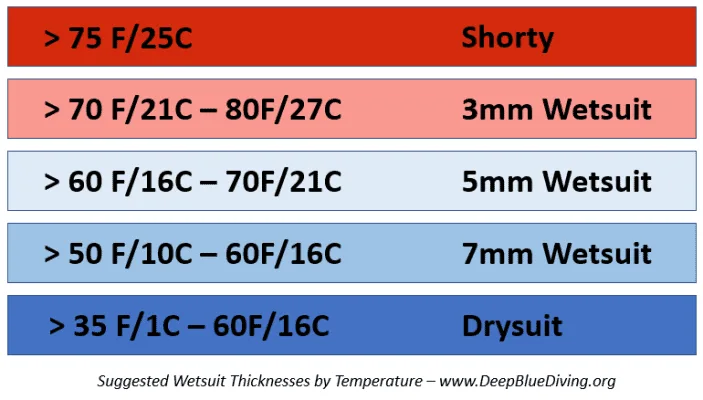
Image source: Web (Bing) / deepblueduning.org (Web image (fair-use with source credit))
Picking Your Thickness: A Step-by-Step Process
So, how do you land on the right neoprene thickness for your next dive? It’s a process of elimination and self-assessment. You start with the most objective factor, the water temperature, and then layer in your personal comfort levels.
This ensures you’re not just guessing but making an informed choice based on science and your own physiology.
Here’s a straightforward way to approach it:
- Check the Water Temperature: This is your primary guide. Look up recent dive reports or use a reliable marine weather forecast for your specific diving location.
- Assess Your Personal Cold Tolerance: Be honest about whether you tend to feel the cold more than others. Divers who are always "cold" might need a thicker suit than someone who naturally runs warm, even in the same water temperature.
- Consider Dive Duration: If you plan on long, leisurely dives, you’ll need more insulation than for a short, quick exploration.
- Factor in Other Gear: Hoods, gloves, and boots add significant warmth, especially in colder conditions.

Image source: Web (Bing) / walmart.com (Web image (fair-use with source credit))
When a Thicker Wetsuit Is Necessary
There are definite situations where opting for a thicker wetsuit isn't just about comfort; it's about safety and being able to complete your dive effectively. If the water temperature drops significantly, or if you're planning extended bottom times, the added insulation from a thicker suit becomes non-negotiable. For many, as of 2026, this means reaching for a 7mm suit when the temperature dips below 65°F (18°C).
Think about what happens when you get too cold underwater. Your body conserves heat by reducing blood flow to extremities. This can lead to numb fingers and toes, making it hard to operate your gear.
Worse, prolonged exposure to cold can lead to hypothermia, a serious condition where your body temperature drops to dangerous levels. Therefore, choosing a suit with sufficient thickness prevents these issues and ensures you can enjoy your dives safely.
Mistakes to Avoid When Choosing Wetsuit Thickness
One of the most common pitfalls new divers fall into is underestimating the importance of wetsuit thickness. They might choose a suit based on what their buddy wears or what they think they need, without fully considering the specific conditions or their own thermal sensitivity. This often leads to uncomfortable, shorter dives.
Another mistake is buying a suit that's too loose. A wetsuit works by trapping a thin layer of water against your skin, which your body then warms. If the suit is baggy, especially around the torso or armpits, water will constantly flush through it, taking your precious body heat with it.
This defeats the purpose of the neoprene. It’s essential that the suit fits snugly, like a second skin, without restricting your breathing or movement.
Best Scuba Diving Wetsuit for Cold Water 2026: Top Picks Reviewed
When you're heading to colder dive sites, the right wetsuit isn't just a piece of gear; it's your primary defense against the elements. Choosing a wetsuit specifically designed for cold water conditions is paramount. These suits often feature thicker neoprene, better sealing technologies like comfortable wrist and ankle cuffs, and sometimes even internal thermal linings to maximize heat retention.
If you're unsure about diving in cooler temperatures, consulting resources that review best scuba diving wetsuit for cold water 2026 can provide valuable insights into models known for their superior insulation and comfort. Remember, proper thermal protection allows you to focus on the incredible underwater world rather than shivering.