
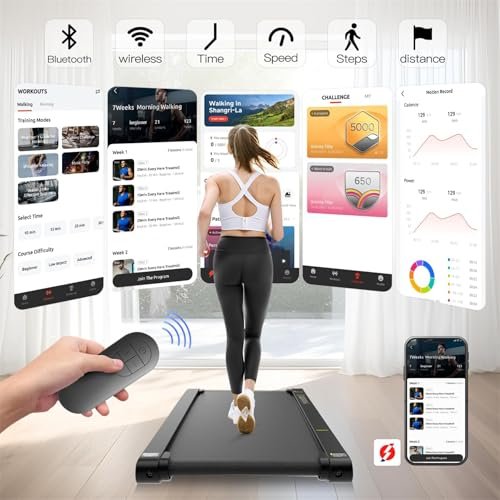
The best walking pad for rehabilitation is stable, cushioned, and low-speed.
Picture this: your doctor just cleared you to begin walking again. You want safe steps, at home, without crowds or weather. You also want to control pace and reduce joint stress. That is where a rehab-friendly walking pad shines. It brings slow starts, steady balance, and soft deck support right to your living room or office. In this guide, I share the Best walking pad for rehabilitation options I’ve used, researched, and compared. I’ll keep things simple, clear, and focused on comfort, safety, and steady progress you can feel.
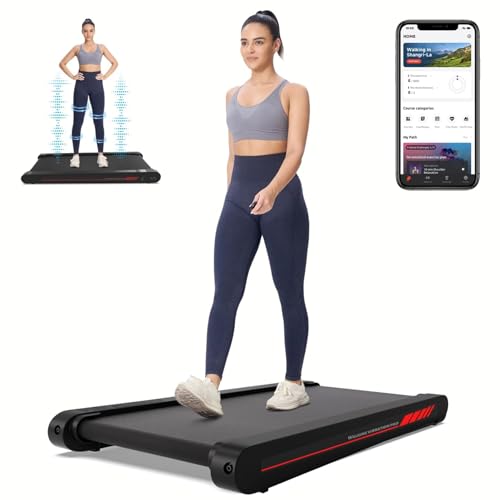
Walking Pad Treadmill with APP,…
【Versatile Fitness Solution】: This multifunctional treadmill combines walking, under desk running, and vibration modes, allowing you to enjoy a 5-minute vibration massage after your workout to relax your entire body….
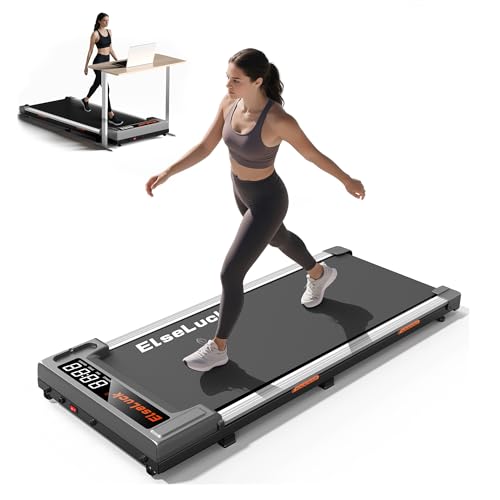
Walking Pad Treadmill, Under Desk…
2.5HP Powerful Motor: The treadmill is equipped with a powerful 2.5HP motor and offers a large weight capacity of up to 265 lbs. And it is quiet while using. 2…

NXSCI Walking Pad with Handle…
Walking Pad Treadmill-365 Days Worry-Free Plan 【Safety Protection】: This walking pad with handle bar prioritizes your health and safety. This walking pad treadmill has 320LB weight capacity, advanced shock absorption,…
3-in-1 Walking Pad with App (Red)

This 3-in-1 walking pad blends walking, light jogging, and vibration mode in one compact frame. The 2.5HP motor runs quiet, which helps if you live in an apartment or share space. The app and remote control make speed changes easy without bending or reaching. For rehabilitation, that simple control and calm sound profile support focus and steady steps.
The deck feels cushioned enough for daily use, and the slim size fits under a desk or couch. I like the low step-up height, which makes mounting easier after surgery or injury. The bright LED display keeps your pace and distance clear at a glance. If you want a single unit that handles warm-ups and cool-downs well, this one checks the right boxes.
Pros:
- Quiet 2.5HP motor reduces noise stress
- App + remote for easy speed control
- Low profile deck for safer step-on and step-off
- Vibration mode for light recovery warm-ups
- Compact size tucks away in small rooms
Cons:
- No built-in handrail for extra balance
- Top speed not for intense runners
- Red color may not suit all decor
My Recommendation
If you are early in recovery and want quiet, simple control, this is a smart pick. It suits users who need slow starts, low impact steps, and space-saving storage. The Best walking pad for rehabilitation should give you smooth pace shifts, soft footfalls, and easy readouts. This one does that well and adds a helpful vibration mode for prep or cool-down.
| Best for | Why |
| Early rehab at home | Quiet motor, low deck, gentle speeds |
| Small apartments | Compact, easy to store under furniture |
| Hands-free control | Remote and app speed changes |
Under-Desk Walking Pad with LED and Remote

This model is made for home and office use with a clean LED display. The 2.5HP motor supports walking and a little jogging for advanced phases. I like the simple remote control for slight speed changes, which matter a lot in rehab. The platform feels stable, and the belt traction helps you stay centered.
The size is ideal under a standing desk and easy to pull out for short sessions. The sound level is low, which helps you hear your body and adjust form. It is a solid pick if you want a reliable base for daily step goals. It keeps things simple and steady, which is important when you rebuild strength.
Pros:
- Stable deck with good grip
- 2.5HP motor handles daily walking
- Remote control for easy speed changes
- Clear LED helps track pace and distance
- Low noise for shared spaces
Cons:
- No handrail option for balance
- Not ideal for steep incline training
- Basic app support compared to premium units
My Recommendation
Choose this if you need a no-fuss pad to support slow, regular steps. It fits well into a work-from-home routine and pairs with sit-stand desks. The Best walking pad for rehabilitation makes small gains safe and simple. This unit shines for that and offers strong value for everyday use.
| Best for | Why |
| Workday walks | Under-desk size, remote control |
| Quiet homes | Low motor noise, smooth belt |
| Steady rehab pace | Stable deck and clear feedback |
NXSCI Walking Pad with Handle Bar (320 lbs)
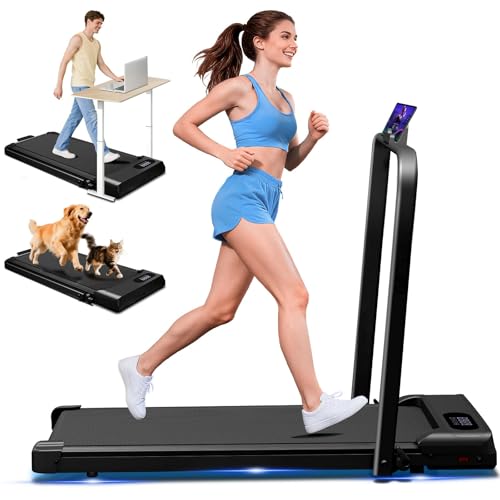
The NXSCI adds a key rehab feature: a handle bar for added balance. If you are worried about stability or you are in early rehab, that bar helps a lot. It folds and stores well but feels sturdy in use with a 320 lb capacity. The 2.5HP motor keeps noise low and stride smooth.
The belt size suits longer steps as you regain confidence. I like that it works as an under-desk unit or a compact treadmill with support. The remote control lets you nudge speed without breaking rhythm. For many users, the added handle bar is the difference between fear and flow.
Pros:
- Handle bar boosts confidence and balance
- High 320 lb capacity adds stability
- Quiet 2.5HP motor with steady drive
- Foldable and compact for small spaces
- Remote speed control for safe tweaks
Cons:
- Heavier than armless pads
- Setup space needed for handle use
- No automatic incline
My Recommendation
If you need extra stability, this is one of the Best walking pad for rehabilitation picks with a handle. It works for seniors, post-op users, or anyone who wants a safety boost. The build feels solid, and the bar is there when you need it. It is a strong choice for confidence and consistent daily practice.
| Best for | Why |
| Balance support | Sturdy handle bar for steady steps |
| Higher weight users | 320 lb capacity and stable frame |
| Small spaces | Folds for easy storage |
Lacuffy Walking Pad with 6% Incline (App)

This Lacuffy model adds a gentle 6% incline to boost activation without speed. For rehab, a mild incline can help the calves and glutes wake up slowly. The no-assembly design means you can start right away out of the box. The 2.5HP motor stays quiet for early morning or late-night sessions.
The app and remote make it easy to adjust speed or track your progress. The LED display is bright and simple to read. The 300 lb capacity gives a stable platform for many body types. If you want light hill work without a large treadmill, this is a smart upgrade.
Pros:
- 6% incline for gentle strength gains
- No assembly needed to get started
- App + remote for control and tracking
- 300 lb capacity for stability
- Quiet operation for shared homes
Cons:
- Fixed incline (not adjustable on the fly)
- No handrail option
- Shorter stride may not fit very tall users
My Recommendation
If your PT clears incline work, this can be the Best walking pad for rehabilitation at home. It is ideal for users who want more muscle activation at low speeds. The mild slope and quiet motor help you focus on form and breath. It offers a good mix of comfort, control, and compact design.
| Best for | Why |
| Low-impact incline | Fixed 6% slope for gentle effort |
| Easy setup | No assembly needed |
| Progress tracking | App + LED display support goals |
Hartwares NeoSilent Walking Pad (XL Belt)

The NeoSilent uses a BLDC motor for smooth, quiet drive and better efficiency. The extra-large belt is the real highlight for rehab. It gives you more side-to-side room, which helps when you are still building balance. More space means fewer missteps and more confidence.
The app control and remote give you easy speed changes in small steps. The compact frame still fits under a desk, which makes daily use simple. I like the stable footing and gentle acceleration curve. If you want extra belt width without a heavy treadmill, this is a standout pick.
Pros:
- BLDC motor for smooth power and low noise
- Extra-large belt for better balance and stride
- App and remote for easy control
- Compact yet roomy deck feel
- Good for cautious walkers and seniors
Cons:
- No dedicated handrail
- May weigh more due to XL belt design
- Limited incline options
My Recommendation
This is one of the Best walking pad for rehabilitation options if you want more room to move. The wider belt reduces edge anxiety, which helps you relax and walk better. It is a strong match for seniors, stroke recovery, or anyone who values space. You get quiet power and a roomy deck in a slim form.
| Best for | Why |
| Balance training | Extra-wide belt reduces missteps |
| Quiet environments | BLDC motor runs smooth and quiet |
| Daily rehab use | Gentle speed curve, stable frame |
Walking Pad with Handle Bar + Incline (3.0HP)
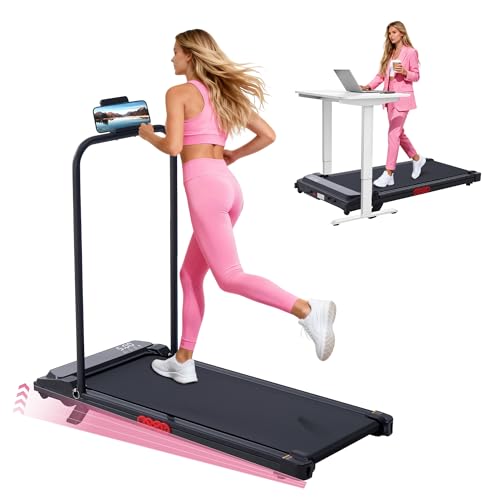
Here you get both a handle bar and incline in a compact package. The 3.0HP motor delivers smooth power with a wide 0.6–7.6 MPH range. That means you can start very slow and move up as your body allows. The handle bar gives a safe anchor for balance, which helps a lot in rehab.
The deck is cushioned and the frame supports up to 350 lbs, so it feels planted. The incline adds variety without increasing speed, which can reduce joint load. I like the simple control layout and sturdy handles. It is a rehab-friendly build that still fits small spaces.
Pros:
- Handle bar for steady grip and safety
- 3.0HP motor with very low starting speed
- Incline for strength without high speed
- 350 lb capacity for rock-solid stability
- Compact for home or office
Cons:
- Takes more floor space than armless pads
- Heavier to move
- Assembly time may be longer
My Recommendation
If you want one unit to take you from week one to full return, this is a top pick. It hits the marks I look for in the Best walking pad for rehabilitation: low start speed, hand support, and incline. It suits users who want a long runway of progress. It is a high-value, long-term tool.
| Best for | Why |
| Early to late rehab | 0.6–7.6 MPH with steady incline |
| Balance support | Handle bar adds security |
| Heavier users | 350 lb capacity and solid frame |
Compact Walking Pad with Handles + Incline
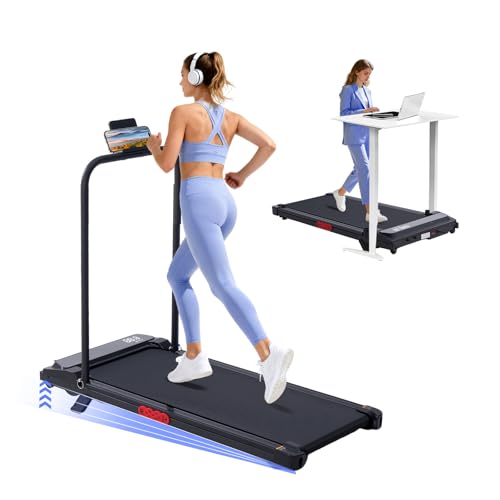
This variant mirrors the last unit with handles and incline, tuned for small homes. The 3.0HP motor and 0.6–7.6 MPH range allow slow starts and steady growth. The handles help you keep posture and feel safe as you walk. The frame is compact but feels strong and quiet.
For rehab, a walk with light incline can stimulate muscles at safe effort. This pad lets you do that while keeping a firm grip on stability. It fits tight spaces but still gives enough belt length for most strides. It is a reliable daily tool for recovery and beyond.
Pros:
- Handles provide balance support
- Low minimum speed for careful starts
- Incline for extra activation at easy pace
- Compact footprint for small rooms
- Good noise control
Cons:
- Not as portable as armless pads
- Limited advanced features
- Assembly may take some time
My Recommendation
This is the Best walking pad for rehabilitation if you want incline plus handles in a small space. It suits seniors, new walkers, and users who fear losing balance. You get slow control, a safe grip, and steady progress. It is practical, strong, and easy to live with.
| Best for | Why |
| Small homes | Compact but capable design |
| Post-op recovery | Handles + low start speed for safety |
| Strength building | Incline adds challenge without speed |
Sweetcrispy Slim Under-Desk Walking Pad
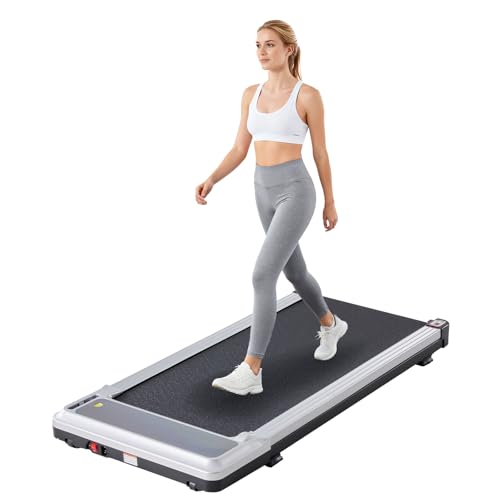
The Sweetcrispy is a slim, armless pad that slides under most desks. It runs quiet and has a soft deck feel that is easy on joints. The design is simple but effective for daily step sessions. For early rehab, the slow speeds and stable feel are key benefits.
The lightweight build makes it easy to move and store. I like it for short, frequent bouts during the day. It helps you build stamina without overdoing it. If you want a thin, no-fuss pad to keep you moving, this is a nice choice.
Pros:
- Very slim and portable
- Quiet motor for shared spaces
- Soft deck feel reduces impact
- Simple controls for easy use
- Great for short, frequent walks
Cons:
- No handles for balance
- No incline options
- Narrower belt than XL models
My Recommendation
If you want a light, simple tool for gentle walks, this is a solid pick. It can be the Best walking pad for rehabilitation if you do short, frequent sessions. It is easy to pull out, walk, and put away. That ease can help you stay consistent every day.
| Best for | Why |
| Desk walking | Ultra-slim form fits under desks |
| Frequent short walks | Quick setup and quiet use |
| Beginners | Soft deck and steady pace |
Lacuffy Walking Pad with Manual Incline
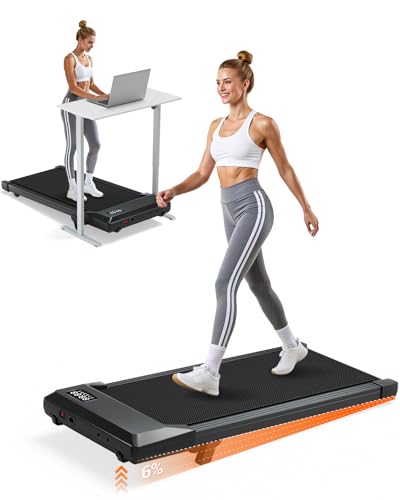
This Lacuffy offers a 6% manual incline and a quiet 2.5HP motor. You set the incline before you start, which keeps the frame simple and steady. The LED display and app link help you watch progress without fuss. The 300 lb capacity gives it a grounded feel underfoot.
For rehab, manual incline is enough to boost effort without speed jumps. The deck feels supportive and grip is solid. If you like to set and forget your incline, this is a great fit. It is a thoughtful mix of control, comfort, and price.
Pros:
- Manual 6% incline for safe strength work
- Quiet operation for home use
- Clear LED and app tools
- Stable 300 lb capacity
- Simple, low-maintenance design
Cons:
- Must stop to change incline
- No handle bar
- Shorter belt than large treadmills
My Recommendation
If you want incline without complexity, this can be the Best walking pad for rehabilitation. It is ideal for careful users who want gradual load without speed rise. The setup is quick, and the feel is calm and steady. It offers great value for daily rehab steps.
| Best for | Why |
| Controlled incline work | Manual 6% slope with steady deck |
| Quiet homes | Low noise motor and smooth belt |
| Budget-minded users | Strong features at a fair price |
TRAILVIBER Walking Pad, 12% Auto Incline

This TRAILVIBER unit brings a rare feature to walking pads: 9-level auto incline up to 12%. That lets you add challenge without speed jumps, which can be rehab friendly. The 450 lb capacity is one of the highest in compact pads, so it feels very stable. The RGB LED and Bluetooth speaker are nice extras for motivation.
Auto incline means you can progress from flat to gentle hills within one session. I like the stable frame and smooth transitions. For users cleared for hill work, this creates a safe training ladder at home. It is compact but strong and feature-rich for recovery and beyond.
Pros:
- Auto incline to 12% with 9 levels
- Very high 450 lb capacity
- Smooth transitions and stable deck
- Motivation features (RGB LED, Bluetooth speaker)
- Great for long-term progress
Cons:
- Heavier than basic pads
- More complex controls to learn
- No built-in handle bar
My Recommendation
If you want a walking pad that grows with you, this is a strong option. It can be the Best walking pad for rehabilitation for users cleared for hills. The auto incline gives you many levels of safe challenge. It is a future-proof pick with excellent stability.
| Best for | Why |
| Advanced rehab | 9-level auto incline to fine-tune effort |
| Heavier users | 450 lb capacity and sturdy frame |
| Motivated walkers | Engaging display and speaker |
Walking Pad Treadmill with LED Remote
This under-desk unit repeats the clean formula that works for rehab: quiet 2.5HP motor, clear LED, and a handy remote. It is portable, slim, and easy to use daily. The belt grip helps you keep a straight line, and the platform feels stable. It is a workhorse for slow, steady recovery steps.
Use it for short bouts during the day to hit your step goal. The speed range is friendly for early recovery. The remote helps you adjust pace in small increments, which matters a lot. It is a safe, simple, and reliable tool.
Pros:
- Quiet 2.5HP motor
- Remote control with small speed increments
- Stable deck with good grip
- Portable under-desk build
- Easy-to-read LED display
Cons:
- No incline features
- No handles for balance
- Basic app support
My Recommendation
If you want a dependable pad for daily steps, this is a smart buy. It may be the Best walking pad for rehabilitation for work-from-home users. The small, steady speed jumps make progress feel safe and smooth. It offers quality and ease at a friendly price.
| Best for | Why |
| Desk walking | Under-desk build and quiet drive |
| Early rehab | Slow speeds and stable platform |
| Daily habit building | Easy controls encourage use |
Walking Pad Treadmill, 3-in-1 with Vibration
This 3-in-1 design includes a walking deck, a light jogging mode, and a vibration pad. The 2.5HP motor runs smooth, and the remote makes small speed changes easy. The compact build fits under furniture, and setup is simple. For rehab, the gentle start and soft deck help reduce joint stress.
Use the vibration to warm up the lower legs before you walk if advised by your provider. The LED display shows distance and pace in a clean view. It is a versatile tool if you want more than a basic pad. It keeps things safe and quiet in a small space.
Pros:
- Three modes to support warm-up and walking
- Quiet motor and smooth belt
- Remote for precise control
- Space-saving design
- Easy readouts on LED
Cons:
- No handrail for balance
- Limited incline features
- Vibration not for every user—check with PT
My Recommendation
If you like multi-function tools, this can be the Best walking pad for rehabilitation. It is great for users who want quick warm-ups and easy walking in one unit. The quiet run and compact design make it easy to keep a routine. It is a flexible, value-rich pick for home rehab.
| Best for | Why |
| Warm-up + walk | Built-in vibration mode |
| Small homes | Compact and easy to store |
| Quiet sessions | Low-noise motor and belt |
FAQs Of Best walking pad for rehabilitation
How slow should I start on a walking pad for rehab?
Start as slow as your clinician advises. Many rehab users begin at 0.6–1.0 MPH. Add speed in small steps only if you feel stable and pain-free.
Is incline safe during rehabilitation?
It depends on the injury and phase. A mild incline can build strength at low speeds. Always ask your doctor or PT before adding hills.
Do I need a handle bar for rehab?
If balance is a concern, yes. A handle bar reduces risk and builds confidence. It is very helpful early on.
How long should sessions be?
Short and frequent is often best. Try 5–10 minutes, several times a day. Increase time only if you feel good.
What features matter most for the Best walking pad for rehabilitation?
Low starting speed, stable deck, soft cushioning, and easy controls. Handles or wider belts help with balance.
Final Verdict: Which Should You Buy?
The Best walking pad for rehabilitation should be stable, quiet, and easy to control. If you need balance support, pick a model with handles and a low start speed.
If you want incline for later phases, choose mild to auto-incline units. For slim spaces, under-desk models keep it simple and steady.
