
The back squat with barbell is a compound exercise targeting the lower body muscles. It involves the quadriceps, hamstrings, glutes, and core for stabilization.
Executing a proper back squat with a barbell is crucial for building strength, improving flexibility, and enhancing overall athletic performance. This fundamental movement is a staple in many fitness programs and is especially favored in strength and conditioning routines. With proper form, the back squat not only engages lower body muscles but also promotes spinal stability through the engagement of the back and abdominal muscles.

Today's Exclusive Deals
Limited-time Exclusive Deals. Check current discount on Amazon.
Check Price on Amazon As an Amazon Associate I earn from qualifying purchases.It’s important for individuals to prioritize technique over weight to maximize benefits and minimize the risk of injury. As a versatile exercise, the back squat can be modified to suit various fitness levels and goals, making it an essential component of strength training. Beginners should start with lighter weights to perfect their form before progressively increasing the load.
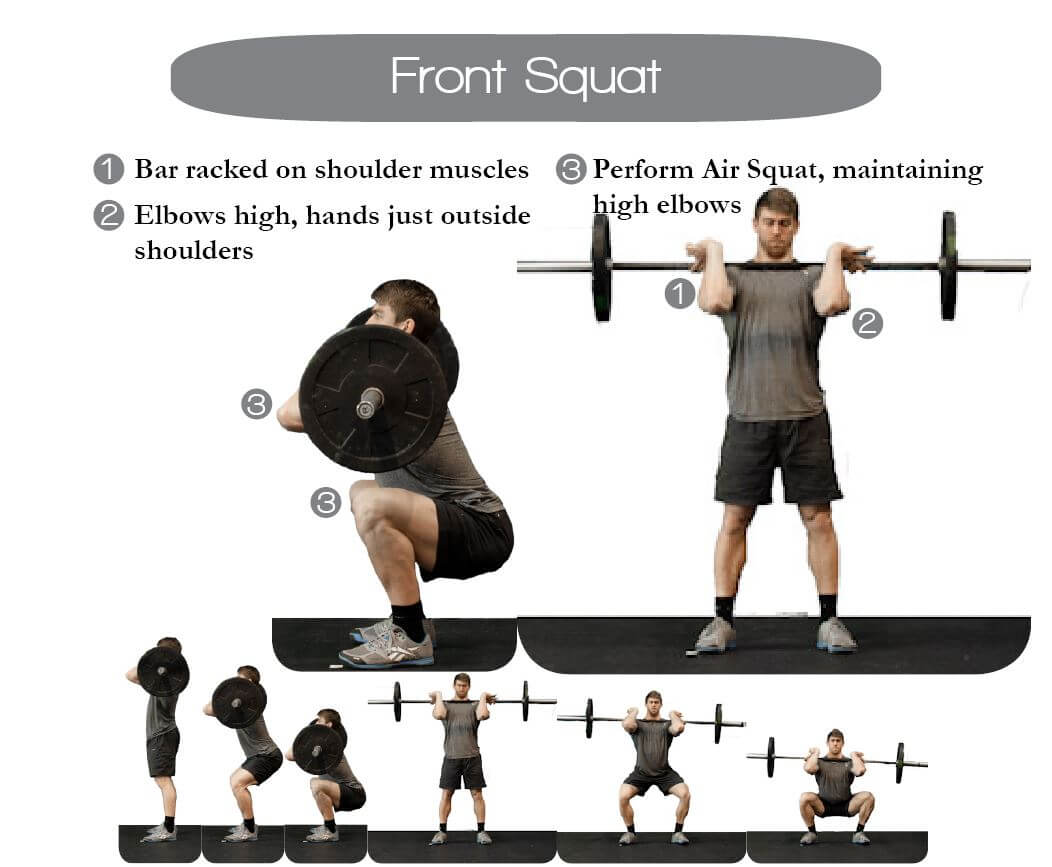
Credit: www.journalmenu.com
Unpacking The Back Squat
Unpacking the Back Squat reveals a journey into strength training’s heart. This classic lift is a staple. Its reputation in building muscle and strength is unmatched. The squat’s complexity requires attention to form, technique, and anatomy to reap all benefits safely.
Anatomy Of A Squat
Understanding the squat’s anatomy clarifies its power. Squats engage multiple muscle groups. Major ones include the quadriceps, hamstrings, glutes, and lower back.
- Quadriceps: They are the prime movers. Squats make them work hard.
- Hamstrings: These muscles balance the force your quads generate.
- Glutes: They add power to the move. A strong drive comes from gluteal muscles.
- Lower Back: Proper technique keeps these muscles safe.
Core muscles also play a vital role. They keep the body stable during the lift. A strong core will improve overall squat performance.
Benefits Of Barbell Back Squats
Barbell back squats offer vast benefits. They’re not just about leg muscles. These squats impact the entire body.
| Benefit | Impact |
|---|---|
| Strength Growth | Muscles gain strength from consistent squat training. |
| Improved Mobility | Regular squats enhance joint flexibility. |
| Calorie Burn | Intensive lifting burns more calories, aiding fat loss. |
| Enhanced Balance | Stabilizing muscles work hard, improving overall balance. |
Back squats also teach body awareness. They require focus on posture and movement. Practicing them helps prevent injuries in daily life. This lift not only shapes the body but also boosts athletic performance.
Setting Up Your Squat
Mastering the back squat with a barbell starts with a solid setup. A proper setup leads to safer, more effective squats. Let’s guide you through this crucial phase, ensuring your lifting experience is both successful and safe.
Choosing The Right Barbell
To begin, select a barbell that fits your strength level and goals. There are several types to consider:
- Standard barbell: Ideal for beginners and general training.
- Olympic barbell: For intermediate and advanced lifters.
- Powerlifting barbell: Made for heavy loads in powerlifting squats.
The right barbell feels comfortable in your hands and on your back. It should spin easily and have knurled grips to prevent slipping.
Rack Positioning For Safety
Set your rack to align with your mid-chest. This ensures you can safely lift off and rerack the barbell. Adjust the safety bars to just below your lowest squat depth. It protects you if you fail a rep. Now proceed to:
- Position the barbell on the rack pegs.
- Ensure the weight plates are secure with collars.
- Center yourself under the bar before lifting it off.
Check your stance is shoulder-width apart, toes slightly out. With these steps, you’re ready to squat with safety and confidence.
Mastering Squat Mechanics
Mastering the squat mechanics is essential for a powerful and safe back squat with a barbell. The back squat engages numerous muscles in your body. It is a cornerstone exercise for strength. To get the full benefits, you must focus on the form. Proper form ensures maximum muscle engagement and reduces injury risks. Now, let’s break down the key components to perfect your squat.
Foot Placement And Stance
Your feet are the foundation of a strong squat. A solid stance starts with foot placement.
- Stand with feet shoulder-width apart.
- Turn toes slightly outward to align with knees during descent.
- Distribute weight evenly across the entire foot.
- Keep heels flat on the floor to maintain balance.
A consistent stance sets the stage for a successful squat and supports a symmetrical muscle build.
The Descent: Finding The Sweet Spot
The descent in a squat is where the magic happens. Getting it right is crucial.
| Phase | Action | Focus Point |
|---|---|---|
| Start | Engage core, take a breath, and keep chest up. | Stable posture |
| Midway | Push hips back and bend knees to lower body. | Controlled movement |
| Bottom | Lower until thighs are parallel to floor. | Depth for muscle activation |
A controlled descent prevents momentum from taking over, encouraging muscle engagement and power.
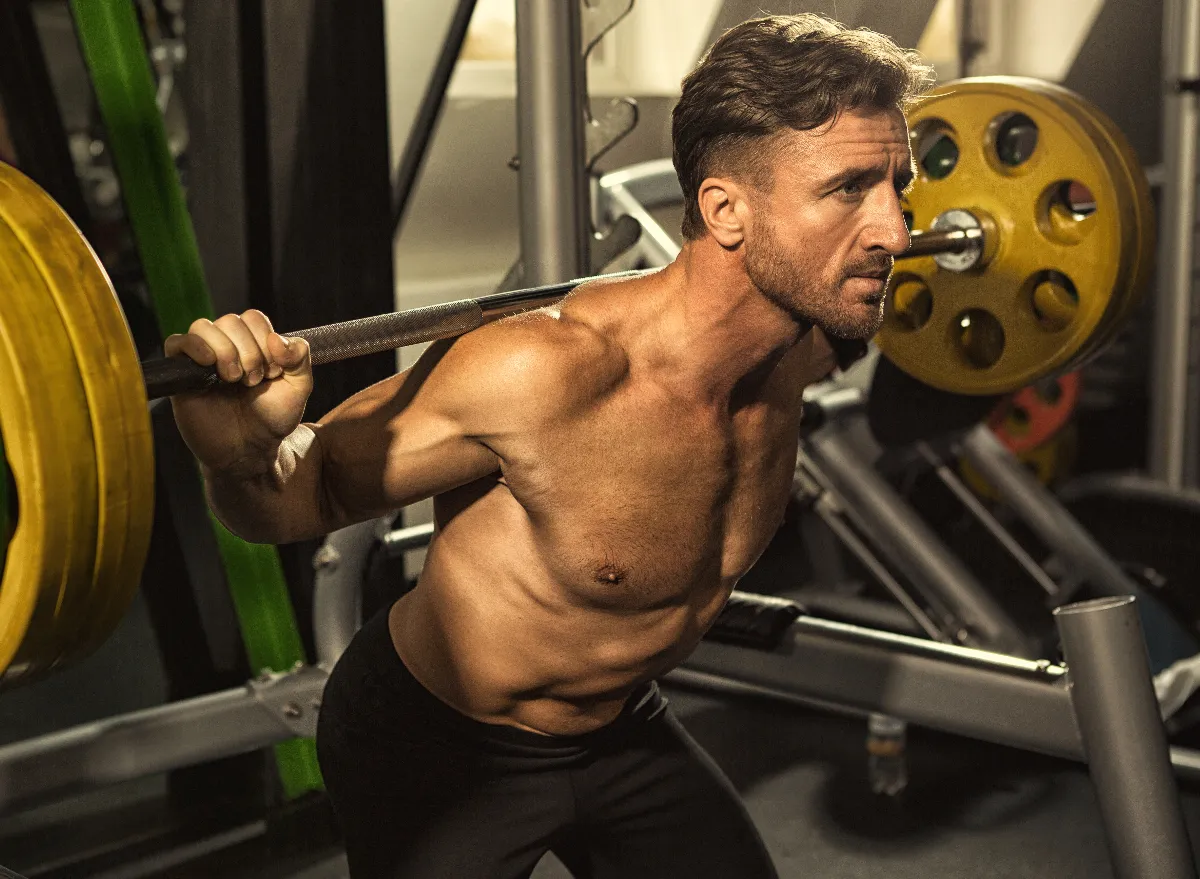
Credit: www.eatthis.com
Navigating Common Challenges
Mastering the back squat with a barbell is a journey. It tests your strength, balance, and technique. To get the best results, you should know the common hurdles and how to jump over them. Let’s dive into making your squat stronger and safer!
Avoiding Knee And Lower Back Injuries
Protecting your knees and lower back is crucial. With a heavy barbell, one wrong move can lead to injury. Here’s what you can do:
- Warm up properly before any heavy lifting.
- Position your feet shoulder-width apart.
- Keep the weight on your heels, not your toes.
- Squat down slowly and with control.
- Ensure your knees track over your toes and don’t cave in.
- Maintain a straight back, avoiding rounding or arching too much.
Remember, practice with lighter weights. Build up slowly to heavier squats.
Sticking Points And How To Overcome Them
Even experienced lifters face sticking points. This is when the squat feels extra tough. Here’s how to push past:
- Identify where you get stuck – is it at the bottom or halfway up?
- Focus on exercises that strengthen that part of the squat.
- Pause squats can increase power through sticking points.
- Pause at the bottom for 2-3 seconds, then push up.
- Vary your training – include front squats for balance.
- Try adding box squats to help with the bottom part of the movement.
- Use spotter arms or safety bars to practice with confidence.
Everyone’s sticking point is different, so tailor your approach to suit your needs. Stay consistent, and you’ll see progress.
Advancing Your Back Squat
Ready to take your back squat to the next level? Mastering the back squat with a barbell is a journey. Once you’ve got the basics down, it’s time to challenge yourself. Pushing past your comfort zone can lead to great gains. Let’s explore how to advance your back squat technique and results.
Incorporating Variations
Variety is key to continuous improvement. Shake up your routine with different squat variations!
- Front Squats: Shift the bar to the front to target quads more intensely.
- Overhead Squats: Raise the bar overhead to engage core and shoulders.
- Box Squats: Use a box to perfect depth and form.
- Paused Squats: Hold at the bottom for a few seconds to increase time under tension.
These variations not only break the monotony, but also enhance muscle engagement and strength.
Squat Progression Programs
Structured progression is vital for squat advancement. A progression program should systematically increase intensity and volume.
| Week | Sets | Reps | Weight |
|---|---|---|---|
| 1-2 | 3 | 8-10 | 70% 1RM |
| 3-4 | 4 | 6-8 | 75% 1RM |
| 5-6 | 5 | 4-6 | 80% 1RM |
| 7-8 | 6 | 2-4 | 85% 1RM |
A program like this will build strength systematically. Always ensure proper form to maximize gains and prevent injury.

Credit: www.amazon.com
Nutrition And Recovery
Strong legs are the pillars of a powerful body, and the back squat with a barbell builds them best. Good nutrition and smart recovery can make a huge difference in your squat progress. Let’s dive into how you can fuel your body for those challenging squat sessions and recover efficiently to keep your training consistent and effective.
Fueling For Squat Sessions
Proper nutrition gives you the energy needed for squats. Carbohydrates and proteins are your best friends. Complex carbs like oats, brown rice, and sweet potatoes provide long-lasting energy. Proteins rebuild your muscles. Think chicken, fish, tofu, and beans.
- Pre-Workout: Eat a balanced meal 2-3 hours before training. Include carbs, protein, and a little fat.
- During Workout: Stay hydrated. Sip on water or an electrolyte drink to keep energy levels steady.
- Post-Workout: Refuel with a protein-rich snack. A shake or a small meal can kickstart muscle repair.
| Meal Timing | Food Suggestions | Benefits |
|---|---|---|
| Pre-Workout | Oats, Banana, Lean Protein | Boost energy, maintain stamina |
| During Workout | Electrolyte Drinks | Stay hydrated, prevent cramps |
| Post-Workout | Protein Shake, Greek Yogurt | Speeds up recovery, rebuilds muscle |
Effective Recovery Techniques
Optimal recovery is as crucial as the workout itself. Combine rest, stretching, and sleep for the best results.
- Stretch and Cool Down: Post-squat stretches prevent stiffness. Try lunges or a light jog to cool down.
- Active Recovery: On non-squat days, stay lightly active. Walk, swim, or cycle to aid muscle recovery.
- Quality Sleep: Aim for 7-9 hours of sleep. Deep sleep repairs and strengthens muscle tissue.
Remember, the right balance of nutrition and recovery can elevate your squat performance. Respect your body’s needs, and it will reward you with gains in strength and endurance.
Frequently Asked Questions On Back Squat With Barbell
What Muscles Does The Back Squat Target?
Back squats primarily work the quadriceps, glutes, and hamstrings. They also engage the core, lower back, and calves for stability and support throughout the exercise. It’s a compound movement involving multiple joints.
Is The Barbell Back Squat Ideal For Beginners?
Barbell back squats can be suitable for beginners when performed with proper form and guidance. It’s crucial to start with lighter weights and focus on technique before progressing to heavier loads to minimize injury risk.
How To Properly Perform A Back Squat?
To properly perform a back squat, stand shoulder-width apart with the barbell on your upper back. Keeping your back straight, bend your knees, and hips to lower down as if sitting back into a chair, then stand back up.
What’s The Ideal Back Squat Frequency Per Week?
The ideal frequency varies based on goals and fitness levels but generally, performing back squats 2-3 times per week allows ample recovery and muscle growth. It’s important to balance intensity and volume for optimal results.
Conclusion
Mastering the back squat with a barbell can significantly enhance your fitness regime. It’s a powerful exercise that targets key muscle groups, improving strength and endurance. Remember to prioritize form to maximize benefits and reduce injury risk. Embrace the challenge and watch your performance soar.
Happy squatting!

