
Image source: Bing (Web (fair-use with source credit))

Today's Exclusive Deals
Limited-time Exclusive Deals. Check current discount on Amazon.
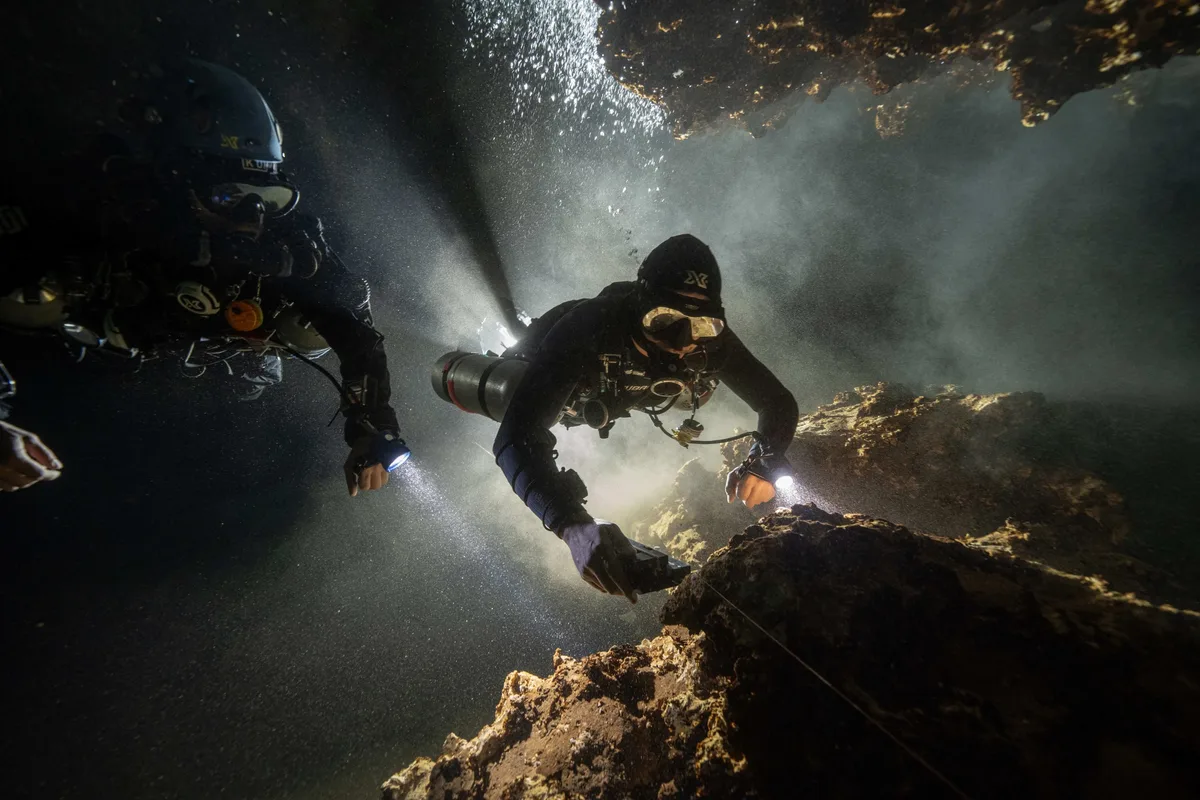
Check Price on Amazon As an Amazon Associate I earn from qualifying purchases.So, what is cave diving? It's the ultimate frontier for scuba enthusiasts, a way to explore some of the most secluded and stunning geological formations on our planet. This isn't just a casual dive; it's a serious discipline that requires specialized training, meticulous planning, and a deep respect for the overhead environment you're entering.
It’s about venturing into natural underground water systems where the only exit is the way you came in. Unlike cavern diving, where natural light is always visible, cave diving means you're fully enveloped in darkness, relying entirely on your equipment and your skills. As of 2026, leading cave diving agencies like the National Speleological Society, Cave Diving Section (NSS-CDS) emphasize rigorous training protocols to manage the inherent risks.
Quick Answer
Cave diving is scuba diving in natural underwater caves, away from any natural light. It requires specialized training, redundant equipment, and strict adherence to safety protocols. Divers follow guidelines and manage air supply meticulously.
It's distinct from cavern diving due to the complete absence of daylight.
Why Accuracy Matters in Cave Diving
In cave diving, "close enough" isn't good enough; it can literally be the difference between life and death. This isn't a sport where you can afford to be slightly off. Our research confirms that even minor miscalculations or equipment errors in this environment can lead to catastrophic outcomes.
Every piece of gear, every procedure, and every bit of knowledge must be precise.
This precision extends to understanding critical distinctions. For instance, knowing the exact difference between cave diving and cavern diving is paramount. Cavern diving typically stays within sight of an open water exit and natural light, while true cave diving means you're always a significant distance from daylight, often hundreds of feet back into the earth.
This distinction dictates everything from equipment needs to emergency procedures.
The Core of Cave Diving: What You're Actually Doing
At its heart, cave diving is about carefully exploring natural, submerged geological formations. It's a specialized type of diving that takes you into a world completely disconnected from the surface. The environment itself is the main attraction, offering sights and experiences found nowhere else.
Exploring Overhead Environments
The defining characteristic of cave diving is the overhead environment. This means you are beneath a solid rock ceiling, with no direct path to the surface for an emergency ascent. This concept is fundamental and dictates almost every aspect of cave diving.
You're no longer just thinking about depth; you're thinking about distance from your entry point and the path back.
This often involves navigating through narrow passages, large chambers, and complex tunnel systems. The formations inside these caves can be breathtaking, stalactites, stalagmites, and other mineral deposits shaped over millennia. The silence and darkness create a unique, almost surreal atmosphere.
Essential Cave Diving Gear: Beyond the Basics
Regular scuba gear is a starting point, but cave diving demands specialized, redundant equipment to handle the risks of zero visibility and confined spaces. Our research into diver certifications and equipment standards highlights the absolute necessity of these items.
- Primary Lights: These need to be powerful and reliable. Look for lights with high lumen output (often 1000+ lumens) and long burn times. Many are designed with robust, corrosion-resistant aluminum housings.
- Backup Lights: At least two independent, smaller lights are essential. They should be easily accessible, often clipped to the diver's harness or BCD. They need to be fully functional and tested before every dive.
- Reels and Spools: These carry the exploration line, or guideline. A large reel typically holds 300-500 feet (90-150 meters) of line, while smaller spools might carry 100-200 feet (30-60 meters). Different line types are available, but braided nylon is common for its strength and low stretch.
- Stage Bottles: These are cylinders containing extra breathing gas, carried externally on the diver's side or back. They are crucial for longer dives or as part of emergency gas sharing. Cylinder valves and regulators used for stage bottles are often distinct from primary gear.
- Cutting Devices: Divers need multiple ways to cut line quickly and safely. This includes specialized line-cutting tools designed for webbing and small diameter lines, as well as a reliable dive knife.
- Harness and D-rings: A dedicated harness system with multiple D-rings allows for secure attachment of reels, spools, stage bottles, and other essential gear. This keeps equipment organized and accessible.
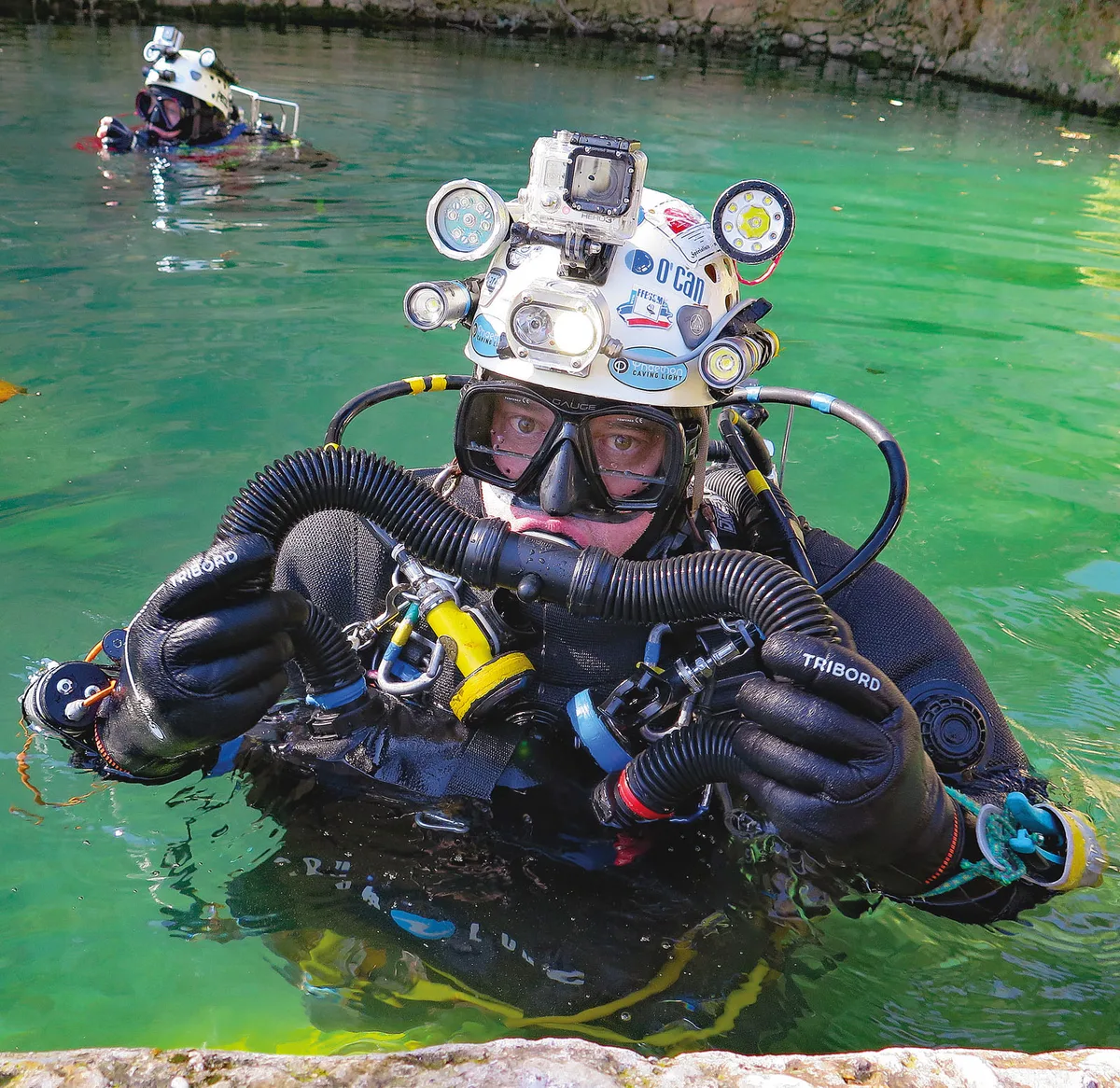
Image source: Web (Bing) / activityfan.com (Web image (fair-use with source credit))
How Do Lights Function in Zero Visibility?
Lights in cave diving aren't for illuminating the entire cave; they're primarily for signaling, navigating, and identifying the guideline. When visibility drops to zero due to silt, your primary light allows you to locate your guideline by touch and then visually confirm it. Backup lights serve as immediate replacements if the primary fails.
Manufacturer specifications often detail beam intensity and spread, crucial for discerning objects at close range in darkness.
Why Are Redundant Air Sources Critical?
The overhead environment means you can't simply ascend if your primary air source fails. Redundant air sources, often in the form of a secondary regulator attached to a separate tank or as part of a doubled-cylinder setup, provide a critical backup. This ensures that even if your main regulator malfunctions, you have immediate access to breathable gas to safely exit the cave.
The High Stakes: Risks and Dangers of Cave Diving
Cave diving carries inherent risks that demand an exceptional level of preparation and discipline. Unlike recreational diving, where immediate access to the surface is usually available, cave environments present unique challenges. Aggregate data from accident reports consistently points to a few critical failure points.
Zero Visibility and Disorientation
The most immediate and common danger in cave diving is the loss of visibility. The cave floor and walls are often composed of fine silt that can be easily disturbed by fin kicks or equipment. If this silt is stirred up, visibility can drop to zero instantly.
This "silt-out" can happen unexpectedly.
When visibility is reduced to nothing, divers can become disoriented very quickly. Without visual references, even experienced divers can struggle to find their guideline. This is why the continuous guideline rule is so critical; it's the primary navigation tool.
Manufacturer specifications for dive lights highlight their importance, but even the brightest beam is useless in zero visibility without a reference.
Entrapment and Equipment Failure
The confined nature of cave passages increases the risk of entrapment. Divers must maintain excellent buoyancy control and use specific finning techniques to avoid snagging their gear on rock formations or getting stuck. Aggressive finning or poor buoyancy can lead to contact with the cave walls, potentially causing silt-outs or entanglement.
Equipment failure, while rare with proper maintenance, can be far more serious in a cave than in open water. A regulator failure, for instance, leaves a diver with no air. Because there's no immediate way to ascend, they must rely entirely on their secondary air source and their ability to navigate back to safety along the guideline.
This is why redundant systems are not optional; they are a core safety requirement.
Mastering Cave Diving: The Path to Safety
Becoming a proficient and safe cave diver is a journey that prioritizes rigorous training and unwavering adherence to established safety protocols. This isn't a path for those looking for a quick certification; it's a commitment to learning and mastering a complex skill set. Our editorial analysis shows that the most successful cave divers are those who treat every dive with extreme seriousness.
Essential Training and Certification
You cannot and should not attempt cave diving without proper certification from a recognized agency. This training is not just about learning the techniques; it’s about instilling the right mindset and respect for the environment. Basic open water scuba certification is just the first step.
The progression typically involves:
- Cavern Diver Course: This is often the introductory level, teaching you how to navigate within the "reach of daylight" of a cave entrance and how to lay a guideline.
- Intro to Cave Diver Course: This builds on cavern skills, pushing you further into the cave system and introducing more complex navigation and emergency procedures.
- Full Cave Diver Course: This is the highest level of recreational cave diving certification, allowing you to explore the full complexities of cave systems, including complex routes, multiple guideline techniques, and advanced gas management.
Agencies like the National Speleological Society, Cave Diving Section (NSS-CDS) and Global Underwater Explorers (GUE) have highly regarded training programs. These programs emphasize a methodical approach, often requiring hundreds of hours of logged diving experience before advanced cave certifications are awarded.
Critical Safety Protocols: Never Deviate
Several non-negotiable safety rules form the backbone of cave diving. These are not suggestions; they are fundamental commandments that protect divers. Aggregate diver feedback and accident reports confirm that violations of these rules are consistently linked to incidents.
- The Continuous Guideline Rule: Always maintain a continuous guideline from your entry point to your exploration point and back. This is your only path out.
- The Lights Rule: Never enter a cave without at least three independent light sources: one primary, and two backups. If your primary light fails, you must have working backups.
- The Air Management Rule: Divers typically follow a "rule of thirds" for gas management: one-third of the gas for penetration into the cave, one-third for the return journey, and one-third as a reserve. This is a conservative approach designed for safety margins.
- The No-Depression Rule: Avoid descending below your planned depth or venturing into areas that exceed your training and equipment limits.
- The No-Touch Policy: Never touch or disturb cave formations. This preserves the cave environment for future exploration and prevents the creation of silt clouds.
Who is Cave Diving For?
Cave diving isn't for everyone, and that's perfectly okay. It requires a specific blend of personal traits, a willingness to commit to rigorous training, and a profound respect for the risks involved. It attracts a particular type of adventurer.
Ideal Personalities and Mindsets
The individuals who excel and thrive in cave diving typically share a few key characteristics. Our research indicates that a calm demeanor under pressure is paramount. These divers are often meticulous planners, detail-oriented, and possess a strong sense of self-reliance.
- Calm and Analytical: When things go wrong (and they can), the ability to remain calm and think logically is essential. Panic is the enemy in a zero-visibility, overhead environment.
- Methodical and Disciplined: Cave diving demands strict adherence to procedures and protocols. A "winging it" attitude has no place here.
- Respectful of the Environment: Understanding the fragile nature of cave ecosystems and the inherent dangers is crucial.
- Patient Learners: The training is extensive and requires time and dedication to master.
If you enjoy problem-solving, are fascinated by geology, and have a penchant for pushing boundaries in a controlled, educated manner, cave diving might resonate with you.
Situations Where Cave Diving is Applied
Beyond pure exploration and personal adventure, cave diving has several practical applications. These often involve scientific research or specialized technical operations.
- Geological and Hydrological Research: Caves provide unique insights into groundwater systems, karst topography, and the history of water tables. Researchers use cave diving to collect samples, map systems, and study aquatic life unique to these environments.
- Archaeological Exploration: In some regions, submerged caves may contain ancient artifacts or human remains, making them sites of significant archaeological interest.
- Resource Mapping: In certain areas, underwater cave systems might be mapped for potential water resources or to understand geological structures.
- Specialized Technical Operations: While less common, some extreme environments might require specialized dive teams for tasks that involve access through submerged cave systems.
Common Cave Diving Mistakes to Avoid
Even with thorough training, mistakes can happen. In cave diving, however, the consequences of common errors are amplified. Our analysis of incident reports highlights recurring themes that serve as critical learning points for any aspiring or practicing cave diver.
- Insufficient Training: Attempting cave dives without proper certification and experience is the single biggest mistake. There is no substitute for agency-specific training, like that offered by NSS-CDS or GUE.
- Poor Gas Management: Miscalculating air supply or failing to adhere to conservative gas planning (like the rule of thirds) can lead to an out-of-air emergency far from an exit.
- Guideline Errors: Losing the guideline, failing to lay it correctly, or having it break are critical navigation failures. This includes issues like "no-sight" guidelines where the line is not continuously visible.
- Equipment Neglect: Not performing thorough pre-dive checks or neglecting regular equipment maintenance can lead to critical failures in a high-risk environment. This applies to everything from regulators to lights.
- Disturbance of the Environment: Causing silt-outs by aggressive finning or touching formations not only ruins the dive but can lead to disorientation and navigation problems, creating a dangerous situation.
- Exceeding Training Limits: Pushing into areas or depths beyond one's certification level or comfort zone is a recipe for disaster. Always dive within your personal and training envelope.
Cave Diving vs. Cavern Diving: Knowing the Difference
It's crucial to understand that cave diving and cavern diving are not the same. While both involve diving in underwater caves, the environment and the risks are significantly different. This distinction is hammered home in all reputable training programs.
| Feature | Cavern Diving | Cave Diving |
|---|---|---|
| Natural Light | Always within the "reach of daylight" of the entrance. | Always beyond the "reach of daylight." No natural light is visible. |
| Penetration | Limited, typically within 100 feet (30 meters) of the entrance. | No strict penetration limit, but governed by training and gas supply. |
| Guideline Rule | May or may not be required, depending on the specific site and agency. | Mandatory continuous guideline from entrance to exploration point and back. |
| Air Management | Often uses standard open-water air rules. | Strict conservative rules, like the "rule of thirds," are mandatory. |
| Training Level | Introductory; builds on open water skills. | Advanced; requires specialized certification beyond cavern diver. |
| Equipment Needs | Similar to open water, with potentially a primary light. | Requires redundant air, multiple lights, reels, and specialized cutting tools. |
| Risk Level | Lower, due to proximity to open water and light. | Significantly higher, due to overhead environment and distance from exits. |
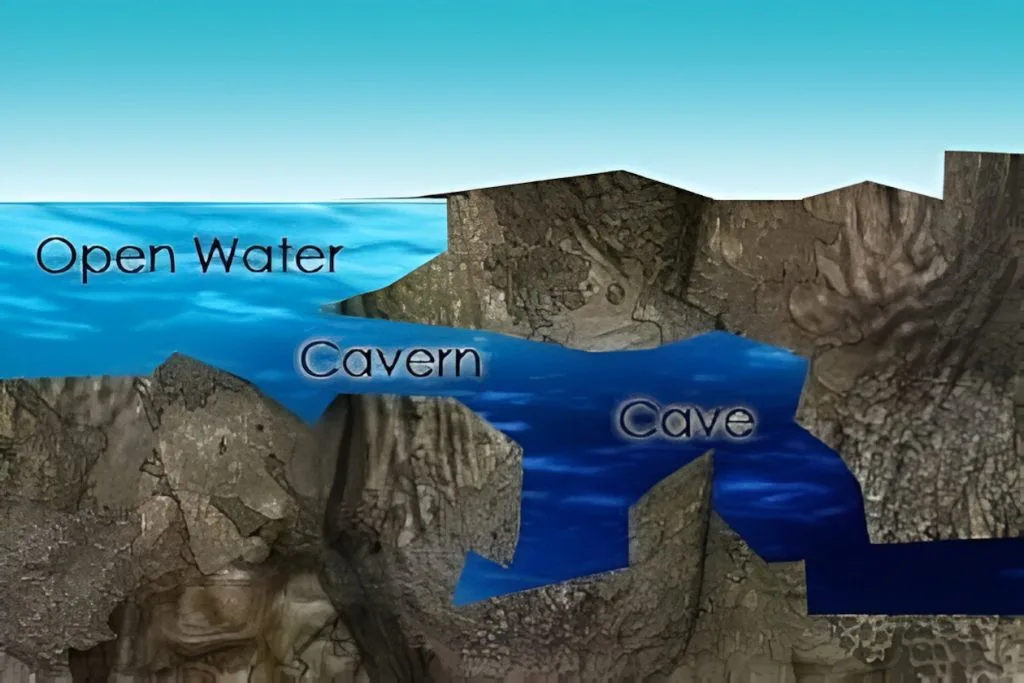
Image source: Bing (Web (fair-use with source credit))
Cavern diving can be a great way to get a taste of overhead environments and develop basic guideline skills, but it doesn't prepare you for the challenges of true cave diving. Think of it as learning to walk before you try to run an ultramarathon.
Expert Cave Diving Insights
Experienced cave divers emphasize a philosophy that blends meticulous preparation with constant situational awareness. They often speak about the importance of "flow" and "flow management", not just for the water, but for your dive plan and your gas supply. Our research suggests that this mindset is key to mitigating risks effectively.
One piece of advice frequently shared is to always treat every dive as if it's your first. This means reviewing your gas plan, checking your equipment thoroughly, and discussing the dive plan with your team (if applicable) before entering the water. Even on familiar sites, complacency can be dangerous.
Another critical insight is the value of "teamwork and communication." In an environment where visibility can disappear in an instant, clear communication with your buddy (or team) through hand signals, light signals, and a shared understanding of the plan is vital. Many agencies, like GUE, place a strong emphasis on team diving protocols as part of their training. This collaborative approach significantly enhances safety.
Frequently Asked Questions About Cave Diving
How long does cave diving training take?
Cave diving certification is a progressive process. A Cavern certification might take a weekend, but Intro to Cave and Full Cave certifications require multiple days of intensive instruction and practical experience, often spread over several weeks or months to allow for skill development and depth of understanding.
What is the "rule of thirds" in cave diving?
The "rule of thirds" is a gas management guideline stating that one-third of your breathing gas should be used for penetration into the cave, one-third for the return journey, and one-third should be kept as a reserve for emergencies. This conservative approach ensures adequate gas for a safe exit.
Can I use my regular scuba gear for cave diving?
No, standard recreational scuba gear is insufficient. Cave diving requires specialized, redundant equipment, including multiple lights, reels for laying guidelines, additional air sources (stage bottles), and specific cutting tools. Standard BCDs and regulators may need to be supplemented or replaced with cave-specific models.
Is cave diving more dangerous than open water diving?
Yes, cave diving is significantly more dangerous than open water diving due to the overhead environment, potential for zero visibility, confined spaces, and lack of direct surface access. This increased risk necessitates specialized training and equipment that go far beyond recreational standards.
What are the most common causes of cave diving accidents?
Accident reports consistently highlight a few primary causes: insufficient training, poor gas management leading to an out-of-air situation, loss or failure of guidelines, equipment malfunctions, and disorientation, often exacerbated by silt-outs. Violations of established safety protocols are also frequent contributors.

