Image source: Web (Bing) / scubadiving.com (Web image (fair-use with source credit))

Today's Exclusive Deals
Limited-time Exclusive Deals. Check current discount on Amazon.
Check Price on Amazon As an Amazon Associate I earn from qualifying purchases.Ever wondered how divers keep in touch when they can't exactly hear each other over the bubbling of their regulators? The answer to how do scuba divers communicate underwater relies on a fascinating mix of visual cues, simple tools, and a shared understanding of specific signals. It's crucial for safety and ensuring a fun, connected dive experience for everyone involved.
From a simple thumbs-up to more complex electronic devices, effective underwater communication prevents misunderstandings and enhances the buddy system. Manufacturer specifications for some dive communicators, for instance, highlight their ability to transmit clear audio up to 100 meters in optimal conditions, a significant leap from traditional methods.
Quick Answer: The Main Ways Divers Talk
Divers primarily communicate underwater using standardized hand signals. They also employ waterproof slates or dive lights for more complex messages. Some advanced systems offer voice communication.
Effective communication ensures buddy safety and coordination.
Understanding Underwater Communication: Why It's Different
Underwater, sound travels differently than it does in air, and visibility can be a huge challenge. The constant stream of bubbles from a diver's regulator also creates a lot of noise. These factors mean that yelling to your dive buddy or even having a normal conversation just isn't possible.
We're talking about a world where clear sightlines can disappear in an instant and where sound can be muffled or distorted. This is why divers rely on methods that bypass the need for clear auditory signals over distance.
The core problem is that the medium itself, water, fundamentally changes how we interact. This environment necessitates a unique set of tools and techniques that are adapted for its specific challenges. It’s about making every gesture and every signal count, ensuring that vital information is conveyed reliably, no matter the conditions.
Diving Signals: The Visual Language of the Deep
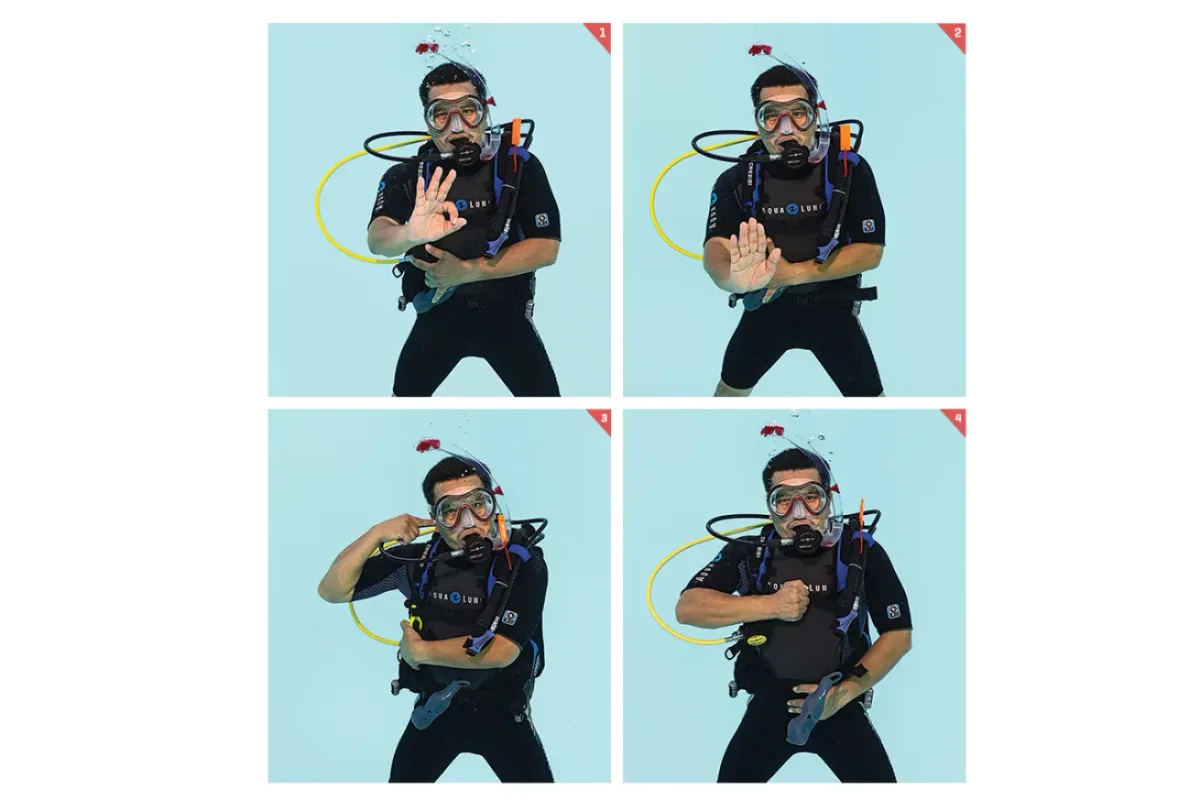
Hand signals are the most fundamental way divers communicate underwater. They form a universal language taught during basic certification courses and are essential for everyday dive interactions. Think of them as a visual vocabulary that every diver learns.

Image source: Web (Bing) / scubatimes.com (Web image (fair-use with source credit))
These signals are designed to be clear, concise, and easy to perform, even with bulky gloves. They cover everything from simple acknowledgments to urgent alerts.
- The "OK" Signal: This is the most critical. Form a circle with your thumb and index finger, extending the other fingers. It means "Are you okay?" or "Yes, I am okay." Always confirm this signal from your buddy before descending or during the dive.
- The "Problem" Signal: Point your hand straight up with your index finger extended, then shake it side to side. This signals something is wrong.
- Ascending/Descending: To signal ascent, point your hand upwards and make a rising motion. For descent, point downwards and make a falling motion.
- "Look!": Point your finger towards your eye and then out towards something to draw your buddy's attention.
- Low Air Warning: This is crucial for safety. Point to your submersible pressure gauge (SPG) and then make a flapping motion with your hand, mimicking a bird's wing. It means you're running low on air.
- Directional Signals: Pointing in a specific direction indicates that way. This helps guide your buddy or indicate something of interest.
- Stop: Hold your hand flat, palm facing out, and wave it side to side in front of you. This means "Hold on" or "Wait."
The effectiveness of these signals depends heavily on clear execution. Divers are trained to make signals large, slow, and deliberate, especially in conditions where visibility might be reduced. Confirming that your buddy has seen and understood your signal is just as important as sending it.
This ensures you're both on the same page and ready to react appropriately to any situation.
Beyond Hand Signals: Tools for Clearer Conversation
While hand signals are fantastic for quick exchanges, sometimes you need more. This is where other tools come into play, especially when communication needs to be more detailed or in less-than-ideal visibility. These supplementary methods ensure that important information isn't missed.
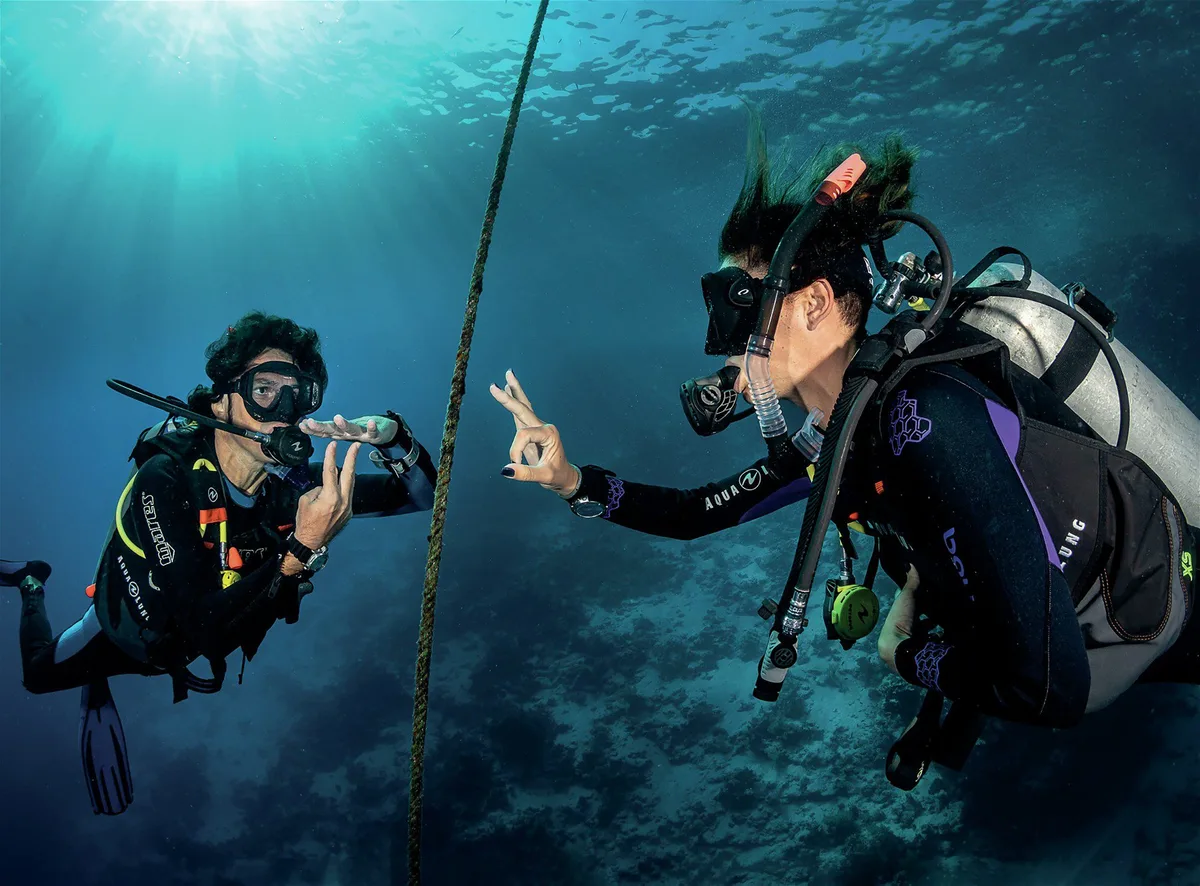
Image source: Web (Bing) / divernet.com (Web image (fair-use with source credit))
- Waterproof Slates and Wet Notes: These are like mini whiteboards for the underwater world. Divers carry small, waterproof slates or pads of paper designed for use with a special pencil or grease pencil. You can write short messages, draw diagrams, or jot down observations. This is incredibly useful for conveying specific information that can't be easily signaled, such as identifying a particular species of fish or noting a problem with equipment. For longer dives, pre-written dive plans on wet notes can also be very helpful.
- Dive Lights: In low-visibility conditions or at night, a dive light becomes an essential communication tool. A few short flashes can get your buddy's attention. You can also use the beam to point out objects of interest or to signal direction. It's a way to cut through the murk and make sure you're seen and heard, in a visual sense.
- Auditory Signaling Devices: Some specialized equipment exists, like air horns or tank bangers. These create a loud noise to get attention, especially on the surface or when you need to signal an emergency across a wider area. However, they're less common for routine communication during the dive itself.
These tools supplement hand signals, offering more versatility. They ensure that even in challenging environments, divers can maintain a strong connection and exchange necessary information safely and effectively. Learning to use these tools can significantly enhance your confidence and preparedness underwater.
Common Mistakes Divers Make When Communicating
Even with established signals and tools, divers can fall into predictable traps that lead to confusion or missed information. Understanding these common pitfalls is key to preventing them and ensuring safer dives. It's easy to overlook the simplicity of a signal or assume your buddy understood you perfectly.
- Making Signals Too Small or Fast: In murky water, or if your buddy is a bit further away, small or quick hand gestures can easily be missed or misinterpreted. A signal meant to be "OK" might look like a "Problem" signal if rushed.
- Not Confirming Understanding: A big one is assuming your buddy saw and understood your signal. Always wait for a reciprocal signal or a nod to confirm. Likewise, if your buddy signals you, acknowledge it.
- Using Non-Standard Signals: While creative signals might seem intuitive, sticking to recognized standards is crucial. What makes sense to you might be meaningless to your buddy, especially if they were trained by a different agency or have different experience.
- Over-Reliance on One Method: Expecting hand signals to work perfectly in zero visibility is unrealistic. Divers should be prepared to use slates, lights, or other tools when conditions demand it.
- Panicking and Forgetting Signals: In an emergency, it's easy to freeze up or forget basic signals. This is why regular practice, even on shallow, easy dives, is so important for reinforcing these essential skills. Regular practice helps build muscle memory.
- Not Checking the SPG: The low air signal is vital, but often, the root cause is simply not monitoring your air supply. Checking your submersible pressure gauge (SPG) regularly is a proactive communication with yourself and your buddy about your air status.
Avoiding these mistakes requires attentiveness and a commitment to clear communication protocols. It’s about being a good dive partner who is not only technically skilled but also mindful and communicative.
Staying Safe: Essential Communication Practices
Safety is paramount in scuba diving, and effective communication is one of its cornerstones. The buddy system relies heavily on the ability of two divers to stay connected and aware of each other's status and needs. Implementing consistent communication practices can prevent minor issues from escalating into serious problems.
- Pre-Dive Briefing: Before you even enter the water, have a thorough briefing with your buddy. Discuss the dive plan, potential hazards, emergency procedures, and any specific signals you might need. This shared understanding sets the stage for a safer dive.
- Buddy Checks: Always perform a thorough buddy check before each dive. This isn't just about gear; it's also a chance to confirm communication signals and air supply status. Ensure both divers are comfortable and ready.
- Regular Check-ins: During the dive, don't just communicate when there's a problem. Make regular "OK" signal checks with your buddy. This brief interaction confirms you're both present, comfortable, and aware of each other.
- Air Management: This is a critical safety aspect tied directly to communication. Always monitor your air supply and know your buddy's. If you're low on air, signal it immediately. Manufacturer specifications often recommend a minimum air reserve for safe ascent.
- Situational Awareness: Be aware of your surroundings and your buddy's position within them. If you see something interesting or a potential hazard, signal it. Similarly, be attentive to your buddy's signals and body language.
- Emergency Procedures: Know how to signal an emergency, like a "problem" or "out of air" signal. Practice these signals so they become second nature. If you encounter an emergency, remain calm and use the appropriate signal.
- Surface Signals: Don't forget about surface communication, especially if you need assistance. Using a dive flag, a Surface Marker Buoy (SMB), or an audible signal like a horn can alert boat traffic to your presence. Proper use of an SMB, like those reviewed by top-rated buoys, is key to diver visibility.