Image source: Web (Bing) / divevolkdiving.com (Web image (fair-use with source credit))

Today's Exclusive Deals
Limited-time Exclusive Deals. Check current discount on Amazon.
Check Price on Amazon As an Amazon Associate I earn from qualifying purchases.So, you're curious about diving and wondering what gear you actually need to get started. It's a super common question, and honestly, it can feel a bit overwhelming with all the different bits and pieces out there. But think of it like building a toolkit, you need the right tools for the job, and scuba gear is no different.
We’re going to break down the essential equipment you'll want to have.
It's not just about buying the most expensive stuff; it's about getting the right gear that fits you well and is reliable. For instance, manufacturer specifications for BCDs often detail buoyancy capacities, with recreational models typically ranging from 20 to 40 lbs of lift, ensuring you can manage your buoyancy effectively at the surface and during your dive.
Quick Answer
You need a mask, snorkel, fins, a buoyancy control device (BCD), a regulator set with a submersible pressure gauge (SPG), a dive computer, and appropriate exposure protection like a wetsuit or drysuit depending on water temperature. These core items allow you to see, move, breathe, control your depth, and monitor your dive safely.
The Must-Have Gear: Core Components Explained
These are the absolute essentials that make scuba diving possible. You can't explore the underwater world without them. Each piece plays a critical role in your safety and enjoyment.
Manufacturer specifications confirm that these are non-negotiable for any certified diver.
- Mask: This is your window to the underwater world. It creates an air pocket in front of your eyes, allowing you to see clearly. A good mask should fit snugly to your face without being painful and should not leak when you press it to your skin. Finding a mask that fits your face shape is crucial; for example, wide-face masks offer more comfort for some divers.
- Snorkel: While not used during the actual scuba dive, a snorkel is handy for breathing at the surface when you're swimming to your dive site or waiting for your buddy. It helps conserve your tank air.
- Fins: These go on your feet and are designed to give you powerful, efficient propulsion through the water. They come in various styles, from full-foot fins to open-heel models that require boots.
- Buoyancy Control Device (BCD): This is like a vest that you wear. It has an inflatable bladder that you can fill with air from your tank or deflate, and sometimes you can also use your breath via the oral inflator. This is crucial for maintaining neutral buoyancy underwater, a key skill for any diver.
- Regulator: This critical piece of equipment connects to your scuba tank and reduces the high-pressure air inside to a breathable pressure that you can inhale. It typically includes your primary second stage (what you breathe from), an alternate air source (your "buddy's backup"), and a submersible pressure gauge (SPG).
- Submersible Pressure Gauge (SPG): This gauge tells you exactly how much air is left in your tank. Knowing your air supply is fundamental to safe diving practices.
- Dive Computer: While older gauges exist, a dive computer is now standard. It tracks your depth, dive time, ascent rate, and calculates your no-decompression limits, acting as your personal dive safety monitor. Many dive computers today also offer features like air integration, showing your tank pressure directly on the screen.
Your Essential Scuba Diving Equipment List
Getting the right gear ensures your dives are safe and comfortable. You don't need to break the bank on the most high-end models when starting out, but investing in reliable, well-fitting essentials is key. Think of it as building your personal dive kit.
Here's a breakdown of what you'll need:
- Mask: For clear underwater vision.
- Snorkel: For surface breathing.
- Fins: For efficient movement.
- Buoyancy Control Device (BCD): To manage your buoyancy.
- Regulator: To breathe air from your tank.
- Submersible Pressure Gauge (SPG): To monitor air supply.
- Dive Computer: For dive tracking and safety.
- Exposure Suit: A wetsuit or drysuit depending on water temperature.
- Scuba Tank: Filled with breathable compressed air.
Renting gear is a great way to try things out when you’re starting. However, as you dive more, owning your own mask, fins, and BCD can significantly enhance comfort and fit. Many divers eventually invest in their own regulator and dive computer for personalized comfort and reliable performance.
This is a common path for those looking to build their scuba diving gear set.
Mask, Snorkel, Fins: Your Underwater Foundation
These three pieces of equipment are your primary interface with the aquatic environment, allowing you to see, breathe at the surface, and move effectively. They're often the first items divers consider purchasing for themselves because personal fit is so important. Aggregate reviews report that ill-fitting gear can lead to significant discomfort and even unsafe diving situations.

- The Mask: A scuba mask creates a sealed air space in front of your eyes. The skirt, typically made of soft silicone, forms a watertight seal against your face. A good mask won't fog up easily and won't leak around the edges. When trying one on, press it to your face without the strap and inhale gently through your nose; it should stay put. If you have a wider face, look for masks specifically designed for a broader fit.
- The Snorkel: This is a simple tube allowing you to breathe while your face is at the water's surface. Most modern snorkels have a purge valve at the bottom to easily clear any water that enters, and some feature a dry-top mechanism that seals the tube when submerged. You can find a variety of options in snorkel gear.
- The Fins: Fins are essential for propulsion. They convert the power of your leg and foot movements into thrust, allowing you to glide through the water with minimal effort. There are two main types:
- Full-foot fins: These are like slip-on shoes and are often used in warmer water.
- Open-heel fins: These require a dive boot and use adjustable straps. They're more versatile for varying water temperatures and can accommodate different foot sizes. For strong currents, specific fin designs offer enhanced power, as detailed in guides to fins for strong currents.
Choosing these foundational items carefully will make your underwater experience far more enjoyable and less frustrating.
BCD & Regulator: Controlling Your Dive
The Buoyancy Control Device (BCD) and regulator are the command center for your dive, giving you control over your breathing and buoyancy. These are sophisticated pieces of equipment where reliability and proper function are paramount for safety. As per guidelines from major diving organizations, understanding their use is a core part of diver training.
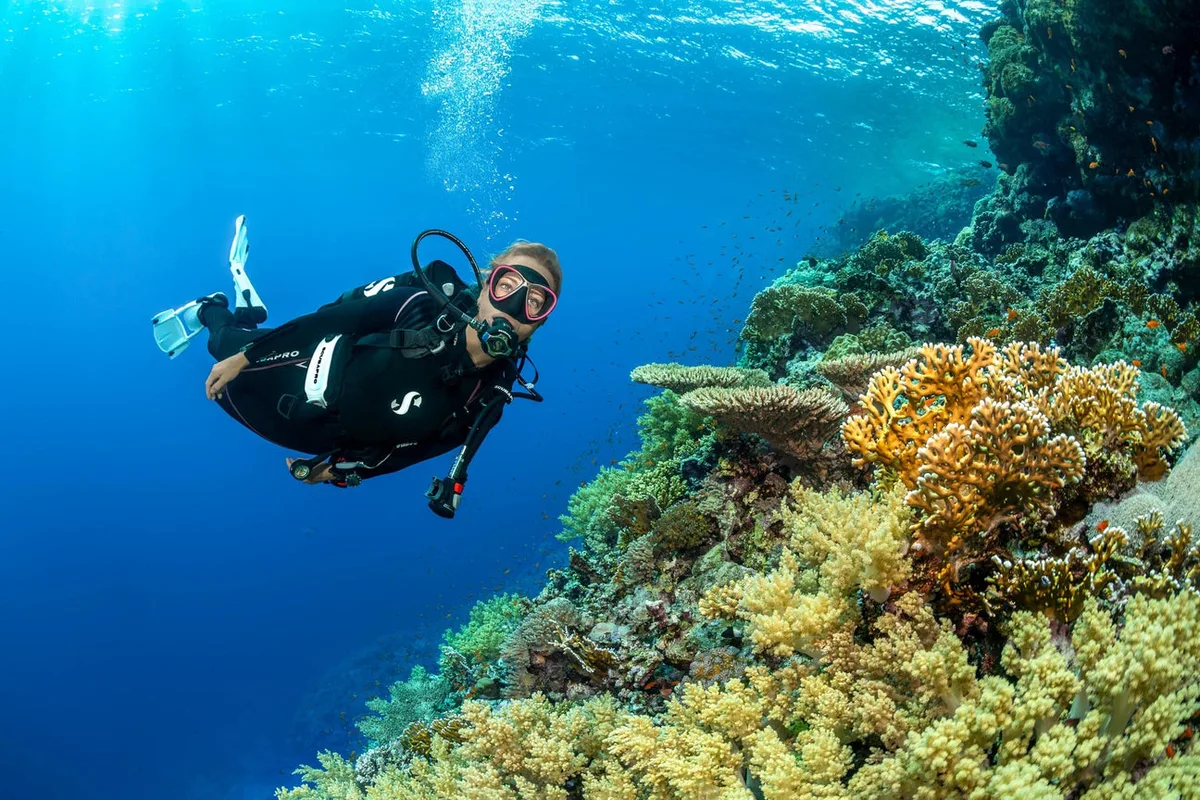
Buoyancy Control Device (BCD)
Your BCD is essentially a wearable vest that allows you to adjust your buoyancy.
- How it works: It has an internal bladder that can be inflated with air from your scuba tank or deflated, and sometimes you can also use your breath via the oral inflator. This is crucial for maintaining neutral buoyancy underwater, a key skill for any diver.
- Features to look for: BCDs come in different styles, like jacket-style (the most common for recreational divers) and back-inflate. They also have various pockets and D-rings for attaching accessories, such as your dive knife. When selecting one, ensuring it fits snugly and comfortably is vital for ease of movement and preventing ride-up.
Regulator
The regulator is what allows you to breathe the air from your tank. It's a sophisticated system that reduces high-pressure air.
- Components: A typical regulator setup includes:
- First Stage: Attaches to the scuba tank valve and reduces the tank's high pressure to an intermediate pressure.
- Primary Second Stage: The mouthpiece you breathe from.
- Alternate Air Source (Octopus): A secondary second stage for sharing air with a buddy in an emergency.
- Submersible Pressure Gauge (SPG): A gauge that shows you the remaining air pressure in your tank. Many modern regulators are paired with a dive computer that can wirelessly display this information.
- Importance: The reliability of your regulator is critical. Manufacturer specifications confirm they undergo rigorous testing to ensure consistent air delivery across a range of depths. For beginners, specific regulators designed for ease of breathing are often recommended, as discussed in guides to regulators for beginners.
Dive Computer: Your Dive Safety Assistant
A dive computer has become an indispensable tool for modern scuba divers, significantly enhancing both safety and convenience. It’s far more than just a gauge; it’s an active assistant monitoring your dive in real-time. As of 2026, dive computers are considered standard safety equipment by virtually all training agencies.
A dive computer's primary function is to track your depth and the duration of your dive. Based on this data, it calculates your remaining no-decompression time, the maximum time you can stay at your current depth without needing mandatory decompression stops on ascent. It also monitors your ascent rate, providing audible or visual warnings if you are ascending too quickly, which is crucial for preventing decompression sickness.
Key Functions and Benefits:
- No-Decompression Limit (NDL) Tracking: This is the computer’s most critical safety feature, continuously updating how much longer you can safely stay at your current depth.
- Ascent Rate Monitoring: Helps you ascend slowly and safely, preventing barotrauma.
- Dive Time and Depth Logging: Automatically records essential dive profile information, often stored for later review.
- Air Integration (Optional): Some computers connect wirelessly to your regulator's first stage to display your remaining tank pressure, eliminating the need for a separate SPG.
- Multi-Gas Capabilities: Advanced models can track multiple gas mixes for technical diving.
While traditional submersible pressure gauges (SPGs) and dive tables are still taught for redundancy, a dive computer simplifies dive planning and monitoring. It takes the guesswork out of managing your dive profile. Investing in a reliable dive computer is a wise choice for any serious diver, and comprehensive guides cover the best dive computers.
Keeping Warm: Wetsuits vs. Drysuits
Your exposure suit is what keeps you warm and protected underwater, and the type you need depends almost entirely on the water temperature of your diving location. Choosing the right suit is crucial for comfort, endurance, and preventing hypothermia. Aggregate user feedback consistently highlights that being too cold cuts dives short and diminishes enjoyment.
Wetsuits
Wetsuits work by trapping a thin layer of water between your skin and the suit. Your body heat warms this trapped water, creating an insulating layer.
- Thickness: Wetsuits come in various thicknesses, typically ranging from 3mm to 7mm.
- 3mm: Suitable for warmer tropical waters.
- 5mm: A good all-around choice for temperate waters.
- 7mm: For colder conditions, often used with hoods and gloves.
- Best For: Recreational diving in water temperatures generally above 65°F (18°C). Our research indicates that wetsuits for warm water offer flexibility and comfort for tropical dives.
Drysuits
For colder water, a drysuit is necessary. Unlike a wetsuit, a drysuit is designed to keep you completely dry.
- How They Work: You wear thermal layers underneath the drysuit, and the suit itself is made of waterproof material with seals at the neck and wrists. Air is added to the suit to maintain insulation and buoyancy.
- Features: They often include integrated boots and require special training to use effectively due to the added complexity of managing buoyancy with both the suit and BCD.
- Best For: Diving in water temperatures below 65°F (18°C), especially in colder climates or during winter months. Guides to wetsuits for cold water can help differentiate needs, but for true cold water immersion, drysuits are superior.
The choice between a wetsuit and a drysuit is one of the most significant decisions for comfort and safety based on your diving environment.