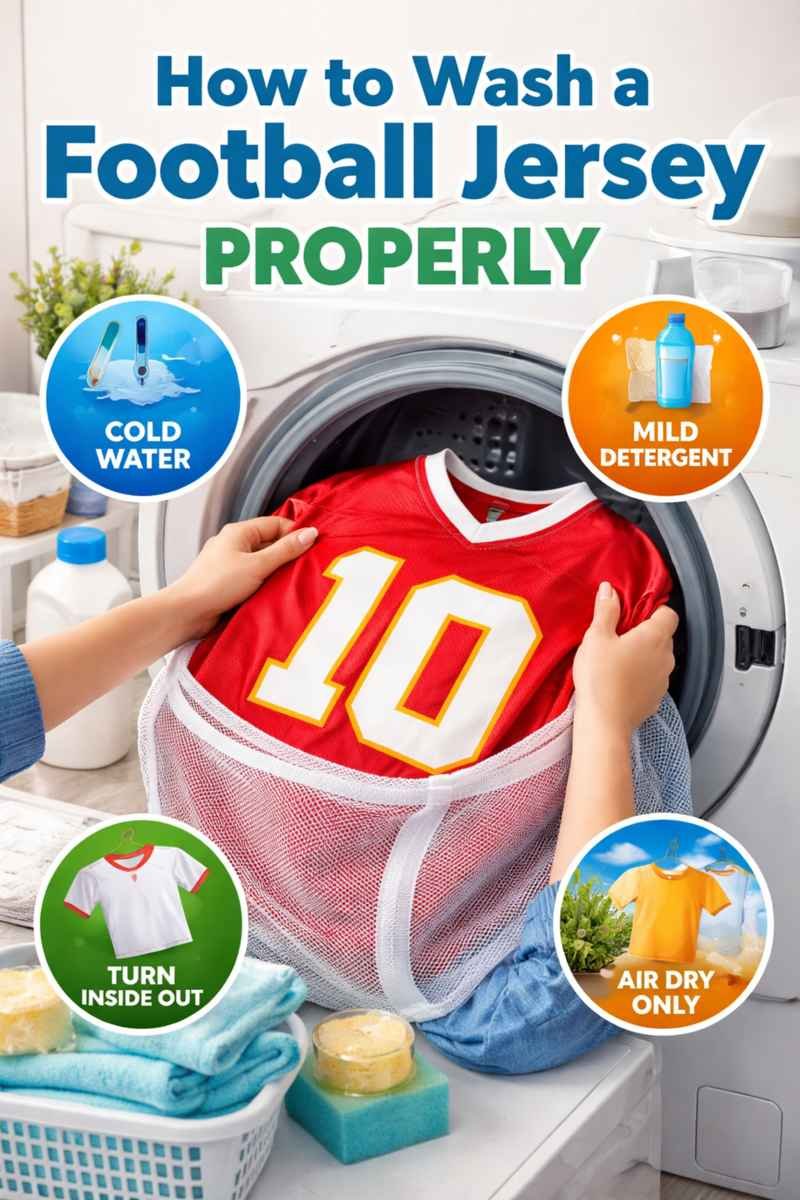
Wash sports jerseys by turning them inside out, using cold water, choosing a gentle cycle, avoiding harsh bleach, and air drying whenever possible to protect fabric, colors, numbers, and logos.
Deal
Today's Exclusive Deals
Limited-time Exclusive Deals. Check current discount on Amazon.
Across the United States, sports jerseys are worn for youth leagues, school teams, college games, professional sports fandom, and everyday casual clothing. These garments often collect sweat, body oils, dirt, and stains during use, but the printed names, numbers, and performance fabrics require careful cleaning.
The safest way to wash a sports jersey is to follow the care label first, then use gentle laundry methods that reduce heat, friction, and chemical exposure. Most modern jerseys made from synthetic fibers can be machine washed, but improper washing can cause fading, peeling graphics, stretching, or fabric damage.
Source: sportszpro.com
Why Sports Jerseys Need Special Washing Care
Sports jerseys are designed for movement, airflow, and durability, but many are made from polyester or blended synthetic fabrics that respond differently from cotton clothing. Heat and strong chemicals can affect fibers, printed graphics, and stitched details.
A jersey may look clean after a game, but sweat and oils can remain trapped in the fabric. Regular washing removes these residues and helps prevent odors from building up over time.
Synthetic materials are common because they dry quickly, but they need gentle care to maintain their structure.
Printed designs
Names, numbers, and logos may loosen or crack when exposed to excessive heat or aggressive washing.
How To Prepare A Sports Jersey Before Washing
Preparation takes only a few minutes but can prevent many common problems. Start by checking the manufacturer’s instructions because some specialty jerseys may require different treatment.
Remove loose dirt and inspect the jersey for stains before placing it in the washer. Treating problem areas early usually works better than trying to remove set-in stains later.
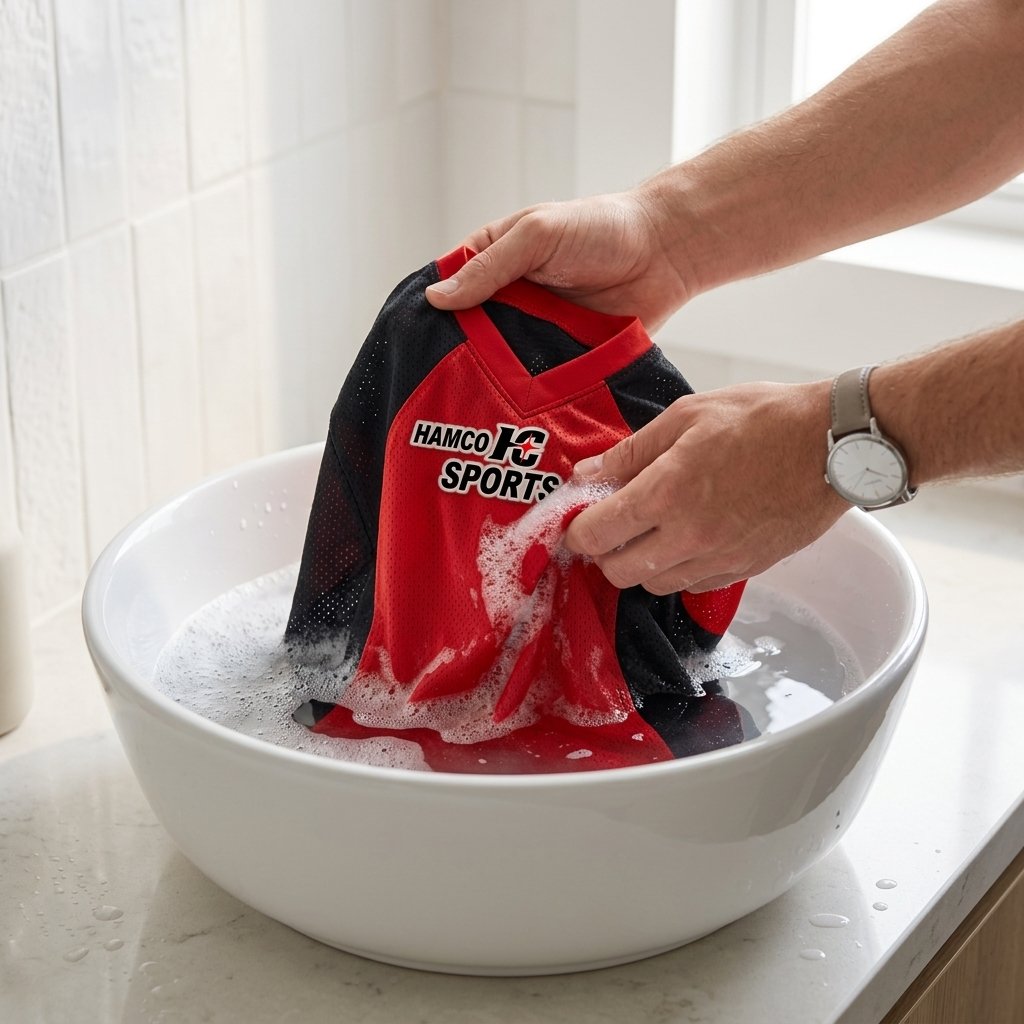
Source: hamcospo.com
Turn the jersey inside out
This reduces direct rubbing on printed graphics and helps protect colors.
Close fasteners
Secure zippers or hook-and-loop parts if the jersey has them.
Separate colors
Wash dark or strongly colored jerseys separately when possible to reduce dye transfer risk.
Removing Common Sports Jersey Stains
Grass, mud, and sweat stains need different approaches. Use a small amount of mild detergent or a fabric-safe stain treatment and gently work it into the area before washing.
Avoid harsh scrubbing
Aggressive rubbing can damage fibers and printed areas.
Step By Step: How To Wash Sports Jerseys
Most washable sports jerseys can be cleaned safely with a simple process. The goal is to remove sweat and dirt while limiting stress on the fabric and graphics.
Use the gentlest settings that still clean the garment. A careful wash routine can extend the usable life of a jersey.
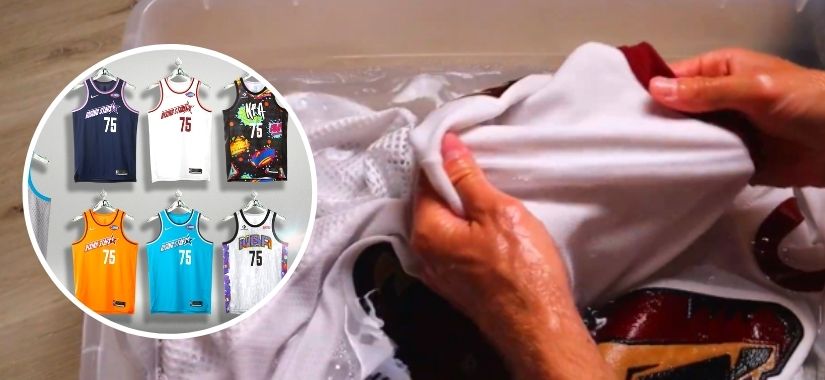
Source: www.youtube.com
Step 1: Use cold water
Cold water helps reduce shrinking, fading, and damage to printed elements.
Step 2: Add mild detergent
Choose a normal gentle detergent and avoid unnecessary additives.
Step 3: Select a gentle cycle
Lower agitation reduces wear on fabric and graphics.
Step 4: Remove promptly
Taking the jersey out after washing helps reduce wrinkles and odor buildup.
Air drying is usually the safest option for sports jerseys because high dryer temperatures can affect synthetic fibers and printed designs. Lay the jersey flat or hang it in a shaded, ventilated area.
Avoid placing jerseys under intense direct heat for long periods because heat may weaken graphics or change the shape of the fabric.
Source: mercht.com
Best drying method
Air drying preserves the jersey’s shape and reduces heat exposure.
Dryer use
If a dryer is necessary, use a low heat setting and remove the jersey quickly.
Frequently Asked Questions
Q
Can you wash sports jerseys in a washing machine?
Yes, many sports jerseys can be machine washed when the care label allows it. Use cold water, mild detergent, and a gentle cycle to reduce wear.
Q
Should you wash a jersey inside out?
Yes. Turning a jersey inside out helps protect printed numbers, names, and logos from friction during washing.
Q
Can you put sports jerseys in the dryer?
A low heat setting may be acceptable for some jerseys, but air drying is generally the safer choice for protecting graphics and fabric.
Q
How often should sports jerseys be washed?
Jerseys worn during games, workouts, or heavy activity should usually be washed after use to remove sweat and odors.
Q
How do you remove smell from a sports jersey?
Wash the jersey promptly with suitable detergent and allow it to dry completely. Persistent odors may require a fabric-safe odor treatment.
✦ Wrapping Up
Conclusion
Washing sports jerseys correctly is mainly about reducing heat, friction, and harsh chemicals. A simple routine of cold water, mild detergent, inside-out washing, and careful drying can help maintain the appearance and function of most jerseys.