
What are compound exercises, and why do they form the backbone of effective fitness programs? Put simply, these movements involve multiple joints and muscle groups working in harmony to move weight.
As of 2026, exercise physiology research consistently highlights that multi-joint movements elicit a greater metabolic response than isolated alternatives. If you want to maximize your training efficiency, understanding how these functional patterns interact is your first step.

Today's Exclusive Deals
Limited-time Exclusive Deals. Check current discount on Amazon.
Check Price on Amazon As an Amazon Associate I earn from qualifying purchases.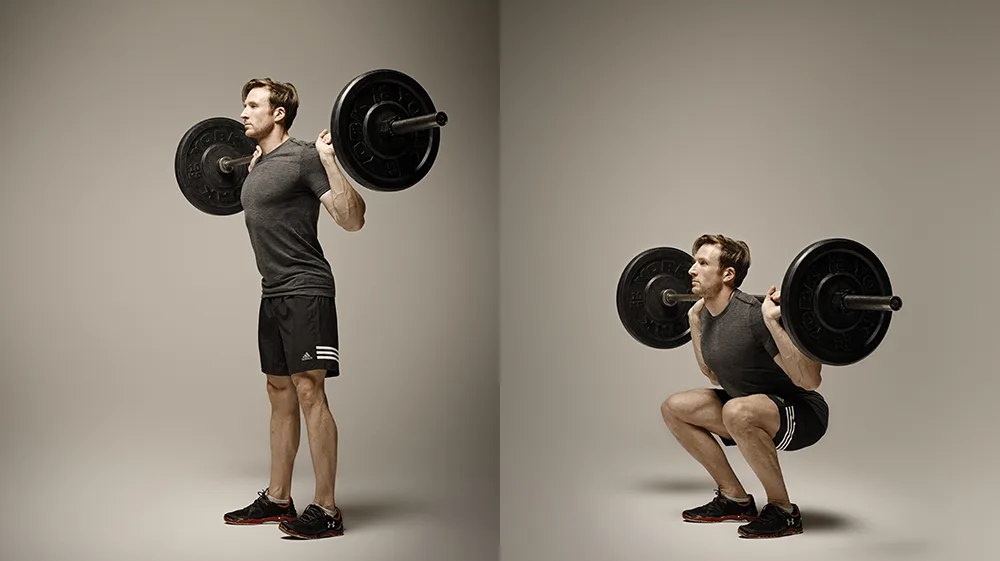
Image source: Bing (Web (fair-use with source credit))
Quick Answer
Compound exercises involve multiple joints and muscle groups simultaneously. They mimic natural human movement patterns like pushing and pulling. These movements build strength and functional capacity efficiently.
They are the most effective way to improve total body coordination.
The Science of Multi-Joint Training: Why Compound Exercises Matter
Compound exercises are the primary driver of strength and functional adaptation in any training regimen. While isolation moves focus on one specific muscle, compound lifts recruit entire chains of musculature to execute a task. This global recruitment forces your body to develop structural integrity rather than just surface-level muscle size.
When you perform a movement like a squat, your brain must coordinate your ankles, knees, and hips while keeping your torso upright. This complexity strengthens your central nervous system, helping you become more proficient at moving weight through space. If you’ve been looking for high-quality gear for your setup, prioritizing movements that demand full-body coordination is the best approach.
Research published by the National Strength and Conditioning Association confirms that multi-joint training promotes superior hormonal responses compared to single-joint work. By challenging your entire body, you trigger a physiological environment that supports recovery and growth. This isn't just about looking better, it's about building a body that can handle the stresses of daily life without breaking down.
Anatomy of a Compound Movement: Kinetic Chains and Coordination
The concept of a kinetic chain is vital to understanding why compound lifts feel so demanding. Your body functions as a series of connected segments, where force generated at the floor must travel through your legs, core, and back to reach the weight. A breakdown in any single link compromises the entire lift.
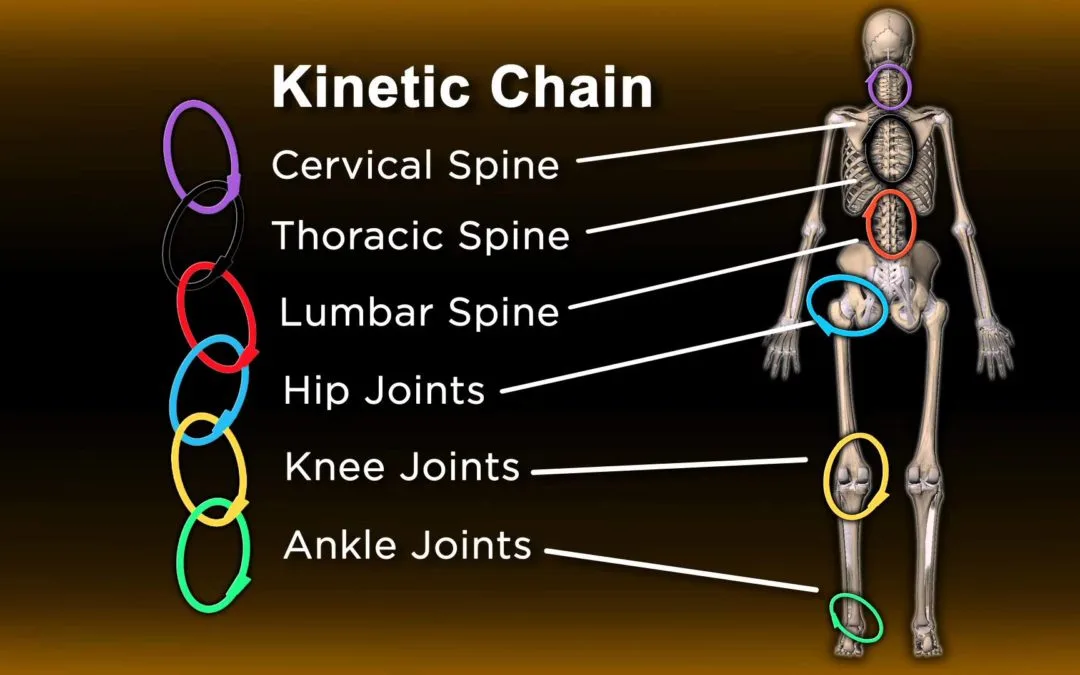
Image source: Web (Bing) / aah.adornomag.com (Web image (fair-use with source credit))
For example, when you perform an overhead press, your feet provide a stable base, your core maintains spinal rigidity, and your shoulders execute the final drive. If your core remains weak, the force generated by your legs never reaches your arms. Developing these connections is why athletes focus on solid equipment for heavy lifting to ensure their kinetic chain remains uninterrupted during intense sessions.
You'll notice that compound moves are often categorized by their primary movement pattern. These include squats, hinges, pushes, pulls, and carries. Each pattern trains a specific way your body interacts with gravity.
By mastering these categories, you ensure that no part of your muscular system is left untrained or underdeveloped.
Physiological Benefits: Beyond Muscle Mass and Caloric Burn
The most immediate benefit of compound exercises is the sheer density of work performed in a short window. Because you are engaging your glutes, back, and core simultaneously, your energy expenditure is significantly higher than during an isolation exercise. This metabolic demand helps improve body composition and cardiovascular stamina concurrently.
Beyond the calorie burn, compound training is essential for bone mineral density. Lifting heavy loads forces your bones to adapt to the stress, becoming stronger and more resilient over time. If you need tools for structural development, compound lifts provide the stimulus required to signal that bone and muscle growth is necessary.
| Benefit Category | Impact of Compound Training |
|---|---|
| Time Efficiency | More muscle worked per minute |
| Functional Strength | Real-world application of power |
| Neurological Load | Improved motor unit recruitment |
| Structural Health | Increased bone density and stability |
Improved inter-muscular coordination is another hidden advantage. Your muscles learn how to talk to each other, improving your balance and grace in everyday activities. This connectivity is the hallmark of true physical fitness that carries over far beyond the gym doors.
Mastering the Big Five: Foundational Movements for Strength
Most experts agree that you only need five fundamental patterns to develop a complete physique. These movements form the bedrock of your program and cover every major muscle group in the human body. Whether you are using reliable gear for beginners, these moves remain the gold standard for progress.
- Squat: Targets your quads and glutes while requiring intense core bracing.
- Hinge (Deadlift): Hits your posterior chain, focusing on the hamstrings and spinal erectors.
- Push (Bench/Overhead Press): Develops the chest, shoulders, and triceps.
- Pull (Rows/Pull-ups): Strengthens the lats, mid-back, and biceps.
- Carry: Builds incredible core stability and grip strength through movement.
If you are just starting out, prioritize consistency over intensity. It is far better to perform a perfect squat with an empty bar than a sloppy one with heavy plates. Once you have durable iron for your sessions, use the same form-first approach to progress through each of these five categories safely.
Risk Mitigation: Form, Bracing, and Avoiding Structural Failure
Because compound exercises involve moving weight through multiple joints, the margin for error is smaller than with isolation work. The primary risk factor is spinal instability. Without proper core engagement, the force of a load can transfer to your lumbar spine, leading to potential strain.
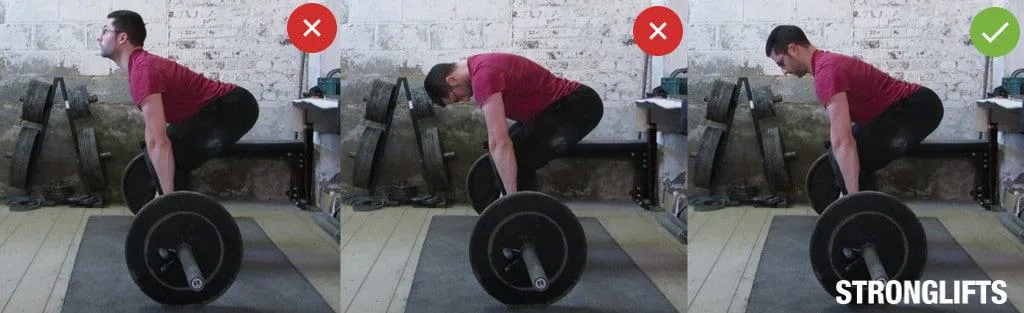
Image source: Web (Bing) / stronglifts.com (Web image (fair-use with source credit))
Before you lift, you must learn to create intra-abdominal pressure, a process often called bracing. Imagine someone is about to punch you in the gut, and tighten your stomach muscles accordingly. This belt of muscle protects your spine and creates a rigid platform for your limbs to push or pull against.
If you are using versatile gym equipment, always treat your bracing as a mandatory part of the set-up.
If you feel sharp or localized pain, stop the set immediately. Compound movements should feel demanding on the muscles, but they should never cause pain in the joints. If you are struggling with your technique, consider lowering the weight or asking a qualified trainer to verify your posture.
Maintaining a neutral spine is the single most important rule for long-term gym success.
Building Your Routine: Prioritizing Movement Patterns Over Isolation
You should structure your workouts by placing the most demanding compound movements at the start of your session. This ensures that your central nervous system is fresh, allowing for better force production and stricter form. If you perform a taxing lift like a barbell squat after you have already exhausted your legs with isolation machines, you significantly increase your injury risk.
Begin your training session with your primary compound lift. Use the middle portion of your workout for secondary compound movements, such as a rows or overhead presses. Save your isolation exercises, like leg extensions or bicep curls, for the final fifteen minutes.
This order protects your performance on the exercises that offer the greatest physical return.
If you are currently building a home setup, remember that versatile options for small spaces can handle these foundational patterns perfectly. You don't need a gym full of machines to build a complete routine. Focus on consistent progress by tracking your lifts over time.
Adding a small amount of weight or performing one extra rep each week creates a compounding effect on your strength.
If you struggle to recover between sessions, adjust your volume rather than your intensity. Compound movements are taxing on your entire body, not just the muscles you feel working. Allow at least one full day of rest between sessions that target the same movement patterns.
This approach ensures you remain capable of hitting your best numbers every time you step into your training area.
FAQs: Troubleshooting Common Concerns and Myths
Are compound exercises enough for complete muscle growth?
Yes, they provide the necessary stimulus for significant muscle growth in most people. By progressively increasing the weight or difficulty, you force your body to adapt and build tissue across multiple muscle groups. Isolation exercises can be useful later to address specific weaknesses, but they are not strictly required for building a strong, capable physique.
How do I know if my form is correct?
Check your form by filming yourself from the side during your sets. Look for a neutral spine and ensure your joints are moving through their intended range without pain. If you see your back rounding or your knees collapsing, reduce the weight immediately.
Seeking feedback from a certified coach is another effective way to ensure your technique is safe and efficient.
Should beginners use heavy weights for these movements?
Beginners should prioritize learning the movement patterns with light weight or just their own body weight. Once you feel confident in your mechanics, slowly introduce external resistance. If you are looking for an ideal starter kit, choose a set that allows for precise, small increases in weight.
This focus on technique will prevent injuries and establish a better foundation for long-term strength.
How many days per week should I do compound lifts?
Most people see the best results training compound movements two to four times per week. This frequency allows for enough stimulus to trigger growth while providing adequate time for recovery. If you find yourself feeling sluggish or if your performance is consistently dropping, increase your rest days.
Consistency over months and years is more important than the exact number of days you lift each week.

