
Tennis is a sport loved by millions around the world. It is fast, exciting, and full of skill. If you are new to tennis, you will often hear the words forehand and backhand. These two strokes are the foundation of almost every rally. Understanding them is not just for players. Even fans and parents watching young athletes need to know what these terms mean. But what exactly is a forehand? How is a backhand different? And why are they so important in tennis?
This article will take you deep into the world of the forehand and backhand. You will learn what these shots are, how they are played, and why every tennis player spends years perfecting them. We will compare the two, look at different techniques, and discuss their role in both beginner and professional matches. You will also discover practical tips and common mistakes, making this guide useful for anyone interested in tennis, whether you want to play or just understand the game better.
Today's Exclusive Deals
Limited-time Exclusive Deals. Check current discount on Amazon.
Check Price on Amazon As an Amazon Associate I earn from qualifying purchases.The Basics: What Is A Forehand In Tennis?
The forehand is usually the first shot beginners learn. It is the most natural way to hit a tennis ball. When you hit a forehand, you swing the racket across your body with your dominant hand. For right-handed players, this means starting on your right side and swinging forward. For left-handed players, it starts on the left.
A forehand is used when the ball comes to the side of your dominant hand. You will see this shot in almost every tennis match, from amateur courts to the finals of Grand Slam tournaments. Most players rely on their forehand for power and control.
How A Forehand Is Played
- Grip: The way you hold your racket is called your grip. There are several forehand grips, but the most common are the Eastern, Semi-Western, and Western grips.
- Stance: Before hitting, you position your feet. The two main stances are open stance (facing the net) and closed stance (side-on to the net).
- Swing: You pull your racket back, rotate your body, and swing forward to meet the ball in front of your body.
- Contact Point: The ball is struck slightly in front of your body at waist height.
- Follow-Through: After contact, your racket continues in the direction you want the ball to go, finishing high.
Why The Forehand Matters
The forehand is usually a player’s strongest shot. It is used to attack, defend, and control rallies. Many players, like Roger Federer and Serena Williams, are famous for their powerful forehands. A strong forehand can decide the outcome of a point.
Today's Exclusive Deals
Limited-time Exclusive Deals. Check current discount on Amazon.
Check Price on Amazon As an Amazon Associate I earn from qualifying purchases.The Basics: What Is A Backhand In Tennis?
The backhand is the shot used when the ball comes to the non-dominant side of your body. For a right-handed player, this means the left side. Unlike the forehand, the backhand is less natural for most people. It can be played with either one hand or two hands.
Even though the backhand is harder for beginners, it is just as important as the forehand. Some players have world-class backhands, using them to hit winners and control the game.
How A Backhand Is Played
- Grip: There are different grips for one-handed and two-handed backhands. The Eastern backhand grip is common for one hand. For two hands, players use a mix of forehand and backhand grips.
- Stance: Like the forehand, you can use an open or closed stance. Most players prefer a closed stance for more control.
- Swing: You pull the racket back with your non-dominant hand helping (in two-handed shots). The swing is more across the body compared to the forehand.
- Contact Point: The ball is hit in front of the body, usually at waist or hip height.
- Follow-Through: The racket finishes across the body or over the shoulder.
Why The Backhand Matters
A good backhand keeps your opponent guessing. It helps you defend against attacks and can surprise with sudden power. Players like Novak Djokovic and Justine Henin are known for their strong backhands.
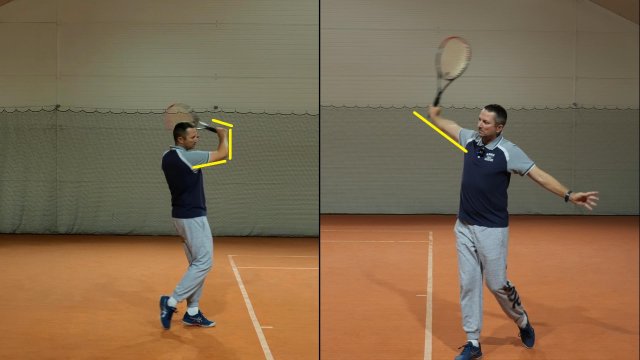
Key Differences Between Forehand And Backhand
It’s easy to mix up these two shots if you are new to tennis. Here is a clear comparison to help understand the main differences:
Today's Exclusive Deals
Limited-time Exclusive Deals. Check current discount on Amazon.
Check Price on Amazon As an Amazon Associate I earn from qualifying purchases.| Feature | Forehand | Backhand |
|---|---|---|
| Side of Body | Dominant (right for right-handers) | Non-dominant (left for right-handers) |
| Number of Hands | Usually one | One or two |
| Natural Movement | More natural | Less natural |
| Power Potential | Generally higher | Varies by style |
| Common Errors | Overhitting, wrist flicks | Lack of follow-through, late contact |
Understanding these differences helps you see why players train both shots. Relying on only one makes it easy for opponents to exploit your weakness.
Types Of Forehand And Backhand Techniques
Modern tennis offers many ways to hit a forehand and backhand. These variations help players adapt to different situations and court surfaces.
Forehand Techniques
- Flat Forehand: The ball is hit with little spin, traveling fast and low.
- Topspin Forehand: The racket brushes up the back of the ball, making it spin forward. This is the most popular forehand in today’s game.
- Slice Forehand: The racket moves down behind the ball, creating backspin. Used for low balls or approach shots.
- Inside-Out Forehand: The player runs around the backhand to hit a forehand from the other side, aiming cross-court.
Backhand Techniques
- One-Handed Backhand: Only one hand holds the racket during the swing. Allows for reach and variety but needs strength and timing.
- Two-Handed Backhand: Both hands on the racket. Offers more control and stability, especially for beginners.
- Topspin Backhand: Adds heavy spin for safety and bounce.
- Slice Backhand: Uses backspin to keep the ball low and force errors.
- Drive Backhand: A flat backhand hit with force, often down the line.
Each technique has strengths and weaknesses. Top players choose the style that matches their body and strategy.
The History And Evolution Of Forehand And Backhand
Tennis has changed a lot over the years. Early rackets were made of wood, and the game was slower. The forehand was often hit with a continental grip, which is rarely seen in modern tennis. The backhand was usually one-handed, as two-handed backhands were not common until the 1970s.
Today, advances in racket technology, string material, and training methods have transformed both shots. The semi-western and western forehand grips give players more spin and power. The two-handed backhand, popularized by players like Bjorn Borg and later Andre Agassi, became the standard for most young players. Now, the variety in techniques is greater than ever.
The Role Of Forehand And Backhand In Match Play
Both shots are used in every rally, but their role can change depending on the player and the situation.
- Offense: Players use the forehand to attack, hit winners, and force errors. The backhand is used for sharp angles and unexpected attacks.
- Defense: A solid backhand helps players survive when under pressure. Slices and defensive lobs are often played with the backhand.
- Transition: During quick exchanges, players need to switch smoothly between forehand and backhand. Footwork becomes crucial.
For example, Rafael Nadal is famous for running around his backhand to hit a forehand. In contrast, Novak Djokovic uses his backhand to control rallies and break down opponents.
How To Improve Your Forehand And Backhand
Getting better at these shots takes time and practice. Here are some proven ways to improve:
- Grip Practice: Make sure your grip is correct for each shot. Practice changing grips quickly between points.
- Shadow Swings: Swing your racket without a ball to build muscle memory.
- Wall Practice: Hit against a wall to increase consistency.
- Footwork Drills: Use ladder drills or cone drills to improve movement. Good footwork means you reach the ball in the best position.
- Video Analysis: Record yourself and compare with professionals. Notice differences in swing, stance, and follow-through.
- Consistency Rallies: Rally with a partner, aiming for 10–20 shots in a row without mistakes.
- Use Targets: Place cones or markers on the court to practice hitting specific areas.
Practical Tip: Focus On Contact Point
Many beginners miss the sweet spot because they are late or too early. Always watch the ball and meet it slightly in front of your body. This small detail can double your power and control.
Practical Tip: Relax Your Grip
Tight muscles slow your swing. Hold the racket firmly but not too tight. This helps generate more speed and reduces injuries.
Common Mistakes With Forehand And Backhand
Even experienced players make mistakes with these shots. Here are some common errors and how to avoid them:
Forehand Mistakes
- Overusing the wrist: Leads to loss of control and injuries.
- Swinging too late: Causes weak shots or mishits.
- Standing flat-footed: Makes it hard to move for the next shot.
Backhand Mistakes
- Poor grip: Using a grip that is too close to forehand or not stable.
- Not using body rotation: Only using arms leads to weak shots.
- Short follow-through: Stops the racket too soon, losing power.
How To Fix These Mistakes
- Work with a coach for feedback.
- Practice slow swings focusing on the correct technique.
- Use video or mirrors to check your form.

Famous Players And Their Signature Shots
Looking at professional players can inspire and teach us a lot about the forehand and backhand.
- Roger Federer: Known for his elegant one-handed backhand and explosive forehand.
- Serena Williams: Powerful forehand, often used to finish points quickly.
- Novak Djokovic: Consistent and accurate two-handed backhand.
- Rafael Nadal: Heavy topspin forehand, especially strong on clay courts.
- Justine Henin: One of the best one-handed backhands in women’s tennis.
Watching their matches and practice sessions can provide valuable insights. Many clips are available online for analysis and learning.
Drills For Mastering Forehand And Backhand
Training is essential to master any skill in tennis. Here are some drills to build a solid forehand and backhand:
- Cross-Court Rally Drill: Rally with a partner, each hitting only forehands or backhands cross-court. This builds consistency and accuracy.
- Down-the-Line Drill: Practice hitting down the line to improve your ability to change direction.
- Approach and Volley Drill: Hit a forehand or backhand, then move forward to the net for a volley. This improves transition play.
- Live Ball Drill: Play points with a partner, focusing on using both forehand and backhand equally.
- Spin Variation Drill: Alternate between topspin and slice to develop control over different spins.
Make sure to warm up before these drills and start slowly, increasing speed as you improve.

Physical And Mental Aspects Of Forehand And Backhand
Tennis is not just about technique. Your body and mind play a big role in how well you hit these shots.
Physical Factors
- Core Strength: Both shots require strong core muscles for rotation and balance.
- Flexibility: Flexible shoulders and wrists allow for smoother swings.
- Endurance: Long rallies test your fitness.
Mental Factors
- Confidence: Trusting your shot helps you play your best.
- Focus: Watching the ball closely, blocking out distractions.
- Tactics: Knowing when to use forehand or backhand for best results.
Many top players use visualization and breathing techniques before hitting important shots. This helps them stay calm and focused under pressure.
Equipment And Its Effect On Forehand And Backhand
Your choice of racket and strings can affect your shots more than you might think.
| Feature | Effect on Forehand | Effect on Backhand |
|---|---|---|
| Racket Weight | Heavier rackets add power | Lighter rackets offer more maneuverability |
| Grip Size | Right size improves control | Too large/small reduces comfort |
| String Tension | Looser strings for more power | Tighter strings for more control |
| Racket Head Size | Bigger head gives bigger sweet spot | Smaller head requires more precision |
If you are just starting, choose a racket with a larger head and lighter weight. This will help you learn both forehand and backhand without getting tired too quickly.
The Importance Of Footwork And Positioning
Many players focus only on the swing but forget about their feet. Good footwork is what puts you in position to hit a strong forehand or backhand.
- Split Step: A small jump before your opponent hits the ball. It prepares you to move quickly in any direction.
- Side Steps: Used to adjust your position without crossing your feet.
- Crossover Steps: Larger steps for quick movement across the court.
Practicing footwork is as important as practicing swings. Many coaches spend entire lessons on movement drills for this reason.
Adapting Forehand And Backhand For Different Surfaces
Tennis is played on many surfaces, like hard courts, clay, and grass. Each surface changes how the ball bounces and moves.
- Hard Courts: Medium bounce, suits both topspin and flat shots.
- Clay Courts: High bounce, longer rallies. Topspin forehands and backhands are very effective here.
- Grass Courts: Low, fast bounce. Slice shots and quick reactions are important.
Players often adjust their technique and grip slightly for each surface. For example, on clay, players use more topspin and stand further behind the baseline.
Non-obvious Insights Most Beginners Miss
- Recovery After the Shot: Many new players forget to return to a ready position after hitting a forehand or backhand. This leaves them out of place for the next shot. Always recover quickly to the center of the baseline.
- Using the Non-Dominant Hand: On the forehand, the non-dominant hand helps balance and guides the racket back. On the two-handed backhand, it provides much of the power. Train both hands, not just your dominant one.
Real-world Example: A Forehand And Backhand Battle
In the 2012 Australian Open final, Novak Djokovic and Rafael Nadal played one of the longest and toughest matches ever. Both used their forehands and backhands to break down each other’s defense. Nadal often used his heavy topspin forehand to push Djokovic wide. Djokovic replied with deep, consistent backhands, turning defense into attack.
This match shows how important both shots are—not just for scoring points, but for building a strategy and winning at the highest level.
When To Use Forehand Vs. Backhand
Most players prefer their forehand for attacking shots. However, a strong backhand can be a big weapon, especially against players who always target your weaker side. At higher levels, players must be able to use both shots equally well. The decision often depends on the situation:
- Forehand: Used for powerful shots, open court, and attacking weak returns.
- Backhand: Used for returning serves, defending, and surprising opponents with sharp angles.
Knowing when to use each shot is a sign of an experienced player.
Learning Resources And Further Reading
If you want to go deeper, there are many great books, online courses, and coaching videos available. The International Tennis Federation (ITF) website has guides and tips for all skill levels. Watching professional matches with slow-motion replay can also help you understand the subtle differences between forehand and backhand techniques.
For further technical details and player statistics, visit the official Wikipedia Tennis Page.
Frequently Asked Questions
What Is The Difference Between A Forehand And A Backhand In Tennis?
A forehand is hit on the dominant side of your body, usually with one hand. A backhand is hit on the non-dominant side, using either one or two hands. The movement, grip, and feel of each shot are different.
Which Is Easier To Learn, Forehand Or Backhand?
Most people find the forehand easier at first because it feels more natural. The backhand can be harder, especially with one hand, but it becomes easier with practice.
Can You Play Tennis With Only A Forehand Or Backhand?
No. To play tennis well, you need both forehand and backhand. If you only use one, opponents will quickly target your weaker side and win points easily.
Why Do Some Players Use A One-handed Backhand?
Some players prefer the one-handed backhand for its reach and flexibility. It allows more variety, but it requires more strength and timing compared to the two-handed backhand.
How Can I Improve My Forehand And Backhand Quickly?
Focus on correct technique, practice regularly, and work on your footwork. Using video analysis and drills with a coach can also speed up improvement.
Tennis is a game of skill, strategy, and constant learning. By mastering the forehand and backhand, you take your first big step towards enjoying and understanding this wonderful sport. Whether you play for fun or dream of playing like the pros, these two shots will always be at the heart of your game.

