
Are Electric Paddle Board Pumps Rechargeable?
Electric paddle board pumps are becoming more popular among stand-up paddleboard (SUP) enthusiasts. These pumps offer a fast, easy way to inflate your board without the effort needed for manual pumping. But with so many devices going wireless today, one big question comes up: Are electric paddle board pumps rechargeable? Understanding the answer is key for anyone who wants more freedom on the water and less hassle with cords or car batteries.
Let’s dive into the world of electric paddle board pumps. We’ll look at how they work, what types are available, the benefits and limitations of rechargeable models, and what you should consider before buying. You’ll also see real-world examples, practical advice, and expert tips most beginners miss.

Today's Exclusive Deals
Limited-time Exclusive Deals. Check current discount on Amazon.
Check Price on Amazon As an Amazon Associate I earn from qualifying purchases.If you want to know whether you can leave the car behind and pump up your SUP anywhere, this is for you.
How Do Electric Paddle Board Pumps Work?
Electric paddle board pumps use a small motor powered by electricity to move air into your inflatable SUP. Instead of manual effort, you just connect the hose, set your desired pressure (usually in PSI), and let the pump do the work.
Most pumps have an automatic shut-off feature to prevent over-inflation.
There are two main types of electric paddle board pumps:
- Corded pumps – These connect to a power source, usually your car’s 12V outlet or a wall socket.
- Rechargeable pumps – These have a built-in battery you can charge at home and use anywhere.
Both types can fully inflate a paddle board in about 8-15 minutes, depending on the size and desired PSI. Most paddle boards require 12-18 PSI for proper rigidity.
Are Electric Paddle Board Pumps Rechargeable?
The short answer: Yes, many electric paddle board pumps are rechargeable. But not all models offer this feature. The market has evolved quickly, and more brands now offer pumps with built-in lithium-ion batteries. These allow you to inflate your board at the beach, by the lake, or even on a camping trip—no car required.
How Do Rechargeable Pumps Work?
Rechargeable electric pumps have a battery inside. You charge the pump at home using a wall adapter, USB-C, or sometimes a car charger. When you need to inflate your SUP, just switch on the pump and it draws power from its internal battery.
Most rechargeable pumps can inflate 1-3 boards on a single charge, depending on the battery size and board volume. After that, you’ll need to recharge the pump before the next use.
Types Of Electric Paddle Board Pumps
To help you compare your options, here’s a look at the main types of pumps and their power sources:
| Type | Power Source | Portability | Typical Use |
|---|---|---|---|
| Corded (Car) | 12V Car Socket | Medium | Inflating near car |
| Corded (Wall) | AC Wall Outlet | Low | Home/garage |
| Rechargeable | Built-in Battery | High | Anywhere, beach, remote spots |
Rechargeable pumps are the most portable. You don’t need to park close to the water or carry heavy batteries. But battery life and recharging times are important to consider.
Key Features Of Rechargeable Electric Paddle Board Pumps
Not all rechargeable pumps are the same. Here are the most important features to check:
1. Battery Capacity
This is measured in milliamp hours (mAh) or watt-hours (Wh). Higher numbers mean more power. A 6000mAh battery can usually inflate 2-3 medium-sized SUPs on one charge.
2. Inflation Speed
Good rechargeable pumps reach full pressure (15 PSI) in 8-12 minutes. Cheaper models might take longer or struggle with higher pressures.
3. Automatic Shut-off
Most quality pumps let you set your target PSI. The pump stops automatically when it reaches the set pressure, protecting your board.
4. Weight And Size
Lighter pumps are easier to carry but may have smaller batteries. Always check the weight if you hike to the water.
5. Multiple Nozzle Attachments
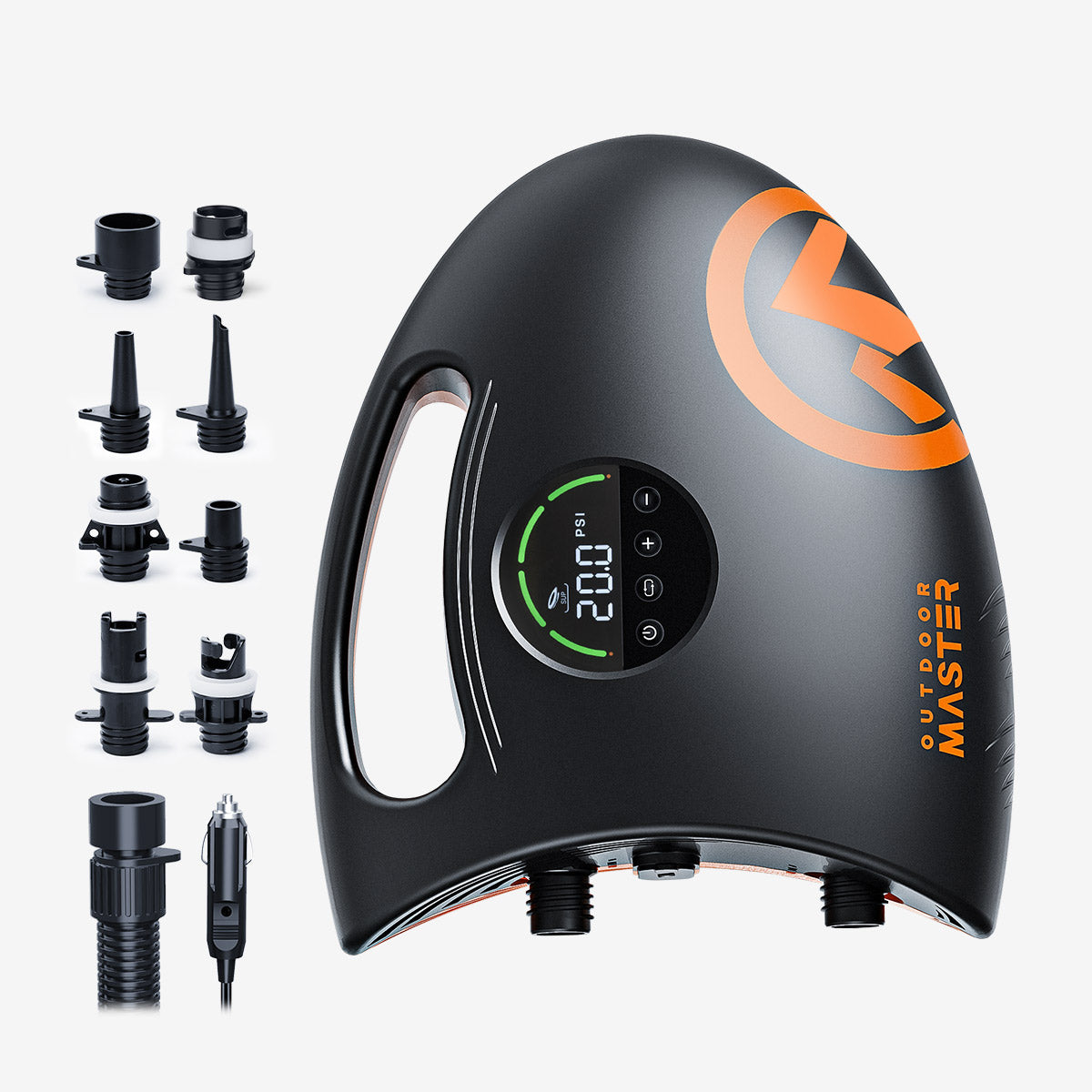
The best pumps work with SUPs, kayaks, and other inflatables. Look for a set of nozzles to fit different valves.
6. Recharge Options
Some pumps support USB-C charging or even solar charging, which is useful for long trips.
Advantages Of Rechargeable Paddle Board Pumps
Choosing a rechargeable electric pump offers several clear benefits:
- True Portability: You don’t need your car nearby. Inflate your SUP anywhere, whether it’s a remote lake or an island.
- Convenience: No hunting for power outlets or worrying about car battery drain.
- Faster Setup: While manual pumps can take 10-20 minutes and a lot of effort, electric pumps get you on the water quickly with little sweat.
- Safety: Automatic shut-off protects your board from over-inflation.
- Multi-use: Many rechargeable pumps can also deflate your board, making packing easier.
Limitations And Common Mistakes
While rechargeable pumps offer freedom, they do have some drawbacks.
Battery Life
Most rechargeable pumps can inflate 1-2 SUPs per charge. If you have a group or need to inflate multiple boards, you might run out of power. Beginners sometimes assume a single charge will last all day. Always check the battery specs.
Recharging Time
Charging a pump from empty can take 2-5 hours depending on the model and charger. If you forget to recharge after a day out, you could be stuck next time.
Inflation Power
Some cheaper rechargeable pumps struggle to reach high pressures (over 15 PSI), especially as the battery drains. If your board needs 18 PSI, choose a pump with strong reviews for high-pressure performance.
Overheating
Continuous use can make pumps hot. Most have automatic shut-offs if they overheat, but it’s smart to let your pump rest after inflating one board.
Tip: Don’t expect rechargeable pumps to be as fast or powerful as the best corded models. They’re built for convenience, not speed records.
Comparing Popular Rechargeable Pumps
To help you see how rechargeable pumps stack up, here’s a comparison of three well-known models:
| Model | Battery Capacity | Inflation Speed | Max PSI | No. of Boards per Charge |
|---|---|---|---|---|
| OutdoorMaster Shark II | 6000mAh | ~10 min (15 PSI) | 20 | 2 |
| SereneLife SLPUMP25 | 4000mAh | ~12 min (15 PSI) | 16 | 1-2 |
| NIXY Ventus | 8000mAh | ~8 min (15 PSI) | 20 | 3 |
Note: Data is based on manufacturer specs and real user feedback.
What To Consider Before Buying A Rechargeable Pump
If you’re thinking about buying a rechargeable electric paddle board pump, pay attention to these factors:
Your Typical Paddle Location
If you always launch near your car, a corded pump might be enough. But if you hike to remote spots, a rechargeable model gives you true freedom.
Board Size And Pressure
Larger boards or those needing high PSI (like racing SUPs) need more powerful pumps with bigger batteries. Check your board’s manual for required PSI.
Group Size
Do you paddle solo, or with friends and family? If you often inflate several boards, look for a pump with enough battery capacity or plan to recharge between uses.
Charging Options
Some rechargeable pumps only accept wall charging. Others allow car or even solar charging. USB-C is convenient if you travel or camp.
Durability And Warranty
Look for pumps with a solid build, good reviews, and at least a one-year warranty. Water-resistance is a plus for use near lakes and beaches.
Noise Level
Electric pumps can be loud (70-90 dB). If you prefer quiet mornings, consider models with lower noise ratings.
Real-world Example: A Day With A Rechargeable Pump
Imagine you’re paddling at a quiet mountain lake, with no car access. You hike in with your inflatable SUP and a lightweight rechargeable pump. After a 20-minute walk, you set up by the water. In ten minutes, your board is inflated to 15 PSI, no sweat or struggle.
You paddle all day, deflate your board with the same pump, and hike out easily.
With a corded pump, this would be impossible. A rechargeable model turns remote locations into your own SUP playground.
Non-obvious Insights Most Beginners Miss
- Battery Storage Matters: Storing your rechargeable pump in hot cars or direct sunlight can damage the battery over time. Keep your pump cool and dry between uses for longer life.
- Deflation Is a Hidden Perk: Many rechargeable pumps have a deflate mode. This makes packing your board much faster and helps you roll it tightly for easy transport.
- Check Valve Compatibility: Not all pumps fit every board. Double-check that your pump’s nozzles match your SUP’s valve type before buying.
- Partial Charging Is Okay: Unlike old batteries, lithium-ion batteries in modern pumps don’t need to fully drain before recharging. Topping up the charge is safe and extends battery life.
When A Rechargeable Pump Might Not Be Best
- If you always paddle with a large group, or run SUP rentals, corded pumps (with unlimited power) may be better.
- In very cold conditions, battery performance can drop. Consider a backup manual pump if you’re paddling in winter.
- For extended trips without power (multi-day camping), bring a solar charger or car adapter, or consider a hybrid pump.
Environmental Impact
Rechargeable pumps are better for the environment compared to single-use batteries or gas-powered pumps. Their lithium-ion batteries last years if cared for. However, when the battery eventually dies, it’s important to recycle it properly.

Rechargeable Pump Maintenance Tips
- Charge after every use, but don’t overcharge.
- Store in a cool, dry place, away from direct sunlight.
- Clean sand and salt from nozzles after beach use.
- Check the air hose for cracks or leaks.
- Recharge every 2-3 months even if not used, to keep the battery healthy.
Frequently Asked Questions
Can A Rechargeable Paddle Board Pump Inflate Multiple Boards On One Charge?
Most models can inflate 1-3 boards per charge, depending on the battery size and board volume. Always check manufacturer specs and reviews for real-world performance.
How Long Does It Take To Recharge A Paddle Board Pump?
Charging usually takes 2-5 hours from empty, depending on the charger and battery size. Some pumps support fast charging via USB-C.
Are Rechargeable Pumps As Powerful As Corded Ones?
Generally, corded pumps have more power and can inflate faster or handle higher pressures. However, high-end rechargeable models now perform almost as well for most SUP needs.
Can I Use A Rechargeable Pump For Other Inflatables?
Yes, most rechargeable pumps include several nozzles for kayaks, air mattresses, and other inflatables. Always check valve compatibility.
Where Can I Find More Technical Info About Electric Pumps?
For detailed technical data and SUP pump standards, visit Wikipedia’s SUP page.
Electric paddle board pumps are now available in convenient, rechargeable models that make your paddling adventures easier and more flexible. By understanding your needs and the features available, you can choose a pump that fits your paddling style and enjoy every trip to the water, wherever it takes you.