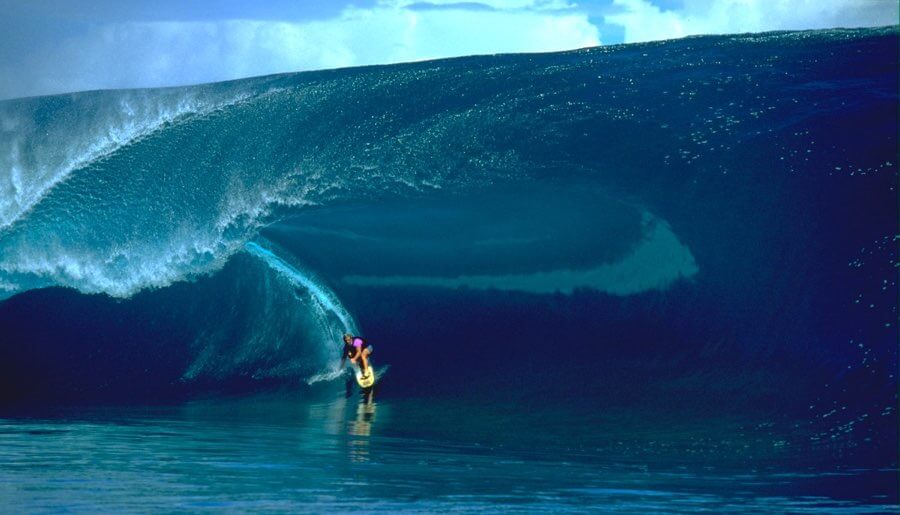
Big wave surfing is a thrilling and dangerous sport that pushes the limits of human skill and courage. Surfers chase gigantic waves, sometimes as tall as a five-story building, in some of the most powerful oceans on Earth. But there is much more to big wave surfing than just size.

Exclusive Deals
Limited-time Exclusive Deals. Check current discount on Amazon.
Check Price on Amazon As an Amazon Associate I earn from qualifying purchases.The sport has a deep history, unique techniques, and a dedicated community that takes both risk and preparation seriously. In this article, you will discover what big wave surfing really means, how it has evolved, what skills and equipment are needed, and why it captures the imagination of people around the world.
What Defines Big Wave Surfing?
At its core, big wave surfing means riding ocean waves that are much larger than what most surfers face. But how big is “big”? Most experts agree that a wave must be at least 20 feet (6 meters) high to count as a big wave. Some waves can reach 60 feet (18 meters) or more. These aren’t the gentle rollers seen at a typical beach. Instead, they are powerful walls of water, often found in only a few special locations on Earth.
Unlike regular surfing, where paddling is enough to catch a wave, big wave surfing sometimes needs extra help. Many surfers use jet skis to tow themselves into huge waves—a technique called “tow-in surfing.” This is because it’s often impossible to paddle fast enough to catch these giant waves before they break.
Exclusive Deals
Limited-time Exclusive Deals. Check current discount on Amazon.
Check Price on Amazon As an Amazon Associate I earn from qualifying purchases.The History And Evolution Of Big Wave Surfing
Big wave surfing began to take shape in the 1950s in Hawaii. Surfers like Greg Noll and George Downing started testing their abilities on the massive winter waves at Waimea Bay and Sunset Beach. Back then, boards were heavy and made of wood, which made control difficult and dangerous.
In the 1990s, the sport changed forever with the invention of tow-in surfing. Pioneers like Laird Hamilton, Buzzy Kerbox, and Darrick Doerner used jet skis to pull themselves into waves at places like Jaws (Peahi) in Maui. This technique allowed them to ride waves previously thought impossible.
Today, big wave surfing has grown into a global sport, with competitions, sponsorships, and a new generation of athletes. Technology, training, and safety equipment have all improved, but the spirit of adventure remains the same.
Exclusive Deals
Limited-time Exclusive Deals. Check current discount on Amazon.
Check Price on Amazon As an Amazon Associate I earn from qualifying purchases.Where Are The World’s Biggest Waves?
Big wave surfing is not possible everywhere. The right conditions—deep water, powerful storms, and unique underwater features—create the world’s most famous big wave spots.
| Location | Country | Wave Height (ft) | Best Season |
|---|---|---|---|
| Jaws (Peahi) | Hawaii (USA) | 60+ | November-March |
| Nazare | Portugal | 80+ | October-March |
| Mavericks | California (USA) | 60+ | November-March |
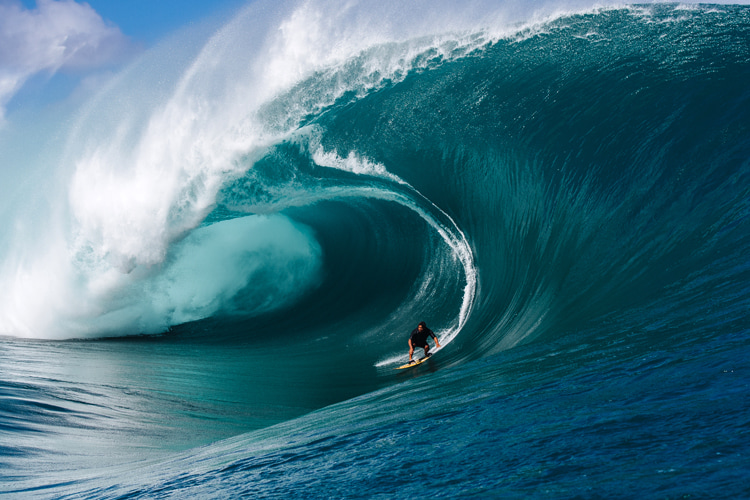
| Teahupo’o | Tahiti (French Polynesia) | 30+ | May-October |
| Shipstern Bluff | Australia | 30+ | March-October |
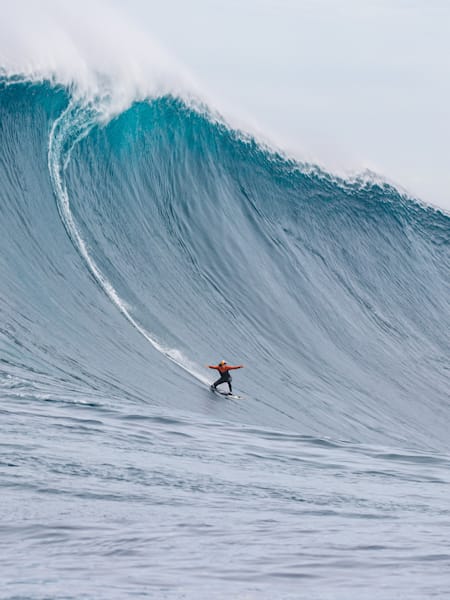
Each location has its own dangers. For example, Nazare is famous for producing the biggest surfable waves in the world, but strong currents and unpredictable walls of water make it extremely risky.
The Science Behind Giant Waves
Big waves are not just random. They are the result of several natural factors working together:
- Storms: Powerful storms far out at sea create energy that travels as swells.
- Ocean Floor: The shape of the seabed, or “reef,” can focus and lift swells into giant waves.
- Wind: Local winds can shape the face of the wave, making it cleaner or messier.
A key factor is bathymetry, which is the study of the underwater depth of lake or ocean floors. For example, at Nazare, a deep canyon funnels water and energy, creating record-breaking waves.
Essential Equipment For Big Wave Surfing
Riding giant waves requires special gear. The right equipment can mean the difference between life and death.
Surfboards
Big wave boards, called “guns,” are longer (8 to 12 feet), heavier, and have a pointed nose. This helps with speed and stability on steep, fast waves. For tow-in surfing, boards are shorter and have foot straps for control.
Personal Safety Gear
- Inflatable Vests: These can be triggered to help surfers float to the surface after a wipeout.
- Leashes: Heavy-duty cords attach the surfer to the board but can be released in an emergency.
- Helmets: Protect against hitting the board or reef.
Communication And Rescue Tools
- Jet Skis: Used for towing and rescue.
- Radios: For communication among the rescue team.
- Flares: In case of emergency.
Many beginners overlook the importance of backup safety plans. Even with the best equipment, having a skilled rescue team ready is essential.
Training And Physical Preparation
Big wave surfers must be in top physical and mental shape. Unlike regular surfing, the risks are much higher.
Physical Strength And Endurance
Surfers need strong core muscles, powerful legs, and excellent cardio fitness. Holding your breath for long periods is critical because wipeouts can keep a person underwater for 30 seconds or more. Some train with techniques like static apnea to improve lung capacity.
Mental Preparation
Courage is important, but so is a calm mind. Surfers practice visualization, meditation, and even panic control exercises to stay focused under stress. Understanding ocean patterns and reading waves accurately can prevent deadly mistakes.
A common mistake is underestimating the mental challenge. Many skilled athletes fail in big waves because fear and confusion overwhelm them during wipeouts.
Dangers And Risks Of Big Wave Surfing
Big wave surfing is one of the most dangerous sports in the world. The risks include:
- Drowning: Being held underwater by multiple waves, sometimes called a “two-wave hold-down.”
- Impact with the Reef or Ocean Floor: Many big wave locations break over sharp coral or rocks.
- Board Injuries: At high speeds, the board itself can cause serious injury.
- Collisions: Crowded lineups or rescue vehicles can be dangerous.
- Shark Encounters: Some spots are in shark habitats.
| Risk | How Surfers Prepare |
|---|---|
| Drowning | Breath-holding training, safety vests, rescue teams |
| Reef Impact | Wearing helmets, studying the break, precise navigation |
| Board Injuries | Using leashes, learning safe falling techniques |
| Collisions | Clear communication, rescue protocols |
What many people miss is the aftershock of wipeouts. Some surfers report memory loss, panic attacks, or even PTSD after severe accidents.
Competitions And Notable Events
Big wave surfing has its own competitive scene. Events are not always held every year—they depend on the right wave conditions.
Key Big Wave Events
- The Eddie Aikau Invitational (Hawaii): Only held when Waimea Bay gets waves over 20 feet Hawaiian scale (about 40 feet face).
- Nazare Tow Surfing Challenge (Portugal): Teams use jet skis to surf and rescue.
- Mavericks Invitational (California): Known for cold water and huge, unpredictable waves.
- Billabong XXL Awards: Not a single event, but yearly awards for the biggest and best rides worldwide.
Some events are so dangerous that only invited surfers with proven skill are allowed to enter.
The Role Of Technology And Innovation
Technology has shaped big wave surfing in surprising ways:
- Wave Forecasting: Websites and apps use satellite data to predict when and where big waves will hit.
- Safety Vests: New designs inflate quickly and give extra buoyancy.
- Board Materials: Modern boards use lightweight, strong materials like carbon fiber.
- Drones: Used for filming and rescue observation.
A practical example is the use of GPS trackers. Surfers can now be located quickly if they disappear under the waves, saving lives.
Famous Big Wave Surfers
Some athletes have become legends for their performances on the world’s biggest waves:
- Laird Hamilton: Pioneer of tow-in surfing and one of the sport’s most influential figures.
- Garrett McNamara: Rode a 100-foot wave at Nazare, setting a world record.
- Maya Gabeira: Holds the record for the largest wave surfed by a woman (73.5 feet at Nazare).
- Greg Long: Known for his calm approach and multiple big wave victories.
- Kai Lenny: A new generation star, skilled in both paddle and tow-in surfing.
What sets these surfers apart is not just bravery but preparation and respect for the ocean.
Why Big Wave Surfing Captures The Imagination
Big wave surfing is more than a sport. It is a test of human limits, a dance with nature’s most powerful forces. The sight of a tiny surfer dropping into a mountain of water inspires awe and fear in equal measure.
Two insights most beginners overlook:
- Teamwork is Essential: Even though one person rides the wave, big wave surfing is a team sport. The best surfers rely on safety crews, spotters, and support.
- Respect for Nature: The ocean cannot be controlled. The best big wave surfers know when to walk away if conditions are too dangerous.
Surfing giant waves is not about conquering nature but learning to work with it. The most successful athletes understand the ocean’s moods and have the humility to wait for the right moment.
Frequently Asked Questions
What Is Considered A Big Wave In Surfing?
A big wave is usually defined as any wave at least 20 feet (6 meters) high on the face. However, some spots like Nazare regularly produce waves much larger than this.
How Do Surfers Survive Wipeouts On Big Waves?
Surfers use inflatable vests, special breathing training, and rely on rescue teams with jet skis. Staying calm and conserving energy underwater is critical for survival.
Where Are The Best Places In The World For Big Wave Surfing?
Famous spots include Jaws (Hawaii), Nazare (Portugal), Mavericks (California), Teahupo’o (Tahiti), and Shipstern Bluff (Australia). Each place has unique challenges and dangers.
Can Beginners Try Big Wave Surfing?
No, big wave surfing is only for very experienced surfers. Beginners should start on smaller waves, build skills, and learn ocean safety before even considering big waves.
Where Can I Learn More About Big Wave Surfing History And Records?
For more details, check the Wikipedia entry on big wave surfing, which offers a deep look at the sport’s history, records, and notable athletes.
Big wave surfing will always be a mix of skill, preparation, and respect for nature. For those drawn to it, the rewards go beyond adrenaline—they are about understanding the ocean, pushing personal limits, and joining a unique global community.