
What Is A Surf Break?
Surfing is more than just riding waves. It’s about understanding the ocean, reading the water, and finding the best spots to catch that perfect wave. When surfers talk about a “surf break,” they are describing a place where waves form in a way that’s ideal for surfing.

Exclusive Deals
Limited-time Exclusive Deals. Check current discount on Amazon.
Check Price on Amazon As an Amazon Associate I earn from qualifying purchases.But what makes a surf break special? It’s not just the wave itself. It’s the shape of the sea floor, the direction of the wind, the tides, and even the history of the location. This article will take you deep into the meaning of a surf break, explaining the science, types, and why some breaks become legendary.
Whether you’re new to surfing or just curious about the ocean, you’ll discover everything you need to know about surf breaks right here.
The Meaning Of A Surf Break
A surf break is a spot in the ocean where waves consistently form and break, creating conditions suitable for surfing. The term covers both the physical location and the wave itself. Surf breaks are shaped by various factors, including underwater geography, wind patterns, and tides. Not every wave is surfable; only those that break in a certain way, creating a rideable face, are considered surf breaks.
Exclusive Deals
Limited-time Exclusive Deals. Check current discount on Amazon.
Check Price on Amazon As an Amazon Associate I earn from qualifying purchases.Surfers often use the word “break” to mean two things:
- The place where waves break (location)
- The actual breaking wave (wave)
Understanding what makes a surf break involves looking at both nature and science. The ocean floor, called the bathymetry, is especially important. It determines how the incoming waves behave. For example, a sandy bottom will produce different waves than a rocky reef.
How Surf Breaks Form
Nature creates surf breaks through a mix of geology, tides, and weather. Here’s what happens:
Exclusive Deals
Limited-time Exclusive Deals. Check current discount on Amazon.
Check Price on Amazon As an Amazon Associate I earn from qualifying purchases.- Swells travel across the ocean, generated by distant storms.
- As they reach shallow water near the coast, the wave energy interacts with the sea floor.
- The shape and depth of the bottom cause the wave to slow down and rise up.
- Eventually, the wave becomes unstable and breaks, forming the rideable face.
The exact spot where the wave breaks depends on the underwater features:
- Sandbars
- Rocky reefs
- River mouths
- Man-made structures
Wind also plays a role. Offshore winds (blowing from land to sea) help shape clean, surfable waves. Onshore winds (blowing from sea to land) can make waves messy and hard to ride.
Main Types Of Surf Breaks
Surf breaks come in many forms. The three most common are beach breaks, reef breaks, and point breaks. Each offers a unique surfing experience.
Beach Breaks
These breaks occur where waves break over a sandy bottom, usually along a beach. The sand moves with tides and storms, so the shape of the waves can change often. Beach breaks are popular with beginners because they’re generally safer and less predictable.
Examples:
- Bondi Beach in Australia
- Huntington Beach in California
Reef Breaks
Reef breaks form over coral or rocky reefs. The underwater structure stays constant, so waves break in the same way every time. Reef breaks often produce powerful, hollow waves, making them favorites for experienced surfers.
Examples:
- Pipeline in Hawaii
- Teahupo’o in Tahiti
Point Breaks
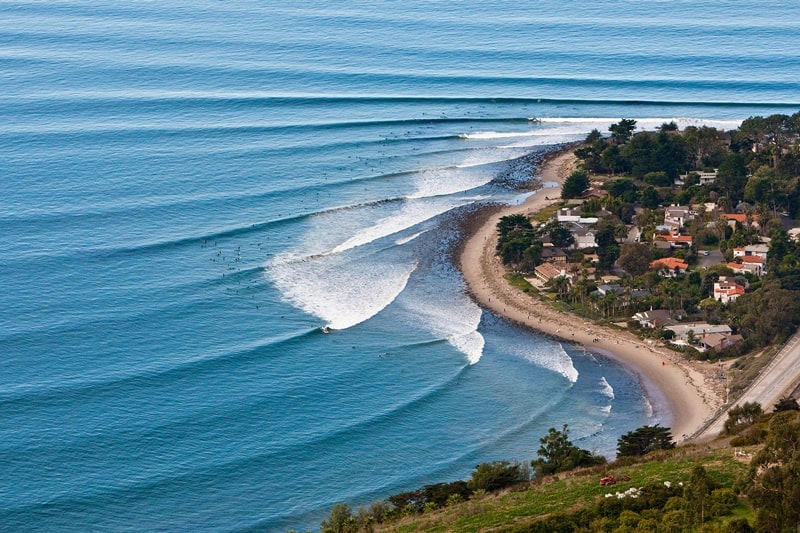
Point breaks happen when waves hit a land point, such as a headland or peninsula, and wrap around it. The waves break along the shoreline, often creating long rides.
Examples:
- Rincon in California
- Jeffreys Bay in South Africa
Rivermouth Breaks
These occur where rivers meet the sea. The river deposits sand or sediment, forming sandbars that produce unique waves. Rivermouth breaks can be very good for surfing, but conditions change often.
Examples:
- Trestles in California
Artificial Breaks
Humans can create surf breaks by building structures like piers, jetties, or artificial reefs. These breaks offer consistency and can help protect natural breaks.
Examples:
- Wave pools (like Surf Ranch in California)
- Artificial reefs in Queensland, Australia
Comparing Surf Break Types
Surfers choose breaks based on their skill level, wave quality, and local conditions. Here’s a comparison of the main break types:
| Break Type | Bottom Structure | Wave Consistency | Difficulty | Famous Examples |
|---|---|---|---|---|
| Beach Break | Sand | Variable | Beginner to Intermediate | Bondi Beach, Huntington Beach |
| Reef Break | Rock/Coral | High | Advanced | Pipeline, Teahupo’o |
| Point Break | Rock/Sand | Medium to High | Intermediate to Advanced | Rincon, Jeffreys Bay |
| Rivermouth Break | Sand/Sediment | Variable | Intermediate | Trestles |
| Artificial Break | Man-made | High | All levels | Surf Ranch, Queensland Reefs |
Key Factors That Affect Surf Break Quality
Not every surf break is equal. Some produce clean, powerful waves, while others are unpredictable. Here are the main factors that influence surf break quality:
Bathymetry
The bathymetry is the shape and depth of the ocean floor. Steep changes in depth create fast, hollow waves. Gentle slopes make slower, rolling waves.
Swell Direction And Period
Waves come from different directions. A surf break works best when the swell comes from the right angle. The swell period (time between waves) also matters; longer periods mean bigger, more powerful waves.
Wind
Offshore winds help create clean waves with smooth faces. Onshore winds make waves choppy and messy. Local wind conditions can change quickly.
Tide
Tides change the depth of water over the break. Some breaks work best at high tide, others at low. Knowing the right tide is critical for good surfing.
Human Impact
Construction, pollution, and sand mining can harm surf breaks. Artificial structures sometimes help but can also damage natural breaks.
Famous Surf Breaks Around The World
Some surf breaks are legendary. They attract surfers from everywhere, and many have unique histories. Here are a few of the most famous:
- Pipeline (Hawaii) – Known for its powerful, hollow waves over a shallow reef. Pipeline is dangerous but offers some of the best barrels in the world.
- Teahupo’o (Tahiti) – Famous for its heavy, thick waves. The break is so intense that it’s often called the world’s most dangerous wave.
- Jeffreys Bay (South Africa) – Offers long, fast rides. J-Bay is a classic point break and hosts world championships.
- Rincon (California) – Called “The Queen of the Coast,” Rincon delivers long rides and consistent waves.
- Uluwatu (Bali) – Known for its beautiful scenery and powerful reef waves.
- Trestles (California) – A rivermouth break with high-quality, consistent waves.
Each break has its own personality, shaped by nature and culture. Some are crowded, others are secret. Surfers often travel thousands of kilometers to visit these spots.
The Science Behind Surf Breaks
Waves are created by wind blowing over the ocean. The energy travels as swells across huge distances. When a swell reaches the coast, the underwater landscape decides how the wave will break.
Scientists use tools like sonar and satellite mapping to study surf breaks. They look at:
- Depth changes
- Sediment movement
- Water temperature
- Local climate patterns
Modern technology helps surfers predict when a break will be at its best. Websites and apps share live data on swell size, wind direction, and tides.
Here’s a simple data table showing how different factors affect wave quality:
| Factor | Positive Effect | Negative Effect |
|---|---|---|
| Bathymetry | Creates powerful waves | Can cause waves to close out |
| Swell Direction | Brings ideal waves | Misses the break, weak waves |
| Wind | Offshore = clean faces | Onshore = messy waves |
| Tide | Right tide = perfect shape | Wrong tide = flat or dangerous |
Surf Breaks And Local Community
Surf breaks are important to local communities. They bring tourism, jobs, and culture. Many towns are famous because of their surf breaks. However, this popularity can bring challenges:
- Overcrowding
- Environmental damage
- Rising costs for locals
Some places protect their breaks with strict rules. For example, in some parts of Australia, local surfers have priority during crowded sessions. Community groups often work to keep breaks clean and safe.

Non-obvious Insights About Surf Breaks
Most beginners think every wave is surfable. In reality, only certain waves break in ways that allow surfing. Even at famous locations, conditions can change daily. A surf break that’s perfect in the morning might be flat or dangerous by afternoon.
Another insight: The quality of a surf break isn’t just about the wave. It’s also about access, safety, and local respect. Some breaks are hard to reach, requiring a hike or boat trip. Others are easy but crowded. Knowing how to read conditions, respect locals, and stay safe is as important as finding a good wave.
How To Choose The Right Surf Break
If you’re planning to surf, picking the right break is key. Here’s how:
- Skill Level – Beginners should start at soft, sandy beach breaks. Advanced surfers can handle reef or point breaks.
- Wave Type – Some breaks offer gentle waves; others are fast and powerful. Match the wave to your ability.
- Crowds – Popular breaks can be crowded. If you want space, look for less-known spots.
- Access – Some breaks require special access. Make sure you know how to get there safely.
- Conditions – Check the swell, wind, and tide before you go. Use surf forecasting tools for the latest info.
The Future Of Surf Breaks
Climate change, rising sea levels, and human activity are changing surf breaks worldwide. Some breaks are disappearing, while new ones are forming. Artificial wave pools are becoming popular, offering perfect waves in controlled environments.
Research groups and local organizations work to protect natural surf breaks. Surfing has also become a sport in the Olympics, increasing global interest and investment.
For more on the science and preservation of surf breaks, see Wikipedia: Surf Break.
Frequently Asked Questions
What Makes A Surf Break Good For Surfing?
A good surf break has the right combination of wave shape, consistency, and safety. Factors like bathymetry, swell direction, wind, and tide all help create ideal waves.
Can Surf Breaks Disappear?
Yes. Surf breaks can change or vanish due to storms, human construction, erosion, or rising sea levels. Sandbars and river mouths are especially vulnerable.
Are Reef Breaks More Dangerous?
Usually, yes. Reef breaks have hard, shallow bottoms. This makes the waves powerful but increases the risk of injury.
How Do I Find Out If A Surf Break Is Crowded?
Surf websites and apps offer live crowd reports. Local surf shops and community boards also give advice on the best times to avoid crowds.
Do Artificial Surf Breaks Offer Real Surfing?
Artificial breaks, like wave pools, produce real waves for surfing. While they lack the natural ocean experience, they offer consistency and safety.
Surf breaks are the heart of surfing. Each break is unique, shaped by nature and culture. By understanding what makes a surf break, you can find better waves, stay safer, and enjoy the ocean with respect. Whether you’re a beginner or an expert, the world of surf breaks offers endless discovery and adventure.


