
Cricket is a game of passion, skill, and strategy. But while the players often take center stage, there’s another figure whose role is just as critical to the spirit and fairness of the game—the umpire. Many newcomers to cricket wonder: what exactly does the umpire do? Is their role limited to making calls on outs, or is there much more behind the scenes? Understanding the full scope of an umpire’s responsibilities is essential for anyone who wants to truly appreciate cricket.
Umpires are not just rule enforcers. They are the guardians of the game’s spirit, safety, and integrity. Their decisions can turn the tide of a match, and their presence ensures that both teams compete on a level playing field. This article takes a deep look into the role of the umpire in cricket, covering every aspect from decision-making to match management, and even technology use. Whether you are a budding player, an eager fan, or just starting to explore the world of cricket, this guide will give you a complete understanding of what makes the umpire so vital.
Who Is An Umpire In Cricket?
An umpire in cricket is an official responsible for enforcing the laws of the game on the field. Each match typically has two on-field umpires, and for international matches, there’s often a third umpire who assists with technology-based decisions. The umpires act as neutral judges, making sure the match runs fairly and smoothly.
Umpires are selected based on their experience, knowledge, and ability to handle pressure. At the top level, they are part of the International Cricket Council (ICC) Elite Panel, but every level of cricket, from school matches to international games, relies on umpires.
Primary Duties Of The Umpire
The umpire’s responsibilities go far beyond simply signaling “out” or “not out. ” Let’s break down the main duties.
1. Making Decisions On The Field
The most obvious role of the umpire is to make impartial decisions according to the laws of cricket. This includes:
- Deciding if a batsman is out (caught, bowled, LBW, run out, etc.)
- Judging whether a ball is legal (no-ball, wide, dead ball)
- Awarding runs, extras, and penalties
Umpires must make these decisions in real time, sometimes under intense pressure from players and spectators.
2. Managing The Match
Umpires control the flow of the game. They:
- Signal the start and end of play
- Oversee breaks (drinks, lunch, tea)
- Ensure that both teams follow the schedule
If weather or bad light affects the match, umpires decide when to pause or resume play. Their management keeps the game running efficiently.
3. Ensuring Player Safety
Cricket balls are hard and can be dangerous. Umpires check if the pitch is safe and the light is good enough to continue. If conditions become risky (e. g. , rain, poor visibility), they can stop play to protect players.
4. Enforcing Fair Play
Umpires watch for unsportsmanlike behavior like sledging (verbal abuse), ball tampering, or time-wasting. They have the power to warn, penalize, or even remove players who break the spirit of the game.
Non-obvious insight: Umpires are also trained to detect subtle actions that may indicate cheating, such as bowlers altering their bowling action or fielders distracting batsmen.
Different Types Of Umpires And Their Roles
Cricket matches often involve more than just the two umpires on the field. Here’s a look at the various roles.
On-field Umpires
There are always two on-field umpires:
- Bowler’s End Umpire: Stands behind the stumps at the bowler’s end. Makes most decisions related to bowling, dismissals, and pitch conditions.
- Square Leg Umpire: Stands at square leg (side of the pitch). Watches for run outs, stumpings, and certain no-balls (like overstepping).
Third Umpire (tv Umpire)
The third umpire sits off the field, watching replays on TV. They assist with close decisions using technology, such as run outs, stumpings, and boundary calls.
Fourth Umpire
In major matches, a fourth umpire helps with logistics, like bringing new balls or replacing injured umpires. They rarely make decisions but are crucial for smooth operations.
Match Referee
While not technically an umpire, the match referee oversees the conduct of the game and handles disciplinary actions. They work closely with the umpiring team.
Key Decisions Made By Umpires
Certain decisions can dramatically change the direction of a cricket match. Here are some of the most important calls an umpire must make.
Out And Not Out
Umpires decide if a batsman is out in various ways:
- Bowled: Ball hits the stumps and dislodges the bails.
- Caught: Ball is caught by a fielder without touching the ground.
- Leg Before Wicket (LBW): Ball would have hit the stumps but is blocked by the batsman’s leg.
- Run Out: Fielder breaks the stumps before the batsman completes a run.
- Stumped: Wicketkeeper removes the bails while the batsman is out of his crease.
Each mode of dismissal requires the umpire to observe closely and apply the rules precisely.
No-ball, Wide, And Dead Ball
- No-ball: Umpires check if the bowler oversteps the crease, bowls above waist height, or breaks other bowling rules.
- Wide: Ball is too wide for the batsman to reach.
- Dead Ball: Ball is not in play due to interruptions.
Power To Overrule
If the two on-field umpires disagree, the one with the better view makes the call. In some cases, the third umpire’s decision is final.
Umpire Signals And Their Meanings
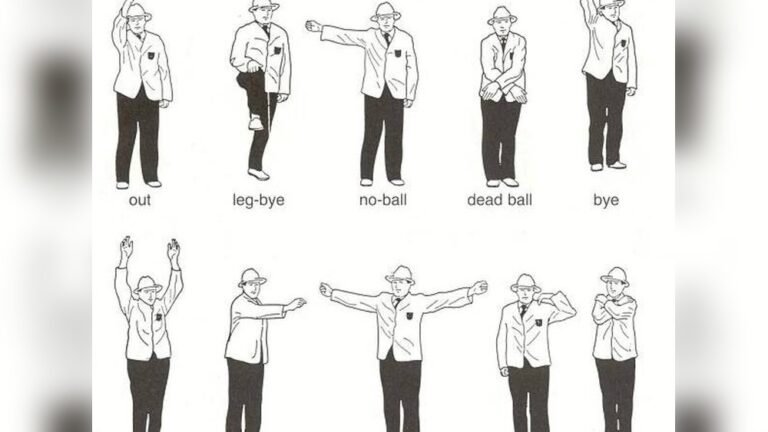
Umpires use hand signals to communicate their decisions to players, scorers, and spectators. These signals are standardized worldwide.
Here’s a comparison of common umpire signals:
| Signal | Meaning | How It’s Shown |
|---|---|---|
| Raised Index Finger | Out | Finger raised above head |
| Both Arms Outstretched | Wide Ball | Arms stretched horizontally |
| One Arm Extended | No Ball | Arm held horizontally |
| Hand Tapping Shoulder | Short Run | Hand taps opposite shoulder |
| Both Hands Raised | Six Runs | Arms raised straight above head |
These signals help everyone follow the umpire’s decisions, even in noisy stadiums.
Use Of Technology In Umpiring
Modern cricket uses technology to help umpires make accurate decisions. This partnership between human judgment and technology is crucial in high-stakes matches.
Third Umpire And Tv Replays
When an on-field decision is too close to call, the third umpire checks slow-motion replays. Examples include:
- Close run outs
- Stumpings
- Catches near the ground or boundary
Decision Review System (drs)
Teams can challenge (review) certain umpire decisions. The DRS uses:
- Hawk-Eye (ball tracking)
- UltraEdge/Snickometer (detects faint edges)
- Hot Spot (infrared imaging)
If evidence shows the decision was wrong, it can be overturned.
Umpire Communication Systems
Umpires wear headsets to talk with each other and the third umpire. This avoids confusion and speeds up play.
Non-obvious insight: Technology does not remove the need for umpire skill—many calls still depend on how well the umpire interprets video evidence and applies the rules.

How Umpires Prepare For Matches
Umpiring requires preparation, not just knowledge of the laws. Before a match, umpires:
- Inspect the pitch and outfield
- Check playing conditions (weather, light)
- Meet captains to discuss match rules and expectations
- Review any special regulations (e.g., powerplays in limited overs cricket)
Umpires must also keep up with rule changes. For example, the ICC regularly updates playing conditions, and umpires must adapt quickly.
Challenges Faced By Umpires
Umpiring is a tough job. Some of the main challenges include:
- Making split-second decisions with limited time
- Handling pressure from players, coaches, and crowds
- Keeping focus for long hours (a test match lasts up to five days!)
- Managing heated situations, such as disputes or sledging
Mistakes are sometimes unavoidable, but top umpires are respected for their consistency and calm under pressure.

How Umpires Are Evaluated
Umpires are regularly assessed on their performance. In international cricket, the ICC reviews every match using:
- Accuracy of decisions
- Control of the match
- Communication with players
- Use of technology
Those who perform well stay at the top; mistakes can lead to demotion.
Qualities Of A Good Umpire
Great umpires are more than rule experts. They need:
- Confidence to make tough calls
- Concentration for long periods
- Physical fitness to move quickly and stay alert
- Communication skills to deal with players and officials
- Integrity to avoid bias or outside pressure
Many top umpires, like Simon Taufel and Aleem Dar, are admired for their professionalism and fairness.
Famous Umpires In Cricket History
Some umpires have become legends in their own right. A few notable examples:
- Dickie Bird: Famous for his gentle style and consistency.
- Steve Bucknor: Known as the “slow finger of death” for his calm, measured calls.
- Aleem Dar: Holds the record for most international matches umpired.
- Simon Taufel: Won multiple ICC Umpire of the Year awards.
Their careers show that umpires can have a lasting impact on cricket history.
How Umpiring Differs Across Formats
The umpire’s role is similar in all formats, but there are key differences.
| Format | Main Challenges | Unique Duties |
|---|---|---|
| Test | Maintaining focus for five days | Handling changing light, pitch wear |
| One Day International (ODI) | Fast scoring, more appeals | Monitoring fielding restrictions, powerplays |
| T20 | Very fast pace, noisy crowds | Frequent boundary checks, quick decisions |
Shorter formats put more pressure on umpires to make instant calls, while longer games test their endurance and consistency.

The Spirit Of Cricket And The Umpire’s Role
Cricket is unique for its emphasis on fair play and respect—known as the “Spirit of Cricket.” Umpires are the main protectors of this spirit. Their conduct sets the tone for the match.
If a player argues or acts unfairly, the umpire is expected to calm the situation with authority but also fairness. For example, when a batsman is unsure about a dismissal, the umpire’s clear, calm explanation can prevent arguments.
Non-obvious insight: Umpires often use “soft skills” like tone of voice, body language, and quiet reminders to guide players’ behavior—skills that aren’t written in any rulebook.
How To Become A Cricket Umpire
Many fans dream of standing in the middle of a packed stadium, making key decisions. The path to becoming an umpire involves:
- Learning the Laws: Start with the official MCC Laws of Cricket.
- Taking Exams: Most countries have umpiring courses and tests.
- Gaining Experience: Officiate at local matches to build confidence.
- Climbing the Ladder: Perform well and move to higher levels—district, state, national, then international.
Each step requires not just knowledge but also the ability to handle pressure and communicate clearly.
For more information, the official MCC Laws of Cricket are a great resource: MCC Laws of Cricket.
Frequently Asked Questions
What Powers Do Umpires Have In Cricket?
Umpires have full authority to enforce all cricket laws during a match. They can stop play, award penalties, change the ball, and even remove players for serious offenses.
Can An Umpire Change Their Decision?
Yes, if an umpire realizes a mistake before the next ball is bowled, they can change the decision. Technology (DRS) also allows certain decisions to be reviewed and overturned.
How Do Umpires Communicate With Each Other?
Umpires use hand signals, eye contact, and, in higher-level matches, wireless headsets. They meet before the match to agree on signals and discuss special cases.
Are Umpires Paid Professionals?
At the international level, umpires are well-paid professionals. In domestic and local cricket, payment varies depending on the match level and country.
What Happens If An Umpire Is Injured During A Match?
If an umpire is injured and cannot continue, the fourth umpire (if available) or a replacement from the ground staff will take over for the rest of the match.
Cricket umpires are much more than rule enforcers—they are the game’s silent guardians. Their decisions, presence, and conduct shape every match, ensuring cricket remains fair, safe, and deeply respected by all who play and watch. Understanding their role brings a new level of appreciation for the game and those who dedicate their lives to it.
