
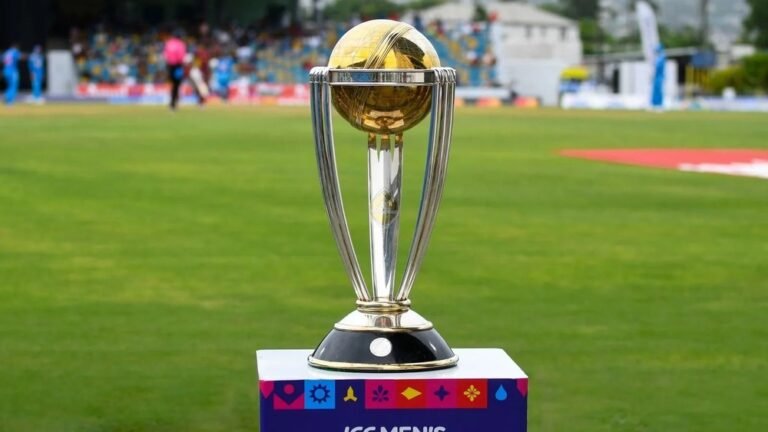
The ICC Cricket World Cup is more than just a tournament; it’s the most prestigious event in the world of cricket. Every four years, nations come together to compete for the ultimate prize. For players, winning the World Cup is a lifelong dream. For fans, it is a festival of excitement, hope, and pride. But what makes the ICC Cricket World Cup so special? Why do billions of people tune in to watch? Let’s explore the story, structure, and significance of this global spectacle.
What Is The Icc Cricket World Cup?
The ICC Cricket World Cup is an international cricket competition organized by the International Cricket Council (ICC). It features the top men’s national teams from around the world, competing in the One Day International (ODI) format. In ODIs, each team faces a set number of overs, usually 50, and the side with the most runs at the end wins. The first tournament was held in 1975 in England, and since then, it has grown into one of the world’s most-watched sporting events.
The History And Evolution
Cricket had a long tradition before the World Cup. However, the idea of a global competition only became real in the 1970s. The inaugural event, in 1975, featured just eight teams. England hosted the first three tournaments, using 60-over matches played in traditional white clothing with red balls.
Over the decades, the World Cup has changed in many ways:
- The number of teams increased, bringing in new nations.
- The format evolved (group stages, knockouts, super six, super eight, round robin).
- Colored clothing and white balls replaced the old style from 1992.
- Day-night matches and better technology (like Decision Review System) were added.
The tournament’s growth mirrored cricket’s global expansion. Today, the World Cup is broadcast to over 200 countries and watched by millions.

Tournament Format And Structure
The structure of the ICC Cricket World Cup is designed to find the best team in the world. While the format has changed over the years, the goals remain the same: fairness and excitement.
Qualification Process
Not every cricketing nation plays in the World Cup. Teams must qualify by playing a series of matches before the main event. The top-ranked teams (according to ICC rankings) get a direct entry. Others compete in qualifying tournaments, where only the best advance.
Main Event Format
The main tournament usually includes 10 to 16 teams. The format can change, but here’s a common structure:
- Group Stage: Teams are divided into groups. Each team plays others in its group.
- Super Stage: The top teams from each group move to the next round (Super Six/Eight or quarter-finals).
- Knockout Rounds: The top teams play elimination matches—quarter-finals, semi-finals, and final.
For example, the 2019 World Cup used a round-robin format, where all teams played each other. The top four moved to semi-finals.
Match Rules
World Cup matches are ODIs. Each team bats for up to 50 overs (unless bowled out early). The team with the most runs wins. If rain interrupts, the Duckworth-Lewis-Stern (DLS) method decides the result.
Memorable Moments And Records
The World Cup has produced many legendary moments. Here are some highlights:
- Kapil Dev’s 175 in 1983: * A stunning innings that helped India win its first World Cup.
- Javed Miandad’s last-ball six (1986): A dramatic finish, still talked about today.
- Australia’s three-peat (1999, 2003, 2007): Dominance by one nation.
- Sachin Tendulkar’s runs: He is the all-time top scorer in World Cup history.
- 2019 Final: England won after a tied match and a dramatic Super Over.
Let’s compare some of the leading run-scorers in World Cup history:
| Player | Country | Matches | Runs |
|---|---|---|---|
| Sachin Tendulkar | India | 45 | 2,278 |
| Ricky Ponting | Australia | 46 | 1,743 |
| Kumar Sangakkara | Sri Lanka | 37 | 1,532 |
| Brian Lara | West Indies | 34 | 1,225 |
Impact On Players And Nations
Winning or even performing well in the ICC Cricket World Cup can change a player’s life and a nation’s sporting history.
- Players: Success brings fame, endorsements, and a place in history. For example, MS Dhoni’s winning six in 2011 made him a national hero in India.
- Nations: A win can boost cricket’s popularity and inspire new generations. Sri Lanka’s surprise victory in 1996 made cricket the number one sport in the country.
For many countries, the World Cup is a chance to show their talent to the world. Smaller teams, like Kenya (semi-finalists in 2003), have used the tournament to gain respect.
How The World Cup Differs From Other Tournaments
Many international cricket tournaments exist, but the ICC Cricket World Cup is unique.
- Frequency: Held every four years, making it special.
- Global Reach: All cricketing nations compete for qualification.
- Prestige: Winning the World Cup is the highest honor in ODI cricket.
Here’s a quick comparison of the World Cup with other major cricket tournaments:
| Tournament | Format | Frequency | Prestige |
|---|---|---|---|
| ICC Cricket World Cup | ODI (50 overs) | Every 4 years | Highest |
| ICC T20 World Cup | T20 (20 overs) | Every 2-4 years | High |
| Champions Trophy | ODI (50 overs) | Irregular | Medium |
The Role Of The Icc
The International Cricket Council (ICC) is the governing body that oversees the World Cup. It decides the rules, format, qualification process, and hosts. The ICC also manages the tournament’s commercial rights, ensuring fair play and anti-corruption measures.
One thing beginners often miss is the huge role the ICC plays in growing cricket globally. The World Cup is used to promote cricket in new countries. For example, the 2007 World Cup included teams like Ireland and Bermuda, helping the sport grow outside its traditional base.
Economic And Social Impact
The World Cup is not just a cricket event—it has huge economic and social effects.
- Host Countries: Hosting brings tourism, jobs, and infrastructure. For example, the 2011 World Cup boosted hotel business in India, Sri Lanka, and Bangladesh.
- TV and Sponsorship: Billions of dollars flow in through sponsorships and broadcasting rights. In 2019, global viewership crossed 1.6 billion people.
- Social Unity: The tournament unites diverse populations, breaking barriers of race, religion, and class. It sparks national pride.
A non-obvious insight: Cricket boards often use World Cup money to fund grassroots cricket, improving facilities for young players.
Women’s Icc Cricket World Cup
While most talk is about the men’s tournament, the Women’s ICC Cricket World Cup is also highly respected. It began in 1973, even before the men’s event. Women’s cricket is growing fast, and recent finals have attracted huge crowds and TV audiences.
Here’s a look at the last five Women’s World Cup champions:
| Year | Winner | Runner-Up | Host |
|---|---|---|---|
| 2022 | Australia | England | New Zealand |
| 2017 | England | India | England |
| 2013 | Australia | West Indies | India |
| 2009 | England | New Zealand | Australia |
| 2005 | Australia | India | South Africa |
Fan Culture And Global Reach
No discussion of the ICC Cricket World Cup is complete without talking about the fans. Cricket fans are among the most passionate in the world. During the tournament, stadiums fill up, and millions gather in front of TVs or stream matches online.
- Fan Zones: Many host cities set up special areas where fans watch together.
- Rivalries: Matches like India vs Pakistan draw record audiences.
- Celebrations: Winning nations celebrate with parades, fireworks, and public holidays.
A non-obvious fact: Some fans travel thousands of kilometers just to watch their team play live, making the World Cup a global travel event.

Challenges And Controversies
Like any major event, the World Cup faces challenges:
- Weather: Rain can disrupt matches, causing frustration.
- Scheduling: Long tournaments can tire players and fans.
- Controversial Decisions: Umpiring and technology (like DRS) sometimes lead to debates.
- Security: Ensuring safety for players and fans is a big task, especially with large crowds.
Despite these challenges, the tournament’s appeal remains strong.
The Future Of The Icc Cricket World Cup
Cricket is always changing, and so is the World Cup. The ICC is considering:
- Expanding the number of teams again to include more countries.
- More use of technology, like real-time stats and improved decision systems.
- New venues, including possible matches in the USA and the Middle East.
You can learn about upcoming changes and the latest news on the ICC’s official website.
Why The Icc Cricket World Cup Matters
The World Cup is important for many reasons. It brings nations together and gives unknown players a chance to shine. It is a platform for skill, drama, and unforgettable moments. For cricket fans, it’s the ultimate test—where legends are made, and history is written.
Frequently Asked Questions
What Is The Icc Cricket World Cup?
The ICC Cricket World Cup is a global tournament organized by the International Cricket Council (ICC) where top national teams play One Day Internationals (ODIs) for the world title. It happens every four years and is considered the most prestigious event in cricket.
How Often Is The Cricket World Cup Held?
The tournament is held every four years. This schedule gives teams time to prepare and makes the event special and highly anticipated.
Who Has Won The Most Icc Cricket World Cups?
Australia has won the most men’s ICC Cricket World Cups, with five titles (as of 2024). They are followed by India and the West Indies, each with two titles.
How Do Teams Qualify For The Icc Cricket World Cup?
Top-ranked teams qualify directly through ICC rankings. Other teams must play in qualifying tournaments. Only the best make it to the main event.
What Makes The Icc Cricket World Cup Different From Other Cricket Events?
The World Cup has more teams, higher prestige, and a global audience. It happens less often than events like the T20 World Cup or the Champions Trophy, making it the most sought-after prize in cricket.
The ICC Cricket World Cup is not just about cricket; it’s about unity, pride, and the love of the game. As the sport continues to grow, this tournament will remain the ultimate stage for players and fans alike.

