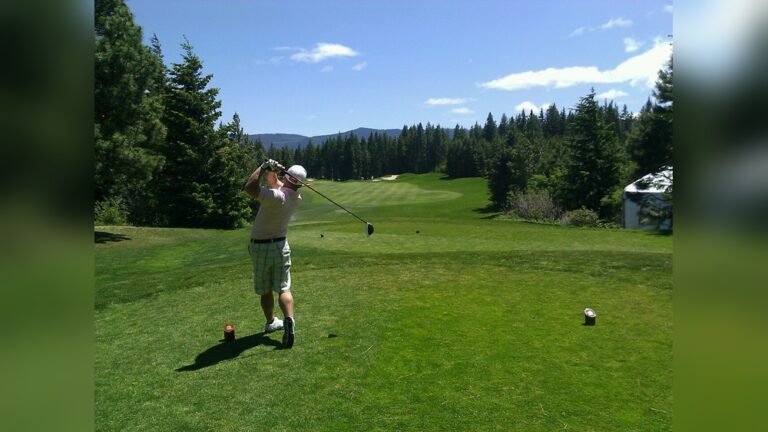
Golf is a sport that combines skill, strategy, and patience. For many, it is more than just a game—it’s a way to enjoy the outdoors, challenge the mind, and connect with others. But what exactly is golf, and how is it played?
If you are new to the sport or simply curious, understanding the basics can open up a whole new world of recreation and competition.
Golf is often seen as a slow-paced game for older people, but this is a common misunderstanding. In reality, golfers of all ages and backgrounds play, from young children learning their first swing to professionals competing at the highest level.
The game is known for its unique culture, rich history, and the way it brings people together for friendly matches or serious tournaments. Whether you want to play for fun or aim for a professional career, understanding the core rules, equipment, and techniques is the first step.
This article will break down the essentials of golf and explain how it is played. You will learn about the course, the rules, the equipment, and the techniques that make golf both simple to start and difficult to master. By the end, you will see why millions find joy in this classic sport.
What Is Golf?
Golf is a club-and-ball sport where players try to hit a small ball into a series of holes on a course using the fewest possible strokes. Unlike many sports, golf does not use a standard playing field. Each golf course is unique, with its own layout, challenges, and scenery.
The game dates back to the 15th century in Scotland, where it evolved from earlier stick-and-ball games. Today, golf is played worldwide, with over 60 million people participating regularly.
The main goal in golf is simple: complete the course in as few strokes as possible. But, because each course is different, and weather or terrain can change quickly, no two rounds are ever the same. This mix of consistency and variety is a big part of golf’s appeal.
The Golf Course
A golf course is not just a large field. It is carefully designed to test skill and strategy. Most standard courses have 18 holes, although some smaller ones offer 9 holes.
Main Parts Of A Golf Course
- Tee Box: The starting point for each hole. Here, players take their first shot.
- Fairway: The main stretch between the tee box and the green. The grass here is short and easy to hit from.
- Rough: Areas beside the fairway with longer, thicker grass. Shots from here are more difficult.
- Hazards: Includes sand bunkers, water, and trees. Hazards make the game more challenging.
- Green: The area around the hole with very short, smooth grass. This is where players try to putt the ball into the hole.
- Hole: A cup in the green, usually 4.25 inches (10.8 cm) in diameter.
Each hole has a par, which is the number of strokes an expert player is expected to need. For example, a par 3 means a skilled golfer should take three shots to get the ball in the hole.
Example Of A Golf Hole Layout
| Part | Description | Typical Length |
|---|---|---|
| Tee Box | Starting area | 0 yards |
| Fairway | Main playing area | 100–500 yards |
| Green | Finishing area with hole | 20–40 yards |
| Hazard | Sand, water, or rough | Varies |
A full round usually covers a distance between 5,000 and 7,000 yards.
Equipment Used In Golf
Playing golf requires several pieces of equipment. Choosing the right gear can make a big difference, especially for beginners.
Basic Equipment
- Golf Clubs: Players use different clubs for different shots. Most carry up to 14 clubs in their bag.
- Woods: For long-distance shots, usually from the tee or fairway.
- Irons: For medium to short-distance shots and control.
- Wedges: For high, short shots, especially near the green or from bunkers.
- Putter: Used on the green to roll the ball into the hole.
- Golf Balls: Small, dimpled balls designed for distance and accuracy.
- Tees: Small pegs used to elevate the ball for the first shot on each hole.
- Golf Bag: Holds clubs and other gear.
- Golf Shoes: Shoes with special soles to help grip the ground during swings.
- Gloves: Worn on the non-dominant hand for better grip.
Comparison Of Common Golf Clubs
| Club Type | Typical Use | Distance (Average) |
|---|---|---|
| Driver (Wood) | Long tee shots | 200–300 yards |
| Iron (7-iron) | Mid-range shots | 120–160 yards |
| Wedge (Sand Wedge) | Bunker/short approach | 60–100 yards |
| Putter | On the green | Up to 30 yards |
What Beginners Often Miss
Many new golfers think all clubs are similar, but each club is designed for specific distances and situations. Using the wrong club can make shots much harder. Also, not all golf balls are the same—some are made for extra distance, while others offer better control.
Choosing the right ball can improve your game.
Basic Rules Of Golf
Golf has its own set of rules, many created by the R&A and the United States Golf Association (USGA). These help keep the game fair and enjoyable for everyone.
Key Rules To Know
- Play the ball as it lies: You usually cannot move or touch the ball except when allowed by the rules.
- Teeing off: Start each hole by hitting from the tee box.
- Order of play: The player farthest from the hole plays first.
- Stroke count: Every swing counts as a stroke, including penalty strokes for rule violations.
- No assistance: You cannot get advice from other players during a round.
- Out of bounds: If the ball goes outside the course, add a penalty stroke and play again from where you last hit.
- Penalty areas: Water or sand hazards can add penalty strokes if your ball ends up in them.
Score Terms Explained
Golf uses some special terms for scoring:
- Birdie: One stroke under par on a hole.
- Eagle: Two strokes under par.
- Bogey: One stroke over par.
- Double Bogey: Two strokes over par.
- Par: Completing the hole in the expected number of strokes.
Example: Scoring On A Par 4 Hole
- 3 strokes: Birdie
- 4 strokes: Par
- 5 strokes: Bogey
Non-obvious Insights
Many beginners focus only on hitting the ball hard, but accuracy is often more important. Also, knowing when to take a penalty drop rather than trying a risky shot from a hazard can save strokes.
How A Game Of Golf Is Played
A standard game of golf is called a round and usually includes 18 holes. The player or team with the lowest total strokes wins.
Steps In Playing A Round
- Start at the first tee box. Players take turns hitting towards the hole.
- Move down the fairway. Each player hits their ball from where it landed, aiming for the green.
- Approach shots. As players get closer, they switch to clubs for shorter, more accurate shots.
- On the green. Use a putter to gently roll the ball into the hole.
- Record your score. Write down the number of strokes used on each hole.
- Continue to the next hole. Repeat the process for all 18 holes.
Types Of Golf Play
Golf can be played in different formats:
- Stroke play: Most common. The winner is the player with the lowest total strokes for the round.
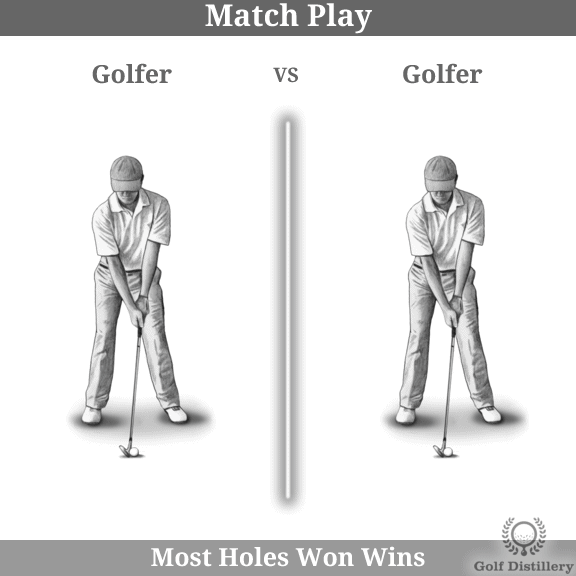
- Match play: Players compete hole by hole. The winner is the one who wins the most holes.
- Scramble: Often used in team events. All players hit, choose the best shot, and all play from that spot.
Example Of A Simple Scorecard
| Hole | Par | Player A | Player B |
|---|---|---|---|
| 1 | 4 | 5 | 4 |
| 2 | 3 | 3 | 4 |
| Total | 7 | 8 | 8 |
Basic Techniques And Skills
Mastering golf involves learning both physical and mental skills.
The Golf Swing
A good golf swing is smooth and controlled. It combines grip, stance, backswing, downswing, and follow-through. Beginners often try to hit too hard, but balance and timing are more important.
Putting
Putting is about control and reading the green. The grass on the green can slope or curve, which changes how the ball rolls. Good putters learn to judge both distance and direction.
Chipping And Pitching
These are short shots near the green. Chipping uses a low, running shot, while pitching sends the ball higher and softer. Choosing the right shot depends on the situation.
Practice And Patience
Golf requires practice. Even professionals spend hours on the driving range and putting green. Mental focus is key—getting frustrated can lead to mistakes.
Two Insights For Beginners
- Course management is as important as technique. Knowing when to play safe and when to take a risk can lower your score.
- Short game matters more than most think. Putting and chipping often make up half your strokes in a round.
Golf Etiquette
Golf is known for its strong culture of etiquette. Respect for other players and the course is essential.
- Be quiet when others are hitting.
- Repair divots and ball marks on the green.
- Keep pace and don’t delay play.
- Let faster groups play through if you are slow.
These traditions make golf enjoyable for everyone.
The World Of Professional Golf
Professional golf is a major global sport. The PGA Tour in the United States and the European Tour are leading organizations. Famous golfers like Tiger Woods, Rory McIlroy, and Annika Sörenstam have made history with their skills.
Major tournaments, such as The Masters, U.S. Open, The Open Championship, and PGA Championship, draw millions of viewers worldwide. Prize money can reach over $10 million for big events.
Golf is also played at the Olympics and has a strong amateur community, with clubs and tournaments for all levels.
For more on professional golf, see the Wikipedia page on professional golf tours.
Benefits Of Playing Golf
Golf offers many benefits beyond competition:
- Physical exercise: Walking the course can cover 5–6 miles (8–10 km).
- Mental challenge: Every shot requires focus and strategy.
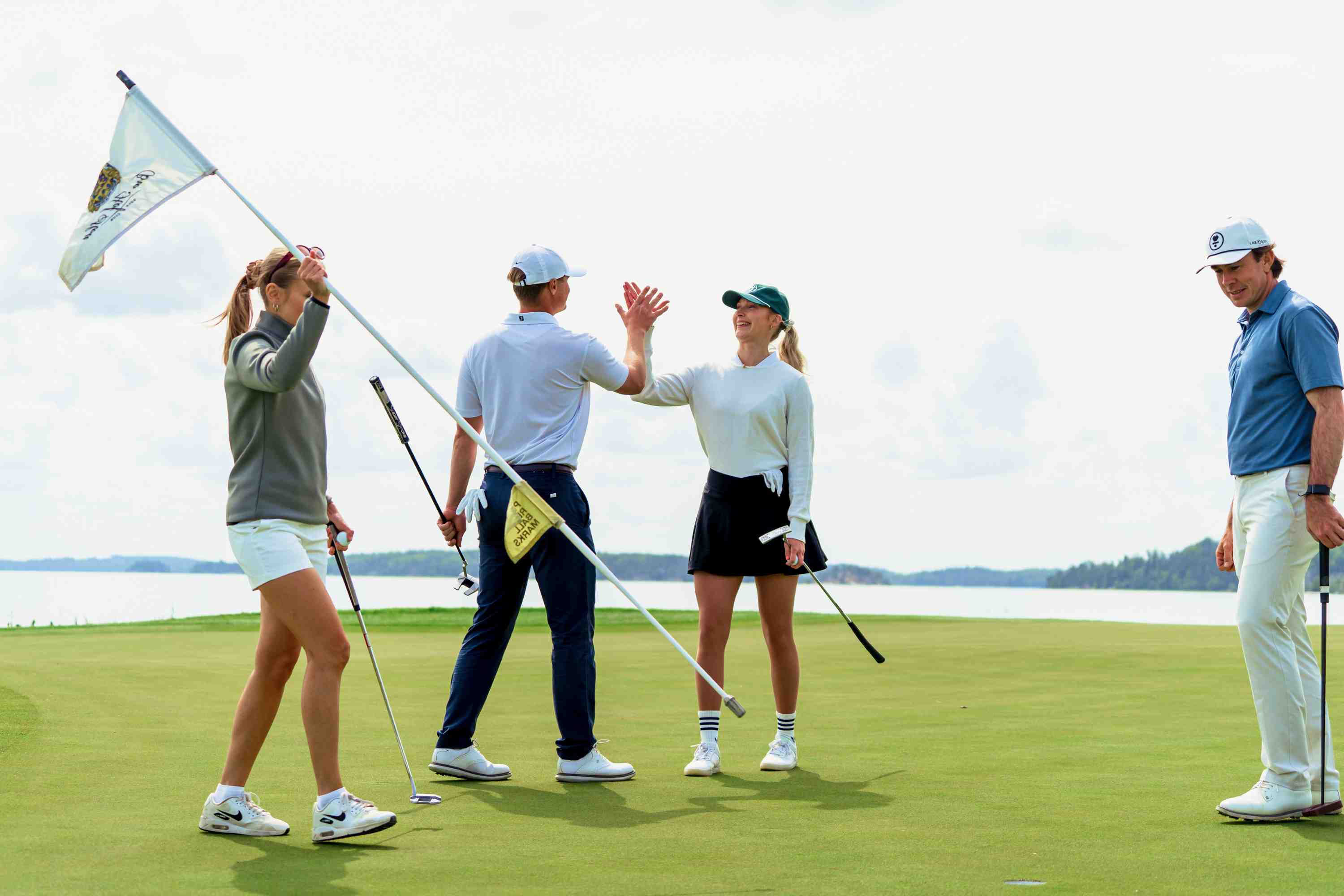
- Social activity: Golf is a great way to meet new people and spend time with friends.
- Stress relief: Being outdoors and enjoying nature helps reduce stress.
Golf is a sport you can play for life, from childhood through old age.
Frequently Asked Questions
What Is The Basic Goal In Golf?
The main goal is to hit the ball into each hole in as few strokes as possible, completing all holes on the course.
How Many Clubs Can A Golfer Carry?
A player can carry up to 14 clubs during a round, each with a specific purpose.
How Long Does It Take To Play 18 Holes?
A typical round of 18 holes takes about 4 to 5 hours, depending on the course and number of players.
Can Children And Beginners Play Golf?
Yes, golf is accessible to all ages and skill levels. Many courses have junior programs and shorter tees for beginners.
What Should I Wear To Play Golf?
Most courses require collared shirts and golf shoes. Some have dress codes, so check before you play.
Golf is a sport of skill, patience, and tradition. Whether you want a new hobby, a way to exercise, or a competitive challenge, learning how golf is played can open up a lifetime of enjoyment. With practice and the right attitude, anyone can experience the unique rewards of this classic game.

