
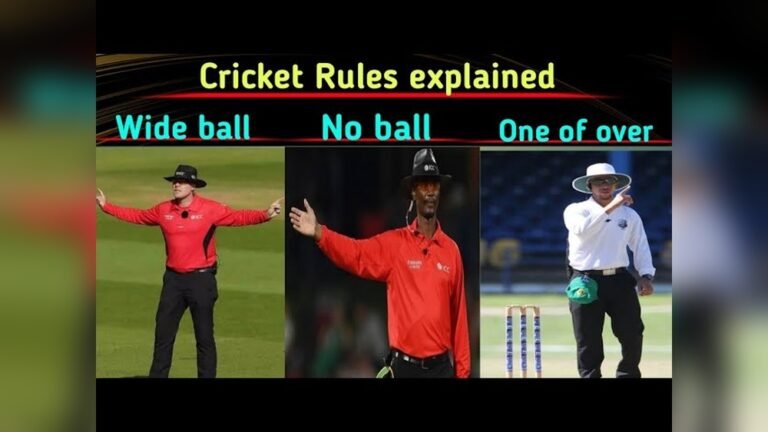
Cricket is a sport full of unique rules and moments that keep fans excited around the world. If you’ve ever watched a match, you may have heard the terms no-ball and wide ball. These are not just simple mistakes by the bowler; they have real effects on the game, from giving free runs to changing how the next ball is played. Understanding these terms helps you enjoy cricket more and see how small details make a big difference. Whether you’re new to cricket or want to explain it to a friend, this article will break down what a no-ball and wide ball are, why they happen, and how they impact the match.
What Is A No-ball In Cricket?
A no-ball is an illegal delivery by the bowler. When an umpire calls a no-ball, the batting team gets an extra run, and the ball does not count as one of the six legal deliveries in the over. But there is more to a no-ball than just an extra run. It can change the pace of the game, give a free hit in limited-overs formats, and sometimes even turn a match around.
Key Reasons For A No-ball
There are several ways a bowler can deliver a no-ball:
- Overstepping the Crease: The most common reason. The bowler’s front foot must be behind the popping crease when it lands. If any part of the foot is over the line, it’s a no-ball.
- High Full Toss: If a ball, without bouncing, passes above the batsman’s waist, it’s a no-ball. This is sometimes called a “beamer.”
- Ball Bouncing Over Head: If a ball bounces and passes over the batsman’s head, it can be called a no-ball (in some formats, it is a wide; rules differ).
- Front Arm and Back Arm Action: If the bowler bends their arm more than allowed (throwing instead of bowling), it’s called a no-ball for illegal action.
- Bowler’s Back Foot No-Ball: If the bowler’s back foot touches or crosses the return crease, it’s a no-ball.
- More Than Allowed Fielders on Leg Side: More than two fielders behind square on the leg side is not allowed.
- Double Bounce or Multiple Bounce: If the ball bounces more than once before reaching the batsman, it’s a no-ball.
- Underarm Bowling: Not allowed in most international cricket.
No-ball: Common Scenarios
Imagine a fast bowler is running in. In his hurry, his front foot lands just ahead of the popping crease. The umpire spots it and signals a no-ball by raising one arm horizontally. The batting team gets an extra run, and the next ball could be a “free hit” if it’s a limited-overs match like T20 or ODI.
This means the batsman cannot be out in most ways on the next ball, except for being run out.
Another scenario: The bowler delivers a full toss, and it reaches the batsman above his waist without bouncing. Even if it was not intentional, it’s called a no-ball for a high full toss. This rule is for player safety.
Umpire Signals And Communication
The umpire signals a no-ball by extending one arm straight out. If it’s a free hit, the umpire makes a circular motion above his head after signaling the no-ball.
Penalties And What Happens Next
- The batting team gets one extra run (sometimes more in some leagues).
- The next ball is a free hit in ODIs and T20s.
- The ball does not count in the over.
- The batsman cannot be out bowled, caught, leg before wicket (LBW), or stumped on a free hit.
Impact On The Game
A no-ball can change the match. It gives the batting side a chance to score more runs and puts pressure on the bowler. In tense situations, a no-ball can cost a team a win, especially in the last over of a close T20 match.
Non-obvious Insights
Many new fans think a no-ball is just a mistake, but it can also be a tactical error. Experienced batsmen often expect a free hit and prepare to score big on the next ball. Also, repeated no-balls can lead to the bowler being banned from bowling in that match in some competitions.
What Is A Wide Ball In Cricket?
A wide ball is another illegal delivery, but for a different reason. If the bowler bowls the ball too far from the batsman, making it impossible to hit in a normal batting stance, the umpire calls it a wide. The batting side gets one extra run, and the ball must be re-bowled.
When Is A Ball Called Wide?
- Too Far from the Batsman: The ball is outside the lines (usually marked on the pitch) and cannot be reached by the batsman in his normal stance.
- Bounces Overhead: In limited-overs cricket, if the ball bounces and passes above the batsman’s head, it is considered a wide.
- Leg Side Wide: Balls way down the leg side, out of the batsman’s reach, are called wide.
- No Contact: If the ball touches the bat or body, it cannot be a wide, even if it was far.
Umpire Signals For Wide
The umpire extends both arms horizontally to signal a wide ball. This helps everyone on the field see the decision.
What Happens After A Wide Ball
- The batting team gets one extra run.
- The ball must be bowled again (it does not count in the over).
- If the wicketkeeper misses it and the batsmen run, those runs are also added as byes.
Examples
A bowler tries a slower ball, but it slips out of his hand and lands far outside off stump. The batsman tries to reach but cannot. The umpire calls wide. In another case, a bowler aims for the leg stump but bowls too wide down leg.
The umpire signals wide again.
Impact Of Wide Balls
Wides can add up quickly, especially in T20 matches. Too many wides show poor control and give the batting team easy runs. In tight matches, even 3 or 4 wides can be the difference between winning and losing.
Non-obvious Insights
Some bowlers bowl wide balls on purpose, hoping the batsman will reach and make a mistake. But this is risky. Also, in some leagues, two consecutive wides can result in penalties or fielding restrictions.

Comparison: No-ball Vs Wide Ball
Both no-ball and wide ball are illegal deliveries, but there are key differences. The table below shows a clear comparison:
| Feature | No-Ball | Wide Ball |
|---|---|---|
| Reason | Bowler breaks delivery rules (foot fault, high full toss, etc.) | Ball too far for batsman to reach |
| Extra Run | Yes (1 run) | Yes (1 run) |
| Counts in Over? | No | No |
| Free Hit Next? | Yes (in ODIs/T20s) | No |
| Can Batsman Be Out? | Only in limited ways (run out, hit the ball twice, etc.) | Yes, in normal ways except for being bowled or caught directly from the wide |
| Umpire Signal | One arm outstretched horizontally | Both arms outstretched horizontally |
Rules And Laws: What The Official Rule Book Says
Cricket is governed by the Marylebone Cricket Club (MCC) Laws of Cricket. The rules for no-ball are under Law 21, and for wides under Law 22.
- Law 21 (No Ball): Defines all situations that are a no-ball, including overstepping, high full tosses, underarm bowling, and more.
- Law 22 (Wide Ball): Explains when a ball is wide and how it is signaled.
For the latest updates, you can visit the official MCC Laws of Cricket.

How No-balls And Wides Affect Strategy
Cricket is a game of small margins. One extra run, one extra ball, can change everything—especially in limited-overs matches.
Batting Team Advantage
- Extra Runs: Every no-ball and wide gives extra runs, making it easier to chase or set a big total.
- Free Hits: On a free hit, the batsman can play aggressively without fear of being out in most ways.
- Psychological Edge: Extra balls mean more scoring opportunities and can unsettle bowlers.
Bowling Team Pressure
- More Balls to Bowl: Each illegal delivery means the bowler works harder and the fielders stay out longer.
- Loss of Rhythm: Frequent no-balls and wides can disturb the bowler’s concentration and confidence.
- Captain’s Worry: In close games, captains worry about bowlers who cannot control their line or overstep often.
Example Of A Match Changed By No-ball Or Wide
In the 2016 T20 World Cup semi-final, a no-ball in the final over gave the batting team a free hit, which resulted in a six and changed the course of the game. Such moments are rare but show how important these rules are.
How Umpires And Technology Help
Modern cricket uses video replays (DRS) and special cameras to check for front foot no-balls. Third umpires can overrule the on-field umpire for missed no-balls. This has made decisions more accurate and fair.

Common Myths And Mistakes
Many new fans make some mistakes when thinking about no-balls and wides. Here are a few:
- Myth: Every high ball is a no-ball. *Not true*—it must pass above waist height without bouncing.
- Myth: Wides give a free hit. *Wrong*—only no-balls do in limited-overs formats.
- Mistake: Bowlers sometimes forget the line for their front foot, especially under pressure, leading to repeated no-balls.
- Myth: A batsman can be out on a no-ball. *Partly true*—but only by run out, hitting the ball twice, or obstructing the field.
How Teams And Players Reduce No-balls And Wides
Top teams work hard to reduce extras. Coaches use video analysis and practice drills to help bowlers improve accuracy. Here are some practical tips bowlers use:
- Mark the run-up and practice stopping before the crease.
- Focus on grip and release for better control.
- Bowl with targets in the nets to avoid wide lines.
Data: No-balls And Wides In Modern Cricket
Let’s look at how these extras have affected matches. The following table shows the number of no-balls and wides bowled in some recent T20 World Cup finals:
| Year | No-Balls Bowled | Wides Bowled | Winning Team |
|---|---|---|---|
| 2022 | 2 | 8 | England |
| 2021 | 1 | 6 | Australia |
| 2016 | 3 | 10 | West Indies |
As seen, even in finals, bowlers sometimes lose control under pressure, and each extra can add up.
Real-world Examples
- In the 2019 IPL, a missed no-ball call in the final over led to controversy, showing how important umpire attention is.
- Jasprit Bumrah, one of the world’s best death bowlers, worked hard to cut down his no-balls after being penalized early in his career.
No-ball And Wide Ball: Rules In Different Formats
The basic rules are the same in Test, ODI, and T20 cricket, but some details change:
- Test Cricket: No free hits for no-balls.
- ODIs and T20s: Free hits after no-balls, tighter wide ball lines to encourage attacking play.
- Franchise Leagues: Sometimes have stricter penalties or extra runs for repeated offences.
This table shows the main differences:
| Format | No-Ball Penalty | Wide Ball Penalty | Free Hit Rule |
|---|---|---|---|
| Test | 1 run, ball re-bowled | 1 run, ball re-bowled | No |
| ODI | 1 run, free hit next ball | 1 run, ball re-bowled | Yes |
| T20 | 1 run, free hit next ball | 1 run, ball re-bowled | Yes |
Frequently Asked Questions
What Happens If A Batsman Is Bowled On A No-ball?
If the ball hits the stumps on a no-ball, the batsman is not out. The only way a batsman can be out on a no-ball is by being run out, hitting the ball twice, or obstructing the field.
Is There A Limit To How Many No-balls A Bowler Can Bowl?
There is no set limit, but if a bowler bowls too many, the captain may remove them from the attack. In some leagues, repeated no-balls for high full tosses can lead to a ban from bowling in that match.
Can A Batsman Be Stumped On A Wide Ball?
Yes, if the batsman leaves his crease and the wicketkeeper removes the bails, he can be stumped off a wide ball.
Do No-balls And Wides Affect A Bowler’s Statistics?
Yes, both count as extras in the scorebook and are recorded against the bowler’s figures, increasing their runs conceded and impacting their economy rate.
Who Decides If A Ball Is A No-ball Or Wide?
The on-field umpire makes the call. For front-foot no-balls in international matches, the third umpire often helps using video technology.
Cricket’s rules may seem complex at first, but understanding the details of no-balls and wides opens up a new level of appreciation for the sport. Watching for the umpire’s signals and seeing how teams react to these moments adds another layer of excitement, whether you’re at the stadium or watching from home.
