
Golf is a sport loved for its mix of skill, strategy, and patience. But if you have ever watched a group of players, you might see golfers with very different abilities competing together—and somehow, everyone feels they have a fair chance. This “level playing field” is possible because of the handicap system. But what exactly is a handicap in golf? Why is it so important, and how does it really work? If you are new to golf, or even if you have been playing for a while, understanding handicaps can make your experience much more enjoyable and fair.
The Meaning Of A Golf Handicap
A golf handicap is a number that shows a golfer’s ability. It allows players of different skill levels to compete on equal terms. The lower the handicap, the better the player. For example, if you have a handicap of 10, you are expected to score about 10 strokes over the course rating on a “normal” day. If your friend has a handicap of 20, they are less experienced or skilled. With handicaps, you both can play together and have a fair match, even if your raw scores are very different.
The handicap is not just a random number. It is based on your previous scores, the difficulty of the courses you played, and a special formula. This system is managed by organizations such as the United States Golf Association (USGA) and The R&A. The goal is to keep the game fun, honest, and fair for everyone.
How The Handicap System Works
The world of golf uses the World Handicap System (WHS), which started in 2020. This system is now used in most countries. It helps golfers to have a handicap that is accepted anywhere in the world. Here is how it works:
- Scorecards: Every time you finish a round, you post your score. This can be done at your club, online, or through apps.
- Course Rating and Slope Rating: Each golf course has a “course rating” (how hard the course is for a scratch golfer) and a “slope rating” (how much harder it is for a bogey golfer). These ratings are used to adjust your scores.
- Calculation: The WHS uses your best 8 scores from your last 20 rounds. It takes into account the difficulty of the courses. This is not just an average; it gives more weight to your best play.
- Daily Handicap Index: Your handicap can change slightly day to day, as you add new scores and old ones drop out. This keeps your handicap current.
A key insight: Not all scores count equally. Only your best performances matter for your handicap, so a few bad rounds won’t hurt your number much. This encourages golfers to always try their best.
Why Golf Needs Handicaps
Golf is different from sports like soccer or basketball, where teams are matched by skill or age. On a golf course, you could have a 70-year-old beginner playing with a 25-year-old expert. Handicaps allow players of all ages and abilities to compete together. Here’s why handicaps matter:
- Fair Competition: Handicaps “give back” strokes to weaker players, making the match close and fun.
- Motivation: Players can track their improvement over time, which is very satisfying.
- Inclusion: Anyone can join in, no matter how experienced they are.
- Honesty: Since handicaps are based on real scores, they reward honest reporting and effort.
Without handicaps, many people would quickly lose interest in competitive golf. The system keeps the spirit of the game alive.
Calculating Your Golf Handicap
Understanding the formula behind your handicap can seem complicated, but the basic ideas are simple. Let’s break it down into steps:
Step 1: Adjusted Gross Score
First, you need your adjusted gross score. This is your total number of strokes, but with some limits (for example, there’s a maximum number of strokes you can count for any hole, based on your ability).
Step 2: Course And Slope Rating
Each course has a course rating and a slope rating. These numbers show how tough a course is. Even if you play well, a difficult course can make your score higher, so the ratings adjust for this.
Step 3: Handicap Differential
For each round, you calculate a handicap differential using this formula:
Handicap Differential = (Adjusted Gross Score – Course Rating) × 113 / Slope Rating
The number 113 is the “standard” slope rating.
Step 4: Best 8 Of Last 20
The WHS takes your lowest 8 differentials from your most recent 20 rounds. It averages these to give your Handicap Index.
Example Calculation
Suppose your last eight best differentials are:
14.2, 13.7, 13.5, 14.0, 13.9, 14.1, 13.8, 14.3
Add these up: 14.2 + 13.7 + 13.5 + 14.0 + 13.9 + 14.1 + 13.8 + 14.3 = 111.5
Divide By 8: 111.5 ÷ 8 = 13.94
So, your Handicap Index is 13.9 (rounded).
Why This Matters
Many golfers do not realize that only their best rounds count for their handicap. This means you should not worry about having a “bad day”—focus on your best golf, and your handicap will reflect your real potential.

Types Of Golf Handicaps
The word “handicap” is used in several ways in golf. Here are the main types you may hear:
- Handicap Index: This is your main handicap number, calculated using the WHS method. It is portable and works at any course.
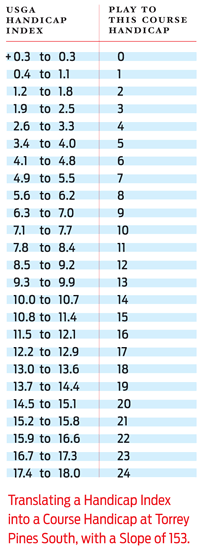
- Course Handicap: This is your handicap adjusted for the course you are playing. It takes into account the slope rating.
- Playing Handicap: In competitions, sometimes a “playing handicap” is used. This may include further adjustments based on the format (e.g., match play, four-ball).
Knowing which type is used for your round or competition avoids confusion.
How Handicaps Affect Scoring And Matches
A common question is: “How do handicaps work when playing against someone?” Here’s how it works in a head-to-head match.
Let’s say Player A has a handicap of 10, and Player B has a handicap of 18. The difference is 8. Player B gets a one-stroke advantage on the 8 hardest holes (as marked on the scorecard). This means if both players shoot the same raw score on those holes, Player B wins those holes.
For tournaments, handicaps can be used in different ways:
- Stroke Play: Each player subtracts their handicap from their total strokes.
- Match Play: The difference in handicaps is used to give strokes on certain holes.
- Stableford/Other Formats: Handicaps can change the way points are given.
The goal is always to give everyone a fair chance, no matter their skill.
Golf Handicap And Course Difficulty
Not all golf courses are equal. A short, flat course is easier than a long, hilly one with water hazards. That’s why the system uses course rating and slope rating. Here’s a comparison of how these ratings affect your experience:
| Course | Course Rating | Slope Rating | Difficulty Level |
|---|---|---|---|
| Easy Municipal | 66.5 | 110 | Beginner-friendly |
| Standard Club | 71.0 | 125 | Average |
| Championship | 75.2 | 140 | Very Hard |
If you play a harder course, your handicap system will recognize this, so you are not “punished” for taking on a challenge.
Common Handicap Mistakes And How To Avoid Them
Many beginners misunderstand or misuse the handicap system. Here are some mistakes and how to avoid them:
- Not posting all scores: Some golfers only post their best rounds. This is unfair and can lead to a lower (or higher) handicap than deserved. Always post every round, even bad ones.
- Forgetting course/slope ratings: Many players ignore these numbers. But they are critical for an accurate handicap.
- Mixing up handicap types: Using Handicap Index instead of Course Handicap in a match can cause confusion.
- Not updating regularly: Handicaps should be updated after every round, not just once in a while.
- Not learning the system: Relying on others to do the math can lead to mistakes. Take time to understand your numbers.
A practical tip: Use a trusted golf app or your club’s computer to calculate your handicap. Modern technology makes it easy and reduces errors.
How To Get An Official Handicap
To get an official handicap:
- Join a golf club: Most clubs are connected to a national golf association.
- Submit scorecards: Usually, at least three 18-hole scores are needed to start.
- Get a GHIN (Golf Handicap and Information Network) number: In the US, this tracks your scores and handicap.
- Keep posting scores: After 20 rounds, your handicap becomes more stable.
Some countries or clubs may have small differences, but this is the general process worldwide.
Handicap For Beginners And High Handicappers
If you are new to golf, your first handicap may be quite high. This is normal! A beginner might start with a handicap of 30, 40, or even higher. Over time, as you improve, your handicap will come down. In fact, watching your handicap drop is one of the most motivating parts of golf.
Many high handicappers worry about being “bad” at golf. But the handicap system is designed for all levels. You can enjoy the game, play with anyone, and celebrate your progress.
How Low Can A Handicap Go?
For men, the lowest possible handicap (scratch golfer) is 0. For women, it is also 0. Some professionals or elite amateurs may even have a “plus” handicap, like +2 or +4. This means they are expected to shoot under par.
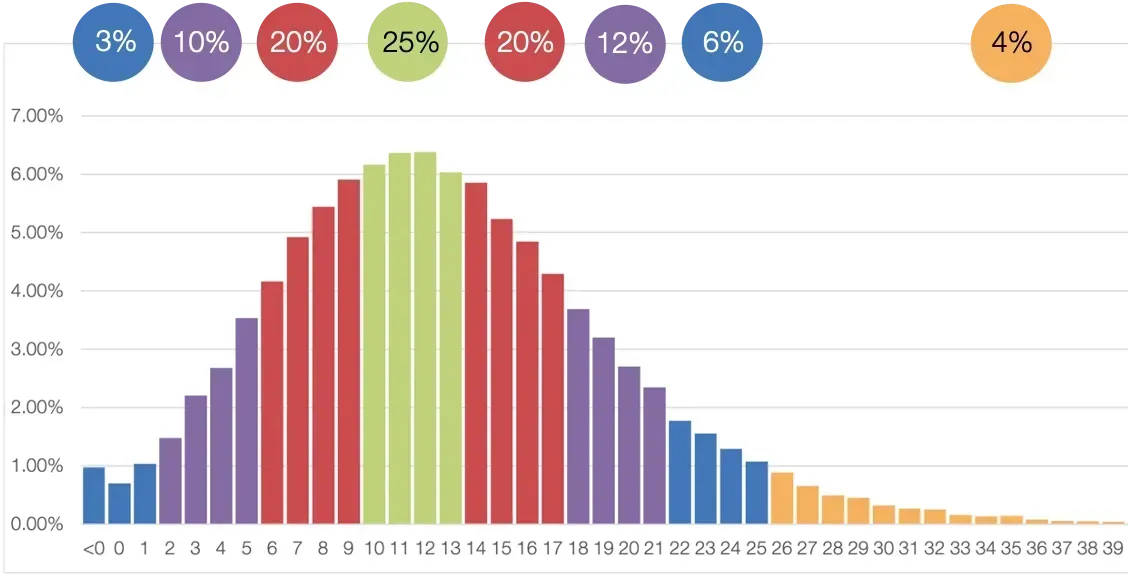
For most golfers, a handicap between 10 and 20 is considered average.
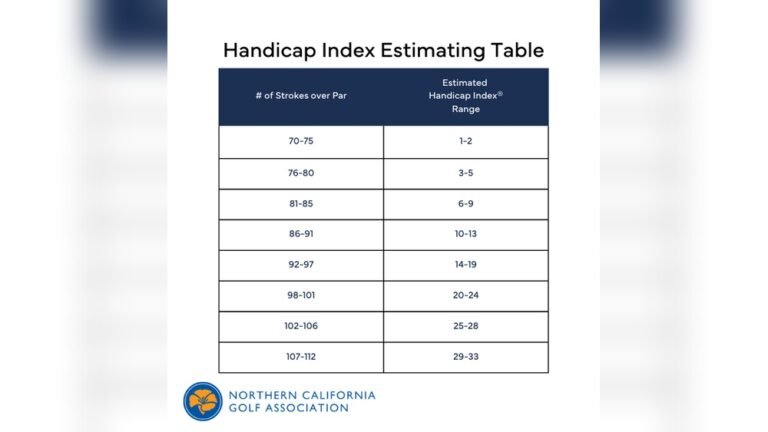
Here’s a quick look at how ability levels match with handicaps:
| Handicap Range | Skill Level | Typical Score (18 holes) |
|---|---|---|
| 0 – 5 | Expert/Low Amateur | 72 – 77 |
| 6 – 15 | Intermediate | 78 – 89 |
| 16 – 25 | Casual/Recreational | 90 – 100 |
| 26+ | Beginner/High Handicapper | 100+ |
A non-obvious insight: Having a “high” handicap is not a sign of failure. It means you are new or still learning, and the system is there to help you improve.
The Social And Competitive Side Of Handicaps
Handicaps are not just about numbers. They shape the social side of golf. With a handicap, you can:
- Join club competitions and tournaments
- Play friendly matches with anyone
- Track your improvement year after year
- Set realistic goals
Many golfers find that the best memories come from matches where handicaps made the game close and exciting.
The Future Of Golf Handicaps
With the World Handicap System, the future is more connected than ever. Scores can be posted through apps. Your handicap follows you anywhere in the world. This global system encourages fairness and competition, whether you’re playing at your local club or on vacation abroad.
If you want to learn more about the official rules and changes, you can visit the USGA World Handicap System.
Frequently Asked Questions
What Is The Main Purpose Of A Golf Handicap?
A golf handicap allows players of different skill levels to compete fairly. It adjusts scores so that less experienced golfers can play against experts and still have a chance to win.
How Often Should I Update My Handicap?
You should update your handicap every time you play a round and post your score. The more often you update, the more accurate your handicap will be.
Can I Have A Handicap If I Only Play At One Course?
Yes. Your handicap will still be valid, but it may be less accurate. Playing different courses gives a better picture of your ability, as it measures your skill in various conditions.
What Is A “plus” Handicap?
A “plus” handicap means you are better than a scratch golfer. For example, a +2 handicap means you are expected to score two strokes under par on a standard course.
Is It Possible To Cheat The Handicap System?
It is possible if someone posts false scores, but most clubs and players value honesty. There are checks in place, and golf’s culture is built on trust and respect for the game.
Golf’s handicap system is one of the most unique and valuable parts of the sport. It brings people together, makes every match interesting, and gives every golfer a chance to win. Whether you are a beginner or aiming to be a scratch golfer, understanding your handicap can make your golfing journey much more enjoyable.
