

Golf is a sport full of unique features, and one that stands out both visually and strategically is the bunker. If you have watched professional tournaments or played a round yourself, you have seen these sandy traps testing the nerves and skill of even the best golfers. But what exactly is a bunker in golf, why does it matter, and how should you handle it? This article will walk you through everything you need to know, from the basics to advanced details, practical tips, and common misunderstandings.
What Is A Bunker In Golf?
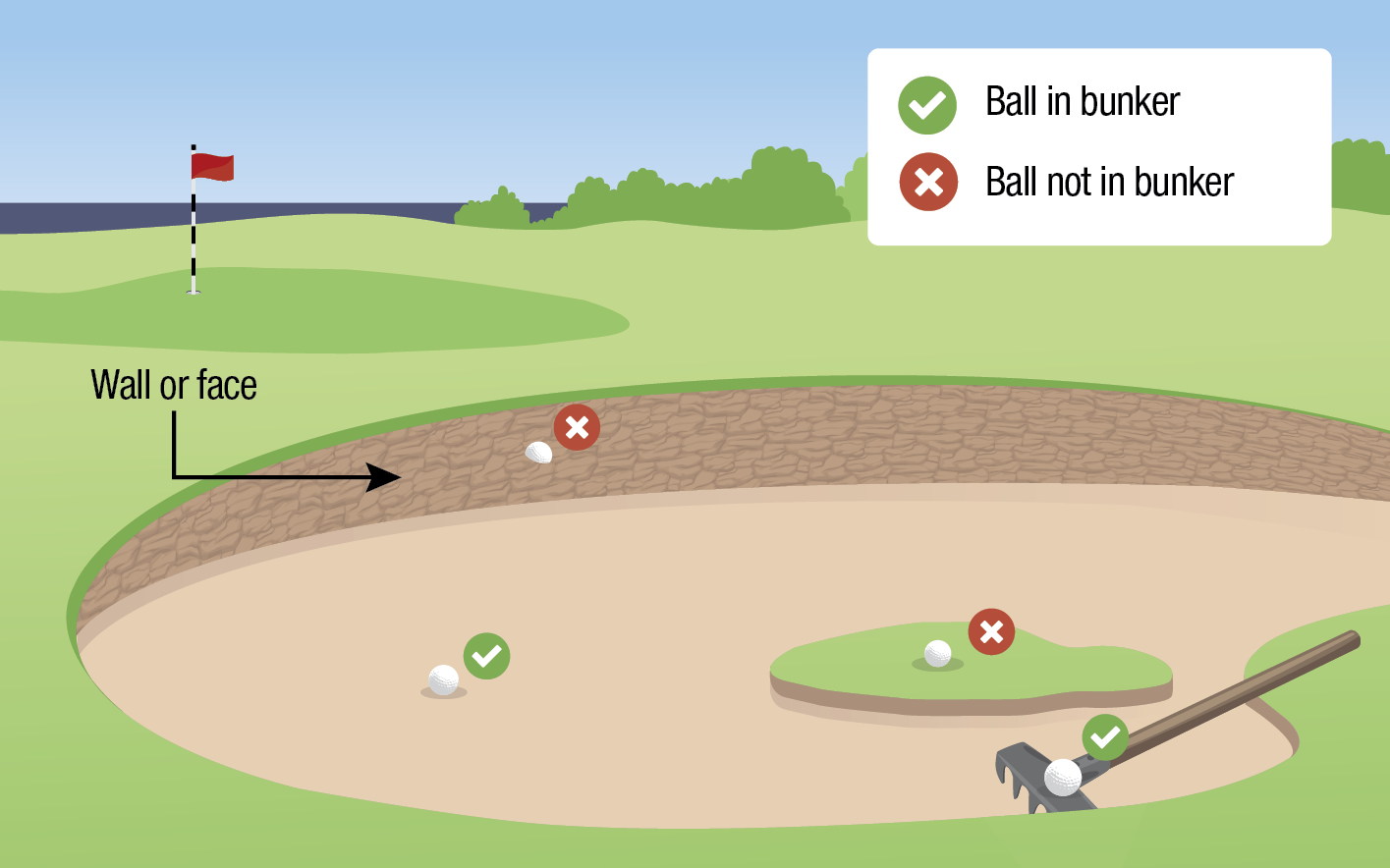
A bunker is a special area on a golf course filled with sand. It is usually shaped like a shallow pit or depression and is designed to challenge golfers. Bunkers are not just obstacles; they are considered “hazards” in the official rules of golf. Their main purpose is to test a player’s accuracy and ability to recover from difficult situations.
There are two main types of bunkers:
- Greenside bunkers: Located close to the putting green, these make approaching the hole more difficult.
- Fairway bunkers: Positioned along the fairway, they catch inaccurate tee or fairway shots.
Bunkers are not just holes filled with sand. Their placement, size, depth, and even the type of sand used can change the level of difficulty for golfers of all skill levels.
The History And Evolution Of Bunkers
The story of bunkers begins in Scotland, where golf was born. Early golf courses were built on sandy coasts. Sheep would dig out hollows in the sand to escape the wind, and these natural depressions became early bunkers. Over time, course designers started to add bunkers on purpose to increase challenge and excitement.
Modern bunkers are carefully designed. Some are shallow and easy to escape, while others are deep and intimidating. The sand is now selected for its consistency and drainage, ensuring fair play in all weather. Today, every major golf course features a variety of bunkers that affect how golfers plan each shot.

Why Are Bunkers Important In Golf?
Bunkers play a vital role for several reasons:
- Strategic challenge: They force golfers to think about shot placement and club selection.
- Visual appeal: Bunkers add beauty and shape to the landscape of a golf course.
- Fairness: Well-placed bunkers reward accurate shots and punish mistakes, leveling the playing field.
Golfers often judge a course by the quality and placement of its bunkers. A well-designed bunker can turn an easy hole into a memorable test.
Types Of Bunkers
Not all bunkers are the same. Each type offers different challenges and requires different strategies.
Greenside Bunkers
These are located near the putting green. Their main purpose is to protect the green and make approach shots more challenging. Greenside bunkers are often deeper and have higher lips, making it harder to get the ball close to the hole.
Fairway Bunkers
Placed along the fairway, these bunkers catch tee shots or long approach shots that miss the ideal target. Fairway bunkers are usually less deep, but escaping them still requires skill.
Waste Bunkers
Waste bunkers are large, natural sandy areas that are not considered hazards under the rules. Golfers are allowed to ground their club and take practice swings in waste bunkers, unlike standard bunkers.
Pot Bunkers
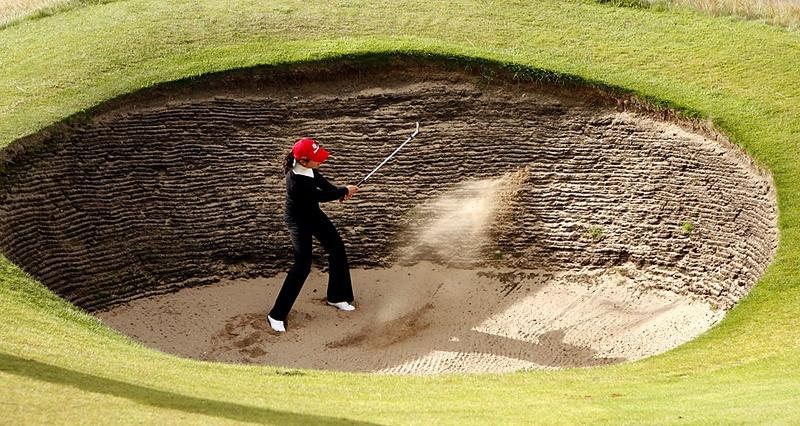
These are small but very deep bunkers, commonly found on British and Scottish courses. They are especially tough because the high walls make it hard to escape with one shot.
Cross Bunkers
Cross bunkers are positioned to cut across the fairway and force players to choose between laying up short or trying to carry the bunker with a longer shot.
Key Rules For Playing From A Bunker
The Rules of Golf have specific guidelines for bunkers. These rules are important to understand so you do not get penalized during a round.
- No grounding the club: In a standard bunker, you are not allowed to let your club touch the sand before making your swing.
- No testing the sand: You cannot touch the sand with your hand or club to feel its texture or firmness before your shot.
- Loose impediments: As of 2019, you are allowed to remove leaves, stones, and other loose objects from the sand, but you must not improve your lie.
- Unplayable ball: If your ball is buried or stuck, you can declare it unplayable and take a one-stroke penalty to drop the ball within the bunker.
Rules can change slightly between professional and amateur events, so always check the latest guidelines.
Common Bunker Locations On A Golf Course
Bunkers are not placed randomly. Course designers use them to shape strategy and make holes more interesting. Here are the most common bunker locations:
- Around the greens: To protect the hole and demand accurate approach shots.
- Along the fairways: To catch wayward drives or lay-up shots.
- Near doglegs: Forcing players to decide between risk and safety.
- In front of greens: Making it harder to play low, rolling shots.
The combination of these placements means golfers must plan every shot with care.
How To Play A Shot From A Bunker
Escaping a bunker is one of golf’s most challenging tasks. Here is a simple step-by-step approach:
- Choose the right club: Most players use a sand wedge (54–58 degrees) for greenside bunkers. For longer fairway bunkers, a pitching wedge or 9-iron may be better.
- Open your stance: Aim your feet and body left of the target (for right-handed golfers).
- Open the clubface: Turn the clubface slightly to add loft and help the club glide under the ball.
- Focus behind the ball: Aim to hit the sand about 1–2 inches behind the ball, not the ball itself.
- Accelerate through the sand: Keep your swing smooth and do not slow down at impact.
Example
Imagine your ball lands in a greenside bunker, 12 yards from the pin. You take your sand wedge, open the clubface, and aim to splash the ball out. By hitting the sand first, the club’s bounce helps lift the ball onto the green with a soft landing.
Strategies For Avoiding Bunkers
The best way to score well is often to stay out of trouble. Here are proven strategies to avoid bunkers:
- Know the course layout: Study the location of bunkers before each round.
- Play to your strengths: If you are not confident carrying a bunker, aim for a safer part of the fairway or green.
- Choose the right club: Select a club that helps you stay short or carry over the bunker.
- Use course management: Sometimes it is smarter to lay up and leave a longer shot than risk landing in a tough bunker.
Many professionals spend hours learning to avoid bunkers, not just escaping them. Course knowledge and smart decisions are just as important as technique.
Differences Between Bunker Sand And Regular Sand
Bunker sand is not the same as beach or construction sand. Golf courses use specific sand types for consistency, drainage, and playability.
- Particle size: Bunker sand is usually medium to coarse, allowing water to drain easily.
- Color: It is often white or light-colored to look good and create contrast.
- Firmness: The sand is packed just enough to prevent buried lies but still allows for clean shots.
Here is a quick comparison:
| Type of Sand | Particle Size | Main Use |
|---|---|---|
| Bunker Sand | Medium to Coarse | Golf course hazards |
| Beach Sand | Fine | Natural beaches |
| Construction Sand | Varies | Building materials |
Using the right sand affects both the challenge and fairness of the game.
Common Mistakes Golfers Make With Bunkers
Even experienced golfers struggle with bunkers. Here are some common mistakes:
- Trying to scoop the ball: Many try to lift the ball with their wrists, causing thin or fat shots.
- Not following through: Stopping the swing in the sand often leads to the ball staying in the bunker.
- Poor club selection: Using the wrong club can make escape much harder.
- Ignoring the lie: Not checking if the ball is buried or sitting clean leads to bad results.
- Not practicing enough: Bunker play is a skill. Without practice, even good players lose confidence.
To improve, spend time practicing bunker shots and learn to read each lie before swinging.
Famous Bunkers In Golf
Some bunkers have become legendary, known around the world for their difficulty or history.
- The Road Hole bunker (St Andrews, Scotland): Deep and tight, this bunker has ruined many championship dreams.
- The Church Pews bunker (Oakmont, USA): Long, with grassy ridges, it challenges the world’s best golfers.
- The Coffin bunker (Royal Troon, Scotland): Small but deep, this bunker is feared by pros and amateurs alike.
These bunkers are famous because they test both skill and nerves, and have changed the outcome of major tournaments.
Bunker Maintenance And Course Care
Maintaining a bunker is both a science and an art. Grounds crews rake the sand daily, repair edges, and monitor drainage. Golfers are expected to help by:
- Raking footprints: Always rake the sand after playing a shot.
- Entering and exiting properly: Use the lowest edge to avoid damaging the lip.
- Replacing rakes: Lay rakes outside the bunker or as local rules suggest.
Course managers also check sand depth and replace sand as needed to keep play fair for everyone.
How Bunkers Affect Scoring
Bunkers can dramatically change your score. According to statistics from the PGA Tour, the average professional gets up and down from a greenside bunker about 50% of the time. For amateur golfers, the success rate is much lower, often under 20%.
Here is a simple look at how bunker shots affect scoring:
| Situation | Average Score (Pro) | Average Score (Amateur) |
|---|---|---|
| Greenside Bunker | 3.1 strokes | 4.2 strokes |
| Fairway Bunker | 4.0 strokes | 5.1 strokes |
This shows why learning bunker skills is so important for lowering your scores.
Advanced Tips For Mastering Bunker Shots
If you want to improve your bunker play, try these advanced tips:
- Adjust your setup for the lie: For buried lies, close the clubface slightly and swing steeper.
- Vary your swing length: Use a longer swing for longer bunker shots and a shorter swing for close ones.
- Use your legs: Keep your lower body stable but allow some knee bend for better control.
- Practice with different sand types: Not all bunkers have the same sand; practice with harder and softer sand if you can.
One non-obvious insight: The most successful bunker players often focus on their finish position, not just impact. If your swing finishes high and balanced, you are more likely to get out clean.
Another overlooked tip: Try to relax your grip pressure. Tension in your hands and arms can lead to poor contact with the sand.
How To Practice Bunker Shots
Practicing bunker shots is different from hitting balls on the range. Here is how to get the most out of practice:
- Set goals: Try to hit 10 balls and see how many you can get within 6 feet of a target.
- Vary the lie: Practice from flat, uphill, downhill, and buried lies.
- Work on both short and long bunker shots: Use different clubs and swing lengths.
Many golfers skip bunker practice, but just 10 minutes a week can make a huge difference.
Comparing Bunker Shots With Other Golf Shots
Bunker shots are unique compared to fairway or rough shots. Here is a comparison:
| Type of Shot | Club Used | Main Challenge | Average Success Rate |
|---|---|---|---|
| Bunker Shot | Sand Wedge | Sand contact, trajectory control | Pro: 50%, Amateur: 20% |
| Fairway Shot | Iron/Wood | Distance, accuracy | Pro: 70%, Amateur: 50% |
| Rough Shot | Iron/Wedge | Grass thickness, control | Pro: 60%, Amateur: 35% |
This highlights why bunker skills are so valuable for scoring.
Bunkers In Professional Golf Tournaments
In professional tournaments, bunkers are often the difference between winning and losing. Famous moments in history include players making miraculous escapes or failing in key situations. Tournament organizers sometimes make bunkers deeper or add new ones to increase difficulty.
Watching pros handle bunkers is a great way to learn. Notice their focus, setup, and commitment to each shot.
For more on the official rules, visit the Wikipedia page on golf bunkers.
Frequently Asked Questions
What Happens If My Ball Lands In A Bunker?
If your ball lands in a bunker, you must play it out without grounding your club in the sand before your shot. Use a sand wedge and aim to hit behind the ball to splash it out. Remember to rake the bunker after your shot.
Are All Sandy Areas On A Golf Course Considered Bunkers?
No, only specific, marked areas are considered bunkers. Large, unmaintained sandy regions are called waste bunkers or waste areas. The rules for playing from these are more relaxed.
Can I Remove Loose Objects From A Bunker?
Yes, you can now remove leaves, stones, and other loose items from bunkers. However, you cannot improve your lie or test the sand’s condition while doing this.
What Club Should I Use In A Bunker?
Most golfers use a sand wedge for greenside bunkers. For longer shots from fairway bunkers, a pitching wedge or 9-iron might be better. The lie and distance to the target should guide your choice.
Why Are Bunkers Called Hazards In Golf?
Bunkers are called hazards because they are designed to make the game more challenging. Hazards test a golfer’s skill and decision-making, and they often increase the risk of a higher score if not handled well.
Mastering bunker play can turn a frustrating hazard into a chance for a great recovery. With practice and the right approach, you can make bunkers a strength in your game, not a weakness.
