Surfing is more than just riding waves—it’s a full-body challenge that tests your balance, agility, and focus. Many surfers, from beginners to seasoned pros, know that good balance is the secret to catching more waves and staying upright. But what exercises truly help improve your surfing balance? The answer goes beyond just standing on a board at the beach. Building solid balance means working on your core, legs, reaction time, and even your mind. Let’s dive into the best training methods, practical tips, and common mistakes that can boost your surfing performance both in and out of the water.
Why Balance Matters In Surfing
Every surfer has experienced the frustration of losing balance and wiping out. It’s normal, especially when starting. Balance is the foundation of all surf movements—paddling, popping up, riding, and turning. Without it, the best technique or strongest paddle won’t help much.
Improving your balance leads to:
- More time standing and riding waves
- Quicker, safer pop-ups
- Faster turns and maneuvers
- Fewer falls and injuries
Interestingly, studies show that surfers use both static balance (staying still on the board) and dynamic balance (adjusting to moving waves). Training both types is key to better performance.
Essential Surfing Balance Exercises
Not all balance exercises help surfers equally. The most effective workouts mimic real surf movements, strengthen the core, and teach your body to respond quickly to changes. Here are the top exercises that target surfing balance.
1. Bosu Ball Squats
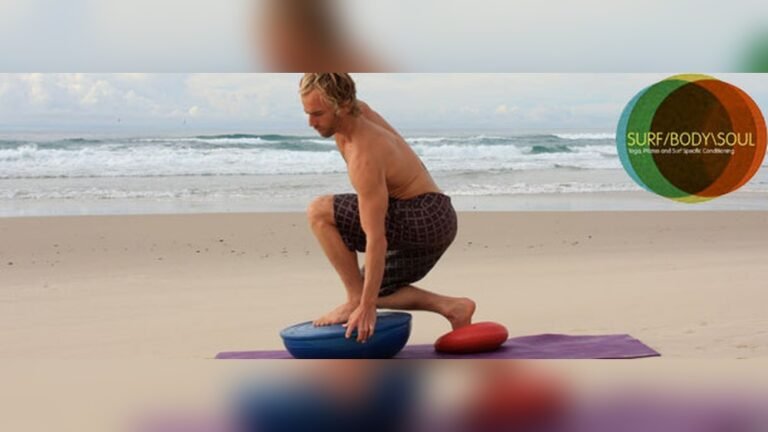
A Bosu ball is a half-ball on a flat platform. Squats on this unstable surface force your ankles, knees, and core to stabilize—just like on a moving surfboard.
How to do it:
- Place the Bosu ball flat-side down.
- Stand with feet shoulder-width apart.
- Lower into a squat, keeping your chest up and knees behind toes.
- Hold for a second, then return to standing.
Tip: Start with shallow squats and increase depth as you get better.
2. Single-leg Balance Drills
Balancing on one leg builds ankle strength and core control, which are vital for surfing.
How to do it:
- Stand on one leg for 30 seconds, keeping your body straight.
- Switch legs.
- To make it harder, close your eyes or tilt your head.
Example: Try brushing your teeth on one leg every morning and night. This daily habit adds up.
3. Stability Ball Plank
A plank on a stability ball adds extra challenge for your core and shoulders.
How to do it:
- Place your forearms on the ball, toes on the floor.
- Keep your body in a straight line.
- Hold for 30–60 seconds.
Why it works: Your core muscles fire up to keep you steady, mimicking the micro-adjustments needed on a surfboard.
4. Balance Board Training
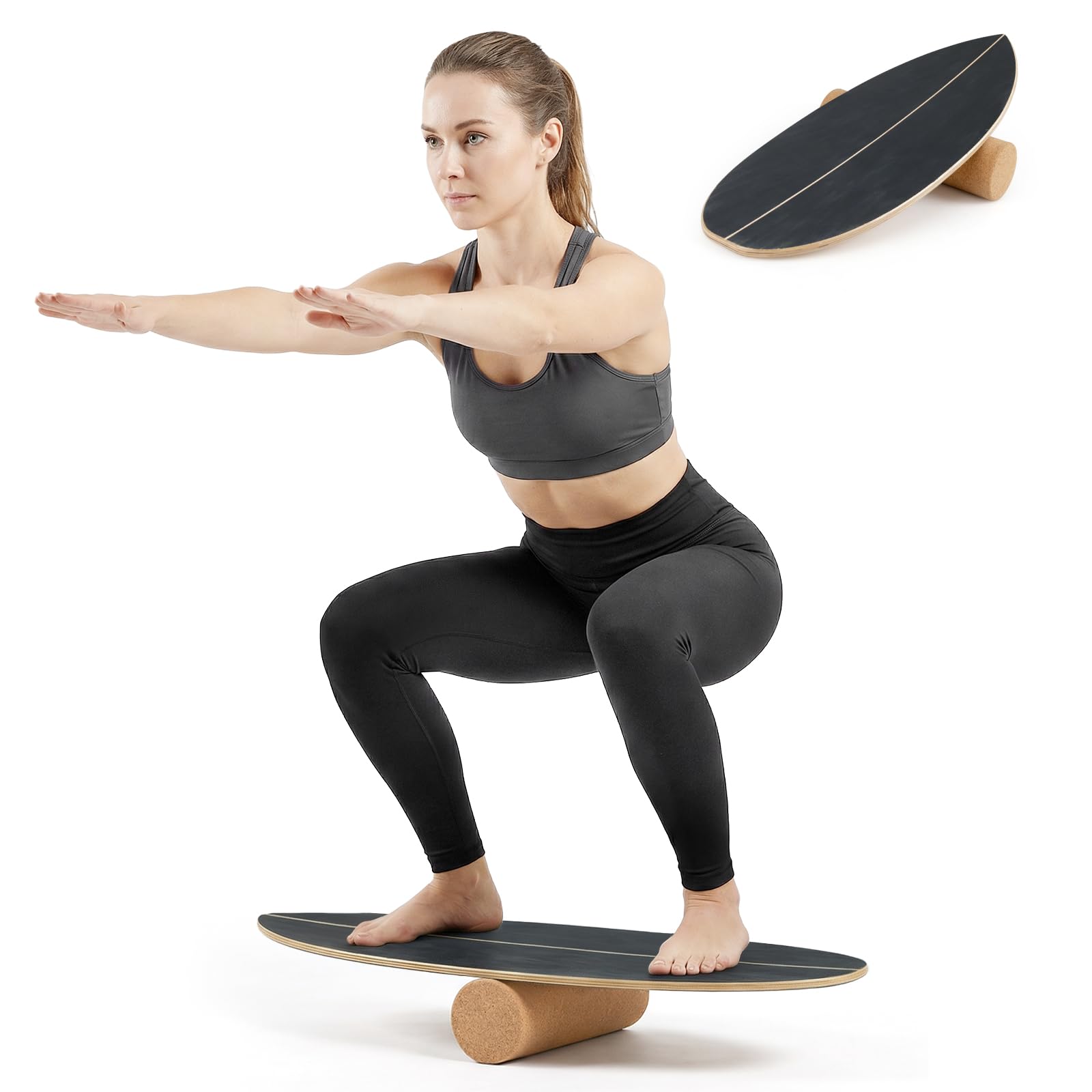
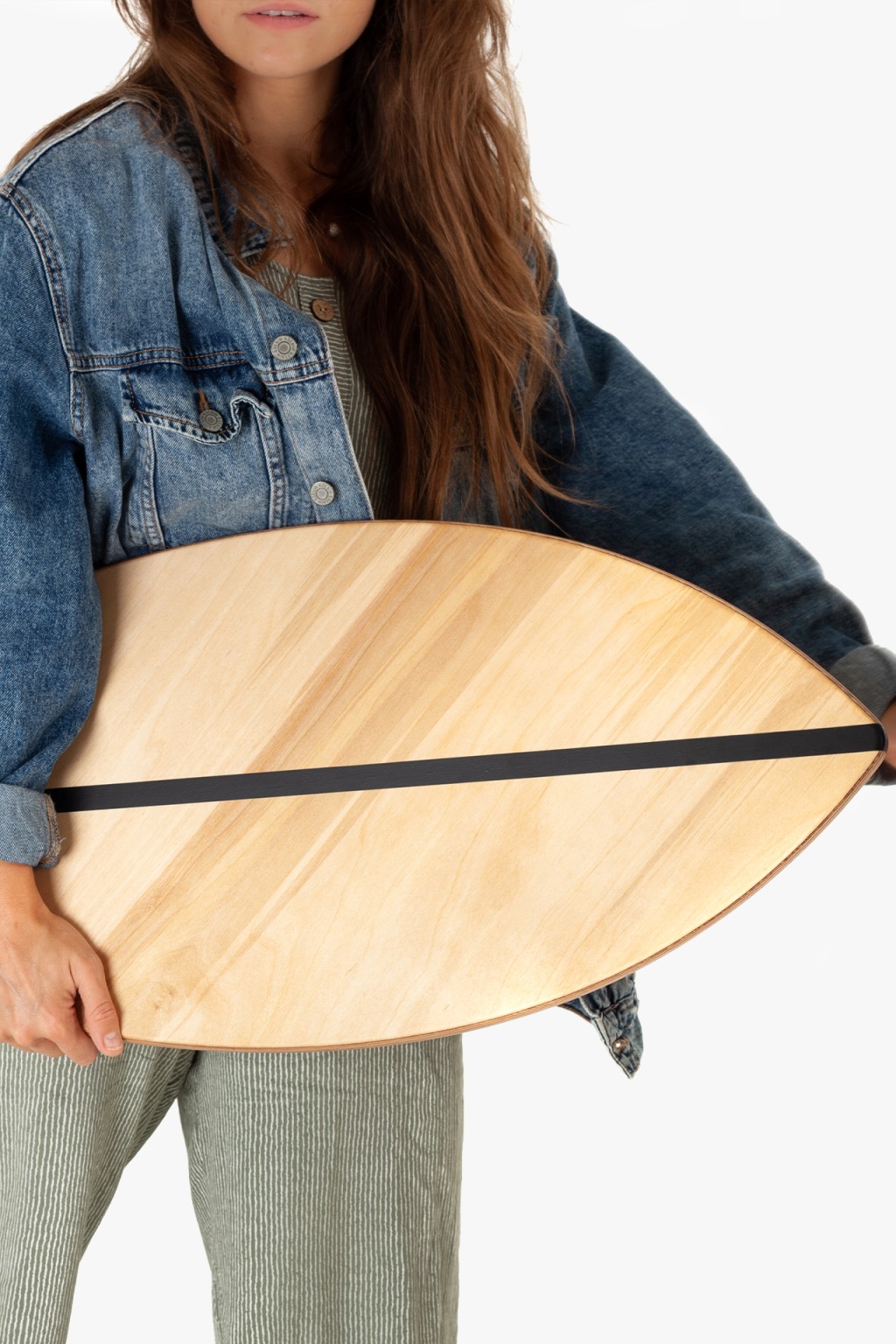
A balance board recreates the sensation of a surfboard on water. It’s a favorite tool for many surfers.
How to do it:
- Place the board on its roller or dome.
- Stand with feet hip-width apart.
- Shift your weight side to side or try squats and pop-up drills.
Practical insight: Use a balance board while watching surf videos—your body learns movements visually and physically at the same time.
5. Yoga Poses For Surfers
Yoga improves both flexibility and balance. Certain poses are especially good for surfers.
Best poses:
- Tree pose: Stand on one leg, place the other foot on your inner thigh, and balance.
- Warrior III: Stand on one leg, lean forward, and lift your other leg back.
- Chair pose: Stand with feet together, bend knees, and lift arms.
Non-obvious tip: Yoga also trains your mind to stay calm and focused—a huge advantage in unpredictable surf conditions.
6. Agility Ladder Drills
An agility ladder forces you to move quickly while staying balanced, just like reacting to a changing wave.
How to do it:
- Place an agility ladder flat on the ground.
- Step in and out of the squares as fast as possible.
- Try side shuffles, hopscotch steps, or one-foot hops.
Extra benefit: These drills improve your footwork for fast pop-ups and turns.
7. Medicine Ball Rotational Throws
Rotational power helps with turning and carving on a wave.
How to do it:
- Stand sideways to a wall, holding a medicine ball.
- Twist your torso and throw the ball against the wall.
- Catch and repeat for 10 reps each side.
Why it matters: Surfing isn’t just forward and backward—it’s about rotating, twisting, and reacting with power.
8. Swiss Ball Hamstring Curls
This exercise strengthens your hamstrings and glutes, helping you stay balanced during quick movements.
How to do it:
- Lie on your back, heels on a Swiss ball.
- Lift your hips, then roll the ball toward you using your heels.
- Roll back and repeat.
Insight: Strong hamstrings prevent knee injuries, which are common in surfing.
9. Slackline Walking
A slackline is a flat rope tied between two points. Walking on it trains balance, focus, and foot sensitivity.
How to do it:
- Start with the line close to the ground.
- Step onto the line, use your arms for balance.
- Take small steps, focusing on control rather than speed.
Not obvious: Slacklining develops “proprioception”—your body’s sense of where it is in space. This is crucial for adjusting your stance in the middle of a wave.
10. Skater Lunges
This exercise mimics the movement of carving and pumping on a surfboard.
How to do it:
- Stand tall.
- Step one foot behind you and across, bending your knees (like a curtsy).
- Switch sides in a fast, jumping motion.
Extra tip: Focus on smooth transitions, not just speed.

Comparison Of Balance Tools For Surfers
There are many tools to help you train balance on land. Each offers unique benefits. Here’s how some common options compare:
| Tool | Main Benefit | Best For | Cost (approx.) |
|---|---|---|---|
| Bosu Ball | Lower body strength, core stability | Beginners to advanced | $80–$120 |
| Balance Board | Surf-specific balance & reaction | Intermediate to advanced | $50–$150 |
| Stability Ball | Core, shoulder, and hip stability | All levels | $20–$50 |
| Slackline | Dynamic balance, focus | Intermediate/Outdoor use | $30–$70 |
How To Structure A Surf Balance Workout
To get the best results, combine different types of exercises. Here’s a sample weekly plan that mixes strength, balance, and flexibility.
| Day | Main Focus | Recommended Exercises |
|---|---|---|
| Monday | Core & Balance | Bosu Ball Squats, Planks, Single-Leg Drills |
| Wednesday | Agility & Power | Agility Ladder, Skater Lunges, Rotational Throws |
| Friday | Flexibility & Recovery | Yoga Poses, Slackline, Swiss Ball Curls |
Tip: Consistency is more important than doing every exercise every day. Two or three sessions per week can lead to big improvements.
Common Mistakes When Training Surfing Balance
It’s easy to make errors when training for better balance. These can slow your progress or even cause injuries.
- Skipping core strength: Many focus only on legs and forget the core. Without a strong core, your balance will be shaky.
- Using only one tool: Real surfing requires many movement types. Mix up your equipment and drills.
- Going too fast: Speed comes after control. If you rush balance drills, you’ll miss the benefits.
- Ignoring flexibility: Tight muscles limit movement. Adding yoga or stretching is key.
- Not simulating surf movements: Exercises should mimic the unpredictable nature of waves. Static poses alone are not enough.
Real-life Examples: Surfers Who Improved Their Balance
Professional surfers often share how land training changed their game. For instance, Stephanie Gilmore, a seven-time world champion, uses balance boards and yoga daily. She credits these routines for her smooth style and quick reactions.
A 2020 study by the Journal of Sports Sciences found that surfers who added balance and core workouts improved their ride time by 22% and reduced falls by 18%. This shows the power of targeted training.
Many surf schools now include balance drills in beginner lessons. New surfers who practice at home often stand up on their boards weeks sooner than those who don’t.
Two Overlooked Insights For Surfers
- Mental balance matters as much as physical: When you’re calm and focused, your body reacts faster. Techniques like mindful breathing or short meditation can help you stay balanced even when the surf gets wild.
- Barefoot training boosts results: Shoes can block your foot’s connection to the ground. Try doing most balance drills barefoot. This builds foot muscles and improves balance—just like being on your board.
Using Technology To Track Progress
Apps and smart devices now help surfers measure and improve their balance. Some balance boards connect to phones and give real-time feedback. Wearable sensors can show if you’re leaning too far in one direction.
If you want to take it further, motion analysis apps let you record and analyze your movements. While not necessary for everyone, these tools can be motivating and show real gains over time.
For an in-depth look at how technology is changing surf training, see this resource from the Surfing England.
Frequently Asked Questions
What Are The Best Exercises For Beginners To Improve Surfing Balance?
For beginners, Bosu ball squats, single-leg balance, and basic yoga poses like tree pose are perfect. These exercises build foundation strength and stability without needing advanced skills or expensive gear.
How Often Should I Do Balance Exercises For Surfing?
Aim for 2–3 sessions per week. Consistency is more important than intensity. Over time, you can increase frequency or difficulty as your balance improves.
Can I Improve My Surfing Balance Without Special Equipment?
Yes. Many exercises use only your body weight. Single-leg stands, yoga poses, planks, and even balancing on a curb or pillow can help. Equipment like balance boards speeds up progress, but it’s not required.
Why Do Surfers Train Balance On Land Instead Of Just Surfing More?
Land training lets you focus on specific balance skills without the distraction of waves. You can repeat drills, correct mistakes, and build muscle memory faster. This means you’ll make the most of every surf session.
What Is The Most Common Mistake When Training For Surfing Balance?
The biggest mistake is ignoring the core. Many people focus only on their legs or try to balance without building core strength. A strong core is the key to steady, controlled movements on the water.
Improving your surfing balance isn’t just for the pros—it’s for anyone who wants to ride longer, fall less, and enjoy every wave. With the right exercises, focus, and a bit of creativity, you’ll see progress both at home and in the surf.
Start simple, stay consistent, and soon enough, you’ll notice the difference every time you paddle out.
