
Ice hockey is a fast-paced and exciting sport loved by millions worldwide. If you are new to hockey, one of the first things you might wonder is, “How many periods are in an ice hockey game? ” The answer seems simple, but when you look closer, you’ll find there’s more to it.
Different leagues, age groups, and special games can have variations. Let’s explore how many periods are played, how long each period lasts, and what makes the structure of an ice hockey game unique.
Standard Number Of Periods In Ice Hockey
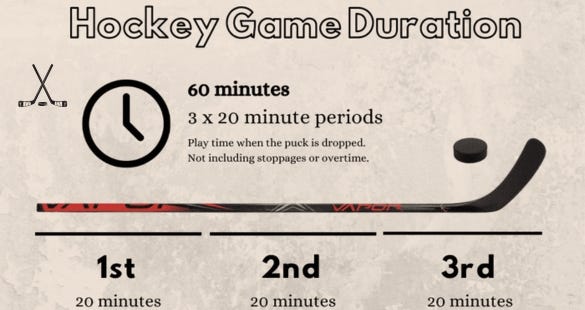
Most professional and amateur ice hockey games are divided into three periods. Each period is usually twenty minutes of actual play time, making a standard game sixty minutes long. This format is used in major leagues like the National Hockey League (NHL), international tournaments, and most adult leagues.
The game clock stops whenever the play is halted. So, even though each period is twenty minutes, the total real time is much longer. With breaks and stoppages, a typical NHL game lasts about 2. 5 hours.
Why Three Periods?
You might wonder why ice hockey has three periods instead of halves or quarters like other sports. The three-period system helps in several ways:
- Ice maintenance: The ice surface gets rough and snowy as players skate. Cleaning the ice after each period keeps the game fair and fast.
- Player recovery: Hockey is physically demanding. Two breaks allow players to rest and coaches to adjust strategy.
- Game flow: Three periods keep the pace high, reducing fatigue and keeping excitement for fans.
How Long Is Each Period?
In most adult leagues and professional games, each period lasts 20 minutes of actual game time. This does not include stoppages, penalties, or intermissions.
In youth or amateur leagues, period lengths can be shorter:
- Youth leagues: Periods can be 12, 15, or 17 minutes.
- High school games: Often use 15- or 17-minute periods.
- College hockey: Uses 20-minute periods, similar to the NHL.
Here’s a quick comparison of period lengths:
| League/Level | Number of Periods | Period Length |
|---|---|---|
| NHL/International | 3 | 20 minutes |
| College | 3 | 20 minutes |
| High School | 3 | 15–17 minutes |
| Youth | 3 | 12–17 minutes |

Intermissions And Their Purpose
Between each period, there is an intermission. In the NHL, each intermission lasts about 17 minutes. Intermissions are longer than timeouts in other sports because the ice must be cleaned and resurfaced.
During intermission:
- The Zamboni machine smooths the ice.
- Players and coaches rest and regroup.
- Fans can grab snacks or use the restroom.
In youth hockey, intermissions are usually shorter, sometimes just a few minutes, especially if ice resurfacing isn’t needed.
What Happens If The Game Is Tied?
A regular-season NHL game consists of three periods. If the score is tied after three periods, the game goes to overtime. Overtime rules can vary:
- NHL Regular Season: One 5-minute overtime period, 3-on-3 skaters. If no one scores, the game goes to a shootout.
- NHL Playoffs: Unlimited 20-minute sudden-death periods until someone scores.
In international tournaments or other leagues, the overtime and shootout structure can differ. For example, Olympic games use 10-minute overtime in early rounds, and longer periods in medal games.
Here’s a quick look at overtime formats:
| League | Regular Season OT | Playoff OT |
|---|---|---|
| NHL | 5 min, 3-on-3, then shootout | 20 min, 5-on-5, sudden death (repeat until goal) |
| Olympics | 5 or 10 min, 4-on-4 or 3-on-3, then shootout | 20 min, 5-on-5, sudden death |
| College | 5 min, 5-on-5, some use shootout | 20 min, 5-on-5, sudden death |
Sudden death means the first team to score wins the game, no matter how much time is left.
Special Cases: Variations In Periods
While three periods are standard, some leagues or special events use a different structure:
- Youth and beginner games: Sometimes use two halves instead of three periods. This makes scheduling easier and helps young players.
- Old rules: In the early 1900s, hockey used two 30-minute halves, not three periods.
- Exhibition games: May use shorter or fewer periods for fun or charity games.
But at all professional and most competitive levels, three periods are the rule.
Non-obvious Insights
Many newcomers are surprised by these details:
- Real game time vs. clock time: A “60-minute” hockey game often takes over two hours with stoppages, penalties, and intermissions.
- Strategy changes by period: Teams often play more cautiously in the third period if they have a lead, or become aggressive if they’re behind.
- Momentum shifts: Coaches use intermissions to make big tactical changes. The break can change the mood and flow of the game dramatically.
How Ice Hockey Periods Compare To Other Sports
Hockey is unique in its three-period structure. Most sports use halves or quarters. Here’s a quick comparison:
| Sport | Main Segments | Length (Pro) |
|---|---|---|
| Ice Hockey | 3 periods | 20 minutes each |
| Soccer | 2 halves | 45 minutes each |
| Basketball | 4 quarters | 12 minutes each (NBA) |
| Football (NFL) | 4 quarters | 15 minutes each |
This three-period system gives hockey its own rhythm, with two full breaks for ice cleaning and strategy.
Tips For New Fans And Viewers
If you’re watching your first hockey game, here are a few things to keep in mind:
- Don’t leave after the first period: Action and intensity often build in the second and third periods.
- Use intermissions to learn: Listen to broadcasters—they explain strategy changes or key moments.
- Watch for line changes: Hockey players change in shifts, not just after a period, so the game is always moving.
Also, if you’re attending a live game, plan for the event to last at least 2. 5 hours, including intermissions.
Frequently Asked Questions
How Many Periods Are In An Nhl Game?
There are three periods in every NHL game. Each period is twenty minutes of actual play time, with two intermissions in between.
Can A Hockey Game End In A Tie?
In regular-season games, if the score is tied after three periods, teams play overtime. If still tied, a shootout decides the winner. In playoff games, overtime continues until someone scores.
Why Does Ice Hockey Use Periods Instead Of Halves?
Periods allow for better ice maintenance and more rest for players. The three-break structure keeps the action fast and safe, while also letting teams adjust their game plan.
How Long Are Intermissions Between Periods?
In the NHL, intermissions last about 17 minutes. In youth or amateur games, they are usually shorter, often just 5–10 minutes.
Has The Number Of Periods Ever Changed In History?
Yes. Early ice hockey games used two halves. The switch to three periods happened in the early 20th century, mainly to improve ice quality and the flow of the game.
Ice hockey’s three-period format is a key part of the sport’s identity. It balances action, strategy, and fair play, making each game exciting from start to finish. For more on the history and rules of ice hockey, visit the official Wikipedia page on ice hockey. Whether you’re a new fan or just curious, understanding the structure helps you enjoy the game even more.
