
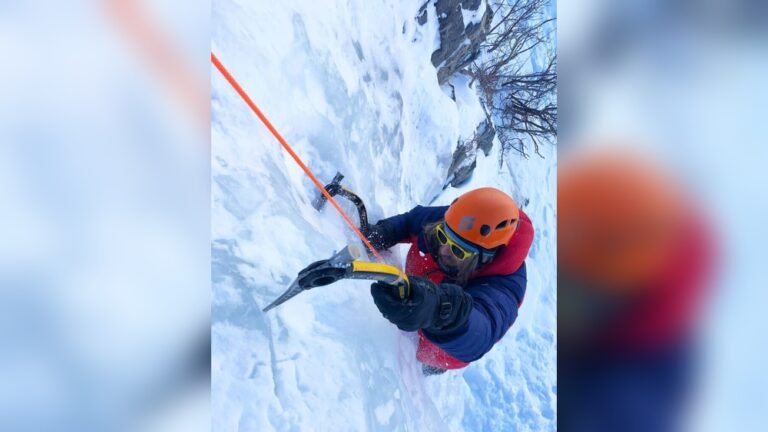
Ice climbing is one of the most thrilling and demanding sports in the world of adventure. Hanging from frozen waterfalls or scaling icy mountain faces is not just about strength and courage—it’s also about using the right gear. Choosing the right ice climbing equipment can be the difference between a safe, enjoyable climb and a dangerous disaster.
If you’re new to ice climbing, or even if you’re upgrading your setup, understanding your gear is crucial.
Many climbers focus only on big items like boots and axes, but the small details—like the type of glove or shape of a carabiner—can impact your safety and performance. This guide will help you make smart choices for each piece of equipment, explain what really matters, and highlight common mistakes that beginners often make.
Understanding The Core Gear For Ice Climbing
Before you buy anything, it’s important to know which pieces of gear are essential. The main items include ice axes, crampons, climbing boots, harnesses, helmets, ropes, protection devices, clothing layers, gloves, and backpacks. Each item has special features designed for ice, not just for general mountaineering. Let’s break down the most important items and what you need to look for.
Ice Axes
Ice axes are your main tools for climbing frozen surfaces. There are two main types: technical ice axes (for steeper, more vertical ice) and mountaineering axes (for more general use).
Key points to consider:
- Length and weight: Technical axes are shorter (usually 50-60 cm) for better control. Lightweight axes reduce fatigue on long climbs.
- Pick shape: A curved, aggressively toothed pick sticks better in hard ice.
- Leash or leashless: Leashless axes allow more movement but require strong grip and technique. Leashed axes can provide security for beginners.
Crampons
Crampons are metal spikes that attach to your boots, giving you grip on ice.
What to look for:
- Number of points: 12-point crampons are standard for ice climbing. Mono-point models offer precision but are harder to balance for beginners.
- Binding system: Step-in bindings are secure but only fit boots with toe and heel welts. Strap-on bindings fit more boots, but can be less stable.
- Material: Most are made from steel (durability) or aluminum (lighter, but less durable).
Climbing Boots
Your boots connect your feet to the ice and need to fit your crampons perfectly.
Consider:
- Insulation: Cold feet end climbs fast. Look for double-layer boots for very cold areas; single-layer for moderate conditions.
- Stiffness: Rigid soles help transfer power and keep crampons stable.
- Fit: Try boots with your climbing socks. Too tight and your toes freeze; too loose and you lose control.
Harness
A good climbing harness keeps you safe and lets you organize gear.
Key features:
- Adjustable leg loops: Useful for thick winter clothing.
- Gear loops: You need enough to carry screws, slings, and carabiners.
- Padding: Extra comfort for long hanging sessions.
Helmet
Falling ice is a real danger. Never climb without a helmet.
- Coverage: Some helmets offer more protection at the sides and back.
- Ventilation: Important for long climbs to avoid overheating.
- Weight: Lighter helmets are more comfortable but may offer less protection.
Ropes
Ropes are your lifeline. Not all ropes are suited for wet, icy conditions.
Look for:
- Dry treatment: Keeps the rope from absorbing water, which can freeze and weaken it.
- Diameter and length: Thinner ropes (8-9mm) are lighter but require more skill. 60m length is standard for ice climbing.
- Single, half, or twin: Half ropes give more options for protection, but require more rope management skills.
Protection Devices (ice Screws And Anchors)
On ice, you use ice screws instead of rock protection.
- Length: Short screws (10-13cm) are easier to place on thin ice; longer screws (16-22cm) are stronger in thick ice.
- Speed of placement: Some screws have handles for faster placement.
- Sharpening: Dull screws are dangerous. Always check before you climb.
Clothing Layers
Staying warm and dry is key.
- Base layer: Wicks sweat from your skin.
- Mid layer: Insulates—fleece or light down is popular.
- Shell layer: Waterproof and windproof jacket/pants protect from the elements.
- Fit: Avoid bulky layers that restrict movement.
Gloves
Gloves must balance warmth and dexterity.
- Fit: You should be able to grip tools without slipping.
- Insulation: Carry several pairs; swap wet gloves for dry ones.
- Reinforcement: Look for reinforced palms and fingers.
Backpack
Your backpack should be light and simple, but big enough for food, water, and extra clothes.
- Size: 30-40 liters is enough for day climbs.
- Features: Ice tool attachments, hydration system compatibility.
Comparing Key Ice Climbing Gear
Understanding how gear compares helps you choose the right item for your climbing style and location. Here is a quick side-by-side look at three essential items:
| Item | Best For | Main Advantage | Main Drawback |
|---|---|---|---|
| Mono-point Crampons | Technical/steep ice | Precision on small holds | Less stable for beginners |
| Dual-point Crampons | General ice climbing | Stability and ease of use | Less precise than mono-point |
| Hybrid Boots | Cold but not extreme | Lighter, flexible for walking | Not warm enough for extreme cold |

What Really Matters When Choosing Ice Climbing Gear
Fit And Compatibility
Many beginners overlook the fit and compatibility between boots, crampons, and harnesses. Even the best gear won’t help if it doesn’t fit you or work together. For example, step-in crampons need boots with specific welts. Always try gear together before buying.
Weight Vs. Durability
Lighter gear means less energy spent, but sometimes it’s less durable. Steel crampons last longer than aluminum. For frequent, hard climbing, choose durability. For occasional trips or easy climbs, lighter can be better.
Adjustability
Winter conditions change fast. Make sure your gear—especially harnesses and jackets—can adjust for thicker or thinner clothing. Adjustable leg loops on harnesses are a must.
Water And Cold Resistance
Standard climbing gear can fail in cold, wet conditions. For example, non-treated ropes soak up water and become heavy, or even freeze. Make sure all soft goods (like ropes and gloves) are rated for ice use.
Common Mistakes When Choosing Gear
- Buying the cheapest option: Cheap gear may not last or perform well in extreme conditions.
- Choosing gear too advanced: Technical mono-point crampons or leashless axes are great, but only if your skill matches. Beginners often have more success with stable, classic designs.
- Ignoring fit: Ill-fitting boots and gloves can ruin your day. Always try before buying.
- Not checking compatibility: Make sure your boots, crampons, and gaiters all work together.
- Skipping dry treatment: Ropes and clothing without water resistance will freeze and become useless.
- Forgetting extra gloves: Wet gloves mean cold, numb hands. Always bring a backup pair.
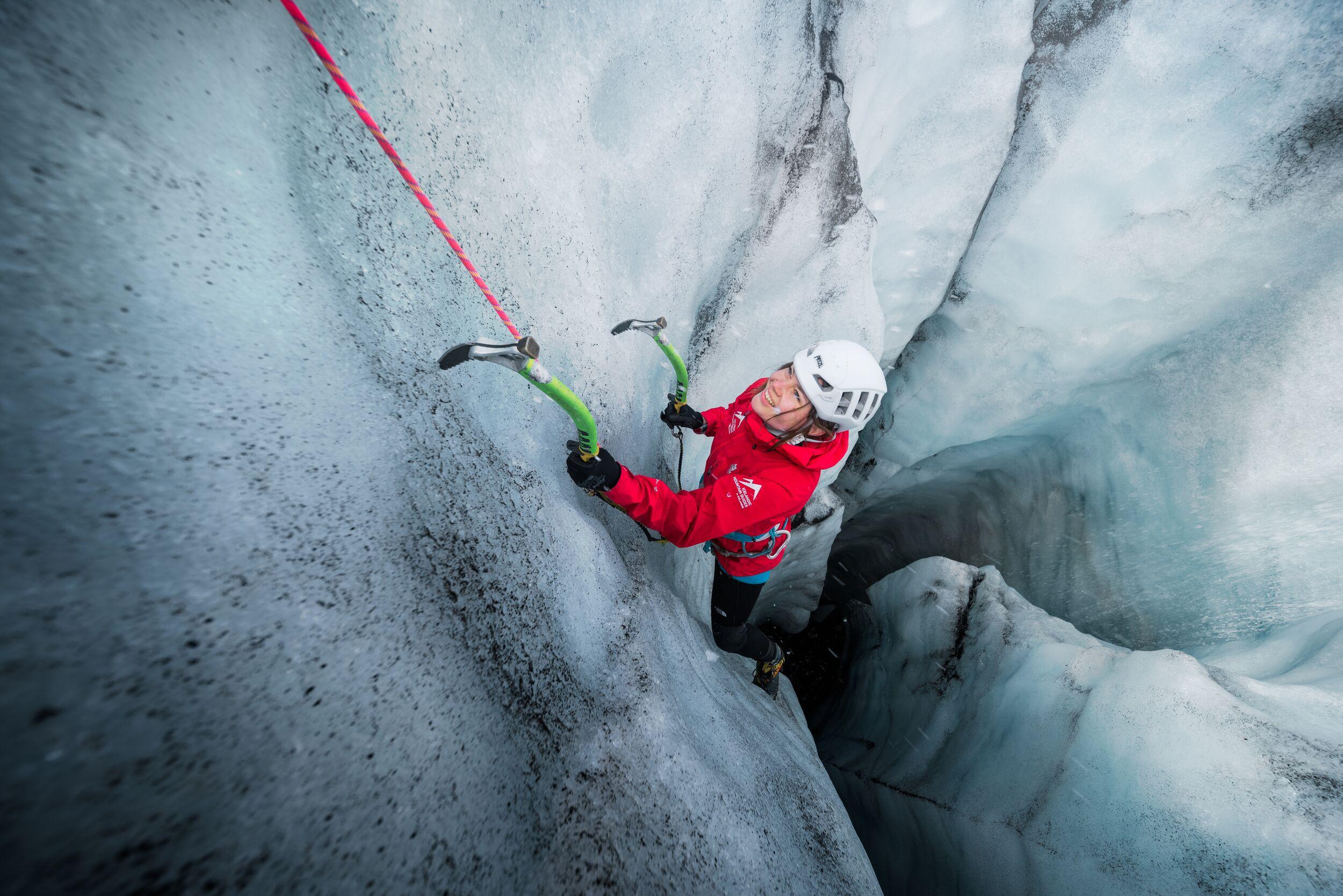
How To Test And Maintain Your Gear
Testing your gear before a climb can prevent surprises.
- At home: Try putting on crampons with gloves, practice clipping your harness, and check the fit of every layer.
- On easy terrain: Test new gear on a simple climb. Make adjustments as you go.
- Maintenance: Dry all your gear after each trip. Sharpen ice tools and screws regularly. Inspect ropes for cuts or wear.
Here’s a quick overview of gear maintenance needs:
| Gear | How Often to Inspect | Key Maintenance |
|---|---|---|
| Crampons | Every trip | Sharpen points, check straps |
| Ice Axes | Every trip | Sharpen pick, check bolts |
| Ropes | Every few trips | Dry fully, inspect for damage |
| Clothing | After each trip | Dry, check for tears |
Two Non-obvious Insights For Beginners
First, practice using gear with gloves on before you ever step onto ice. Many new climbers can’t adjust crampons, tie knots, or place ice screws because they only practiced bare-handed. Cold, numb hands make everything harder.
Second, pack a few small repair items like duct tape, zip ties, and a small file. A broken crampon strap or loose screw can end your climb unless you can fix it quickly.
Real-world Example: Choosing For Different Climbing Environments
Ice climbing gear needs change depending on location and style.
- Waterfall ice: Requires technical tools, warm clothing, and dry-treated ropes. Falling ice is common, so helmets and sturdy clothing are critical.
- Alpine ice: You may need lighter gear for long approaches, and boots with more insulation for cold nights.
- Mixed climbing (rock and ice): Picks and crampons with replaceable, aggressive points help when switching from rock to ice.
Here’s a comparison of gear needs for two different environments:
| Environment | Boots Needed | Clothing Focus | Key Extras |
|---|---|---|---|
| Frozen Waterfall | Double boots | Maximum insulation | Extra gloves, thick shell |
| High Alpine | Hybrid boots | Layering for walking/climbing | Lightweight pack, sun protection |
Where To Buy And How To Get Help
It’s best to visit a specialized climbing shop, where you can try gear and get advice. Online stores have more options, but you must be sure about sizing and compatibility.
- Ask experienced climbers for recommendations. Many love sharing tips and may let you try their gear.
- Rent gear first if you’re unsure what fits you best.
- Check for certifications like UIAA or CE for helmets and ropes.
For more technical details and standards, the International Climbing and Mountaineering Federation (UIAA) is a trusted resource.
Final Thoughts
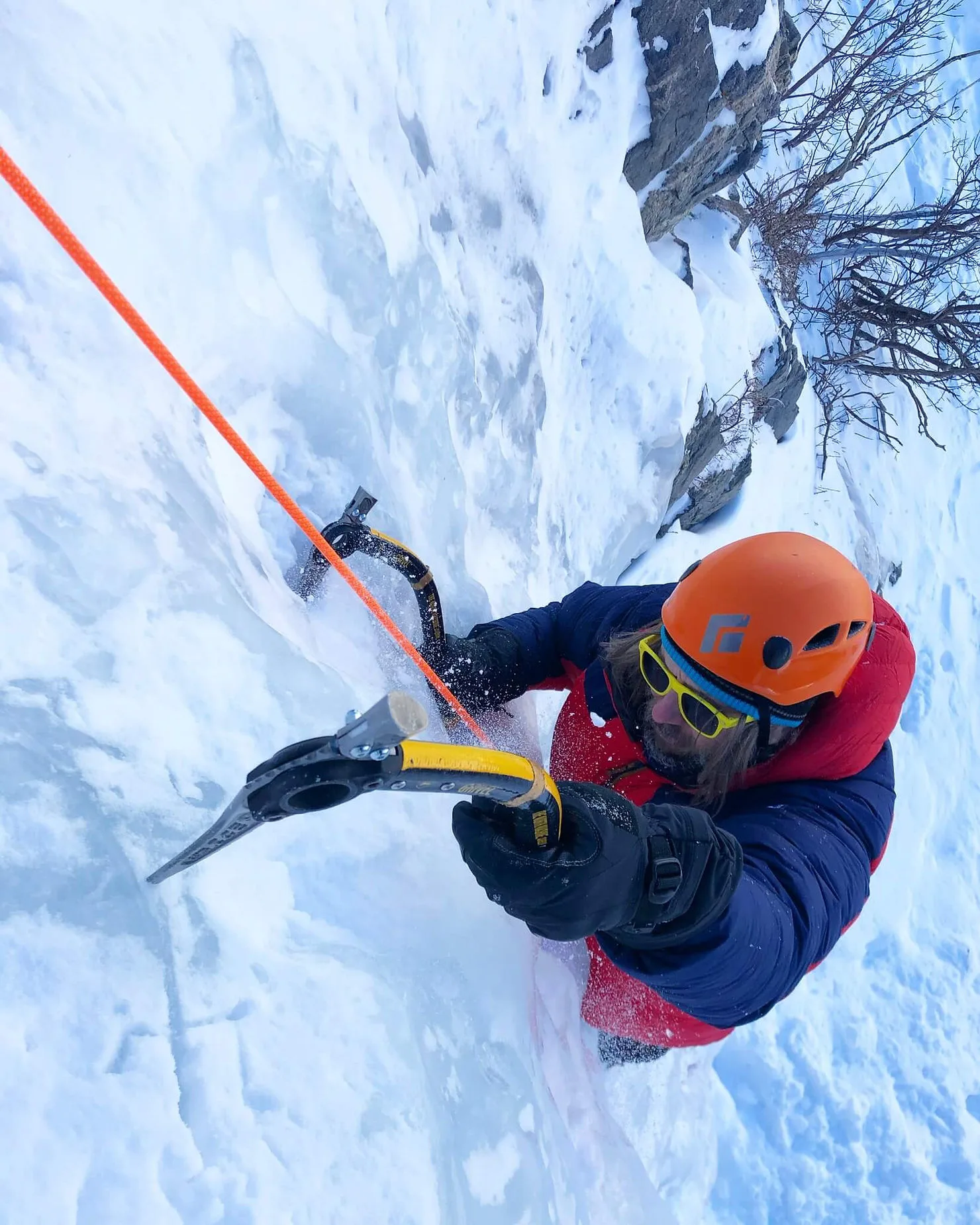
Choosing the right ice climbing gear is not just about picking the most expensive or famous brands. It’s about understanding your needs, the conditions you’ll face, and how each piece works together to keep you safe and comfortable. Take your time, ask questions, and always test your gear before heading into the mountains.
Good preparation will help you enjoy the beauty and excitement of ice climbing with confidence.
Frequently Asked Questions
What’s The Difference Between Ice Climbing Boots And Regular Winter Boots?
Ice climbing boots are much stiffer and usually have extra insulation. They’re designed to hold crampons securely, which is not possible with most regular boots. The soles are rigid to help you stand on small ice points.
How Important Is Dry Treatment For Ropes?
Dry treatment is very important. It keeps ropes from absorbing water, which can freeze and make the rope stiff, heavy, or even dangerous. Always choose a dry-treated rope for ice climbing.
Can I Use Rock Climbing Gear For Ice Climbing?
Some gear overlaps, like harnesses or helmets, but most rock climbing gear isn’t built for freezing, wet conditions. For example, ice tools and crampons are designed specifically for ice, not rock.
How Do I Know If My Crampons Fit My Boots?
Fit your crampons to your boots before you climb. Make sure all straps or step-in bindings are secure and there’s no movement. Many shops will help you check this if you ask.
What’s The Best Way To Stay Warm While Ice Climbing?
Use several thin clothing layers instead of one thick jacket. This keeps you warmer and lets you adjust as your activity level changes. Always carry spare gloves and a warm hat.
