
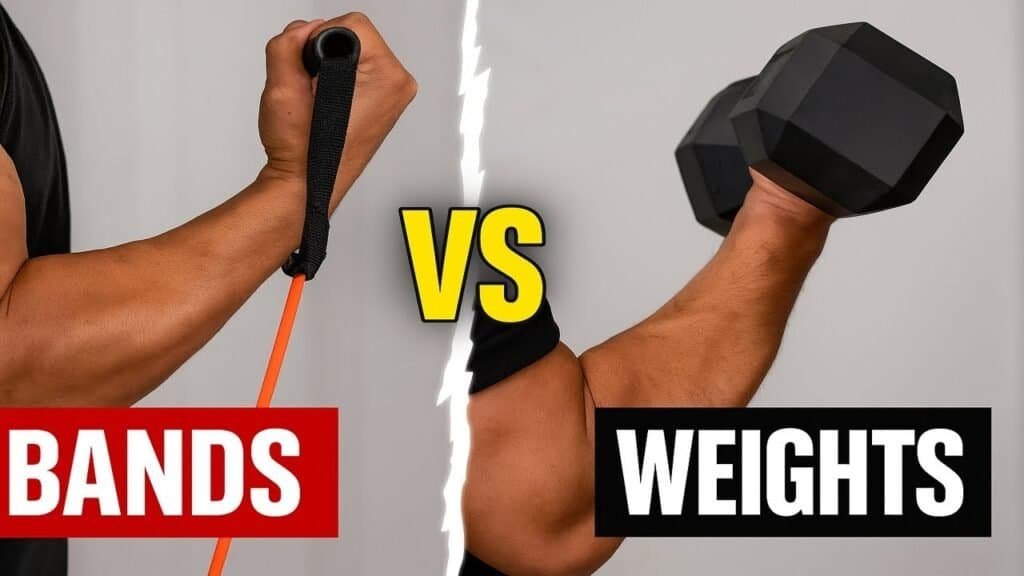
Are you wondering if resistance bands can truly replace weights in your home gym? You might think heavy dumbbells and barbells are the only way to build strength and tone your muscles.
But what if there’s a simpler, more affordable option that fits right in your living room? Resistance bands have become popular for a reason—they offer versatility, convenience, and an effective workout. Keep reading to discover how these stretchy tools stack up against traditional weights and whether they can meet your fitness goals without taking up much space or breaking the bank.
Your perfect home workout might be closer than you think.
Benefits Of Resistance Bands
Resistance bands are popular tools for home workouts. They offer many benefits compared to traditional weights.
These bands can help you build strength and improve flexibility without bulky equipment.
Portability And Convenience
Resistance bands are light and easy to carry. You can use them anywhere, at home or on the go.
You do not need a lot of space or special setup to use resistance bands. They fit in small bags or drawers.
Versatility In Exercises
Resistance bands let you do many types of exercises. They work for arms, legs, back, and core muscles.
You can change the band’s tension to increase or decrease the difficulty. This helps you grow stronger over time.
Cost-effectiveness
Resistance bands cost less than most weights or machines. They are a budget-friendly choice for home gyms.
Since they last a long time, you get good value without spending much on new equipment.
Reduced Injury Risk
Resistance bands provide smooth resistance that lowers the chance of injury. They protect your joints better than heavy weights.
The bands allow controlled movements and improve muscle balance. This helps prevent strains and sprains during workouts.
Advantages Of Traditional Weights
Traditional weights like dumbbells and barbells have been used for years. They offer many benefits that help build strength effectively.
This section explains why traditional weights remain a strong choice for home gyms.
Progressive Overload Potential
Traditional weights allow you to increase the load in small steps. This helps your muscles grow stronger over time.
You can easily add more weight as you get stronger. This makes it simple to challenge your muscles and avoid plateaus.
- Incremental weight increases
- Clear measurement of progress
- Better control over workout intensity
Muscle Building Efficiency
Traditional weights provide constant resistance through the entire movement. This helps muscles work harder and grow faster.
They target specific muscles well. You can focus on building size and strength effectively with them.
- Consistent resistance
- Better muscle targeting
- Supports heavy lifting for growth
Stability And Balance Training
Using free weights requires more balance and control. This helps improve your stability and coordination.
Resistance bands do not challenge balance the same way. Traditional weights help train your whole body, not just muscles.
- Engages stabilizer muscles
- Improves joint stability
- Enhances overall body control
Variety Of Equipment Options
Traditional weight equipment comes in many forms. You can choose dumbbells, barbells, kettlebells, and more.
This variety allows you to perform many types of exercises. You can train different muscles and keep workouts interesting.
- Dumbbells for isolated exercises
- Barbells for heavy lifts
- Kettlebells for dynamic moves
- Weight plates for adjustable loads
Comparing Resistance Bands And Weights
Resistance bands and weights are popular tools for home workouts. Both help build strength but work differently.
Choosing the right tool depends on your fitness goals and how your body responds to each type.
Muscle Activation Differences
Resistance bands create tension that increases as you stretch them. This means muscles work harder at the end of the movement.
Weights provide constant resistance throughout the exercise. This helps muscles stay engaged at all times.
- Bands activate muscles more at full stretch
- Weights keep muscle tension steady
- Both improve muscle strength but in different ways
Range Of Motion And Resistance
Resistance bands allow more freedom in movement. They can be used in many directions and angles.
Weights often limit movement to fixed paths. This can help focus on specific muscles with less risk of injury.
- Bands offer flexible and varied motion
- Weights provide stable and controlled motion
- Both can improve joint mobility and muscle control
Effectiveness For Strength Gains
Weights are usually better for building large muscle strength. They let you add more load as you get stronger.
Resistance bands improve strength but have limits. They work well for endurance and muscle tone.
| Tool | Strength Gain | Load Adjustment |
|---|---|---|
| Weights | High | Easy (add plates or heavier dumbbells) |
| Resistance Bands | Moderate | Limited (use thicker bands or double bands) |
Suitability For Different Fitness Levels
Resistance bands suit beginners and those recovering from injuries. They are gentle and easy to control.
Weights fit those with some experience. They help challenge muscles more as strength grows.
- Bands are great for light to moderate workouts
- Weights are better for heavy strength training
- Both can be used safely with proper form

Best Exercises With Resistance Bands
Resistance bands are a great tool for home workouts. They offer a simple way to add strength training without heavy weights.
You can target many muscle groups using resistance bands. Here are some of the best exercises to try.
Upper Body Workouts
Resistance bands help build strength in the arms, shoulders, and back. They allow smooth, controlled movements.
- Bicep curls
- Tricep extensions
- Shoulder presses
- Chest presses
- Lat pulldowns
Lower Body Workouts
Use resistance bands to work your legs and glutes. They add tension and improve muscle tone.
- Squats with band
- Glute bridges
- Side leg lifts
- Lunges with band
- Hamstring curls
Core Strengthening Moves
Resistance bands can help strengthen your core muscles. They add resistance to twisting and bending exercises.
- Seated twists
- Standing side bends
- Plank with band pull
- Leg raises with band
- Russian twists
Full-body Routines
Combine resistance band exercises for a full workout. These routines work many muscles in one session.
- Band squat to overhead press
- Deadlift to row
- Chest press to bicep curl
- Lunge with side raise
- Mountain climbers with band
Combining Bands And Weights
Resistance bands and weights each offer unique benefits for strength training. Combining both tools can improve your home gym workouts.
This approach helps you build strength, increase muscle tone, and add variety to your routine.
Hybrid Training Benefits
Using bands and weights together targets muscles in different ways. Bands provide constant tension, while weights add steady resistance.
This mix improves muscle endurance and strength. It also reduces injury risk by balancing your workout.
- Enhances muscle activation
- Improves joint stability
- Offers varied resistance levels
- Increases workout flexibility
Sample Workout Plans
Combine resistance bands and weights in simple workouts. You can alternate or use both in one session.
- Start with 3 sets of band squats, then 3 sets of weighted lunges
- Perform bicep curls with weights, followed by banded rows
- Do weighted deadlifts, then finish with banded glute bridges
Adjust reps and sets based on your fitness level to avoid fatigue.
Transitioning Between Tools
Move smoothly between bands and weights by planning your workout order. Start with one tool, then switch after a set or exercise.
Focus on form and control to get the most from each tool. Take short breaks if needed to reset your posture.
- Begin with lighter resistance to warm up
- Switch to weights for heavier sets
- Use bands for finishing exercises and stretching
Maximizing Results
Combine bands and weights to challenge your muscles in new ways. Change the order, resistance, and speed of exercises.
Track your progress and increase resistance over time. This helps avoid plateaus and keeps your workouts effective.
- Increase band tension or weight gradually
- Mix slow and fast movements
- Include full-body and isolation exercises
- Rest adequately between sessions

Setting Up A Home Gym
Creating a home gym is a great way to stay fit without leaving your house. You can choose different equipment based on your space and budget.
Resistance bands are popular for home workouts. They are light and easy to use. But can they replace weights? Let’s explore this as you set up your gym.
Essential Equipment Choices
Choosing the right equipment is key. Resistance bands can work well for many exercises. They add resistance without heavy weights.
Weights like dumbbells or kettlebells help build muscle strength differently. Combining both can give a balanced workout.
- Resistance bands: easy to store and versatile
- Dumbbells: good for strength training
- Kettlebells: add variety and challenge
- Yoga mat: for floor exercises and comfort
Space Optimization Tips
Home gyms often have limited space. Resistance bands take up very little room. You can hang or roll them up easily.
Weights need more floor space and storage racks. Use vertical shelves to save space. Keep your workout area clear for safety.
- Use wall hooks for resistance bands
- Stack weights on sturdy shelves
- Choose foldable or small equipment
- Keep a clear area for movement
Budget-friendly Options
Resistance bands cost less than most weights. They are a good choice if you want to spend less. You can do many exercises with just bands.
Weights are more expensive but last longer. Start small and add more equipment over time as your budget allows.
- Buy a set of resistance bands for variety
- Look for used weights or sales
- Invest in a quality yoga mat
- Focus on versatile equipment first
Safety Considerations
Safety is important when using any gym equipment. Resistance bands can snap if old or damaged. Check them before each use.
Weights can cause injury if dropped. Use a firm grip and good form. Keep your space tidy to avoid trips or falls.
- Inspect resistance bands regularly
- Use proper lifting techniques with weights
- Keep equipment organized and off the floor
- Wear proper shoes for support
Who Should Choose Bands Or Weights
Resistance bands and weights both help build strength at home. Each has benefits for different users. Choosing the right tool depends on your fitness level and goals.
This guide explains who should pick bands or weights for their home gym.
Beginners And Rehabilitation
Beginners find resistance bands easy to use. They allow gentle strength building without heavy strain. Bands also help people recovering from injuries.
Bands provide controlled resistance that supports safe movement. They reduce risk of injury during rehab exercises.
- Light resistance suits weak muscles
- Flexible tension helps improve mobility
- Low impact on joints and tendons
- Easy to adjust resistance by changing band length
Experienced Lifters
Experienced lifters often prefer weights for heavy lifting. Weights provide consistent, measurable resistance. They help build muscle mass and strength efficiently.
Bands can complement weights but may not replace the load needed for advanced training.
- Weights allow gradual increase in load
- Better for building maximal strength
- Provide stable resistance for heavy lifts
- Easy to track progress with weight increments
Athletes And Functional Training
Athletes use bands for functional and dynamic training. Bands improve speed, power, and coordination. They mimic real sport movements better than weights.
Bands also help with warm-ups and injury prevention by activating muscles gently.
- Enhance explosive power with variable resistance
- Improve balance and agility
- Train muscles through different movement planes
- Portable and easy to use anywhere
Space And Lifestyle Factors
Resistance bands take up less space than weights. They are good for small homes or apartments. Bands are light and easy to store or carry.
Weights need more storage and require a solid workout space. Consider your available space and lifestyle before choosing.
- Bands fit in bags and drawers
- Weights need racks or shelves
- Bands suit travel and outdoor workouts
- Weights are better for dedicated gym rooms
Frequently Asked Questions
Can Resistance Bands Provide Effective Strength Training?
Yes, resistance bands offer effective strength training by targeting muscles through variable tension. They improve muscle tone, endurance, and flexibility, making them a versatile alternative to weights.
Are Resistance Bands Suitable For All Fitness Levels?
Absolutely, resistance bands come in various tension levels, making them ideal for beginners to advanced users. They allow gradual progression and adapt to different workouts easily.
Can Resistance Bands Replace Free Weights Completely?
Resistance bands can replace free weights for many exercises, but heavy lifting may require traditional weights. Bands excel in functional training, rehab, and muscle activation.
How Do Resistance Bands Benefit Home Gym Workouts?
Resistance bands save space, are affordable, and portable. They provide diverse exercise options, improve strength, and enhance flexibility, perfect for home gym setups.
Conclusion
Resistance bands can be a great addition to any home gym. They offer flexibility and convenience. Weights, on the other hand, provide different benefits. Both have their unique strengths. It depends on your fitness goals. Some might prefer bands for travel.
Others might enjoy the challenge of weights. Mixing both can offer the best of both worlds. Consider your space and budget. Experiment to see what works best. Find what keeps you motivated. Stay consistent, and you’ll see progress. Fitness is a personal journey.
Enjoy the process and stay active!
