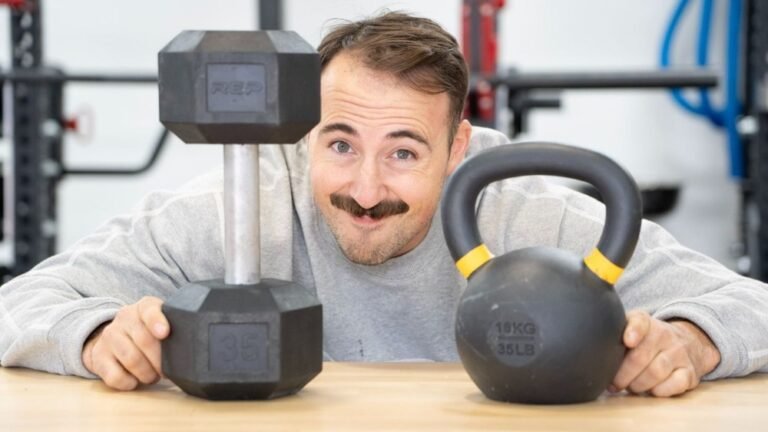
Have you ever wondered if kettlebells are actually heavier than dumbbells? It’s a question many fitness enthusiasts ask, especially when choosing the right equipment for their workouts.
Understanding the difference can help you pick the best tool to reach your fitness goals faster and safer. You’ll discover the key facts about kettlebell and dumbbell weights, how their designs affect your workout, and which one might be the right fit for your routine.
Keep reading—you might be surprised by what you learn!
Kettlebell Vs Dumbbell: Basic Differences
Kettlebells and dumbbells are common tools in strength training. Each has unique features that affect how you use them. Understanding their differences helps you choose the right one for your workout.
Both tools build muscle and improve fitness. Yet, their shape, weight, and grip change the exercise experience. Below, explore the main distinctions between kettlebells and dumbbells.
Shape And Design
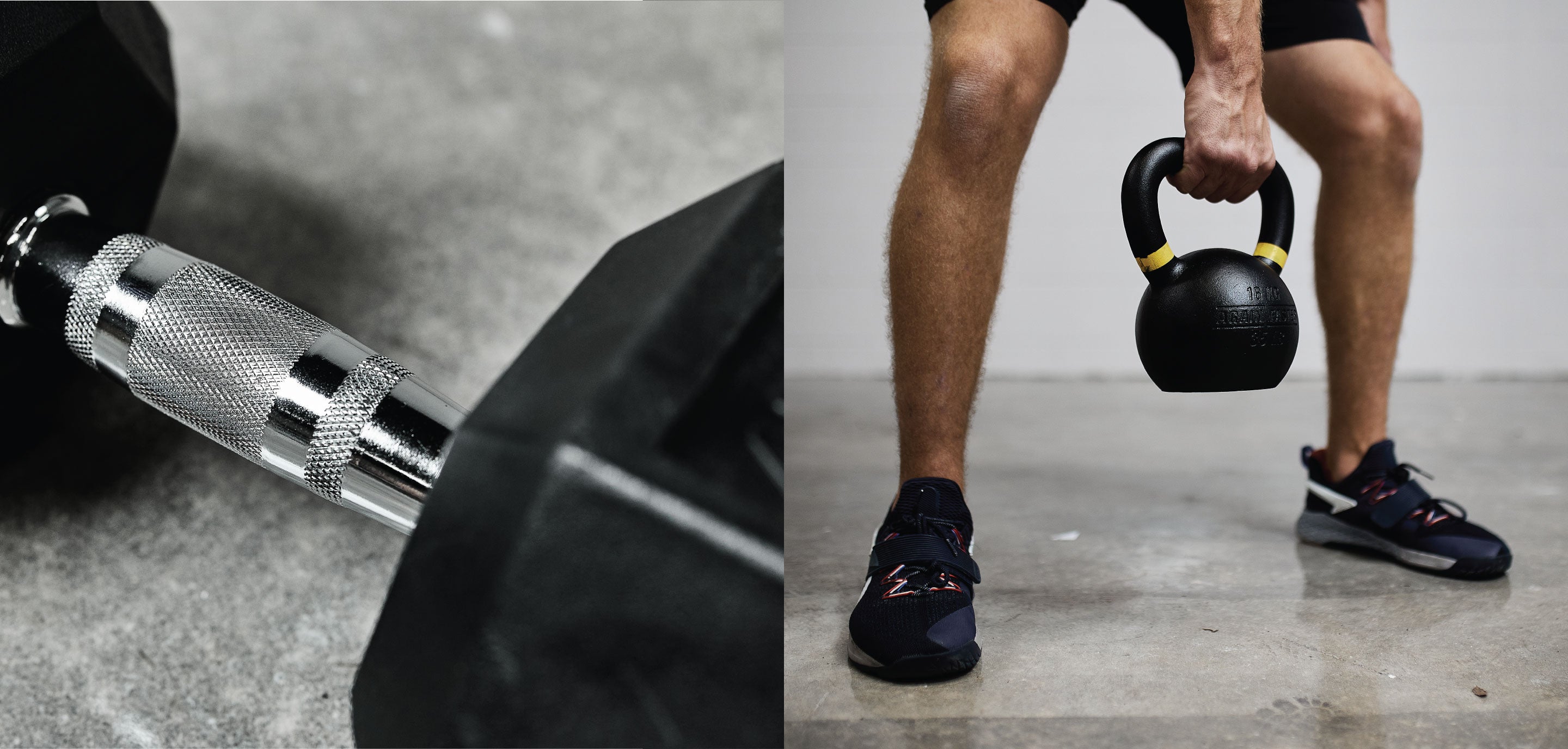
Kettlebells have a round ball shape with a handle on top. This design allows swinging and dynamic movements. Dumbbells look like two small weights connected by a straight handle. They work well for controlled, steady lifts.
Weight Distribution
Kettlebells have uneven weight distribution. Most weight sits below the handle, creating a shifting center of gravity. Dumbbells have even weight on each side of the handle. This balance makes dumbbells easier to control in many exercises.
Grip And Handling
Kettlebells require a firm grip around the handle. The handle is thicker and wider than dumbbells. This challenges your grip strength more. Dumbbells have a slimmer handle, allowing different grip styles. They are easier to hold for long sets.

Weight Comparison Between Kettlebells And Dumbbells
Comparing kettlebells and dumbbells involves understanding their weight differences. Both tools serve strength training but have unique weight features. Weight affects how exercises feel and how muscles work. This section explains the weight comparison between kettlebells and dumbbells.
Standard Weight Increments
Dumbbells often come in small, even weight steps. Usually, you see increases by 2.5 or 5 pounds. This helps users adjust weight gradually. Kettlebells have less common increments. They often jump by 5 or 10 pounds. This makes fine-tuning weights harder for some exercises.
Weight Range Availability
Dumbbells cover a wide weight range. From very light (1-5 pounds) to very heavy (over 100 pounds). Kettlebells also cover many weights. They start around 5 pounds and go up to 100 pounds or more. However, very light kettlebells are less common. Heavy kettlebells are popular for strength training.
Impact Of Weight On Exercises
Kettlebells feel different due to their shape and handle. Their center of mass is away from the hand. This changes the workout effect even at the same weight. Dumbbells feel balanced and are easier to control. This allows more precise muscle targeting. Weight choice affects exercise form and intensity.
How Weight Feels During Workouts
Feeling the weight during a workout depends on more than just numbers on the scale. Kettlebells and dumbbells may have the same weight, but they often feel very different in your hands. Understanding how weight feels can help you choose the right tool for your workout goals.
Center Of Gravity Effects
Kettlebells have an off-center weight. The handle is separate from the bulk of the weight. This shifts the center of gravity away from your hand.
Dumbbells have a balanced center of gravity. The weight is evenly spread on both sides of the handle.
This difference changes how your muscles work to control the weight. Kettlebells can feel heavier because your body must stabilize more.
Muscle Engagement Differences
Kettlebell exercises engage more muscles. Your grip, arms, shoulders, and core all work harder. The uneven weight challenges your stability.
Dumbbells focus more on isolated muscles. They allow controlled, steady movements. This can feel easier for certain exercises.
The muscle engagement with kettlebells often makes the weight feel heavier during dynamic moves.
Perceived Heaviness In Movements
Kettlebells feel heavier during swings and snatches. The momentum adds to the challenge. Your body fights to control the moving weight.
Dumbbells feel heavier in slow, steady lifts. The balanced weight lets you focus on strength. The load feels stable throughout the movement.
How heavy a weight feels depends on the type of exercise and how your body handles the load.
Choosing The Right Weight For Your Training
Choosing the right weight for your training is important for progress and safety. The correct weight helps build strength without causing injury. It also keeps workouts effective and enjoyable. Different weights suit different fitness levels and goals.
Kettlebells and dumbbells come in many sizes. Picking the right one depends on your body and what you want to achieve. Understanding how to select the right weight will improve your training results.
Assessing Fitness Level
Start by knowing your current strength and endurance. Beginners need lighter weights to learn proper form. More experienced users can handle heavier weights. Testing your limits with care helps avoid injury. Choose a weight that challenges but does not strain you.
Exercise Goals And Preferences
Your training goal guides weight choice. For building muscle, heavier weights with fewer reps work well. For endurance, lighter weights with more reps suit better. Kettlebells often require more control and balance. Dumbbells can be easier for isolated movements. Pick weights that match your workout style.
Adjusting Weight Over Time
Strength improves with practice. Increase weight gradually to keep progress steady. Listen to your body to avoid overdoing it. Changing weights prevents plateaus and keeps workouts fresh. Track your progress and adjust as needed for best results.
Common Misconceptions About Kettlebell Weight
Kettlebells often confuse beginners about their weight. Many believe kettlebells are always heavier than dumbbells. This is not always true. Misunderstandings come from how kettlebells look and are labeled. Clearing these up helps choose the right weight for your workout.
Visual Size Vs Actual Weight
Kettlebells look bigger than dumbbells of the same weight. Their round shape makes them appear heavier. Size tricks the eye, but weight is about mass, not shape. A 20-pound kettlebell weighs the same as a 20-pound dumbbell. Size does not mean more weight.
Kettlebell Weight Labels
Some kettlebells show weight in kilograms, others in pounds. Confusion happens when comparing these units. A 16 kg kettlebell weighs about 35 pounds. Always check the label carefully. Comparing units helps avoid mistakes in choosing weights.
Marketing Myths
Some sellers claim kettlebells offer more weight for less size. This is a marketing tactic, not a fact. Kettlebells and dumbbells follow the same weight standards. Trust the labeled weight, not the size or sales pitch. Real weight matters for safe workouts.
Benefits Of Using Both Kettlebells And Dumbbells
Using kettlebells and dumbbells together offers many fitness benefits. Each tool targets muscles differently. This mix creates a balanced workout plan. It helps improve strength, endurance, and coordination.
Both kettlebells and dumbbells bring unique advantages. Combining them keeps workouts fresh and effective. This variety helps users stay motivated and avoid boredom.
Versatility In Workouts
Kettlebells add dynamic, swinging movements. Dumbbells allow controlled, steady lifts. Using both opens many exercise options. You can work on strength, speed, and balance. This variety fits many fitness goals and levels.
Complementary Strength Gains
Kettlebells focus on power and core stability. Dumbbells improve isolated muscle strength. Together, they develop overall body strength. This balance helps prevent muscle imbalances and injuries. Your body becomes stronger and more flexible.
Variety To Prevent Plateaus
Using only one tool can slow progress. Muscles adapt to the same routine. Switching between kettlebells and dumbbells challenges muscles differently. This stops plateaus and boosts results. Your workouts stay exciting and productive.

Frequently Asked Questions
Are Kettlebells Heavier Than Dumbbells By Default?
No, kettlebells are not heavier by default. Both come in various weights. Weight depends on your choice, not the type of equipment.
How Does Kettlebell Shape Affect Perceived Weight?
Kettlebells have a unique shape that shifts the center of gravity. This can make them feel heavier during dynamic movements compared to dumbbells.
Can Kettlebells Replace Dumbbells For Strength Training?
Yes, kettlebells can replace dumbbells. They offer versatile, functional training with added benefits like improved grip and core engagement.
Why Do Kettlebells Feel Harder To Lift Than Dumbbells?
Kettlebells feel harder due to their offset weight distribution. This challenges stabilizer muscles more than the balanced dumbbells do.
Conclusion
Kettlebells and dumbbells can weigh the same or differ. Kettlebells have unique shapes that affect how they feel. Dumbbells are usually easier to hold and control. Choose the tool that fits your workout style best. Both help build strength and improve fitness.
Focus on form and consistency for good results. Weight alone does not decide which is better. Try both to see which you like more. Keep moving and enjoy your exercise journey.
