So, you're wondering if scuba diving is safe for children? It's a question many parents grapple with as they consider exciting new adventures for their kids. The straightforward answer is yes, with proper training and supervision, children can absolutely enjoy the wonders of scuba diving safely.
However, it's not as simple as just handing them a mask. Safety hinges on a child's readiness, their training, and strict adherence to age and depth regulations. For instance, junior diver certifications typically require a minimum age of 10 and impose significant depth limits, like 40 feet for younger teens, per established training agency guidelines as of 2026.

Today's Exclusive Deals
Limited-time Exclusive Deals. Check current discount on Amazon.
Check Price on Amazon As an Amazon Associate I earn from qualifying purchases.
Image source: Bing (Web (fair-use with source credit))
What's the Magic Age for Kids to Scuba Dive?
The exact age a child can start scuba diving isn't set in stone by a single, universal law, but rather by the standards of reputable training agencies and the physiological and psychological readiness of the child. Most major diving organizations, like PADI and NAUI, allow children as young as 10 years old to begin training for a full Open Water Diver certification. However, for introductory experiences, often called "Discover Scuba Diving" programs, the minimum age can be as low as 8.
These age cutoffs are not arbitrary. They are based on extensive research and practical experience to ensure children can handle the physical demands and cognitive requirements of diving.
- Physical Readiness: Can the child comfortably swim a certain distance and tread water confidently?
- Mental Maturity: Can they follow complex instructions and stay calm under pressure?
- Physiological Factors: Lung capacity and equalization abilities play a role.
It’s crucial to remember that these are minimums. Every child is different, and a responsible dive instructor will assess each young potential diver individually.
Junior Diver Certification: What It Means and Why It Matters
When a child successfully completes their scuba training, they don't just get a "diver" card; they get a Junior Open Water Diver certification. This certification is a testament to their skills and knowledge but comes with built-in safeguards. Understanding what this certification entails is key to ensuring a child's safety underwater.

Image source: Web (Bing) / blog.padi.com (Web image (fair-use with source credit))
The core of the Junior Diver certification is that it allows a child to dive, but always with specific limitations and under direct adult supervision. This isn't a license to explore the ocean independently.
- Depth Restrictions: These are the most significant difference from adult certifications. For example, a 10-11 year old certified diver typically cannot descend deeper than 40 feet (12 meters). A 12-14 year old might be allowed to go to 60 feet (18 meters). These limits are in place because children's bodies react differently to pressure changes than adults.
- Mandatory Supervision: Junior divers must always dive with a certified adult diver. This could be a parent, guardian, or a dive professional. The adult is responsible for the child's safety and adherence to dive plans.
- Buddy System: The buddy system is paramount in diving for everyone. For junior divers, it's non-negotiable. They learn to rely on their buddy, and their buddy relies on them, reinforcing teamwork.
Choosing a dive center that clearly explains these junior certification requirements is essential for any parent considering diving for their child.
The Essential Gear for Young Divers
Just like adult divers, children need specialized gear to explore the underwater world comfortably and safely. While the principles are the same, the equipment is scaled down and designed with a younger diver's proportions in mind. Using gear that fits properly is not just about comfort; it’s a critical safety factor.
An ill-fitting mask can cause leaks, and a poorly adjusted BCD can affect buoyancy.
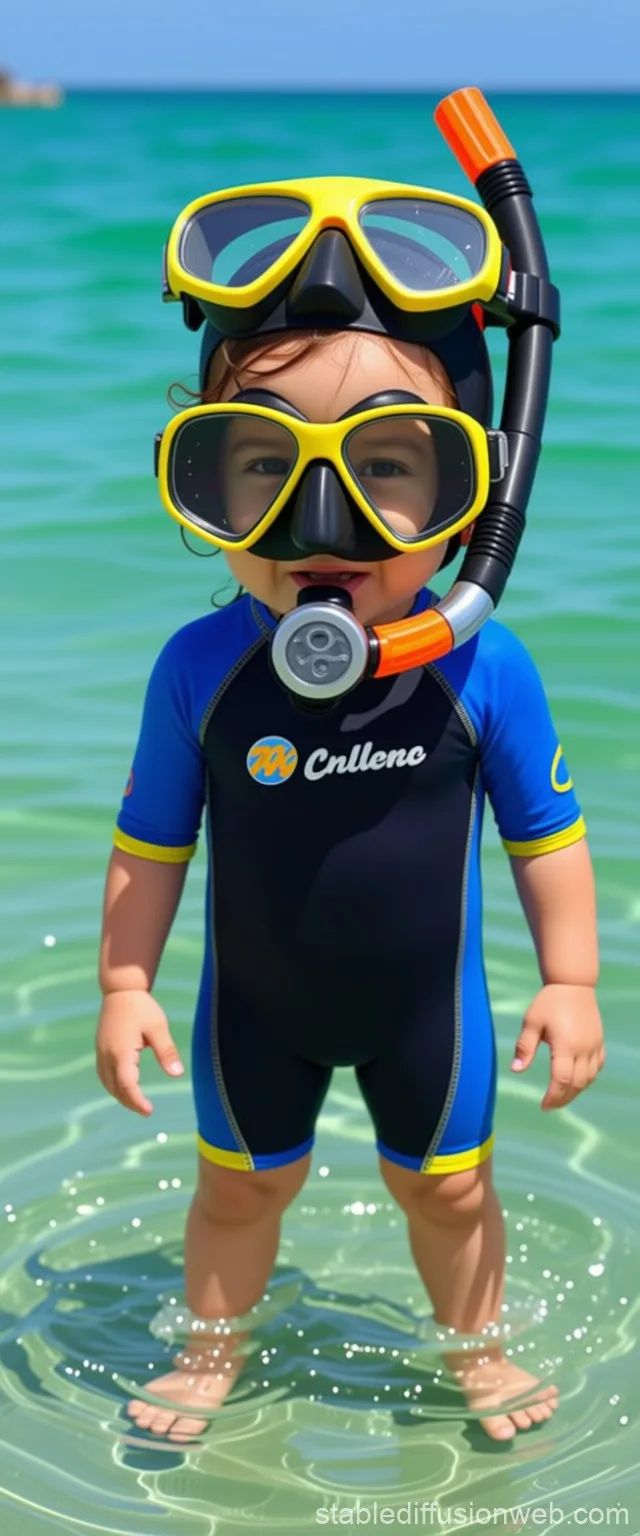
Image source: Web (Bing) / stablediffusionweb.com (Web image (fair-use with source credit))
Here's a rundown of the essential pieces:
- Mask: A mask designed for a smaller face is crucial. It needs to create a good seal without being too tight.
- Snorkel: A basic snorkel allows for breathing at the surface. Junior snorkels are typically smaller in diameter and length.
- Buoyancy Control Device (BCD): This vest helps divers float at the surface and control buoyancy underwater. Junior BCDs are sized appropriately. You can explore various options for a properly fitted BCD to ensure optimal comfort and control.
- Regulator: This device delivers air from the tank. Junior regulators often have smaller mouthpieces. Ensuring you have a reliable Scuba Diving Regulator for Beginners is paramount for safe breathing.
- Tank: The scuba tank holds the breathable air. Proper weight distribution is key for balance.
- Weight System: Proper weighting is essential for neutral buoyancy. Junior divers use weight belts or integrated systems that are easy to release in an emergency. The right Scuba Diving Weight Belt is key for balance.
- Exposure Protection (Wetsuit/Rash Guard): Depending on water temperature, a wetsuit or rash guard provides thermal protection. For warmer waters, a Scuba Diving Wetsuit for Warm Water is ideal.
How Kids Learn to Dive Safely
The journey to becoming a certified junior diver involves a structured learning process. It's designed to build skills progressively in a safe and controlled manner, blending theoretical knowledge with practical application. Dive training agencies have refined these methods over decades to ensure the highest safety standards.
The learning process typically involves three key components:
- Knowledge Development: Children learn the fundamentals of scuba diving. They study how pressure affects the body, how to breathe underwater, and crucial safety procedures. This is often done through interactive online modules or classroom sessions tailored for younger learners.
- Confined Water Dives: These are the initial dives in a controlled environment, usually a swimming pool. Here, under the direct supervision of an instructor, kids practice essential skills. This includes clearing their mask, recovering their regulator, and performing buoyancy control exercises.
- Open Water Dives: Once proficient in confined water, junior divers move to open water for their certification dives. These dives are conducted in natural bodies of water, within their designated depth limits. The instructor gradually introduces them to the underwater environment, reinforcing skills learned in the pool and building confidence.
The emphasis throughout is on mastery, not speed. Instructors ensure that each child is comfortable and competent before moving to the next stage, making the experience positive and safe.
Key Safety Protocols for Junior Divers
Safety isn't an afterthought; it's woven into every aspect of junior scuba diver training and practice. There are specific protocols that instructors and parents must adhere to, ensuring that the underwater experience remains secure and enjoyable.
- Buddy System: This is the cornerstone of dive safety. Junior divers are taught to always stay close to their buddy and communicate with them.
- Proper Pre-Dive Checks: Before every dive, a thorough buddy check is conducted. This involves checking that all equipment is present, functional, and properly connected.
- Controlled Ascent and Descent: Learning to ascend and descend slowly and in control is vital for preventing pressure-related injuries. Instructors emphasize breathing continuously during ascents.
- Buoyancy Control: Mastering buoyancy means the diver can hover neutrally in the water column. This skill is essential for preventing accidental rapid ascents or descents.
- Emergency Procedures: Junior divers are trained on what to do in various emergency scenarios. These procedures are practiced repeatedly in a calm, safe environment.
- Dive Planning: Before any dive, a plan is made, outlining depth and duration. For junior divers, this plan is created and closely monitored by their supervising adult.
Potential Risks for Children in Scuba Diving
While scuba diving offers incredible experiences, it's an activity that inherently carries risks, and these need careful consideration when it comes to children. The primary concern is ensuring that the unique physiological and psychological aspects of childhood are fully addressed in the context of diving safety. Understanding these potential risks is the first step in mitigating them.
The most significant risks are related to pressure changes and the body's response to them.
- Barotrauma: This refers to injuries caused by pressure differences. In diving, it can affect the ears, sinuses, and lungs if equalization isn't done correctly. Children's developing ear structures can sometimes make equalization more challenging.
- Decompression Sickness (DCS): DCS occurs when dissolved gases in the body form bubbles during ascent. Children's bodies may metabolize nitrogen differently than adults, making them potentially more susceptible, which is why strict adherence to dive tables and computer limits is crucial.
- Pulmonary Barotrauma (Lung Overexpansion): This is a serious risk that can happen if a diver holds their breath during ascent. As surrounding pressure decreases, lung air expands, potentially causing lung tissue rupture. This is why continuous breathing is so heavily emphasized in training.
- Nitrogen Narcosis: At deeper depths, nitrogen can have an anesthetic effect, leading to impaired judgment. Children can experience this, but it's often managed by staying within appropriate depth limits for their certification.
- Equipment Issues: Like any mechanical activity, scuba gear can malfunction. For children, incorrectly fitting gear can lead to greater discomfort and potential safety issues.
Mitigating these risks relies heavily on rigorous training, appropriate supervision, and respecting the specific limitations placed on junior divers. Choosing a dive operator that prioritizes safety and has instructors experienced with children is paramount.
When is Your Child Ready for the Underwater World?
Deciding if your child is ready for scuba diving involves looking beyond just their age. While there are minimum age requirements, a child's individual development plays a much bigger role. A key factor is their swimming ability and comfort in the water.
Can they swim a reasonable distance and tread water confidently? If the answer is a hesitant no, it’s best to build those water skills first.
Another critical aspect is their emotional maturity and ability to follow instructions. Diving requires paying attention to details and remaining calm, even if something unexpected happens. A child who panics easily or struggles to listen might not be ready.
Our research indicates that children aged 10-14 who exhibit good listening skills and can problem-solve calmly are more likely to succeed in certification programs.
Expert Tips for a Safe and Fun First Dive
Getting a child ready for their first scuba diving experience is about more than just signing them up for a course. It’s about preparation, setting expectations, and ensuring the entire process is positive and confidence-building. A great first dive sets the stage for a lifelong love of the ocean.
Here are some tips from experienced dive professionals:
- Choose the Right Dive Center: Look for a dive shop that specifically advertises junior programs and has instructors with experience teaching children. Ask about their instructor-to-student ratios for kids' courses.
- Start with a "Discover Scuba Diving" Experience: This introductory program is designed for those curious about diving but not yet ready for full certification. It allows them to try scuba in a pool or very shallow, calm open water with an instructor.
- Talk About It (Positively!): Before the dive, explain what they'll be doing in simple, exciting terms. Focus on the fun aspects, like seeing fish. Avoid dwelling on potential dangers.
- Ensure Proper Fit of Gear: Ill-fitting equipment can ruin a dive. Make sure masks seal well and BCDs are snug but comfortable. You can find some of the best beginner equipment options by looking at Best Scuba Diving Gear for Beginners.
- Be Present and Supportive: If you are a certified diver, being present can be reassuring. However, let the certified instructor lead the training and dive.
- Manage Expectations: Their first dive might be short, and they might not see a whole reef. The goal is a safe, positive experience with breathing underwater.
Frequently Asked Questions About Kids and Scuba Diving
Can my 8-year-old try scuba diving?
Yes, an 8-year-old can typically participate in an introductory scuba diving experience, often called a "Discover Scuba Diving" program. These are designed for beginners to try scuba in a controlled environment under close supervision. Full certification, however, usually has a minimum age of 10.
What's the difference between a Junior Open Water Diver and an adult Open Water Diver?
The main differences are depth limitations and supervision requirements. Junior divers have strict depth limits based on their age (e.g., 40 feet for 10-11 year olds) and must always dive with a certified adult. Adult Open Water Divers have greater depth limits and can dive with other certified adults.
Do children need special scuba gear?
Yes, children need gear that is specifically sized for them. This includes masks, snorkels, BCDs, and regulators that fit their smaller frames. Using properly sized Scuba Diving Masks for Wide Face or smaller masks is crucial for a good seal and comfort.
How deep can a 10-year-old scuba dive?
A 10-year-old who is certified as a Junior Open Water Diver typically has a maximum depth limit of 40 feet (12 meters). This limit is in place to manage the physiological stresses of pressure changes on their developing bodies. Exceeding these limits can increase the risk of decompression sickness.
Is it safe for children with asthma to scuba dive?
Generally, it is not recommended for individuals with a history of asthma to scuba dive, as breathing difficulties underwater can be extremely dangerous. A thorough medical evaluation by a physician experienced in diving medicine is always required before starting any scuba training. They will make the final determination based on the individual's condition.