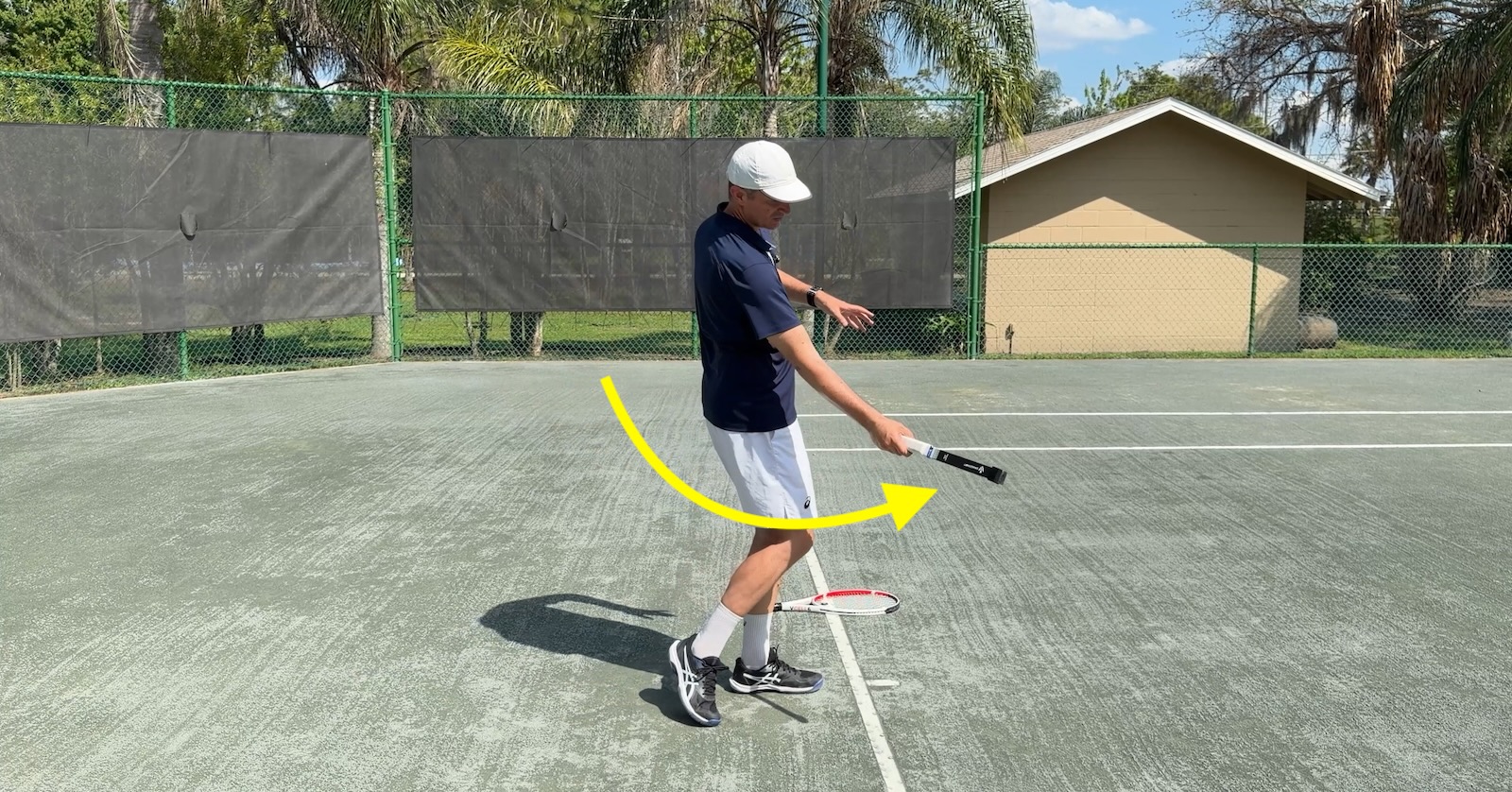
Improve your tennis swing by building better preparation, swing path, contact point, timing, and follow-through through focused practice and proper technique.
Deal
Today's Exclusive Deals
Limited-time Exclusive Deals. Check current discount on Amazon.
In the United States, tennis players of all levels practice on public courts, school teams, clubs, and private facilities while looking for ways to hit cleaner and more reliable shots. A better tennis swing is not created by simply swinging harder. It comes from controlling the racket path, using the body efficiently, and repeating good movement patterns.
A strong tennis swing combines technique, timing, balance, and decision-making. Players can improve by understanding how the racket moves from preparation to contact and by practicing small adjustments instead of making random changes. This guide explains practical methods to develop a smoother, more powerful, and more consistent tennis swing.
Source: playtennis.sg
Understand What Makes A Good Tennis Swing
A good tennis swing allows the racket to meet the ball at the right time and position while the body stays balanced. The goal is not only to hit hard but to create a repeatable motion that works under pressure.
Every effective swing has several connected parts: preparation, loading, forward movement, contact, and follow-through. When one part breaks down, the entire shot can become less accurate or less powerful.
Source: finishlinept.com
Preparation
Turn the body and move the racket into position early so you are ready before the ball arrives.
Contact
Strike the ball in front of the body with a stable racket face for better control.
Follow-through
Allow the racket to complete its natural path instead of stopping the motion suddenly.
Why Smooth Swings Usually Beat Hard Swings
Many developing players try to create more power by swinging faster with their arms. This often causes poor timing and inconsistent contact. A smoother swing uses the legs, hips, shoulders, and arm together.
Power in tennis comes from efficient energy transfer. The lower body begins the movement, the trunk rotates, and the racket accelerates through the ball. This sequence helps players hit harder without unnecessary tension.
Better efficiency
A relaxed swing reduces wasted movement and helps maintain control during longer matches.
Improve Your Tennis Swing Preparation And Setup
Better preparation is one of the fastest ways to improve a tennis swing. Many errors happen before the racket even starts moving forward because players react too slowly or stand in poor positions.
Start by using a ready position between shots. Keep your feet active, hold the racket in front of your body, and watch the opponent’s movement. Early preparation gives you more time to create a controlled swing.
Source: vekeda-sports.com
Use an early racket takeback
Move the racket back as soon as you recognize the incoming shot instead of waiting until the last moment.
Create proper spacing
Maintain enough distance from the ball so your arm can extend naturally through contact.
Stay balanced
Avoid leaning backward or reaching because unstable positioning reduces accuracy.
Practice Shadow Swings Before Hitting Balls
Shadow swings allow players to repeat movement patterns without worrying about the ball. This helps develop awareness of body rotation, racket position, and follow-through.
Perform slow repetitions first. Focus on making each part of the motion smooth before increasing speed.
Practice goal
Build a repeatable movement pattern that can transfer to real shots.
Fix Your Tennis Swing Path And Contact Point
The racket path determines how the racket travels toward and through the ball. A poor swing path can create weak shots, unwanted errors, or inconsistent spin.
For most groundstrokes, players should aim to contact the ball slightly in front of the body. The exact position depends on the stroke style, grip, and incoming ball, but late contact is a common cause of mistakes.
Source: www.youtube.com
Keep the racket moving forward
Avoid pulling across the ball too early unless creating a specific spin shot.
Watch the contact zone
Focus on meeting the ball cleanly instead of looking immediately toward the target.
Use controlled acceleration
Increase racket speed through the hitting area rather than forcing maximum speed from the start.
A reliable forehand uses body rotation, a stable hitting arm, and a controlled follow-through. Players should avoid relying only on the wrist because it can reduce consistency.
A common improvement drill is to hit slow forehands while focusing on clean contact. Once accuracy improves, gradually increase pace.
Forehand focus
Build consistency first, then add speed and spin.
Improve Backhand Swing Technique
The backhand requires good shoulder rotation and timing. Whether using a one-handed or two-handed backhand, preparation is critical.
Players often struggle when they wait too long before turning their shoulders. Early preparation creates more time and control.
Backhand focus
Turn early and maintain a stable racket face through contact.
Build More Power Without Losing Control
More powerful tennis swings come from better technique, not simply stronger muscles. Players generate force by coordinating movement from the ground upward.
A player who swings too hard with only the arm may lose accuracy. A player who uses efficient rotation and timing can often create more pace with less effort.
Source: feeltennis.net
Use your legs
Bend the knees and push from the ground to create a stronger base.
Rotate the body
Use hip and shoulder rotation to add energy to the swing.
Stay relaxed
Loose muscles allow faster racket movement and better timing.
Simple Drills For A Better Swing
Effective tennis drills repeat specific skills under controlled conditions. Players can improve faster by practicing one goal at a time.
Examples include hitting cross-court rallies for consistency, practicing slow-motion swings, and using target areas to improve accuracy.
Wall drill
Hit against a wall to practice timing, control, and repeated contact.
Target drill
Aim for specific court zones to improve placement.
Common Tennis Swing Mistakes And How To Correct Them
Most tennis swing problems come from timing, positioning, or unnecessary movement. Identifying the cause is more useful than simply trying to hit harder.
Players should change one technical element at a time. Making many adjustments at once can make it difficult to understand what actually improves performance.
Source: tennisfitnesslove.com
Hitting late
Prepare earlier and move your feet sooner to create a better contact position.
Using too much arm
Add more body rotation and reduce tension in the hitting arm.
Stopping the follow-through
Allow the racket to finish naturally after contact.
Improvement appears through better consistency, cleaner contact, and fewer unforced errors. A stronger swing does not always mean faster shots; it means more reliable results.
Players may notice that rallies feel easier because the swing requires less correction during each shot.
Positive signs
More controlled shots, improved balance, and better confidence during rallies.
Frequently Asked Questions
Improving a tennis swing requires consistent practice and attention to technique. These common questions address problems many players face.
Source: tenngrand.com
Frequently Asked Questions
Q
How long does it take to improve a tennis swing?
The timeline depends on skill level, practice quality, and consistency. Players who practice correct movements regularly may notice improvements in control and timing within weeks, while major technical changes can take longer.
Q
Should I swing harder to hit a faster tennis shot?
Not always. Better timing, body rotation, and racket acceleration often create more speed than simply using more arm force.
Q
Why do I keep hitting tennis shots late?
Late contact often happens because of slow preparation, poor footwork, or incorrect positioning. Preparing earlier and moving toward the ball can help.
Q
Can beginners improve a tennis swing without a coach?
Beginners can improve through drills, practice, and studying proper technique. A qualified coach can help identify personal errors faster, especially when progress stops.
Q
What is the most important part of a tennis swing?
Timing and clean contact are among the most important parts because they influence power, control, and consistency.
✦ Wrapping Up
Conclusion
Improving a tennis swing is a process of building better habits. The most effective approach combines early preparation, proper swing mechanics, balanced movement, and focused repetition.
Players should avoid chasing power before developing control. A smooth and repeatable swing provides the foundation for stronger shots, better accuracy, and more confidence on the court.
💡 Key Takeaway
Practice one swing improvement goal at a time, record your progress, and focus on consistent contact before increasing speed.