
Cyclists around the world often compare Shimano and SRAM when choosing components for their bikes. Both brands have their loyal followers. But why do so many riders, from beginners to pros, say Shimano is better? The reasons go beyond tradition or price. Shimano’s reputation comes from decades of innovation, reliability, and a focus on real-world cycling needs.
Choosing between Shimano and SRAM can feel confusing if you’re new to bike parts. The differences are not always obvious until you ride, maintain, and push your bike in various conditions. This article will dive into the details that matter—explaining why Shimano stands out, where SRAM falls short for many riders, and what these choices mean for your cycling experience.

Today's Exclusive Deals
Limited-time Exclusive Deals. Check current discount on Amazon.
Check Price on Amazon As an Amazon Associate I earn from qualifying purchases.Whether you ride road, mountain, or city bikes, these insights will help you make a confident decision.
Shimano’s Dominance: History And Global Trust
Shimano started in 1921 in Japan and has become the world’s largest bike component maker. SRAM, based in the United States, is a much younger company, founded in 1987. This long history gives Shimano a big advantage in experience, innovation, and global distribution. Shimano supplies parts for almost every style of bike, from casual city bikes to Olympic-winning machines.
The numbers tell a clear story. Shimano holds over 70% of the global bike component market (compared to about 15% for SRAM). This dominance is not just about being first. It’s about trust earned through consistency and quality. When you buy a Shimano-equipped bike, you are joining millions of satisfied riders worldwide.
Today's Exclusive Deals
Limited-time Exclusive Deals. Check current discount on Amazon.
Check Price on Amazon As an Amazon Associate I earn from qualifying purchases.Non-obvious insight: Shimano’s history means that even mechanics and bike shops in small towns know how to service their parts. You’re rarely left searching for help or spares, no matter where you ride.
Shifting Performance: Precision And Smoothness
One of the most important parts of your bike is the gear system. Smooth, reliable shifting makes your ride enjoyable and efficient. Shimano is widely praised for its silky gear changes. Riders often say Shimano’s shifting feels “invisible”—it just works, every time.
Why Shimano Shifting Feels Better
- Indexing accuracy: Shimano’s gear indexing is famous for staying precise, even after months of use.
- Low lever effort: Shimano shifters need less force, making them comfortable for all hand sizes.
- Shadow rear derailleur: Shimano’s Shadow design keeps the derailleur close to the frame, protecting it from hits and making shifting more stable.
SRAM’s “DoubleTap” and “Exact Actuation” systems are fast, but many riders find them less intuitive or need more hand strength. SRAM shifting can feel “crisper” but also “clunkier,” especially under load.
Example: Mountain Biking
On technical mountain bike trails, Shimano’s clutch derailleurs keep the chain tight and quiet. SRAM’s clutch works, but some riders notice more chain slap or dropped chains. Shimano’s system is more forgiving if your bike takes a hit.
Today's Exclusive Deals
Limited-time Exclusive Deals. Check current discount on Amazon.
Check Price on Amazon As an Amazon Associate I earn from qualifying purchases.Reliability And Durability: Lasting Performance
Why do so many bike shops recommend Shimano for everyday riders? The answer is simple: Shimano parts last longer and need less adjustment. Many commuters and touring cyclists report riding for years with only basic maintenance.
Common Durability Advantages
- Stainless steel hardware: Fights rust, even in rain or snow.
- Thicker, stronger chains: Wear out slower than SRAM chains, saving money.
- Better sealing on bearings: Hubs and bottom brackets stay smooth for years.
In side-by-side tests, Shimano cassettes and chains often survive longer before needing replacement. This is true across all price levels, from entry to pro.
Practical Example
A Shimano Deore or 105 groupset can often go 10,000 miles with just chain changes. Many SRAM mid-range setups need more frequent tuning and earlier replacement of cassettes or shifters.
Non-obvious insight: Shimano’s cross-compatibility means you can often mix older and newer parts without problems. This flexibility makes maintenance easier and cheaper.
Cost And Value For Money
Shimano is known for offering better value at nearly every price point. Their parts are often cheaper to buy and keep running. This is true in both initial price and total cost over the life of your bike.
Side-by-side Price Example
Let’s compare a typical mid-range setup for road bikes:
| Groupset | Retail Price (approx.) | Average Lifespan | Replacement Cost |
|---|---|---|---|
| Shimano 105 R7000 | $600 | 8,000-12,000 miles | Low |
| SRAM Rival 22 | $700 | 5,000-8,000 miles | Medium |
Over time, Shimano’s longer life means fewer replacements. You save money and avoid the hassle of more frequent repairs.
Hidden Savings
Shimano’s wider spare parts availability means you can find parts almost anywhere, often for less money. SRAM parts sometimes cost more, especially outside North America or Europe, and can be harder to source in smaller bike shops.
Ease Of Maintenance And Setup
Many riders don’t want to be bike mechanics—they want to ride. Shimano wins here with easier setup and less maintenance. Mechanics often say, “Shimano just works,” even after a quick install.
Shimano’s Maintenance Advantages
- Cable routing: Shimano’s cable systems are simpler to route and tune.
- Fewer proprietary tools: Most adjustments use standard bike tools.
- Clearer documentation: Shimano’s instructions are easy to follow, even for beginners.
SRAM sometimes requires special tools or very fine adjustments. If your setup drifts out of tune, it’s often harder to fix. For home mechanics, this can be frustrating.
Case Study: Hydraulic Brakes
Shimano’s hydraulic disc brakes are praised for easy bleeding and reliable stopping power. SRAM brakes sometimes need more frequent bleeds, and their lever feel can be less consistent, especially on lower-end models.
Range And Compatibility
Shimano’s product line covers everything—from basic city bikes to high-end racing machines and even e-bikes. SRAM focuses more on high-performance mountain and road bikes, with fewer options for casual or utility riders.
Compatibility Table
Here’s a look at how Shimano and SRAM stack up for key bike types:
| Bike Type | Shimano Options | SRAM Options |
|---|---|---|
| City/Commuter | Extensive (Nexus, Alfine, Tourney) | Limited |
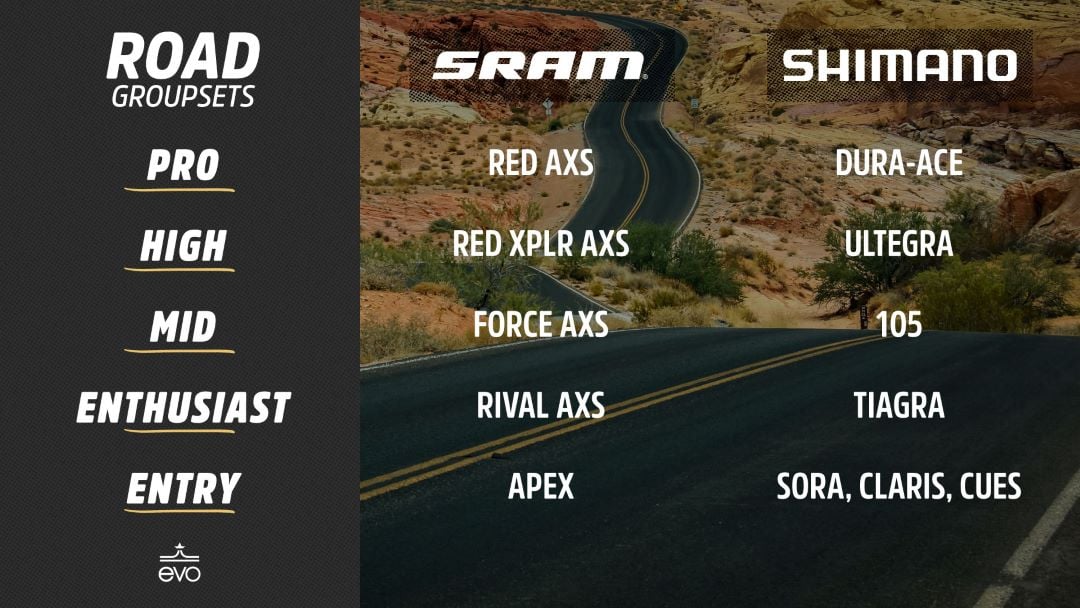
| Road Racing | Full Range (Claris to Dura-Ace) | Good (Apex to Red) |
| Mountain | Full Range (Altus to XTR) | Good (SX to XX1 Eagle) |
| Gravel | GRX series | Rival/Force/Red XPLR |
| E-Bike | Steps, LinkGlide | Very limited |
This range means you can start with a basic Shimano setup and upgrade over time, often keeping some old parts. With SRAM, you may need to replace more if you change your riding style.
Global Availability And Support
No matter where you travel, you’ll find Shimano parts and service. From rural Asia to small-town Europe, Shimano’s reach is unmatched. This is critical for touring cyclists, world travelers, and anyone who needs quick repairs.
Real-world Example
Touring cyclists crossing continents nearly always choose Shimano. Why? If a derailleur or shifter breaks, a replacement is almost always available. SRAM support is strong in the US and Western Europe, but much weaker in Africa, Asia, and South America.
Non-obvious insight: Even in remote areas, mechanics are trained on Shimano. You’re much less likely to get stuck with a non-repairable problem far from home.
Innovation: Practical Progress, Not Just Hype
SRAM is known for introducing new ideas, like 1x drivetrains and wireless shifting. But Shimano’s innovations focus more on real-world reliability and gradual improvement.
Key Shimano Innovations
- Di2 electronic shifting: Offers smooth, reliable shifts in all weather.
- Hyperglide cassettes: Allow multiple gears to shift at once, smoother than older systems.
- Ice-Tech brakes: Reduce heat, making long descents safer.
While SRAM’s wireless “eTap” is exciting, some riders find it less reliable for long trips or extreme weather. Shimano’s Di2 is trusted by pro teams and commuters alike.
Example: 12-speed Drivetrains
Both brands offer 12-speed systems. Shimano’s cassettes often provide closer gear steps, making it easier to find the perfect cadence. SRAM’s wide-range cassettes are good for steep climbs, but some riders don’t like the bigger jumps between gears.

Ergonomics And User Experience
How does each brand feel in your hands? Shimano wins for comfort and ease of use, especially for smaller hands or long rides.
Why Shimano Feels Better
- Shorter lever throw: Less hand movement, less fatigue.
- Smoother lever shape: Fits more hand sizes.
- Quieter operation: Less drivetrain noise.
SRAM shifters can feel sharp or stiff, especially for people with less hand strength. Shimano’s design is more forgiving, making it ideal for all ages and body types.
Consistency Across Price Levels
Shimano is famous for trickle-down technology. Features from their top “Dura-Ace” or “XTR” lines often appear in lower-priced models within a year or two. This means even budget bikes get advanced tech—like clutch derailleurs or improved brakes.
SRAM’s lower-end parts often feel very different from their high-end gear. You might get a great experience on SRAM Red, but not on the cheaper SX or Apex lines.
Real User Feedback And Industry Opinions
Look at online forums, bike shop reviews, and pro team choices. Shimano is almost always the default recommendation for new riders or anyone who values reliability.
Sample Quotes
- “I’ve ridden 20,000 miles on my Shimano 105. Just change the chain and clean it—never had a single issue.”
- “SRAM is lighter and great for racing, but I spend more time tuning it. Shimano is set-and-forget.”
- “When my SRAM shifter broke on tour, no one in the next three towns had a replacement. With Shimano, I was back on the road in a day.”
Common Criticisms Of Shimano—and The Reality
No brand is perfect. Shimano gets some criticism for:
- Less innovation in recent years: True, but their focus is on refinement, not hype.
- Heavier weight: Some SRAM parts are lighter, but the difference is small for most riders.
- Slower to adopt 1x or wireless: Shimano now offers these, but only after making sure they are reliable.
Most of these points matter more for racers or tech-focused riders. For 90% of cyclists, Shimano’s strengths outweigh these minor drawbacks.
When Might Sram Be Better?
While Shimano wins for most riders, SRAM has strengths:
- Weight savings: Top SRAM parts are lighter, good for racing.
- 1x drivetrains: SRAM led the way in single-chainring mountain bikes.
- Wireless shifting: SRAM’s eTap is the most advanced wireless system.
If you value these features and are comfortable with more setup and maintenance, SRAM can be a good choice.
Summary Table: Shimano Vs Sram Key Differences
To help you compare at a glance, here’s a summary of the main differences:
| Feature | Shimano | SRAM |
|---|---|---|
| Shifting Feel | Smoother, lighter | Crisper, louder |
| Reliability | Top-rated | Good, but less consistent |
| Cost | Lower overall | Higher, especially for spares |
| Maintenance | Easier, less frequent | Needs more tuning |
| Parts Availability | Global | US, EU focused |
| Innovation | Steady, practical | Faster, more experimental |
| Suitability | All riders | Racers, tech-lovers |

Key Mistakes To Avoid When Choosing
- Buying on hype alone: Fancy features are useless if the parts are hard to tune or replace. Focus on what you need.
- Ignoring local support: Always check which brand your local shops stock and know how to service.
- Not considering long-term costs: Cheaper to buy does not always mean cheaper to own.
- Overlooking comfort: Try both brands if possible. Hand comfort and shifting feel are personal.
- Mixing incompatible parts: Shimano and SRAM parts do not always mix. Check compatibility before swapping.
Final Thoughts
Shimano’s strengths—reliability, value, ease of use, and global support—make it the better choice for most cyclists. Whether you commute, tour, or ride for fun, Shimano’s focus on real-world needs delivers consistent satisfaction. SRAM shines in some high-performance areas but asks more from the rider in maintenance and tuning.
The real secret? Shimano’s “boring” reputation is a blessing. You spend less time fixing and more time riding. For most, that’s the best reason of all.
If you want to learn more about bike components history and technology, the Shimano Wikipedia page offers more in-depth information.
Frequently Asked Questions
Why Do So Many Bikes Come With Shimano Instead Of Sram?
Most bike brands choose Shimano because of its global availability, reliability, and broad product range. Shimano’s pricing and support make it a safe, trusted choice for bike makers and customers everywhere.
Can I Mix Shimano And Sram Parts On My Bike?
In general, mixing Shimano and SRAM is not recommended. Their shifters, derailleurs, and cassettes use different designs. Some advanced riders mix certain chains or cassettes, but it’s best to use a complete system from one brand for smooth shifting.
Is Sram Better For Mountain Biking?
SRAM is known for 1x drivetrains and wide-range cassettes, which are popular in mountain biking. However, Shimano now offers similar options. For most riders, Shimano’s reliability and easier setup are bigger advantages on the trail.
Are Shimano Brakes Better Than Sram Brakes?
Most riders and mechanics agree that Shimano hydraulic brakes are easier to bleed and more consistent in feel. SRAM’s higher-end brakes are strong, but their lower models sometimes need more maintenance.
Which Brand Should I Choose If I Travel A Lot?
If you plan to travel or tour in different countries, Shimano is the better choice. You’ll find parts and service almost anywhere, while SRAM support is limited in some regions. This makes Shimano the safer option for long-distance adventures.

