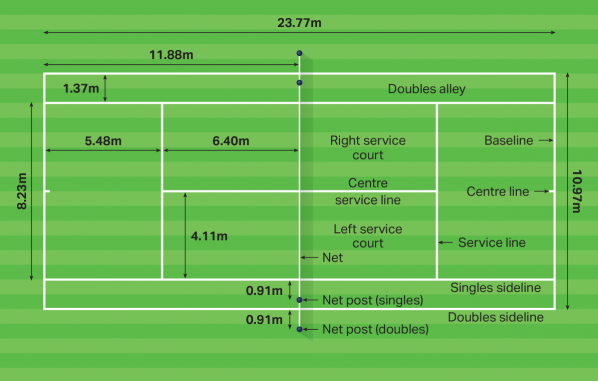
A tennis court is more than just a rectangle with lines. Its size affects how players move, the speed of the game, and even the strategies used by professionals. If you are a tennis fan, a beginner learning the game, or considering building your own court, understanding the exact dimensions and layout is essential. This guide explains every aspect of the tennis court size, from official measurements to how different surfaces and court types can change the experience. We will also explore why these details matter, show how courts compare to other sports fields, and answer the questions many beginners overlook.
Official Tennis Court Dimensions
Tennis is a sport with strict rules for court size, set by the International Tennis Federation (ITF). These rules ensure fairness and consistency across professional and amateur games worldwide.

Today's Exclusive Deals
Limited-time Exclusive Deals. Check current discount on Amazon.
Check Price on Amazon As an Amazon Associate I earn from qualifying purchases.Standard Measurements
A full-size tennis court has these key measurements:
- Length: 23.77 meters (78 feet)
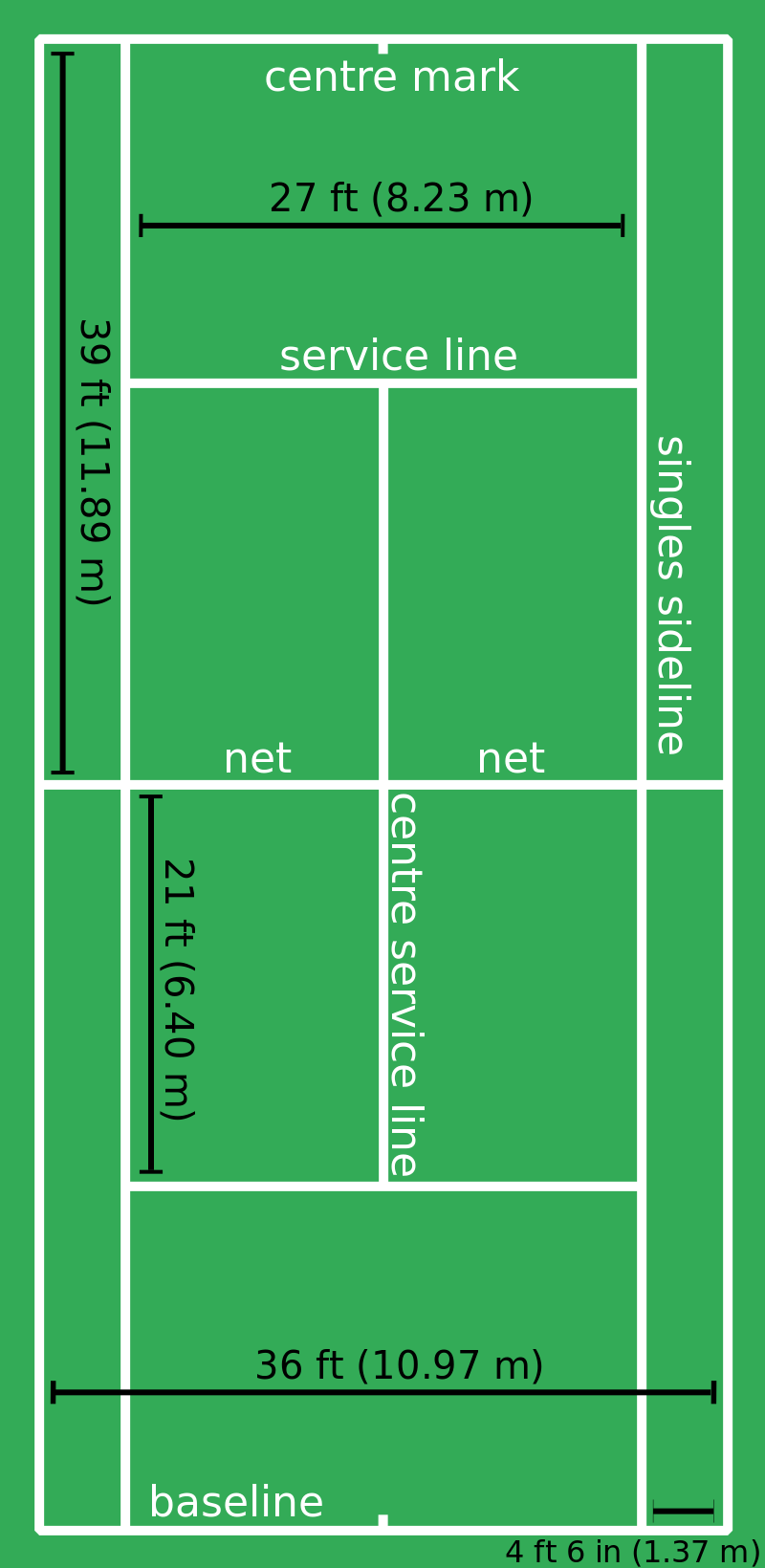
- Width: 8.23 meters (27 feet) for singles, 10.97 meters (36 feet) for doubles
These measurements are taken from the outside edges of the boundary lines. The difference in width between singles and doubles is because doubles matches use the side alleys, which singles matches do not.
The Net
The net divides the court into two equal halves:
- Net Height (center): 0.914 meters (3 feet)
- Net Height (posts): 1.07 meters (3 feet 6 inches)
- Net Length: Extends across the full width of the court
The net is slightly higher at the posts than at the center, creating a small dip. This shape can affect the path of the ball and strategies for shots near the net.
Markings And Lines
Every tennis court has a series of clearly marked lines, each with a specific role:
- Baseline: The line at each end of the court, parallel to the net
- Service Line: Parallel to the net, located 6.4 meters (21 feet) from it
- Center Service Line: Divides the two service boxes on each side
- Singles Sideline: Marks the width for singles play
- Doubles Sideline: Marks the width for doubles play
- Center Mark: Small mark in the center of each baseline
All lines must be the same color, and they are typically white for visibility. The lines are considered part of the area they define; if a ball touches a line, it counts as in.
Minimum Area For Play
The playing area must also include space around the court for players to move safely. The recommended minimum area is:
- Length: 36.58 meters (120 feet)
- Width: 18.29 meters (60 feet)
This extra space allows for chasing wide balls and ensures safety, especially in professional tournaments.
Court Size For Singles Vs Doubles
The difference between singles and doubles courts comes down to the use of the side alleys.
Singles Court
- Width: 8.23 meters (27 feet)
- Area: 195.65 square meters (2,106 square feet)
Doubles Court
- Width: 10.97 meters (36 feet)
- Area: 260.87 square meters (2,808 square feet)
The extra 1. 37 meters (4. 5 feet) on each side allows doubles teams to cover more ground and makes the game more dynamic.
Visual Comparison
Here’s a side-by-side look at singles and doubles court sizes:
| Type | Length | Width | Area |
|---|---|---|---|
| Singles | 23.77 m | 8.23 m | 195.65 m² |
| Doubles | 23.77 m | 10.97 m | 260.87 m² |
Many beginners overlook how much the extra space in doubles influences tactics and movement.
Tennis Court Surface Types And Their Impact
The size of the court remains the same, but the surface can change how the game feels. The main surfaces are:
- Hard Court: Made of concrete or asphalt, covered with acrylic. Medium speed, consistent bounce.
- Clay Court: Crushed brick or stone. Slower, high bounce, and longer rallies.
- Grass Court: Natural grass. Fastest surface, low and unpredictable bounce.
- Artificial Grass or Carpet: Used indoors or in regions with heavy rain.
Surface And Space Usage
While measurements stay official, the space around the court may need adjustments depending on the surface. For example, grass courts may require more maintenance space, while clay courts need room for sweeping and line cleaning equipment.
How Surface Affects Play
- Hard courts are balanced. Players need to cover the whole court efficiently.
- Clay courts encourage sliding, so players use the extra space differently.
- Grass courts often result in quicker points, so less lateral movement is common.
These subtle differences can influence how much safety space is needed and what type of shoes or equipment is best.
Key Areas And Their Sizes
Each part of the court has its own dimensions. Understanding these helps both players and coaches plan better strategies.
Service Boxes
Each side of the net has two service boxes (left and right):
- Length (from net): 6.4 meters (21 feet)
- Width: 4.115 meters (13.5 feet)
The center service line divides them, and serves must land in the correct box.
Baseline And Sideline Widths
- Baseline Width: 10 cm (4 inches)
- Sideline Width: 5 cm (2 inches)
These widths are small, so precision is key in both play and court construction.
Net Posts
- Distance from sideline: 0.914 meters (3 feet) outside the doubles sideline
This placement makes sure the net is taut and at the correct height.
Center Mark
- Length: 10 cm (4 inches)
It helps players position themselves correctly when serving.
Court Size For Other Tennis Formats
Besides singles and doubles, other tennis formats use different court sizes.
Mini Tennis (short Court Tennis)
Often used for children or beginners:
- Length: 11-18 meters (36-59 feet)
- Width: 5-6 meters (16-20 feet)
These courts help new players develop skills without getting overwhelmed by the full-size court.
Wheelchair Tennis
Uses the same court as standard tennis, but the rules allow two bounces. The extra space around the court is even more important for wheelchair maneuverability.
Beach Tennis
Played on sand with a smaller court:
- Length: 16 meters (52.5 feet)
- Width: 8 meters (26.2 feet)
The net is also higher (1. 7 meters or 5. 58 feet).
Comparison: Tennis Court Vs Other Sports Courts
People often wonder how a tennis court compares to courts for other sports. Here’s a look at the differences:
| Sport | Length | Width | Area |
|---|---|---|---|
| Tennis (doubles) | 23.77 m | 10.97 m | 260.87 m² |
| Badminton | 13.4 m | 6.1 m | 81.74 m² |
| Basketball | 28 m | 15 m | 420 m² |
| Volleyball | 18 m | 9 m | 162 m² |
A tennis court is much larger than a badminton or volleyball court, but smaller than a basketball court.

Why Court Size Matters
The dimensions of a tennis court are not just tradition. They affect:
- Player movement: The amount of space defines how much running is required.
- Strategy: Wider courts for doubles mean more teamwork and coverage.
- Safety: Extra space around the court prevents injuries.
- Consistency: Standard sizing ensures skills transfer from one court to another.
Many beginners do not realize that even small errors in court size can change the balance of play. For example, a court that is too short can give an unfair advantage to players who stand closer to the baseline.
Building A Tennis Court: Practical Considerations
If you want to build a tennis court, knowing the exact size is only the start. Here are important factors to keep in mind:
Space Needs
Besides the playing area, you’ll need space for:
- Fencing: To keep balls inside the court.
- Lighting: If you plan to play at night.
- Benches and storage: For players and equipment.
- Drainage: Especially important for outdoor courts.
Orientation
Courts are usually built north-south to minimize sun glare. This is a detail that many beginners miss, but it makes a big difference in outdoor play.
Surface Choice
Pick a surface based on climate, maintenance, and player preference. For example, hard courts last longer in rainy areas, while clay is popular in dry, warm climates.
Cost
Building a full-size court can cost from $30,000 to over $100,000 USD, depending on location, materials, and extras.
Maintenance
Different surfaces need different maintenance. Grass courts require the most, while hard courts are the easiest. Lines should be repainted regularly to keep the court official.
Common Mistakes With Court Size
Even experienced players and builders make errors with court size. Here are some to avoid:
- Not allowing enough space around the court: Leads to safety risks and less enjoyable play.
- Incorrect line widths: Can cause disputes about whether balls are in or out.
- Improper net height: Changes the way the ball travels.
- Wrong surface slope: Courts need a slight slope for drainage (about 1% gradient).
- Building for singles only: Limits court use if you want to play doubles in the future.
Paying attention to these details saves money and headaches later.
Tennis Court Size In Major Tournaments
Professional tournaments follow ITF rules strictly. However, the area around the court is often larger to fit cameras, officials, and crowds.
- Grand Slam tournaments like Wimbledon, Roland-Garros, the US Open, and the Australian Open all use the official size.
- The extra area can make the court feel bigger on TV, but the playing surface is always the same.
Some tournaments use colored courts or slightly different surfaces, but the fundamental size never changes.
How Court Size Affects Tennis Skills
Learning on a full-size court develops different skills compared to playing on a short court. For example:
- Footwork: More space means better movement skills.
- Endurance: Longer rallies and more running build stamina.
- Shot selection: Players must use angles and depth wisely.
Children often start on smaller courts, but moving to the standard size is essential for developing a complete game.
Measuring And Marking A Court
If you’re setting up a court for the first time, accuracy is important. Here’s a practical overview:
- Use a long measuring tape (at least 30 meters).
- Mark the outer lines first, then add service lines and center lines.
- Double-check the diagonals—the distance from one baseline corner to the opposite corner—should be exactly 25.97 meters (85 feet 3 inches).
- Use chalk or removable paint for temporary courts.
- For permanent courts, use weather-resistant paint and make sure surfaces are flat and debris-free.
Even minor mistakes in marking can lead to confusion during play.
Tennis Court Size For Home And Recreational Use
Not everyone has space for a full tournament court. Here’s how to adapt:
- Smaller courts are fine for practice or casual games.
- Portable nets and line markers can help you create a temporary court on a driveway or playground.
- Be aware that playing on a smaller court changes timing and tactics.
Some people use pickleball or badminton courts as substitutes, but official tennis play requires the standard size.
Non-obvious Insights Most Beginners Miss
- The court’s orientation to the sun is just as important as its size. Playing with the sun in your eyes can ruin the game.
- Surface drainage affects safety and playability. Courts with poor drainage can become slippery or damaged quickly, especially in rainy climates.
- The height of the fence matters as much as the court itself. It should be at least 3 meters (10 feet) to keep balls from flying out.
- The thickness of the lines is regulated—too thick or thin lines can make a court unofficial.
- The slope of the court (about 1% or 1 cm per meter) is needed so water runs off. Flat courts hold water and become unsafe.
Tennis Court Size And Official Rules
The ITF is the global authority for tennis rules. The official guidelines ensure that every tournament, from the local club to the Olympics, uses the same size court. For more detail, you can visit the Wikipedia Tennis Court page for diagrams and extra specifications.
Frequently Asked Questions
How Big Is A Tennis Court In Feet And Meters?
A full-size tennis court is 23.77 meters (78 feet) long and 8.23 meters (27 feet) wide for singles matches. For doubles, the width increases to 10.97 meters (36 feet).
What Is The Minimum Area Needed To Build A Tennis Court?
The minimum recommended area, including safe space around the court, is 36.58 meters (120 feet) long by 18.29 meters (60 feet) wide. This ensures enough room for movement and fencing.
Are There Different Sizes For Children’s Tennis Courts?
Yes, mini tennis courts are smaller, usually 11-18 meters long and 5-6 meters wide. These are designed for young players to learn the basics before moving to a full-size court.
Does The Surface Type Change The Court Size?
No, the official size stays the same, but the type of surface (hard, clay, grass) changes the feel of play. Maintenance space and safety zones may need small adjustments depending on the surface.
Can You Play Tennis On A Smaller Court At Home?
Yes, you can play casual games on a smaller court, but it won’t follow official rules. Using temporary lines and portable nets lets you enjoy tennis even with limited space, but expect the game to feel different.
A tennis court’s size may seem straightforward, but the details matter for both fun and fairness. Whether you play for competition or recreation, knowing these facts helps you get the most from every game.