
Skydiving is one of the most thrilling experiences anyone can have. The feeling of freefall, the wind rushing past, and the beauty of the earth below create memories that last a lifetime. But along with the excitement comes a fair share of risk.
Understanding the risks involved in skydiving is essential for anyone considering the sport, whether for a single jump or as a regular hobby. This article explores all the major risks of skydiving, explains their causes, and gives practical advice for staying safe in the sky.

Today's Exclusive Deals
Limited-time Exclusive Deals. Check current discount on Amazon.
Check Price on Amazon As an Amazon Associate I earn from qualifying purchases.The Main Risks In Skydiving
Skydiving is an adventure sport, and like all adventure sports, it carries several dangers. Here are the main risks that every skydiver should know about before making that leap.
1. Equipment Failure
Skydivers depend on their gear for survival. While modern parachutes are highly reliable, equipment failure still happens, though rarely.
The main parachute sometimes does not open properly. According to the United States Parachute Association (USPA), the chance of a main chute malfunction is about 1 in 1,000 jumps. However, every skydiver has a reserve parachute. This backup is packed and checked by a certified rigger. The chance that both main and reserve fail is extremely low, but not zero.
Today's Exclusive Deals
Limited-time Exclusive Deals. Check current discount on Amazon.
Check Price on Amazon As an Amazon Associate I earn from qualifying purchases.Common causes of equipment failure include:
- Improper packing: Even a small mistake can lead to a twist or tangle.
- Worn-out gear: Old or poorly maintained equipment is riskier.
- Pilot chute hesitation: The small chute that pulls out the main can get stuck.
Most accidents from equipment failure happen when jumpers panic or do not follow emergency procedures quickly enough. Proper training and regular gear checks greatly reduce this risk.
2. Human Error
Many skydiving accidents result from human error rather than equipment problems. Mistakes can happen in many ways, including:
- Incorrect body position during exit or freefall
- Misjudging altitude and opening the parachute too late
- Improper landing technique
For example, if a skydiver does not keep their legs up during landing, they can break ankles or legs. New jumpers are more likely to make these mistakes, especially if they are nervous or distracted. Even experienced jumpers can become overconfident and skip important safety checks.
Today's Exclusive Deals
Limited-time Exclusive Deals. Check current discount on Amazon.
Check Price on Amazon As an Amazon Associate I earn from qualifying purchases.3. Weather Hazards
Weather plays a huge role in skydiving safety. Strong winds, sudden storms, or poor visibility can turn a safe jump into a dangerous one.
Skydivers should never jump in bad weather. Wind can push jumpers off course, making it difficult to reach the landing zone. Rain and low clouds can hide obstacles or confuse jumpers about their altitude. Cold weather can also cause numb fingers, making it hard to control the parachute.
Here’s a comparison of safe and unsafe weather conditions for skydiving:
| Condition | Safe for Jumping? | Risks |
|---|---|---|
| Clear, light winds | Yes | Minimal |
| Strong winds (>15 mph) | No | Hard landings, off-target drift |
| Rain or storms | No | Poor visibility, wet gear |
| Low clouds/fog | No | Obstacle collision, altitude confusion |
Always listen to the instructors and check the weather forecast before your jump.
4. Hard Landings
Landing is one of the most dangerous parts of skydiving. Hard landings can cause sprains, fractures, or even spinal injuries. The risk increases if the jumper misjudges the landing, tries to land in a small area, or faces strong wind gusts.
Most drop zones have soft, clear landing areas, but sometimes jumpers land off course and hit trees, rocks, or even buildings. Proper landing training and calm decision-making help prevent injuries.
5. Mid-air Collisions
Skydiving is often done in groups. Mid-air collisions can happen if jumpers are too close together during freefall or under parachute. Collisions can cause entanglements, broken bones, or unconsciousness.
The risk is higher in busy drop zones or during formation skydives when many jumpers link up in the air. Good communication, following jump plans, and keeping space between skydivers reduce this danger.
6. Canopy Collisions
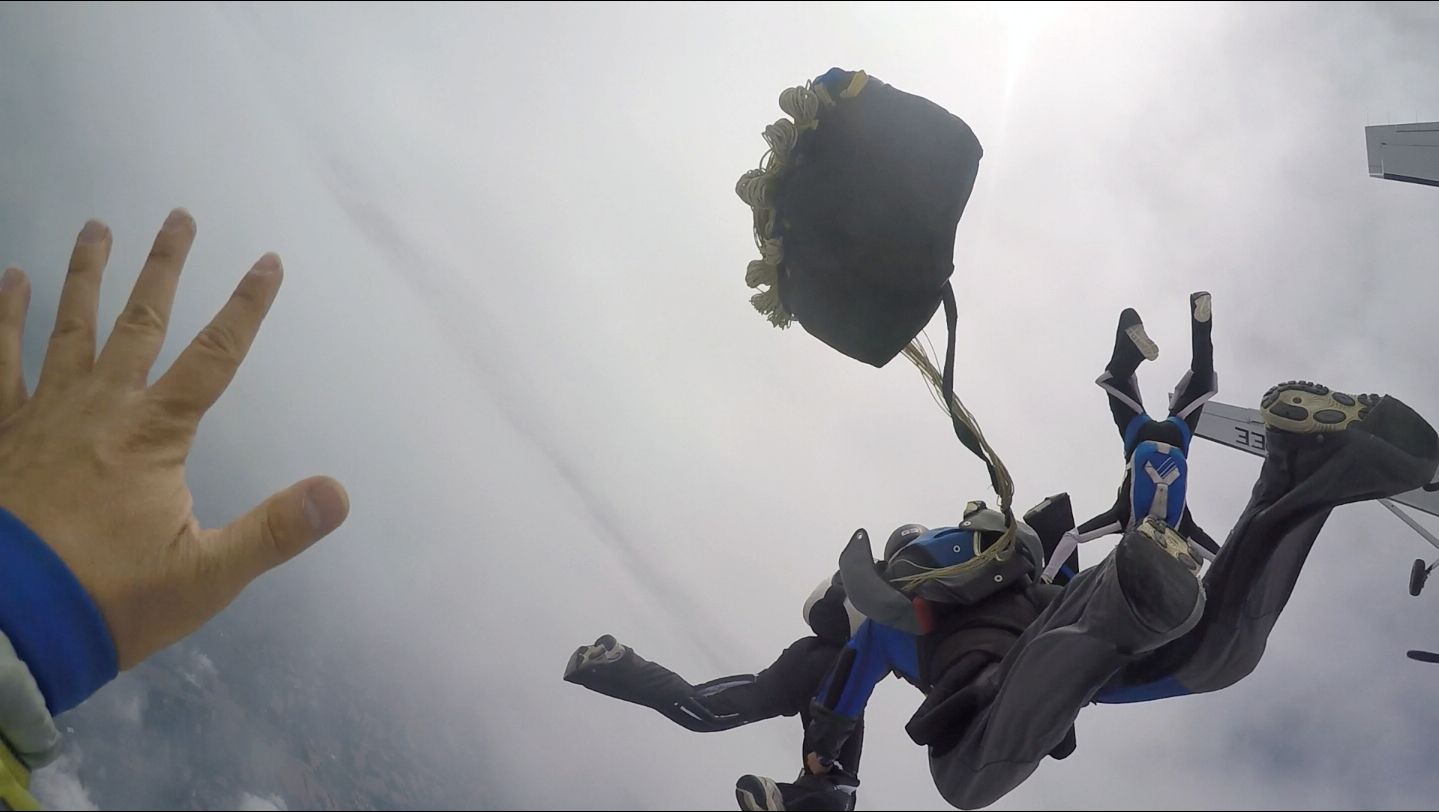
After the parachute opens, the sky is full of canopies. Canopy collisions occur when two or more parachutes bump into each other. These accidents can collapse a canopy or twist the lines, causing a dangerous spin.
Here’s a comparison of what to do and what NOT to do if a canopy collision occurs:
| Action | Recommended? | Why |
|---|---|---|
| Look around before turning | Yes | Prevents collisions with others |
| Make sudden, sharp turns | No | Can surprise nearby jumpers |
| Cut away a tangled canopy if needed | Yes | Switches to reserve safely |
| Panic and freeze | No | Delays emergency response |
Most canopy collisions happen below 1,000 feet, where there is less time to recover. Training and awareness are the best prevention.
7. Medical Emergencies
Skydiving puts stress on the body. Heart attacks, fainting, or seizures can occur, especially for those with hidden medical problems. The sudden adrenaline rush and rapid change in altitude can trigger health issues.
People with heart disease, epilepsy, or severe asthma should check with a doctor before skydiving. Even healthy people can become dehydrated, dizzy, or overwhelmed by fear.
8. Inadequate Training
Not all skydiving accidents happen to beginners, but inadequate training is a major risk. If a jumper does not understand emergency procedures, gear handling, or landing techniques, the risk of injury goes up.
There are different training methods:
- Tandem jump: The student is attached to an instructor.
- Static line: The parachute opens automatically after exit.
- Accelerated Free Fall (AFF): The student jumps with instructors but opens their own chute.
Each method has strict requirements. Skipping steps or rushing training can lead to mistakes in real jumps.
9. Altitude Awareness Problems
Jumpers must always know their altitude. Not opening the parachute at the right height is one of the most dangerous mistakes. Distraction, excitement, or poor equipment (like a broken altimeter) can cause loss of altitude awareness.
Automatic Activation Devices (AADs) are now common. They open the reserve parachute if the main is not deployed in time. But jumpers should never rely only on gadgets—knowing when to deploy is a basic skill.
10. Unexpected Landing Areas
Sometimes, wind or mistakes cause jumpers to land far from the planned area. Unexpected landing areas can be dangerous due to:
- Power lines
- Water bodies
- Roads or highways
- Rough terrain
Landing in these places can lead to serious injury or even death. Good navigation skills and following the landing pattern help reduce this risk.
11. Parachute Malfunctions
Besides total equipment failure, parachutes can malfunction in other ways. Examples include:
- Line twists: The lines get tangled, spinning the jumper.
- Slider up: The part that slows chute opening stays stuck.
- Bag lock: The chute does not come out of its bag.
Most malfunctions can be fixed if the jumper reacts quickly and follows training.
12. High-speed Landings
Some jumpers perform advanced maneuvers called swooping. This involves diving the parachute to gain speed, then leveling out close to the ground. If done wrong, high-speed landings can cause broken bones or worse.
Swooping is only for very experienced jumpers. Beginners should stick to straight-in approaches and learn from instructors before trying advanced moves.
13. Freefall Disorientation
During freefall, it’s easy to get disoriented—losing track of up, down, or direction. This can lead to spinning, tumbling, or forgetting to deploy the parachute at the right time. Good body position and training help prevent this.
Some jumpers use audible altimeters that beep at preset heights as a backup reminder.
14. Psychological Stress And Panic
Even the bravest people can become overwhelmed by fear during a skydive. Panic can cause jumpers to forget training, freeze, or make unsafe moves. First-time jumpers are especially at risk.
Most drop zones offer pre-jump training to help manage nerves. Breathing exercises and focusing on each step help reduce stress.
15. Lack Of Supervision Or Poor Drop Zone Management
Finally, not all drop zones are equal. Lack of supervision or poor management increases risk for everyone. Safe drop zones have:
- Certified instructors
- Regular gear checks
- Strict safety briefings
- Clear emergency plans
Do your research before picking a drop zone. Choose centers with a good safety record and experienced staff. Checking reviews and certifications is a smart move.
Real Data: How Risky Is Skydiving?
To understand the actual risk, let’s look at the statistics. Skydiving is safer than many people think, especially compared to other activities.
| Activity | Fatalities per 100,000 Jumps/Events | Injury Rate |
|---|---|---|
| Skydiving (USPA, 2022) | 0.39 | 0.99 per 1,000 jumps |
| Motorcycling | 21 | Much higher |
| Scuba Diving | 1.98 | About 1 per 2,000 dives |
| Running a Marathon | 1.01 | Varies |
While skydiving involves real risk, it’s not as deadly as many believe—especially if you follow safety procedures and jump with a reputable organization.
Non-obvious Insights For Beginners
- Mental preparation is as important as physical training. Many first-time injuries happen not from gear or technique, but from panic or mental overload. Practice calming techniques and visualize the jump before you go.
- Choose your drop zone wisely. Not all centers have the same safety culture. Look for those with USPA or similar certifications, good equipment maintenance, and positive reviews.
How To Minimize The Risks
Skydiving is never 100% safe, but you can make it much safer by following a few key rules:
- Always check your equipment before every jump.
- Listen carefully to your instructors and ask questions if you’re unsure.
- Never jump in bad weather, even if others do.
- Practice emergency drills until they become automatic.
- Stay within your skill level—do not attempt advanced maneuvers before you’re ready.
If you have health concerns, talk to your doctor first. Tell your instructor about any medical conditions so they can help you stay safe.
Frequently Asked Questions
Is Skydiving Safe For Beginners?
Yes, skydiving is generally safe for beginners when done at a certified drop zone with proper training. Most first jumps are tandem, where an instructor handles the parachute. This reduces risk.
What Happens If Both Parachutes Fail?
This is extremely rare. Modern parachute systems have a main and a reserve, plus an Automatic Activation Device (AAD) that opens the reserve if needed. The chance of both failing is very low.
How Likely Is Injury Or Death In Skydiving?
According to the USPA, the fatality rate is about 1 in 250,000 jumps. Most injuries are minor, such as sprained ankles from hard landings. Serious accidents are rare with proper training and equipment.
Can You Skydive With Medical Conditions?
Some health problems, like heart disease or epilepsy, can make skydiving dangerous. Always check with your doctor before jumping and tell your instructor about any medical issues.
How Do I Choose A Safe Drop Zone?
Look for drop zones certified by national organizations, with experienced instructors and positive safety records. Read reviews and ask about their emergency procedures before booking. For more details, you can visit the Wikipedia page on Skydiving.
Skydiving is a unique adventure that comes with real risks. By understanding those risks and preparing properly, you can enjoy the thrill while keeping yourself as safe as possible. Whether you jump once or a hundred times, knowledge and respect for the sport are your best safety tools.

