
Rugby is a sport that brings excitement, teamwork, and physical power together. But before the first whistle blows, there is one thing every player and fan should know: the size of the field. The rugby field is not just grass and lines. Its dimensions affect the pace, tactics, and style of play. If you’ve ever wondered, “How big is a rugby field?” you are not alone. Many new fans, and even experienced ones, get confused about the exact measurements and why they matter. This guide will help you understand the full details of a rugby field, including comparisons, practical examples, and insights beginners often miss.
Standard Rugby Field Dimensions
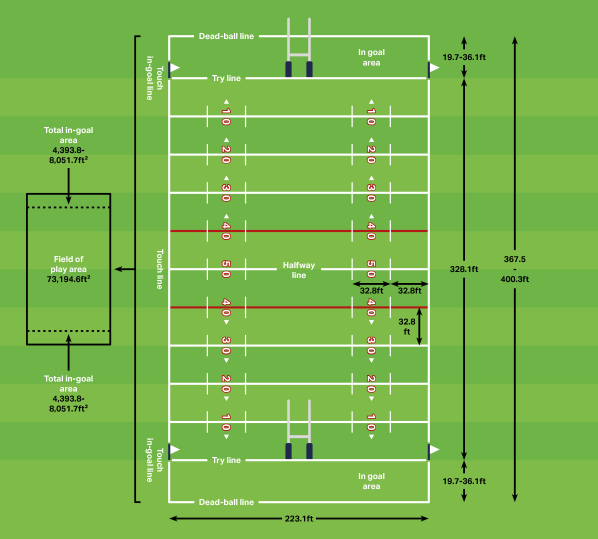
A standard rugby field is rectangular and has specific measurements set by World Rugby, the game’s governing body. The rules are strict, but there is a small range allowed for different stadiums or levels.

Today's Exclusive Deals
Limited-time Exclusive Deals. Check current discount on Amazon.
Check Price on Amazon As an Amazon Associate I earn from qualifying purchases.| Feature | Minimum | Maximum |
|---|---|---|
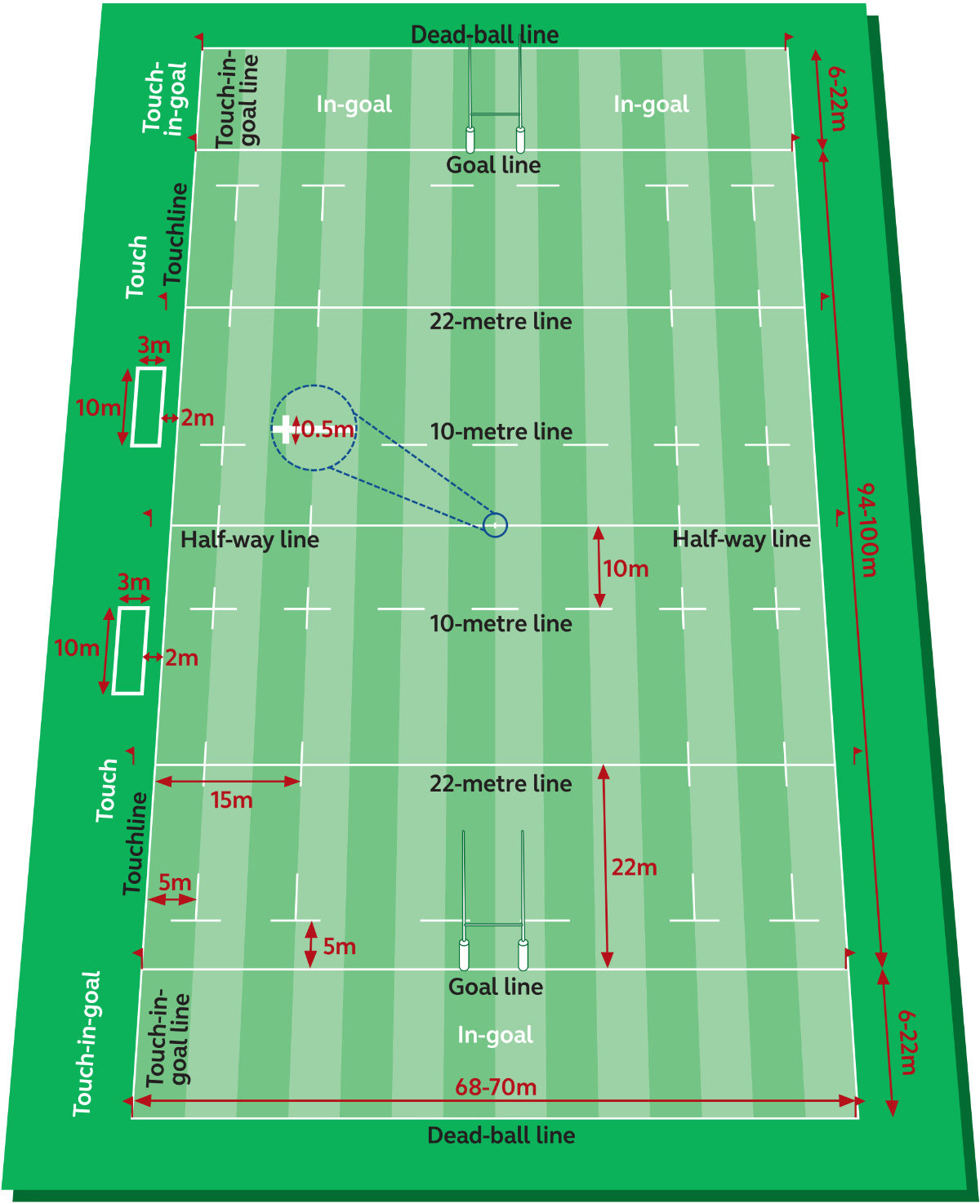
| Field Length (goal line to goal line) | 94 meters (102.8 yd) | 100 meters (109.4 yd) |
| Field Width | 68 meters (74.4 yd) | 70 meters (76.5 yd) |
| In-goal Area (depth beyond goal line) | 6 meters (6.6 yd) | 22 meters (24 yd) |
So, the main playing area is about 100 meters long and 70 meters wide. But the total length, including the in-goal areas, can reach up to 144 meters.
Key Field Markings And Their Purposes
Understanding the lines and zones on a rugby field is crucial. These markings are not just for looks—they help referees, players, and coaches manage the match.
- Halfway Line: Splits the field into two equal halves.
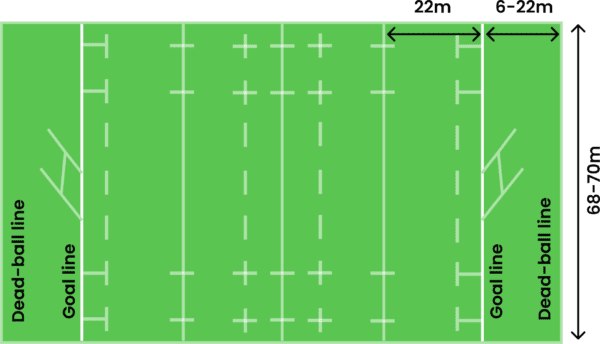
- 22-Meter Lines: Run parallel to each goal line, 22 meters out. Teams restart play here often.
- 10-Meter Line: Used for kick-offs. The ball must cross this line.
- 5-Meter Line: Important for scrums and lineouts close to the goal.
- Try Line (Goal Line): The line a player must cross to score a try.
- Dead Ball Line: The end boundary of the in-goal area.
- Touch Line: The side boundaries of the field.
A beginner might miss how important the space between the 22-meter lines is. Many tactical kicks and defensive strategies rely on these zones.
Today's Exclusive Deals
Limited-time Exclusive Deals. Check current discount on Amazon.
Check Price on Amazon As an Amazon Associate I earn from qualifying purchases.In-goal Area: The Scoring Zone
The in-goal area is where tries are scored. It lies between the goal line and the dead ball line. Unlike soccer, the size of this area can change from field to field.
The minimum depth is 6 meters, but some stadiums have in-goal areas up to 22 meters. A longer in-goal area can favor attacking teams, as they have more room to ground the ball. However, it also means defending teams must cover more ground.
Comparing Rugby Field Sizes To Other Sports
Many people compare rugby fields to soccer or American football fields. Here’s a quick comparison to help you visualize the size.
| Sport | Field Length | Field Width |
|---|---|---|
| Rugby (Union) | 100 meters | 70 meters |
| Soccer | 100-110 meters | 64-75 meters |
| American Football | 91.4 meters (100 yards) | 48.8 meters (53.3 yards) |
Notice that a rugby field is both longer and wider than an American football field. This extra space creates more open play and running.
Today's Exclusive Deals
Limited-time Exclusive Deals. Check current discount on Amazon.
Check Price on Amazon As an Amazon Associate I earn from qualifying purchases.Field Size Variations: Sevens, Youth, And Women’s Rugby
Not all rugby matches use the full-size field. Here are some examples:
- Rugby Sevens: Uses a standard size field, but only 7 players per side instead of 15. This creates more space and faster play.
- Youth Rugby: Children’s matches often use smaller fields, about half the standard size, to match their physical abilities.
- Women’s Rugby: At top levels, the field is the same size as men’s rugby. For younger or beginner levels, smaller fields can be used.
For example, under-10s might play on a field only 60 meters long and 35 meters wide.
Why Field Size Matters In Rugby
The field size shapes the way rugby is played. More space means:
- Players need better fitness and speed.
- There are more chances for open runs and line breaks.
- Kicking is a bigger part of tactics, as long kicks can turn defense into attack.
On smaller fields (like for youth), the game is tighter and more focused on passing and teamwork.
A common mistake is thinking that a smaller field makes the game easier. In reality, less space means less time to make decisions and more physical challenges.
The Goal Posts And Their Place
At each end, behind the goal line, stand the rugby posts. They have two tall uprights with a crossbar. The posts are:
- 5.6 meters apart (width)
- Crossbar is 3 meters high
- Uprights reach at least 3.4 meters above the crossbar
They are used for kicks (conversions, penalties, and drop goals). Their position doesn’t change, even if the in-goal area is longer.
Field Surface And Safety Considerations
Most rugby is played on natural grass, but some modern stadiums use artificial turf. The surface must be even and free from holes or hard objects. Safety padding is often used around the posts and along the touch lines.
One insight beginners miss: wet or muddy fields can change the game completely. Players need to adjust their running, tackling, and kicking when the surface is slippery.
Rugby Field Layout: A Quick Reference
Here’s a simple summary of the main field areas:
| Area | Main Function |
|---|---|
| Main Playing Field | General play |
| In-Goal Area | Scoring tries |
| Touch Lines | Boundary for play |
| 22-Meter Lines | Restarts and tactical play |
| 5-Meter Lines | Scrums and lineouts |
Practical Tips For Visiting Or Watching A Rugby Match
If you ever get the chance to stand on a rugby field, you’ll notice just how big it feels. Here are a few things to keep in mind:
- The distance between the try lines is longer than most people expect.
- The in-goal area can feel almost as big as a basketball court.
- Watching from the stands, the field may look smaller than it really is—TV cameras can’t show the full width.
If you want to see official diagrams and rules, the World Rugby site has clear images and full details.
Frequently Asked Questions
How Big Is A Rugby Field In Feet?
A standard rugby field is about 328 feet long (goal line to goal line) and 229.6 feet wide. Including the in-goal areas, it can reach up to 472 feet in total length.
Are All Rugby Fields The Same Size?
No. There is a small allowed range. Length can be between 94 and 100 meters, and width between 68 and 70 meters. In-goal areas also vary.
How Does A Rugby Field Compare To A Soccer Field?
They are similar in length, but rugby fields are usually wider. This allows for more running and open play.
Why Does The In-goal Area Size Change?
Stadium size and safety zones can affect in-goal area size. As long as it’s within the rules (6 to 22 meters), the field is approved.
What Are The Lines On A Rugby Field For?
Lines mark zones for restarts, scoring, scrums, and boundaries. Each line has a special purpose in play and tactics.
A rugby field’s size is one reason the sport is so intense and exciting. Next time you watch or play, you’ll see just how much those extra meters matter.

