Basketball is a fast, exciting sport played by millions around the world. Whether you watch NBA games or pick up a ball at your local court, you’ll notice every player has a special job on the floor. These jobs are called positions. Understanding what each position does is key to enjoying the game and improving your skills. This guide breaks down every position in basketball, their roles, and what makes each one unique.
Exclusive Deals
Limited-time Exclusive Deals. Check current discount on Amazon.
Check Price on Amazon As an Amazon Associate I earn from qualifying purchases.The Five Traditional Basketball Positions
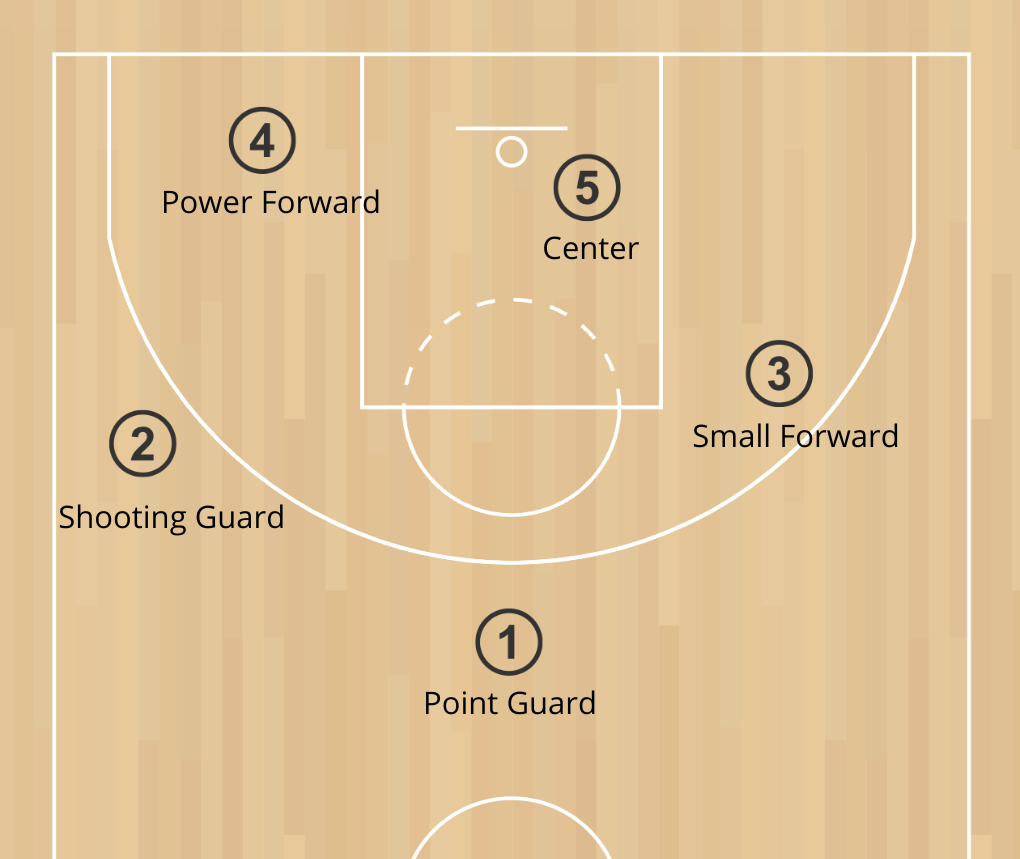
Every basketball team has five players on the court. Each player fills a certain position, with its own duties and style of play. While modern basketball often blurs these lines, the classic five-position system is still the foundation:
- Point Guard (PG)
- Shooting Guard (SG)
- Small Forward (SF)
- Power Forward (PF)
- Center (C)
Let’s explore each position in detail.
Point Guard (pg)
The point guard is often called the “floor general.” This player controls the ball and the flow of the offense. You’ll usually find the team’s best passer and ball-handler at this spot. The point guard’s main job is to set up plays, pass to teammates, and make quick decisions under pressure.
Exclusive Deals
Limited-time Exclusive Deals. Check current discount on Amazon.
Check Price on Amazon As an Amazon Associate I earn from qualifying purchases.Key skills for a point guard:
- Strong dribbling
- Excellent vision
- Leadership
- Quickness
Famous examples include Chris Paul and Magic Johnson. Point guards are usually not the tallest players, but they are among the smartest and most skilled. A mistake beginners often make is thinking the point guard only passes. In today’s game, many point guards are also top scorers.
Shooting Guard (sg)
The shooting guard is known for scoring. This position often features the team’s best shooter. A shooting guard must be able to make baskets from long range and drive to the hoop. They need speed, good footwork, and the ability to create their own shot.
Exclusive Deals
Limited-time Exclusive Deals. Check current discount on Amazon.
Check Price on Amazon As an Amazon Associate I earn from qualifying purchases.Key skills for a shooting guard:
- Accurate shooting (especially three-pointers)
- Athleticism
- Good defense
- Ability to move without the ball
Famous shooting guards include Michael Jordan, Kobe Bryant, and Ray Allen. Shooting guards usually partner with the point guard to form a strong backcourt. A detail beginners miss: top shooting guards are also strong defenders and rebounders, not just scorers.
Small Forward (sf)
The small forward is the most versatile position. They do a bit of everything—shoot, drive, defend, and rebound. Small forwards are often athletic, with the speed of a guard and the size to play near the basket.
Key skills for a small forward:
- All-around scoring
- Defensive flexibility
- Rebounding
- Passing
Great small forwards like LeBron James and Kawhi Leonard can guard multiple positions and play inside or outside. Beginners often overlook how much small forwards help with passing and defense. Their flexibility can change a team’s style of play.
Power Forward (pf)
The power forward is usually one of the team’s strongest players. They play close to the basket, fighting for rebounds and scoring in the paint. Modern power forwards also shoot from mid-range and beyond.
Key skills for a power forward:
- Physical strength
- Rebounding
- Inside scoring
- Setting screens
Tim Duncan and Kevin Garnett are famous power forwards. In today’s game, players like Giannis Antetokounmpo can handle the ball and shoot, showing how the position is evolving. Many beginners miss that power forwards must be good defenders, not just big scorers.
Center (c)
The center is usually the tallest player. Their main job is to protect the basket and score near the hoop. Centers are crucial for defense, rebounding, and blocking shots.
Key skills for a center:
- Height and size
- Shot blocking
- Rebounding
- Inside scoring
Legends like Shaquille O’Neal and Hakeem Olajuwon dominated this position. Modern centers, such as Nikola Jokic, are also skilled passers. A common mistake: thinking centers only defend. In today’s basketball, centers are often key playmakers.
Position Comparison: Physical Traits
Here’s a simple look at the average height and typical body type for each position:
| Position | Average Height (NBA) | Body Type |
|---|---|---|
| Point Guard | 6’1″ – 6’4″ | Lean, quick |
| Shooting Guard | 6’3″ – 6’6″ | Lean, athletic |
| Small Forward | 6’5″ – 6’9″ | Strong, agile |
| Power Forward | 6’8″ – 6’11” | Strong, muscular |
| Center | 6’10” – 7’2″ | Tall, powerful |
These are only averages. Some players break the mold and play outside their “normal” size for a position. The game rewards skill and intelligence as much as height.
Modern Basketball Positions And “positionless” Play
Basketball has changed a lot in the last 20 years. Today, many teams use positionless basketball. This means players can switch roles depending on the situation. For example, a center may shoot three-pointers, or a point guard may play inside.
Examples of positionless players:
- LeBron James: Can play and guard all five positions
- Giannis Antetokounmpo: Handles the ball like a guard, scores like a center
- Draymond Green: Runs offense as a power forward
Teams now look for players who can do many things. This makes the game faster and more exciting. However, the five positions still matter, especially when teaching beginners or organizing teams.
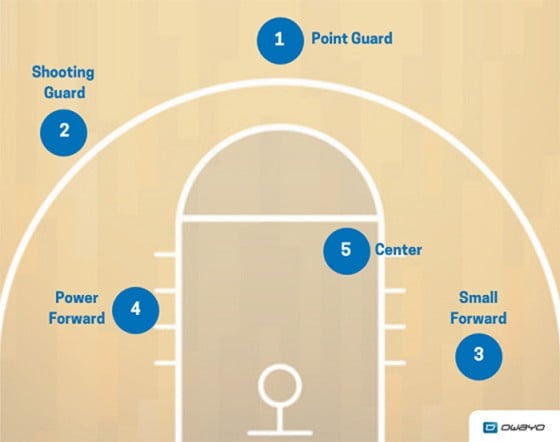
Basketball Positions On Offense And Defense
A player’s role changes depending on whether their team has the ball.
On Offense
- Point Guard: Brings up the ball, calls plays, finds open teammates
- Shooting Guard: Looks for scoring chances, moves to free spots
- Small Forward: Attacks the basket, shoots from mid-range or three-point line
- Power Forward: Sets screens, scores near the rim, shoots mid-range
- Center: Posts up near the basket, sets picks, finishes around the hoop
On Defense
- Point Guard: Guards the other team’s main ball-handler, pressures the ball
- Shooting Guard: Defends shooters and helps stop drives
- Small Forward: Guards versatile scorers, helps rebound
- Power Forward: Protects the paint, blocks shots, boxes out for rebounds
- Center: Anchors the defense, blocks shots, grabs rebounds
Many coaches mix up defensive assignments depending on the match-up. It’s common to see a small forward guard a shooting guard or a power forward switch onto a center.
Comparing Offensive And Defensive Duties
Here’s how the key duties for each position differ on offense and defense:
| Position | Offensive Role | Defensive Role |
|---|---|---|
| Point Guard | Set up offense, pass, score | Guard ball-handler, steal, pressure |
| Shooting Guard | Shoot, drive, create shots | Defend shooters, intercept passes |
| Small Forward | Score, rebound, pass | Guard wings, help rebound |
| Power Forward | Screen, rebound, inside scoring | Protect rim, box out, block shots |
| Center | Post moves, finish near rim | Block shots, anchor defense |
Non-traditional Positions And Roles
Besides the main five, basketball has a few special terms and roles:
- Sixth Man: The first substitute, often just as skilled as starters. They bring energy and scoring off the bench.
- Defensive Specialist: Focuses mainly on stopping the other team’s best scorer.
- Stretch Four/Five: A power forward or center who can shoot three-pointers, stretching the defense.
- Combo Guard: Can play both point guard and shooting guard, giving more flexibility.
- Swingman: Can play both shooting guard and small forward.
These roles help teams adjust to different game situations. For example, a stretch five like Brook Lopez makes it harder for defenses to protect the rim because he pulls big defenders away from the basket.
How To Choose Your Position
If you’re new to basketball, you may wonder, “Which position is best for me?” Here are some tips:
- Know your strengths. Are you quick and like handling the ball? Try point guard. Are you tall and strong? Center or power forward may fit.
- Try different roles. Many youth teams rotate players to learn all positions.
- Focus on skills, not size. Smaller players can play forward if they rebound well. Tall players can be guards if they dribble and shoot.
- Ask your coach. They know where your skills help the team most.
One insight many beginners miss: being good at one position helps you understand the others. For example, learning to play point guard improves your passing, which helps at any spot.
Common Mistakes When Learning Positions
Many beginners make similar mistakes when learning where to play:
- Only focusing on scoring, not defense
- Thinking they are “stuck” at one position forever
- Ignoring passing and teamwork
- Not learning the basics of all five spots
A well-rounded player who knows every position is more valuable and has a bigger future in basketball.
Evolution Of Positions In The Nba
The NBA has changed how positions work. In the 1980s and 1990s, roles were strict—centers stayed near the basket, guards rarely posted up. Today, NBA stars like Kevin Durant (a nearly 7-foot small forward) and Stephen Curry (a shooting guard who acts as a point guard) break old rules.
Modern teams often use a “small ball” lineup, with shorter, quicker players. The Golden State Warriors changed basketball by using five shooters and few traditional big men. Now, many teams look for players who can defend multiple positions and shoot from anywhere.

Position Numbers And Their Meaning
In basketball, coaches often use numbers to call out positions:
- 1 – Point Guard
- 2 – Shooting Guard
- 3 – Small Forward
- 4 – Power Forward
- 5 – Center
When you hear “the 2 spot,” it means shooting guard. This numbering system is universal, making it easy to talk about tactics or draw plays.
How Positions Affect Team Strategy
The mix of positions on a team shapes its style. A team with a strong center will play inside-out, focusing on the paint. A team with quick guards will push the pace and shoot more three-pointers.
Coaches build their game plan around their players’ strengths. Some teams “go big” with two power forwards, while others “go small” with three guards and two forwards.
Famous Players By Position
Here are some of the greatest players ever at each position:
| Position | All-Time Greats |
|---|---|
| Point Guard | Magic Johnson, Stephen Curry, John Stockton |
| Shooting Guard | Michael Jordan, Kobe Bryant, Dwyane Wade |
| Small Forward | LeBron James, Larry Bird, Kevin Durant |
| Power Forward | Tim Duncan, Karl Malone, Dirk Nowitzki |
| Center | Shaquille O’Neal, Kareem Abdul-Jabbar, Hakeem Olajuwon |
Watching these legends play will help you understand what makes each position special.
Frequently Asked Questions
What Is The Most Important Position In Basketball?
There is no single “most important” position. Many coaches say the point guard is key because they control the ball and set up the offense. However, every position is vital. The best teams have strong players at all five spots.
Can A Player Play More Than One Position?
Yes. Many modern players are “multi-position.” For example, LeBron James can play every position on the floor. Coaches love players who can switch roles during a game.
Are Positions Different In Youth Basketball?
In youth basketball, positions are less strict. Coaches often rotate players to help them learn all the skills. As players get older, they usually settle into a position that fits their body and talents.
How Do I Know Which Position Is Right For Me?
Try different spots and talk to your coach. Think about your skills, size, and what you enjoy most. Remember, the best players understand all positions, even if they specialize in one.
Where Can I Learn More About Basketball Positions?
You can find more about basketball positions and history on the official Wikipedia basketball positions page.
Basketball is a game of roles, teamwork, and skill. No matter your size or experience, there’s a position for you. Learn the basics, watch how great players move, and try every role to become the best player you can be.
The more you understand each position, the more you’ll enjoy the game.