What Is A Fast Break In Basketball?
Basketball is a game of speed, skill, and split-second decisions. One of the most exciting moments in any basketball match is the fast break—a burst of action that can change the flow of the game in seconds. But what exactly is a fast break, how does it work, and why do teams use it? Whether you’re a new fan or an aspiring player, understanding the fast break is key to appreciating modern basketball. Let’s dive into the world of fast breaks, explore how they happen, what makes them successful, and how they impact both offense and defense.

Exclusive Deals
Limited-time Exclusive Deals. Check current discount on Amazon.
Check Price on Amazon As an Amazon Associate I earn from qualifying purchases.Understanding The Fast Break
A fast break in basketball is a quick offensive play where a team moves the ball up the court rapidly after gaining possession, aiming to score before the opposing defense can set up. The goal is to catch defenders off-guard, often leading to easy baskets. Fast breaks are known for their energy and the way they can shift momentum in a game.
The basic idea is simple: when a team gets the ball—often through a rebound, steal, or blocked shot—the players run toward their basket as quickly as possible, passing and dribbling to create an advantage. The key is speed and numbers. If the offense has more players down the court than the defense, they have a good chance to score.
How The Fast Break Works
A typical fast break begins when a team gains possession. Here are the main steps:
Exclusive Deals
Limited-time Exclusive Deals. Check current discount on Amazon.
Check Price on Amazon As an Amazon Associate I earn from qualifying purchases.- Securing the Ball: The play often starts with a defensive rebound, a steal, or a blocked shot.
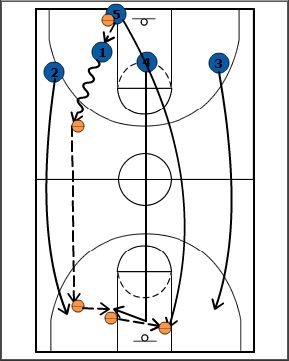
- Outlet Pass: The player who gets the ball (the rebounder or defender) makes a quick pass to a teammate, usually a guard, who is ready to run up the court.
- Advancing the Ball: The team pushes the ball up the court, using dribbles and passes to stay ahead of defenders.
- Finishing the Play: The attacking players look for the easiest shot—often a layup or dunk—before the defense can recover.
Timing and spacing are critical. The offense must move quickly, but also maintain control. A bad pass or poor decision can lead to turnovers.

Key Elements Of A Successful Fast Break
A fast break is more than just running fast. Several factors help teams succeed:
- Speed: Players must accelerate instantly after gaining possession.
- Decision Making: Quick choices on whether to pass, dribble, or shoot are crucial.
- Spacing: Players spread out to give the ball handler options and stretch the defense.
- Communication: Calling for the ball or signaling where to run helps avoid confusion.
Teams that practice these elements often score easy points in transition.
Exclusive Deals
Limited-time Exclusive Deals. Check current discount on Amazon.
Check Price on Amazon As an Amazon Associate I earn from qualifying purchases.Types Of Fast Breaks
Not all fast breaks are the same. Here are the main types you’ll see:
1. Three-on-two Fast Break
This is the classic fast break situation. Three offensive players attack two defenders. The ball handler drives the middle, while teammates run the wings. The goal is to force the defenders to commit, then pass to the open teammate for a simple shot.
2. Two-on-one Fast Break
Here, two offensive players face one defender. The ball handler can pass or fake to the teammate, making it hard for the lone defender to stop both.
3. Primary Fast Break
This is the initial rush after gaining the ball, often with a numbers advantage. Teams focus on scoring before the defense can react.
4. Secondary Fast Break
If the first chance to score is not there, teams flow into a secondary fast break. This is a more organized transition, using set plays or quick passes to find a shot before the defense is fully set.
Comparing Fast Break Vs. Half-court Offense
The fast break is only one style of attack. To understand its value, let’s compare it to the traditional half-court offense:
| Aspect | Fast Break | Half-Court Offense |
|---|---|---|
| Speed | Very fast | Slower, methodical |
| Number of Passes | Few | Many |
| Defensive Pressure | Low (defense not set) | High (defense ready) |
| Turnover Risk | Moderate | Lower |
| Shot Quality | Often high (close shots) | Varies (may be outside shots) |
A fast break offers quick points, but teams need discipline to avoid mistakes. The half-court offense is safer but may not create as many easy baskets.
The Role Of Each Player In A Fast Break
Every player has a job during a fast break. Here’s what each position typically does:
Point Guard
Often the fastest and best ball handler. The point guard leads the break, pushes the ball, and decides to pass or finish.
Shooting Guard And Small Forward
These wings sprint alongside the point guard, ready to receive passes for a layup, dunk, or short jumper.
Power Forward And Center
These players (the bigs) trail the play. They clean up missed shots, set screens, or follow the ball for a put-back.
Here’s a quick overview:
| Position | Main Role in Fast Break |
|---|---|
| Point Guard | Push the ball, make decisions |
| Shooting Guard | Run wing, finish or shoot |
| Small Forward | Run wing, finish or shoot |
| Power Forward | Trail, rebound, set screen |
| Center | Trail, rebound, defend if needed |
A common beginner mistake is for all players to run straight to the basket. Good teams use spacing and roles to maximize their chances.
Famous Fast Break Teams And Examples
Some basketball teams are famous for their fast break style. The Los Angeles Lakers of the 1980s, led by Magic Johnson, were known for “Showtime”—a fast, creative offense that thrilled fans. They averaged over 115 points per game, with many coming from fast breaks.
In college basketball, the North Carolina Tar Heels under coach Roy Williams were also famous for running the break. Their philosophy: score before the defense even crosses half court.
In today’s NBA, teams like the Golden State Warriors use fast breaks and quick transitions to create open three-point shots, showing how the fast break has evolved.
Fast Break Statistics
The impact of fast breaks can be measured with stats like fast break points. NBA teams average about 13–15 fast break points per game. Some teams, like the 2017–2018 Lakers, have scored over 20 fast break points per game, showing how a strong transition offense can boost overall scoring.
Another key stat is points per possession. Teams usually score more efficiently on fast breaks compared to half-court sets, often shooting above 60% on these plays.
Fast Break Drills And Practice Tips
Teams don’t just run fast breaks in games—they practice them. Here are some common drills:
- Three-Man Weave: Players run the length of the court, passing and weaving to practice spacing and timing.
- 2-on-1 Drill: Two attackers face one defender, focusing on decision making and finishing.
- Outlet Passing Drill: After a rebound, players work on making a quick, accurate pass to start the break.
Practical tips:
- Always look up the court after gaining possession.
- Communicate with teammates—call for the ball or signal direction.
- Practice finishing under pressure, as defenders may catch up.
Defensive Strategies Against The Fast Break
Good teams also know how to stop a fast break. Common defensive tactics include:
- Getting Back Quickly: Sprinting to defend before the offense can score.
- Stopping the Ball: The first defender tries to slow down the ball handler, buying time for teammates.
- Protecting the Paint: Defenders cover the area near the basket to block easy shots.
A subtle strategy is to send one or two players back on defense as soon as a shot goes up—this is called “defensive balance. ” Teams that fail to do this often give up easy fast break points.
Common Fast Break Mistakes
Fast breaks are risky. Here are mistakes teams often make:
- Forcing Passes: Trying to pass through defenders instead of waiting for the right moment.
- Poor Spacing: Players bunch together, making it easier for the defense.
- Losing Control: Rushing can lead to missed layups or turnovers.
- Not Reading the Defense: Sometimes, defenders recover quickly; knowing when to slow down and set up the offense is important.
A non-obvious tip: The best fast breaks often start with a good rebounder who can pass well. Teams that train their big men to make quick outlet passes see more success.
How The Fast Break Impacts The Game
A strong fast break can change a game’s pace and energy. It puts pressure on opponents, forces them to get back quickly, and can cause fatigue. Teams that run well often go on scoring runs, building leads in a hurry.
But there’s a tradeoff. Fast breaks require constant focus and fitness. If a team tries to run but makes mistakes, the other team can score easily the other way. Coaches must balance aggression with smart decision-making.
Fast Break Evolution In Modern Basketball
The fast break has changed over time. In the past, teams focused on layups or dunks. Today, with the rise of the three-point shot, players will often pull up for a quick three on the break—sometimes called a “transition three.
” This can lead to higher scores but also more risk.
Analytics show that teams who excel at transition offense often have more efficient scoring. However, the best teams mix fast breaks with strong half-court offense, adapting to game situations.
How To Improve Your Fast Break Skills
If you want to get better at running the fast break, focus on:
- Speed and Conditioning: Work on sprinting and stamina.
- Passing Accuracy: Practice outlet and lead passes.
- Finishing at the Rim: Layups, floaters, and quick shots under pressure.
- Court Awareness: Always know where your teammates and defenders are.
- Making Smart Decisions: Don’t force plays; if the break isn’t there, pull back and set up.
Advanced players study video of great fast break teams, looking for patterns and timing. Many also learn from international basketball, where fast breaks are used in creative ways.

Real-world Impact: Youth And Amateur Basketball
Fast breaks are not just for pros. At the youth and amateur level, they can be even more effective. Many young teams struggle to get back on defense, so a well-run fast break can lead to easy points.
However, coaches should teach both the skills and the discipline to know when to run and when to slow down. A good fast break is about control, not just speed.
For more on basketball strategy and history, you can check out this Wikipedia guide to fast breaks.
Frequently Asked Questions
What Is The Main Purpose Of A Fast Break In Basketball?
The main purpose of a fast break is to score quickly before the defense can set up. This gives the offense a better chance for easy shots, often leading to layups or dunks.
How Can You Tell If A Team Is Good At Running Fast Breaks?
Teams that are good at fast breaks usually have high numbers of fast break points, move the ball quickly, and make smart decisions in transition. They also communicate well and have players who sprint up the court.
What Should Defenders Do To Stop A Fast Break?
Defenders need to sprint back, stop the ball handler early, and protect the paint. Good communication and anticipation are key. Teams often assign one or two players to get back on defense as soon as a shot is taken.
Can All Players Participate In A Fast Break, Or Only Certain Positions?
All players can participate, but roles differ. Guards usually lead the break, wings finish, and big men trail for rebounds. Teams that involve all five players effectively often have the best results.
Is The Fast Break Used In All Levels Of Basketball?
Yes, the fast break is used at every level—from youth leagues to the NBA. It’s especially common in high school and college games, where speed and athleticism can make a big difference.
Basketball’s fast break is a thrilling and important part of the game. By understanding how it works, practicing the right skills, and learning from great teams, any player or fan can appreciate why the fast break is such a game-changer.