
A fast break. A countdown. The sound of a buzzer. If you watch basketball, you know the tension that builds as the clock ticks down. But have you ever wondered why the game moves so quickly, or what forces teams to take a shot before time runs out? That’s where the shot clock comes in. This simple device has changed the way basketball is played around the world. If you want to understand modern basketball, you need to know how the shot clock works, why it exists, and how it affects every moment on the court.
What Is A Shot Clock?
The shot clock is a timer used in basketball games to limit how long a team can possess the ball before attempting a shot. If the team does not attempt a shot that hits the rim or goes in before the shot clock reaches zero, they lose the ball to the other team. The shot clock creates a sense of urgency, encourages offense, and keeps the game moving at a fast pace.

Today's Exclusive Deals
Limited-time Exclusive Deals. Check current discount on Amazon.
Check Price on Amazon As an Amazon Associate I earn from qualifying purchases.Most professional leagues use a shot clock, but the length can vary. In the NBA, the shot clock is set to 24 seconds. In FIBA (international basketball), it’s also 24 seconds. However, college basketball in the United States uses a 30-second shot clock. Youth and amateur leagues may have different rules or sometimes no shot clock at all.
The Origins Of The Shot Clock
Basketball wasn’t always this exciting. In fact, before the shot clock, games could be painfully slow. Teams would often stall, passing the ball without trying to score, especially if they were ahead late in the game. This led to boring matches and very low scores.
For example, in 1950, the Fort Wayne Pistons beat the Minneapolis Lakers 19-18, one of the lowest-scoring games in NBA history.
Today's Exclusive Deals
Limited-time Exclusive Deals. Check current discount on Amazon.
Check Price on Amazon As an Amazon Associate I earn from qualifying purchases.In 1954, Danny Biasone, owner of the Syracuse Nationals, introduced the 24-second shot clock to the NBA. He believed that 24 seconds was enough time for a team to run a good play, but not so much that the game would slow down. The formula Biasone used was simple: NBA games at that time lasted 48 minutes (2,880 seconds), and he wanted each game to have about 120 shots (60 by each team). 2,880 divided by 120 equals 24 seconds.
After the shot clock was introduced, average scores jumped, and fans loved the faster, more exciting play. The shot clock quickly became a standard part of basketball worldwide.
How The Shot Clock Works
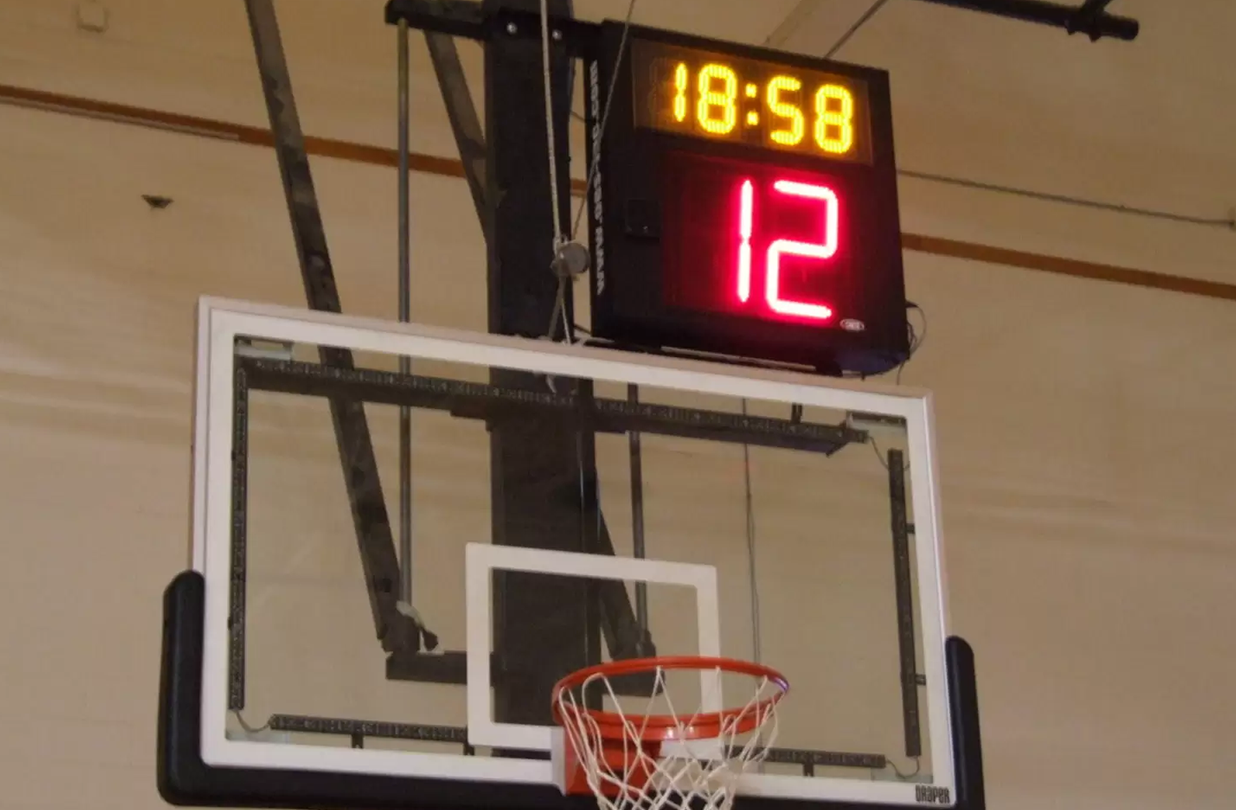
The shot clock starts when a team gains full control of the basketball, either after a rebound, made basket, or turnover. The team then has a fixed number of seconds (24 or 30, depending on the league) to attempt a shot.
A shot attempt is only valid if the ball leaves the player’s hands before the shot clock reaches zero. If the shot hits the rim or goes through the basket, the clock resets. If the ball does not hit the rim and the clock expires, it’s a shot clock violation, and the other team gets possession.
Today's Exclusive Deals
Limited-time Exclusive Deals. Check current discount on Amazon.
Check Price on Amazon As an Amazon Associate I earn from qualifying purchases.Here’s a look at what happens during a typical shot clock cycle:
- Team gains possession: The shot clock begins counting down.
- Running a play: Players pass, dribble, and try to create a good shot opportunity.
- Taking a shot: The team must shoot before the shot clock expires.
- Reset or violation: If the shot hits the rim or goes in, the clock resets. If not, it’s a violation.
Shot Clock Rules In Different Leagues
The length and rules of the shot clock are not always the same. Here’s a comparison of how different leagues use the shot clock:
| League | Shot Clock Length | Reset After Offensive Rebound |
|---|---|---|
| NBA | 24 seconds | 14 seconds |
| FIBA (International) | 24 seconds | 14 seconds |
| NCAA Men’s | 30 seconds | 20 seconds |
| NCAA Women’s | 30 seconds | 20 seconds |
| WNBA | 24 seconds | 14 seconds |
Non-obvious insight: Many new fans don’t realize the shot clock can reset to a shorter time (like 14 seconds) after an offensive rebound, not always to the full 24 or 30 seconds.

Why The Shot Clock Matters
The shot clock is more than just a timer. It changes how the game is played in several important ways:
- Speeds up the game: Teams must act quickly, which leads to more possessions and scoring.
- Prevents stalling: Teams can’t just hold the ball to protect a lead, making every minute exciting.
- Rewards good defense: If a team defends well for the full shot clock, they can force a violation.
- Promotes teamwork: Fast play means teams need to move the ball and work together.
- Increases strategy: Coaches must design plays that can be executed under time pressure.
Without the shot clock, basketball could return to slow, defensive games with little action. The shot clock ensures the game is always moving forward.
Understanding Shot Clock Violations
A shot clock violation occurs when a team fails to take a valid shot before the timer reaches zero. This usually happens when:
- The ball is still in the player’s hands as the clock expires.
- The shot is taken, but it does not hit the rim or go in.
When a violation happens, the other team is given the ball. Referees listen for the buzzer and watch a red light that appears around the backboard when the shot clock runs out.
Common mistake: Some beginners think hitting the backboard is enough, but the ball must hit the rim to reset the clock.
Shot Clock Reset Rules
In most leagues, the shot clock resets to the full time (24 or 30 seconds) if:
- The defending team gains possession (rebound or turnover)
- A made basket is scored (and the other team gets the ball)
However, after an offensive rebound (when the shooting team gets the ball back after a missed shot), many leagues now reset the shot clock to a shorter time. For example, the NBA and FIBA reset to 14 seconds, while NCAA resets to 20 seconds.
This rule was added to keep the game fast and prevent teams from using the full clock again after every offensive rebound.
The Shot Clock’s Impact On Strategy
The shot clock makes basketball a game of both skill and quick thinking. Here’s how it affects strategy:
- Offense: Teams often run their plays quickly, but also need to be patient enough to find a good shot. As the clock winds down, players must improvise, sometimes leading to exciting last-second shots.
- Defense: Teams may focus on forcing the offense to use up time, hoping to cause a rushed or low-quality shot. Some defenses get stronger as the clock gets closer to zero.
- End of quarters: Teams pay close attention to the shot clock and game clock, sometimes “holding for one shot” to avoid giving the other team a chance to score before time runs out.
Non-obvious insight: Good teams practice “late clock” situations—what to do when only 5 seconds or less are left on the shot clock. This is a skill often overlooked by beginners.
Shot Clock And Game Flow
Let’s compare the pace of play and scoring before and after the shot clock was introduced. Here’s some data from the NBA:
| Season | Average Points per Game | Pace (Possessions per Game) |
|---|---|---|
| 1953–54 (no shot clock) | 79.5 | 75.4 |
| 1954–55 (shot clock introduced) | 93.1 | 99.6 |
| 2022–23 | 114.7 | 100.2 |
This dramatic change shows how the shot clock made basketball faster and more exciting for both players and fans.
Shot Clock In Youth And Amateur Basketball
Not all basketball games use a shot clock. In some youth leagues, there is no shot clock at all, usually because of equipment costs or to keep the focus on basic skills. However, as players get older, most competitive leagues introduce a shot clock to prepare them for higher levels of play.
Practical tip: If you are coaching or playing in a league with no shot clock, it’s still a good idea to practice quick decision-making, as this will help you adapt if you move to a higher level.
Technical Aspects And Placement
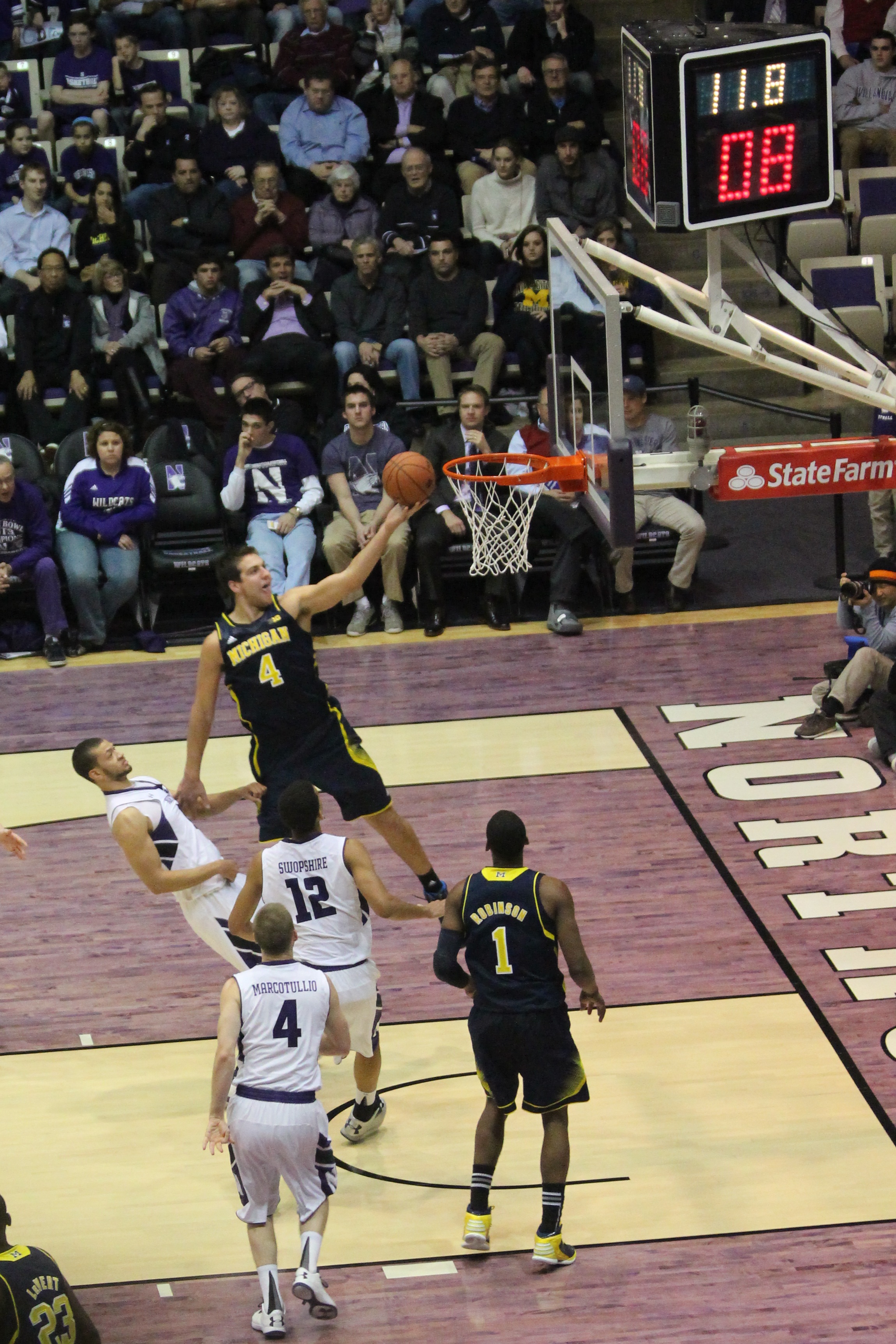
The shot clock is a visible timer placed above the backboard at each end of the court. It counts down in seconds, often with a digital display. In professional arenas, the shot clock is integrated with the game clock and the scoreboard.
Officials control the clock with a remote device. Some modern systems are even automated, starting or stopping the timer based on the referee’s whistle or the ball being touched.
Famous Shot Clock Moments
Some of basketball’s most memorable moments have happened with the shot clock winding down. Think about buzzer-beaters—those last-second shots that win games. These plays are often possible only because of the shot clock, forcing quick decisions and heroic efforts.
One famous example is Derek Fisher’s 0.4-second shot in the 2004 NBA Playoffs, where he caught and released the ball with only 0.4 seconds left on the clock, beating the buzzer and the San Antonio Spurs.
Comparison: Shot Clock Vs. Game Clock
The game clock measures the total time left in a quarter, half, or the entire game. The shot clock is a separate timer that only tracks how long the offensive team can have the ball before shooting.
Here’s a quick comparison:
| Aspect | Game Clock | Shot Clock |
|---|---|---|
| Purpose | Total game/quarter time | Limits possession time |
| Who controls it | Referees/officials | Referees/officials |
| Reset conditions | Quarter/half ends | Change of possession, rim hit, etc. |
| Display location | Scoreboard | Above backboard |
Shot Clock Innovations
Technology has made the shot clock more reliable and visible. Modern shot clocks use LED lights and are synchronized with the game clock. In some leagues, the shot clock also includes a red light that flashes when time is up, making it easier for players and referees to see.
There are also experiments with even shorter shot clocks, such as the FIBA 3×3 competition, which uses only a 12-second shot clock. This creates a super-fast version of the game, showing how the shot clock can shape basketball in new ways.
The Shot Clock’s Global Influence
Since its invention, the shot clock has spread from the NBA to almost every major basketball league worldwide. Even leagues that resisted at first eventually adopted it to keep up with the modern, fast-paced style of play. The shot clock is now a symbol of how basketball balances skill, speed, and strategy.
For more historical background and details on the invention of the shot clock, you can read about it on Wikipedia.
Frequently Asked Questions
What Happens If The Shot Clock And Game Clock Reach Zero At The Same Time?
If both clocks expire together, the referees check if the shot was released before time ran out. If not, the play is stopped, and the period or game ends. If the shot was released in time, the basket may count if it goes in.
Does The Shot Clock Reset On A Foul?
Yes, if the defensive team commits a foul, the shot clock usually resets. The amount of time depends on the league—sometimes to the full time, sometimes to 14 or 20 seconds if the offense keeps the ball.
Can The Shot Clock Be Changed During A Game?
No, the length of the shot clock is set before the game and cannot be changed during play. However, referees can adjust the clock if there was a timing error.
Why Is The Nba Shot Clock 24 Seconds But College Basketball Uses 30 Seconds?
The NBA chose 24 seconds to create a fast, exciting game. College basketball uses 30 seconds to allow more time for teams to run complex plays and develop young players’ skills.
What Is The Shortest Shot Clock Used In Organized Basketball?
The shortest widely-used shot clock is 12 seconds in FIBA 3×3 basketball. This makes the game much faster and increases the number of possessions and shots.
The shot clock is more than just a rule—it’s a heartbeat that keeps basketball alive and exciting. Whether you’re a player, coach, or fan, understanding the shot clock helps you appreciate the fast pace and strategy that make basketball one of the world’s most popular sports.

