If you’ve just bought your first paddle board or are thinking about it, you might be asking: Do I need a pump for my paddle board? This is an important question, especially if you want to spend more time on the water and less time struggling with setup. Whether you’re a casual paddler, an adventure seeker, or someone looking for a fun way to stay fit, understanding the role of a pump is key for a smooth paddle boarding experience. Many newcomers miss a few details about pumps—like the types available, how they affect your board, and what happens if you skip getting one. Let’s break down everything you need to know, so you can make the best choice for your paddle board and lifestyle.
Exclusive Deals
Limited-time Exclusive Deals. Check current discount on Amazon.
Check Price on Amazon As an Amazon Associate I earn from qualifying purchases.Why A Pump Matters For Paddle Boards
Most paddle boards today are either inflatable or solid. If you have a solid (rigid) board made from materials like epoxy or fiberglass, you won’t need a pump—your board is always ready. But if you own or plan to buy an inflatable paddle board (often called iSUP), a pump is essential. Inflatable boards must be filled with air to the correct pressure before you can use them.
A pump is more than just a tool for filling your board. The right pump can save you time and energy, and it makes sure your board is safe and performs well on the water. Inflating your board to the right pressure keeps it stiff, stable, and able to handle your weight without bending.
What Happens If You Don’t Have A Pump?
Without a pump, you simply can’t use an inflatable paddle board. Even if you try to use an air compressor or another tool, you risk damaging your board or not reaching the right pressure. Borrowing a pump every time you paddle is inconvenient and unreliable.
Exclusive Deals
Limited-time Exclusive Deals. Check current discount on Amazon.
Check Price on Amazon As an Amazon Associate I earn from qualifying purchases.Also, some boards require high pressure (often 12–15 PSI or more), which general air pumps can’t achieve.
Types Of Paddle Board Pumps
Choosing the right pump can make a huge difference in your paddle boarding routine. There are several types of pumps, each with their own advantages.
1. Manual Hand Pumps
These are the most common pumps included with new boards. They are usually single-chamber or double-chamber designs.
Exclusive Deals
Limited-time Exclusive Deals. Check current discount on Amazon.
Check Price on Amazon As an Amazon Associate I earn from qualifying purchases.- Single-chamber pumps: Basic, require more effort, slower.
- Double-chamber pumps: More efficient, move more air per stroke.
Manual pumps often have two modes: single action (pumping air when you push down) and double action (pumping air both up and down). Double action is faster for the first part of inflation; single action is better for higher pressure at the end.
2. Electric Pumps
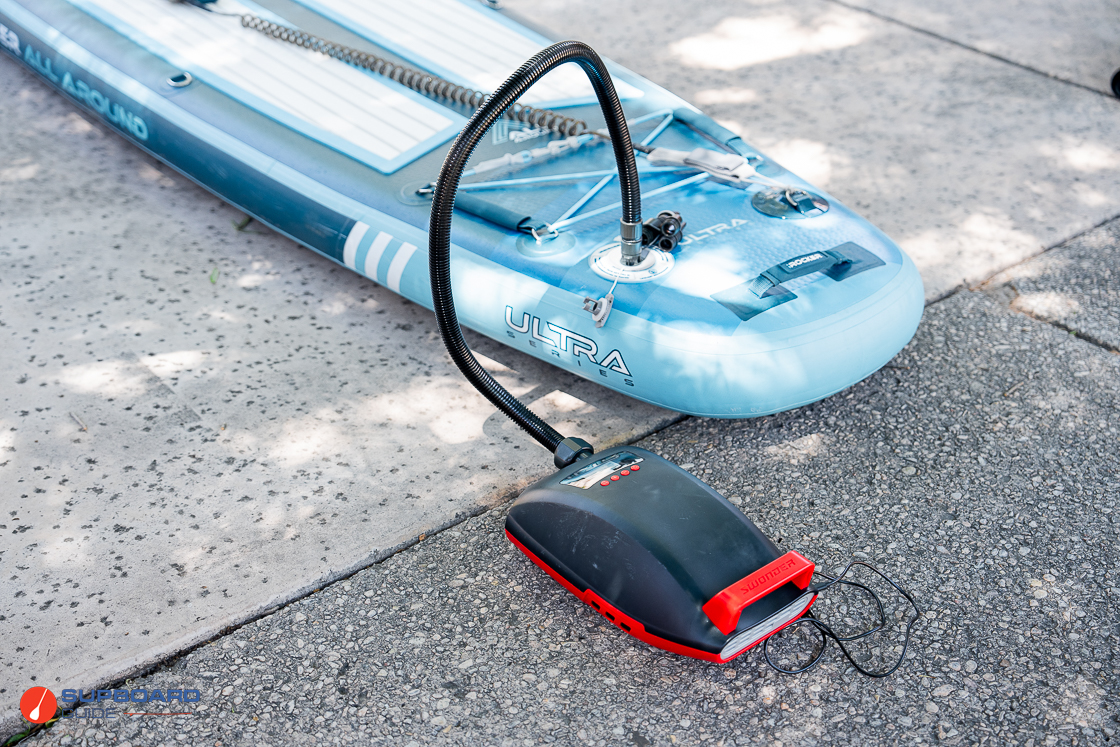
Electric pumps run on batteries, your car’s 12V socket, or a wall outlet. These pumps are becoming popular because they do most of the work for you. They can reach the right PSI easily and usually stop automatically. However, they cost more and need a power source.
3. Foot Pumps
Less common, but some boards come with a foot pump. These are simple and portable, but slower and less powerful than hand or electric pumps.
4. High-pressure Pumps
If your board requires higher pressure (15–20 PSI), a high-pressure pump is best. These are designed to handle the extra force needed without risking damage to the board or the pump.
5. Third-party Or Aftermarket Pumps
Some paddlers buy aftermarket pumps for better performance or features. These can include pressure gauges, adapters for different valves, or lightweight designs for travel.
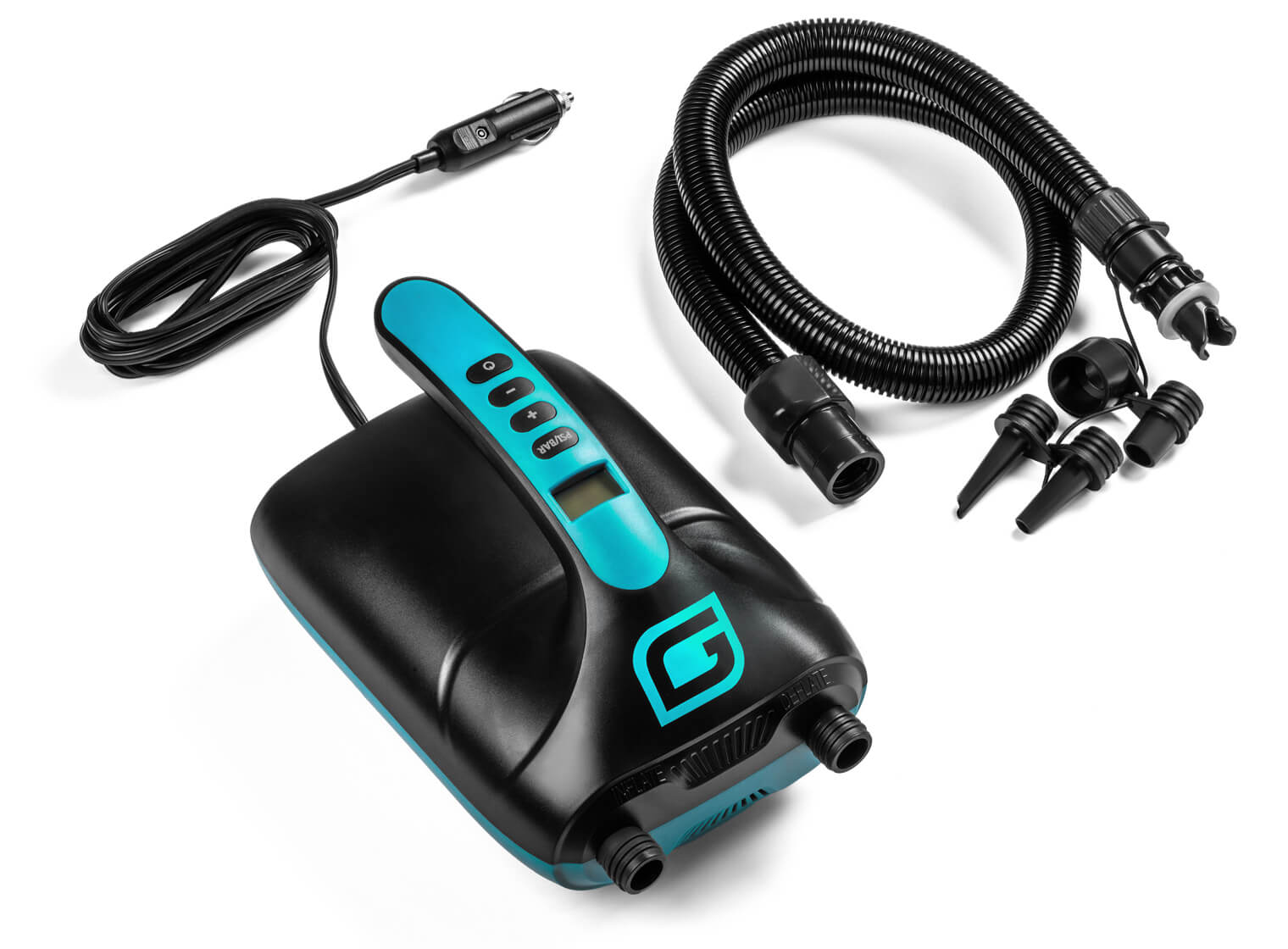
Comparing Pump Types
Here is a quick overview of the most popular paddle board pump types, with their main features:
| Pump Type | Power Source | Speed | Effort Level | Common Use |
|---|---|---|---|---|
| Manual Hand Pump | Human | Medium | High | Standard inflatables |
| Electric Pump | Battery/Car/Wall | Fast | Low | Frequent users, groups |
| Foot Pump | Human | Slow | Medium | Portability/travel |
| High-Pressure Pump | Human/Electric | Medium-Fast | Medium | High PSI boards |
How To Choose The Right Pump
Not all paddle board pumps are the same. Here’s what matters most when choosing a pump for your inflatable paddle board:
Pump Compatibility
Your pump must match your board’s valve type. Most iSUPs use the Halkey-Roberts (HR) valve, but some use other connectors. Always check your board’s manual or ask the seller.
Pressure Range
Every board has a recommended PSI (pounds per square inch). Choose a pump that can easily reach and measure this pressure. Inflating to the wrong PSI makes your board unstable or can even damage it.
Portability
If you plan to hike or travel with your board, a lightweight or compact pump is best. Some electric pumps are heavy and need a car nearby.
Inflation Speed
If you paddle often or with a group, a fast pump saves time and energy. Double-chamber hand pumps and electric pumps are fastest.
Built-in Gauge
A pressure gauge is essential. It shows when your board reaches the correct PSI. Some cheap pumps don’t have one, or it’s inaccurate—leading to under- or over-inflation.
Durability
Pumps get a lot of use, especially in sandy or salty environments. Look for strong materials, a good warranty, and replaceable parts.
Cost
Manual hand pumps are usually included free with a new board. Electric pumps can cost $70–$200 or more. Think about your budget and how often you paddle.
Key Differences: Manual Vs. Electric Pumps
Many beginners ask if it’s worth upgrading to an electric pump. Here’s a side-by-side look at manual and electric pumps:
| Feature | Manual Pump | Electric Pump |
|---|---|---|
| Price | Usually free with board, $25–$60 | $70–$200+ |
| Setup Time | 5–12 minutes per board | 5–8 minutes per board |
| Effort | High | Low |
| Portability | Very good | Good, but needs power |
| Noise | Silent | Loud |
| Reliability | Very high | Can overheat or drain battery |
Common Mistakes Beginners Make
Many new paddlers make simple mistakes that can be avoided:
- Using the wrong pump or adapter: Not all pumps fit all valves. Always check compatibility first.
- Under-inflating the board: A soft board flexes, making it hard to paddle and increasing the risk of damage.
- Over-inflating: Pushing beyond the recommended PSI can burst seams.
- Forgetting the pressure gauge: Guessing the pressure is risky. Always use a gauge.
- Neglecting pump care: Sand, salt, and dirt can damage your pump. Rinse and dry it after each use.
When You Might Not Need A Pump
If you own a solid paddle board (fiberglass, epoxy, or carbon), you do not need a pump—these boards are always ready. However, they are harder to transport and store. Most people with inflatable boards will need a pump every time they paddle.
Rarely, some paddlers store their inflatable board inflated at home or on their car roof. But this only works if you have space and can keep the board out of direct sun and heat, which can increase pressure and risk damage.
Can You Use A General Air Pump Instead?
Standard air pumps (like those for bikes, cars, or pool toys) usually won’t work for paddle boards. They may not fit the valve, can’t reach high PSI, or lack a gauge. Some multi-use pumps with adapters can work in emergencies, but they’re not reliable for regular use.
Real-world Example: A Day On The Water
Imagine planning a lake trip with friends. You arrive and realize you forgot your pump. Now, your inflatable board is useless, and you miss out on the fun. Even if someone has a bike pump, it won’t fit or reach the pressure needed.
This is why experienced paddlers always check their pump and parts before leaving home.
Practical Tips For Pumping Up Your Board
- Start with double action: Use this mode to fill the board quickly at low pressure.
- Switch to single action: When pumping becomes hard, switch modes to reach the final PSI.
- Rest if needed: Pumping is a workout, especially for larger boards.
- Check the gauge often: Stop at your board’s recommended PSI.
- Pack a repair kit: In case you lose air or damage the valve, a basic kit can save your trip.
Caring For Your Pump
A good pump can last for years with simple care:
- Rinse after use, especially at the beach.
- Store in a cool, dry place.
- Lubricate moving parts if the manual recommends it.
- Replace worn hoses and seals.
Is An Electric Pump Worth It?
If you paddle often, have multiple boards, or want to save energy, an electric pump is a smart upgrade. It inflates quickly, stops automatically, and saves your arms for paddling. But manual pumps are more reliable if you’re far from power or worried about battery life. For most beginners, the free hand pump included with your board is enough. As you paddle more, you may want to upgrade.

Quick Reference: Do You Need A Pump?
Here’s a summary to help you decide:
| Board Type | Is a Pump Needed? | Why? |
|---|---|---|
| Inflatable (iSUP) | Yes | Must be inflated before use |
| Solid/Epoxy/Hard | No | Always ready, no air required |
| Foam Board | No | Pre-shaped, no air required |
Where To Learn More
You can find more details on paddle board pumps, maintenance, and tips at the Wikipedia Standup Paddleboarding page.
Frequently Asked Questions
Is A Pump Included With Every Inflatable Paddle Board?
Most inflatable paddle boards come with a basic manual pump and a pressure gauge. However, not every package includes a high-quality or electric pump. Always check what’s included before buying.
How Long Does It Take To Inflate A Paddle Board?
Inflating a standard board (10’6” length) with a manual pump usually takes 7–12 minutes, depending on your strength and the pump type. Electric pumps can do it in 5–8 minutes.
Can I Leave My Paddle Board Inflated All The Time?
Yes, you can, as long as you store it out of direct sunlight and extreme heat. Pressure can increase with temperature, so check and release air if needed. Long-term storage is safer if you deflate the board.
What Psi Should I Inflate My Paddle Board To?
Most boards work best at 12–15 PSI, but some need up to 20 PSI. Always follow your board’s manual for the correct pressure. Under- or over-inflation can affect performance and safety.
Do I Need A Special Adapter For My Pump?
If your pump and board use the same valve (usually Halkey-Roberts for iSUPs), no adapter is needed. If not, you may need an adapter, which is often sold separately.
Getting the right pump for your paddle board means less stress, more fun, and safer paddling. Whether you stick with the manual pump or upgrade to an electric one, make sure it matches your board and your needs. With the right setup, you’ll spend more time on the water—and less time on the shore.