Taking care of your skis may sound simple, but true maintenance goes beyond just wiping them after a fun day on the slopes. If you want your skis to last longer, perform better, and stay safe, you need to understand and follow some key practices.
Proper ski care is not just for professionals. Every skier, whether beginner or expert, benefits from knowing how to maintain skis correctly. This guide explains everything, step by step, and highlights details that even regular skiers sometimes miss.
Why Ski Maintenance Matters
Good ski maintenance is the foundation for smooth performance, better control, and longer equipment life. When you keep your skis in good shape, you enjoy:
- Better grip on snow and ice
- Easier turning and gliding
- Lower risk of accidents or injuries from broken edges or sticky bases
- Reduced repair costs over time
Neglecting your skis can lead to rust, base damage, and poor performance, which often means a frustrating day on the mountain. Imagine missing a perfect powder day because your skis are too slow or hard to control—simple maintenance can prevent this.
Basic Cleaning After Each Use
Ski maintenance starts the moment you finish skiing. Moisture and dirt can damage your skis if left unchecked.
- Dry your skis immediately: Wipe down your skis with a clean, dry towel after each use. Pay special attention to the metal edges, which can rust quickly.
- Remove snow and ice: Tap your skis gently to knock off snow, especially around the bindings and edges.
- Check for dirt or salt: If you ski in areas that use salt for de-icing (like resort parking lots), use a damp cloth to clean the base and edges, then dry them fully.
Non-obvious tip: Store your skis in a warm, dry place after cleaning. Avoid leaving them in your car overnight, as moisture and temperature changes can cause rust or delamination.
Inspecting Skis For Damage
Regular inspection helps you catch problems early, before they turn into expensive repairs.
- Look for base scratches: Small scratches are normal, but deep gouges (called “core shots”) need professional repair.
- Check the edges: Rust, burrs (sharp bumps), or cracks can affect how your skis grip the snow.
- Examine the topsheet: Chips or cracks on the topsheet might seem cosmetic, but they can let water in and cause the ski to weaken over time.
- Binding check: Make sure there are no loose screws or cracks. Bindings are critical for safety.
Example: If you notice a small rust spot, use a gummy stone to gently remove it before it spreads. Waiting too long allows rust to eat into the edge, making repairs harder.
Edge Maintenance: Sharpening And De-burring
Sharp edges are the secret to control and safety, especially on icy slopes.
Sharpening Edges
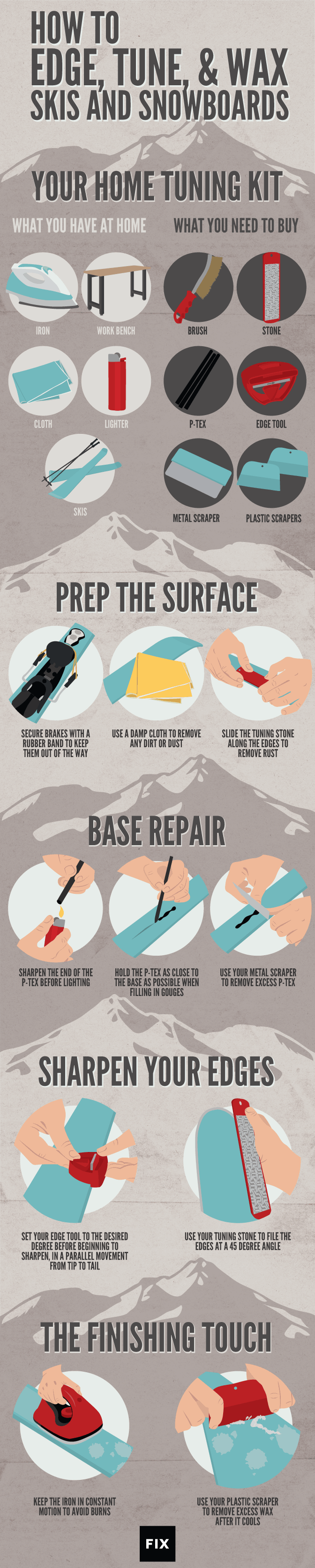
- Use a ski-specific diamond stone or file to sharpen edges.
- Work in one direction, from tip to tail.
- Keep your angle consistent, usually 90 degrees or as specified by your ski manufacturer.
De-burring
- A gummy stone is perfect for removing small burrs or rust spots.
- Run the stone lightly along the edge to smooth out rough spots.
How Often?
- Recreational skiers: Every 3-5 days on the mountain
- Aggressive or racing skiers: Every 1-2 days
Practical insight: Never over-sharpen. Too much filing can shorten your ski’s life by thinning the edge metal.
Base Maintenance: Waxing
Waxing is the most important part of ski maintenance for both speed and protection.
Why Wax Skis?
- Reduces friction, helping your skis glide smoothly
- Protects the base from drying out (“base burn”)
- Improves control, especially in sticky or wet snow
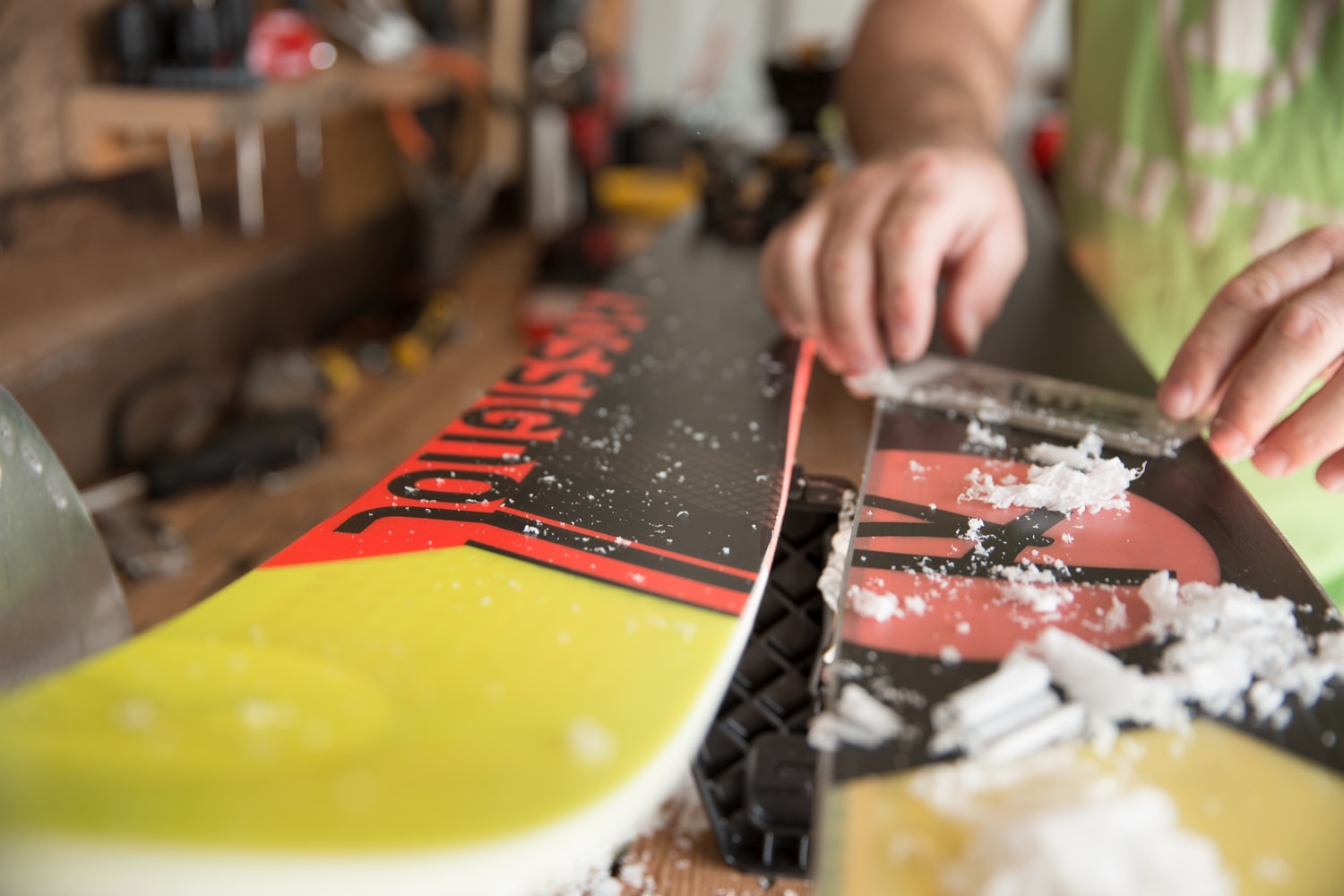
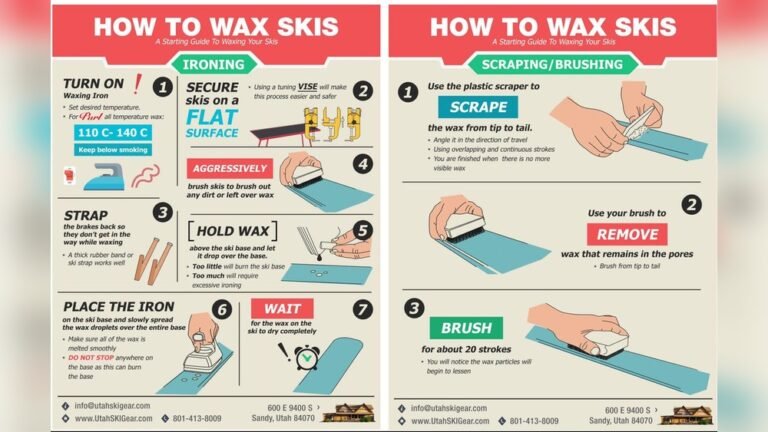
How To Wax Skis
- Clean the base: Use a base cleaner and a nylon brush to remove old wax and dirt.
- Apply wax: Drip wax onto the base using a waxing iron (never a clothing iron—it can burn your skis).
- Spread the wax: Use the iron to spread wax evenly. Move the iron slowly, never let it sit in one place.
- Let it cool: Wait at least 30 minutes.
- Scrape off excess: Use a plastic scraper to remove extra wax.
- Brush the base: Finish with a nylon brush to polish and open the ski’s structure.
How Often To Wax
- Every 4-6 ski days for casual skiers
- After every use for racers or in wet conditions
Little-known fact: Skis dry out even when stored. Wax them before summer storage to prevent damage.
Base Repair: Fixing Scratches And Gouges
Small scratches are normal, but deep cuts expose the ski’s core and need repair.
Spot Repairs
- For shallow scratches, use a P-Tex candle. Light it, drip molten P-Tex into the scratch, let it cool, and scrape smooth.
- Deeper gouges may need professional help.
When To Seek A Shop
If you see the core (wood or other material inside the ski), take your skis to a shop. DIY fixes are not enough for core shots.
Expert tip: Regular waxing fills small scratches and keeps the base smooth, making big repairs less likely.
Binding Checks And Adjustments
Bindings are your main safety feature. They must release your boots in a fall to prevent injury.
- Check screws for tightness every few uses.
- Make sure the binding moves freely and is not clogged with ice.
- Adjust release settings (DIN) according to your weight, height, age, and ability. If unsure, have a professional set them.
Common mistake: Never set your own bindings if you’re not trained. Incorrect settings can cause serious injuries.
Storing Skis Properly
Good storage is often ignored but can save you money and trouble.
- Store skis in a cool, dry place. Avoid damp basements or hot attics.
- Loosen binding springs if possible, or set bindings to the lowest setting to reduce tension.
- Place skis base-to-base, but don’t clamp them tightly.
Non-obvious insight: Wax your skis before storing for the off-season and don’t scrape it off. This “storage wax” protects the base from drying and keeps edges rust-free.

When To Visit A Professional Ski Technician
While most maintenance can be done at home, some repairs need professional tools and skill.
- Major base damage: Deep gouges or visible core
- Edge replacement: If edges are cracked or pulling away
- Binding adjustment: If you buy new boots or feel unsure about release settings
- Annual tune-up: At least once a year, have your skis fully serviced
A professional tune-up can include stone grinding, precise edge sharpening, and hot waxing—much more than most people can do at home.
Tools And Supplies For Ski Maintenance
Having the right tools makes ski care easier and more effective. Here’s a comparison of essential items:
| Tool | Use | Cost Range (USD) | Recommended For |
|---|---|---|---|
| Diamond Stone | Edge sharpening | 15–30 | All skiers |
| Gummy Stone | Edge de-burring/rust removal | 10–20 | All skiers |
| Plastic Scraper | Wax removal | 5–15 | All skiers |
| P-Tex Candle | Base repair | 5–10 | Home repairs |
| Waxing Iron | Wax application | 30–80 | Frequent waxers |
Tip: Buying a basic tuning kit can save money compared to purchasing items individually.
Diy Vs. Professional Maintenance
Some tasks are easy at home, while others are best left to professionals. Here’s a quick comparison:
| Task | DIY Level | When to Go Pro |
|---|---|---|
| Edge Sharpening | Moderate | Major edge damage |
| Waxing | Easy | Hot box waxing for race skis |
| Base Repair | Easy-Moderate | Core shots/deep gouges |
| Binding Adjustment | Not recommended | Always for safety |
Mistakes To Avoid In Ski Maintenance
Many skiers, even experienced ones, make these common errors:
- Storing wet skis: Always dry them first to prevent rust.
- Using household irons for waxing: These can overheat and damage your base.
- Skipping edge checks: Dull or burred edges lead to slips and accidents.
- Ignoring bindings: Poorly adjusted bindings are dangerous.
- Waxing without cleaning: Dirt trapped under wax can scratch your base.
Advanced tip: Don’t mix different types of wax unless you understand their compatibility. Some waxes don’t blend well and can hurt performance.
Environmental Considerations
Ski wax and cleaners can impact the environment. Many traditional waxes contain fluorocarbons, which are harmful to nature.
- Choose eco-friendly waxes when possible.
- Dispose of old wax and cleaning chemicals responsibly.
- Never scrape skis directly onto the snow.
For more on eco-friendly ski products, check the Ski Wax Wikipedia page.
Frequently Asked Questions
How Often Should I Wax My Skis?
Most casual skiers should wax their skis every 4-6 days on the mountain. If you ski often or in wet conditions, wax more frequently. Before summer storage, apply a thick layer of wax and leave it on until next season.
Can I Sharpen Ski Edges At Home?
Yes, you can sharpen edges at home with a diamond stone and a guide. However, keep the angle consistent and go slowly. For major edge damage or cracks, it’s best to visit a ski technician.
What Should I Do If My Ski Base Has A Deep Gouge?
If the gouge is deep enough to show the core (wood or metal inside), visit a shop for repair. Shallow scratches can be fixed at home with P-Tex. Always check for water or dirt in the gouge before repairing.
Is It Safe To Adjust Ski Bindings Myself?
It’s not recommended unless you are trained. Incorrect settings can cause the skis to release too early or not at all, leading to injury. Let a professional check and set your bindings, especially if you change boots or gain/lose weight.
What Is The Best Way To Store Skis Over Summer?
Dry skis completely, apply a thick layer of wax (do not scrape), and store in a cool, dry place. Loosen the bindings if possible. This prevents rust and keeps the base healthy until next season.
Caring for your skis doesn’t have to be difficult, but attention to detail makes a big difference. Regular cleaning, inspection, waxing, and proper storage will keep your skis fast, safe, and fun for many seasons. A little effort now saves you money and trouble later—so treat your skis well, and they’ll return the favor every time you hit the slopes.