
An under desk elliptical uses a flywheel and magnets for smooth, quiet resistance.
If you want a clear, friendly guide on How does an under desk elliptical work?, you are in the right place. I have logged many hours pedaling under my desk while typing, taking calls, and even eating lunch. In this guide, I break down the parts, the motion, and the science in plain words. You will learn how it moves, why it is so quiet, what muscles it works, and how to use it for real results during your day.

Today's Exclusive Deals
Limited-time Exclusive Deals. Check current discount on Amazon.
Check Price on Amazon As an Amazon Associate I earn from qualifying purchases.
The core mechanics explained
How does an under desk elliptical work? It starts with a simple set of parts that turn foot motion into smooth pedal strokes. Inside the unit, you will find a flywheel, a belt or chain, a crank, and magnets. The pedals link to the crank, which spins the flywheel. Magnets near a metal disk create resistance without touching the wheel.
Here is what each part does in clear terms:
- Flywheel adds smooth feel and keeps momentum so each stroke is steady.
- Belt drive connects the pedals to the flywheel and stays quiet.
- Magnetic system sets the load. No friction means low noise and less wear.
- Pedal arms set the ellipse path. That shape eases the stress on your knees.
Most models let you pedal forward or backward. Forward pedaling hits the front of the thighs and the glutes. Backward pedaling shifts load to the hamstrings and calves.
Today's Exclusive Deals
Limited-time Exclusive Deals. Check current discount on Amazon.
Check Price on Amazon As an Amazon Associate I earn from qualifying purchases.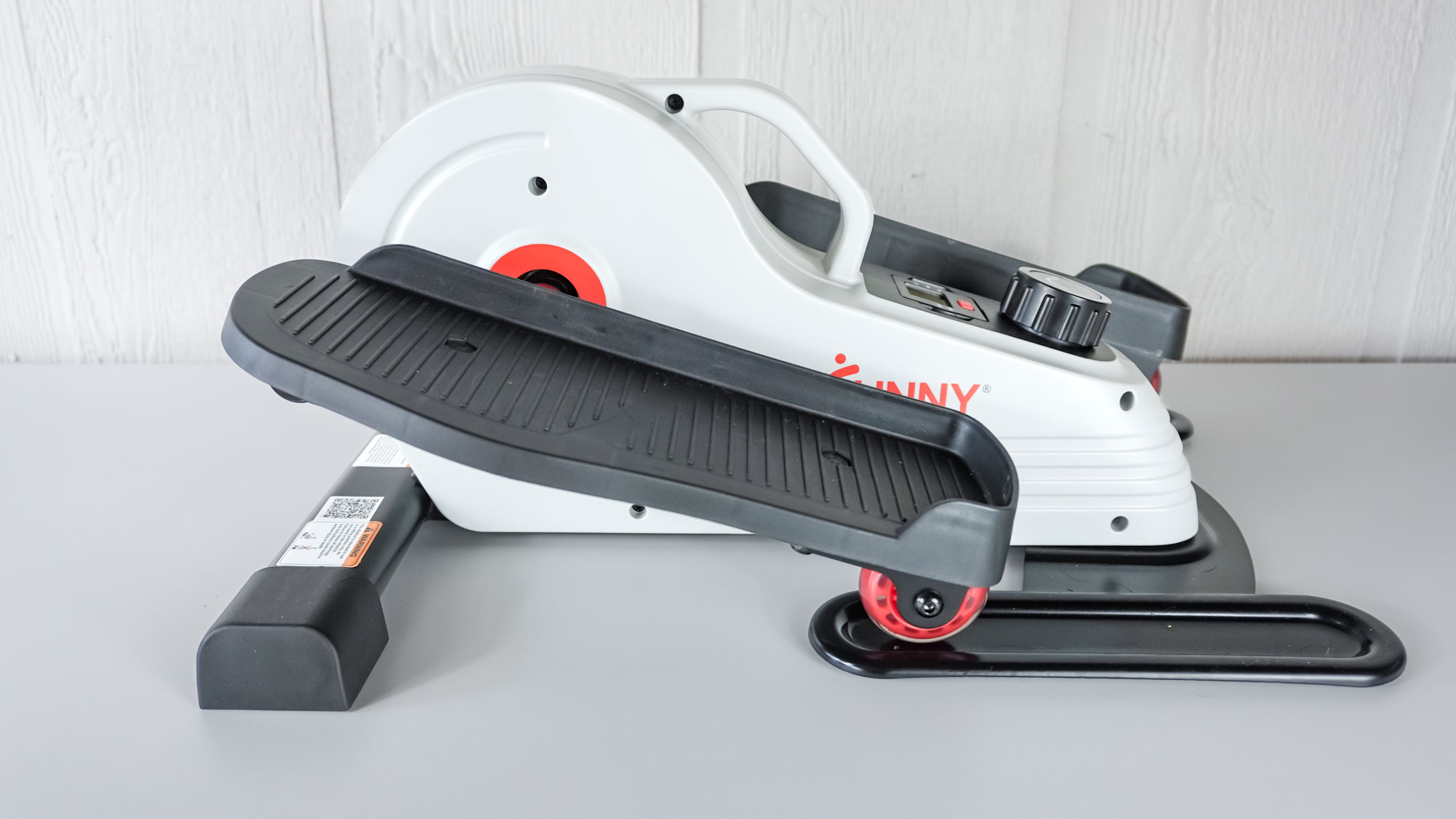
What happens inside with each pedal stroke
How does an under desk elliptical work during a single push? Each stroke follows a clean chain of events. The flow is like a bike, but shorter and lower to the ground.
Step by step:
- You press down and forward on the pedal. This turns the crank.
- The belt spins the flywheel. The wheel stores energy, like a spinning top.
- Magnets near the metal disk create a braking force. More magnet, more drag.
- That drag turns your leg work into heat in the disk. There is no contact.
The result is a smooth, quiet ride. The flywheel cuts small bumps in torque. That protects your joints and lets you work while you work.

Resistance types and settings
Most units use magnetic resistance. You can raise it with a dial or buttons. Some models use a motor to adjust levels for you. A few budget units use pads that rub the wheel, but they can be noisy and wear out.
Today's Exclusive Deals
Limited-time Exclusive Deals. Check current discount on Amazon.
Check Price on Amazon As an Amazon Associate I earn from qualifying purchases.Match the setting to your goal:
- Very low levels keep legs moving during calls with little sweat.
- Mid levels raise heart rate and burn more calories.
- High levels build strength in the legs in short bursts.
Turn the dial up if you want more load. Turn it down to spin light and fast. In simple terms, this is the heart of the answer to How does an under desk elliptical work? The magnets change how hard each stroke feels.
Ergonomics under the desk
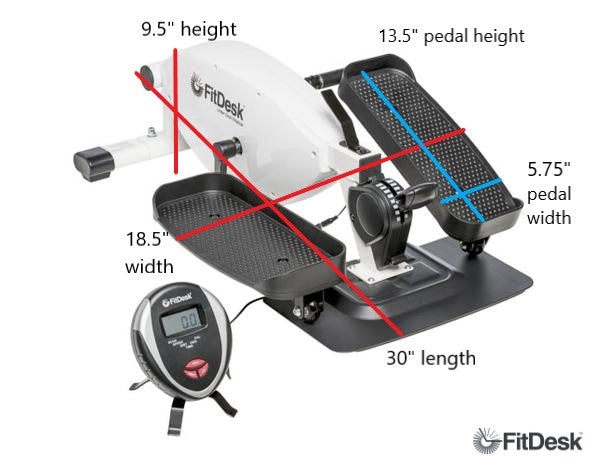
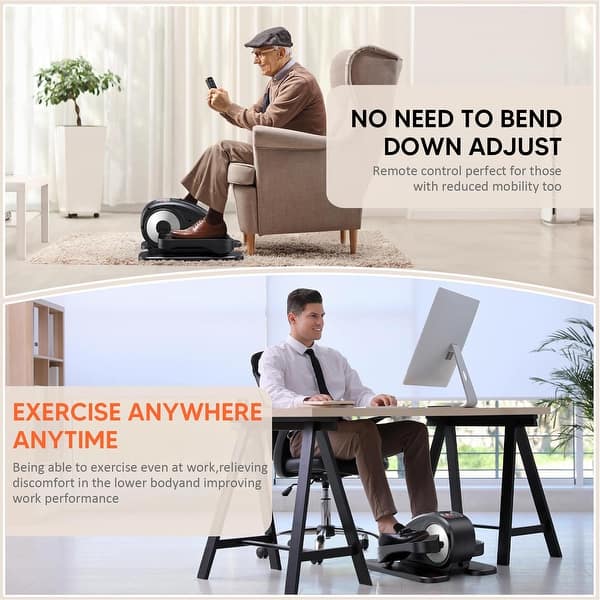
How does an under desk elliptical work with your chair and desk? The design is low so your knees clear the desktop. The pedals sit at an angle that keeps your feet flat and comfy. The ellipse path cuts knee lift but keeps a natural stride.
Use these quick tips:
- Sit tall with your back on the chair. Keep your hips square.
- Place the unit so your knees do not hit the desk. Raise the desk if you must.
- Aim for light pressure on your heels. Avoid toe-only pedaling.
- If the unit slides, add a mat for grip.
Small moves, big payoffs. Good fit means you pedal longer and feel better.
Health and fitness benefits with real expectations
How does an under desk elliptical work for your health? It keeps you in motion and adds gentle cardio to your day. This boosts daily energy burn, known as NEAT. Light pedaling can burn about 100 to 200 calories per hour at easy levels. A brisk push can reach 250 to 300 for some people.
Key gains you may notice:
- Better blood flow in the legs during long sits.
- A mild rise in heart rate that feels easy to hold.
- Less stiffness in hips, knees, and lower back.
This is not a full sprint workout. Think of it as steady background movement. Studies on desk-based activity show even light motion can help glucose control and mood. It is a small hinge that swings a big door over time.

Under desk elliptical vs mini bike vs full-size elliptical
How does an under desk elliptical work compared to other tools? A mini bike has a circle pedal path and can stress knees when your desk is low. An under desk elliptical uses an ellipse path to cut knee lift. A full-size elliptical adds arm action, bigger stride, and higher heart rate.
Simple points to note:
- Under desk: very quiet, low knee rise, great for work hours.
- Mini bike: compact, but knee angle can be tight under a low desk.
- Full elliptical: full body, high cardio, but you need space and time.
Pick the tool that fits your day and your space.
Features to look for when buying
When you shop, try the basics first. Your goal is smooth, quiet, and stable.
Look for:
- Solid weight and a stable base so it does not wobble.
- Smooth belt drive and a decent flywheel for steady motion.
- Wide resistance range with easy controls you can reach while seated.
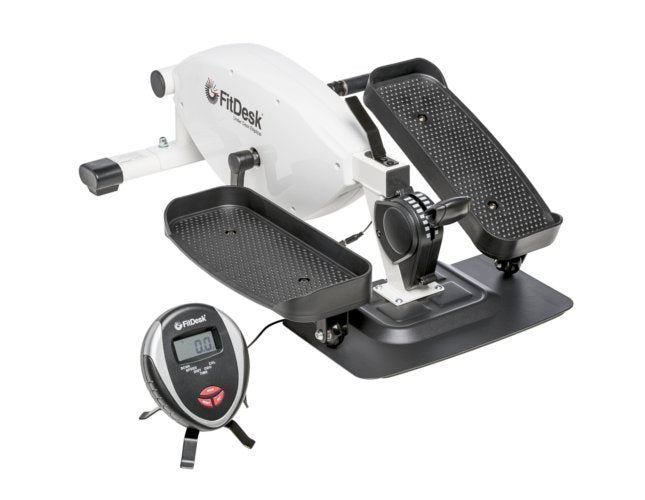
- Clear display for time, speed, distance, and RPM.
- Quiet action so it does not bother calls or roommates.
- Carry handle, floor grips, and a mat for safety.
- Good support and a fair warranty.
Ask yourself: How does an under desk elliptical work for my desk, my chair, and my day? That question keeps your choice on track.

How to use it effectively at work or home
How does an under desk elliptical work best in daily life? Keep it simple. Place it at your feet and start light. Build time and load over days, not hours.
Try this plan:
- Warm up for 3 to 5 minutes at a low level.
- Pedal 20 to 30 minutes while you read or join a call.
- Add 2 to 3 short bursts of 60 seconds at a higher level.
- Cool down for 2 to 3 minutes and stretch calves and hips.
Extra tips:
- Switch to backward pedaling to hit new muscles.
- Keep a towel and water nearby.
- Use a cadence you can hold and still speak in full lines.

Maintenance and troubleshooting
How does an under desk elliptical work long term? It stays smooth if you care for it. The good news: magnetic units need little work.
Do this once a month:
- Wipe dust from pedals, wheels, and magnets.
- Check bolts for tightness. A small turn can stop a squeak.
- Make sure the belt is aligned and not frayed.
- If noise appears, check for a rub point near the magnets.
If a part clicks or drags, stop and inspect. Many makers offer guides and parts. When in doubt, contact support and share a short video of the sound.
A week in the real world: my results
I tested one under my sit-stand desk for a full week. On call days, I spun at a low level for 90 minutes across the day. On quiet days, I did three 10-minute blocks with short bursts.
What I learned:
- My legs felt less heavy at 4 p.m., and my focus was better.
- A mat stopped floor creep and cut noise in a small office.
- High resistance made me hunch. I lowered it and sat taller. That fixed it.
If you ask, How does an under desk elliptical work when life gets busy? The answer is: it blends in. That is its magic.
Environmental and noise considerations
Most models are whisper quiet due to magnetic resistance and belts. The sound is often below normal talk level. This makes them fine for shared homes or offices.
If you live upstairs, use a dense mat. It cuts vibration on wood floors. Keep pedals smooth and even to avoid thumps.
The energy and biomechanics behind the smooth feel
How does an under desk elliptical work from a physics view? Your legs add torque to the crank. The flywheel evens that torque over each stroke. This reduces the start-stop feel you get with small, light devices.
Why it feels kind on joints:
- The ellipse path reduces knee lift at your desk height.
- Magnetic drag is linear and predictable across speeds.
- A heavier flywheel adds inertia and helps glide through dead spots.
Simple idea, smart result. Smooth force, low stress, steady motion.
Safety and who should be careful
Most people can use one with no issue. Still, some cases need care. If you have a recent knee, hip, or ankle surgery, ask your clinician first. If you have balance or nerve issues, start slow and monitor for numbness.
Play it safe:
- Wear flat shoes with a firm sole.
- Keep posture tall. Stop if you feel pain, not just effort.
- Drink water and take short breaks each hour.
Frequently Asked Questions of How does an under desk elliptical work?
How does an under desk elliptical work?
It uses pedals linked to a flywheel and magnets to create smooth resistance. You push the pedals, the flywheel spins, and the magnets add load without touching.
Is it good for weight loss?
It helps you burn extra calories while you sit. Paired with smart food choices and walks, it supports steady loss over time.
Can I use it under any desk?
Most fit under standard desks, but knee space varies. Measure your chair height, knee rise, and desk clearance to be sure.
Does it make noise on calls?
Magnetic units are very quiet. With a mat and smooth pedaling, most people on calls will not hear it.
Forward or backward pedaling, which is better?
Both help. Forward hits quads and glutes more, while backward adds work for hamstrings and calves.
How many minutes should I aim for each day?
Start with 10 to 20 minutes and build up. Many users do 45 to 90 minutes across the day in short blocks.
Will it replace my gym workout?
No, it is light to moderate activity. Use it to sit less, then add walks, strength work, or rides for full fitness.
Conclusion
You came here asking, How does an under desk elliptical work? Now you know the parts, the motion, and how to make it fit your day. It is a simple tool with a smart design that keeps you moving with little noise and low stress.
Start small. Place one under your desk, set an easy level, and pedal through your next meeting. Want more tips like this? Subscribe for new guides, ask a question in the comments, or share your setup so we can help you dial it in.