
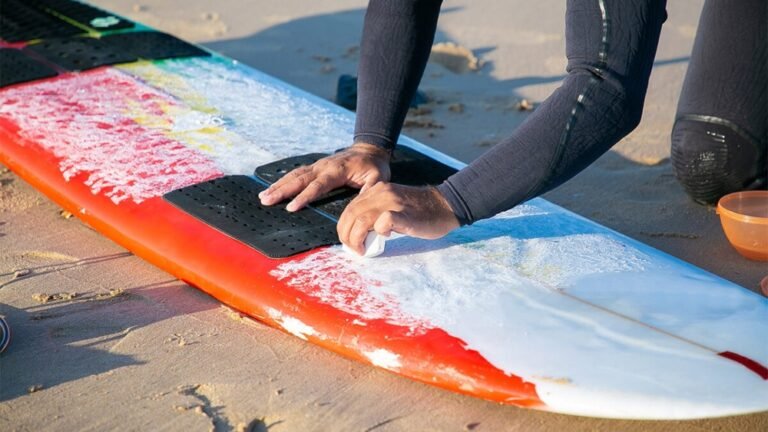
Surfing looks simple from the beach: people, boards, and waves. But if you watch closely, you’ll notice something curious. Before heading into the water, surfers often stop, crouch over their boards, and rub something onto the top. This might seem like a strange ritual, but it’s a key part of every surf session. So, why do surfers wax their boards? The answer is about much more than just tradition. Waxing is essential for grip, safety, performance, and even style. Let’s explore exactly why surfboard wax matters, how it works, and what happens if you skip this step.
The Core Reason: Traction
The main reason surfers wax their boards is for traction. Surfboards, especially those with a fiberglass or epoxy finish, are smooth and slippery. Water makes this even worse. If you try to stand on an unwaxed board, your feet will slide off almost instantly.
Surfboard wax creates a sticky layer on the board’s surface. This helps your feet stay planted when you’re paddling, popping up, and riding waves. With good grip, you can perform maneuvers, control the board, and stay balanced. Without wax, even experienced surfers find it nearly impossible to surf safely.
How Wax Creates Grip
Surfboard wax is made from a mix of paraffin, beeswax, and sometimes other sticky substances. When applied, it forms small bumps and a slightly tacky surface. These bumps give your feet something to press against, even when the board is wet.
Many beginners think wax is just for comfort or aesthetics. In reality, it’s a critical safety feature. Slipping off your board can mean missed waves, injuries, or dangerous situations in strong surf.
Safety Benefits Of Surfboard Wax
Staying on your board is about more than just catching waves. Safety is a major concern in surfing, especially for beginners and in crowded spots.
- Reduces falls: Wax helps keep your feet from sliding, so you’re less likely to fall unexpectedly.
- Prevents injuries: Slipping can lead to twisted ankles, hitting the board, or colliding with other surfers.
- Protects others: A surfer who loses control is a risk not only to themselves but to everyone nearby.
Many novice surfers underestimate how slippery a surfboard becomes without wax. Even a quick wipe-down in the water can remove enough wax to make paddling back to shore difficult.
Performance And Control
Surfers rely on subtle foot movements to steer, accelerate, and perform tricks. A waxed board reacts more precisely to these inputs.
- Turns and maneuvers: With solid grip, you can shift your weight aggressively without fear of slipping.
- Tricks and aerials: Advanced surfers need maximum traction for jumps, spins, and other dynamic moves.
- Consistency: Wax ensures the board feels the same every session, building muscle memory.
Imagine trying to skateboard on an ice rink. That’s the difference between a waxed and unwaxed surfboard.
Types Of Surfboard Wax And Choosing The Right One
Not all surfboard wax is the same. There are several types, each suited to different water temperatures and conditions.
| Wax Type | Water Temperature | Typical Use |
|---|---|---|
| Cold Water Wax | Below 60°F (15°C) | Chilly regions, winter surfing |
| Cool Water Wax | 58-68°F (14-20°C) | Spring/fall, temperate beaches |
| Warm Water Wax | 64-74°F (18-24°C) | Tropical/subtropical surf |
| Tropical Wax | Above 75°F (24°C) | Hot climates, summer months |
Choosing the wrong wax is a common mistake. For example, cold water wax will melt and become slippery in hot conditions. Tropical wax, on the other hand, is too hard for cold water and won’t create enough stickiness. Always check the water temperature and match your wax accordingly.
Basecoat Vs. Topcoat: The Two-layer System
Experienced surfers use a two-layer system for the best results.
- Basecoat: A hard wax layer that forms bumps on the board. This is applied first and lasts several sessions.
- Topcoat: A softer, sticky layer added before each surf session for extra grip.
This system prevents the wax from flattening out too quickly. It also makes it easier to refresh your wax job—just add more topcoat. Skipping the basecoat means your wax will wear down faster and give less traction.
How To Wax A Surfboard Properly
Waxing a surfboard is simple, but there’s a right way and a wrong way.
Step-by-step Waxing
- Clean the board: Remove old wax and dirt for a fresh start.
- Apply basecoat: Rub in small circles across the standing area (usually from just above the tail to about two-thirds up the board).
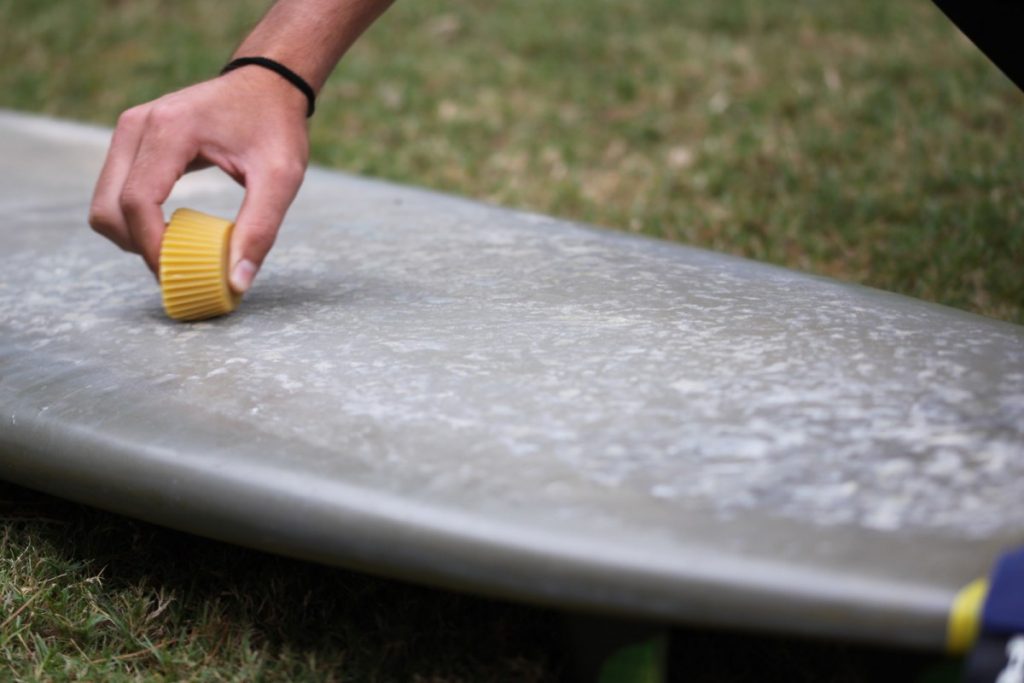
- Create bumps: Use cross-hatching or circular motions to build up texture.
- Add topcoat: Use softer wax over the basecoat before each session.
- Check for coverage: Make sure there are no slippery spots.
Some surfers use a wax comb to roughen the wax between sessions. This restores grip without needing to add more wax every time.
Common Waxing Mistakes
- Applying too much wax: Excess wax can make the board heavy and messy.
- Waxing the wrong area: Only wax where your feet and hands will be.
- Not cleaning old wax: Layers of old, dirty wax lose grip and can peel off in the water.
Other Uses For Surfboard Wax
While traction is the main reason, wax has a few other purposes in surfing culture:
- Marking the board: Surfers use wax to mark their foot position or highlight where to stand.
- Scent and style: Some waxes have unique scents or colors for personal expression.
- Quick repairs: In emergencies, wax can help seal small dings or cracks until proper repair.
These uses are secondary, but they show how central wax is to the surfing experience.
Wax Vs. Traction Pads: A Comparison
Some surfers use traction pads instead of, or alongside, wax. Here’s how the two compare:
| Feature | Wax | Traction Pad |
|---|---|---|
| Grip Area | Customizable, full board | Mainly tail (back foot) |
| Maintenance | Needs regular application | Very low |
| Feel | Sticky, soft | Firm, textured |
| Cost | Low per session | Higher one-time cost |
| Customization | High | Limited |
Most shortboard surfers use a combination: a traction pad for the back foot and wax for the front. Longboarders usually prefer wax for the whole standing area, especially if they walk up and down the board.
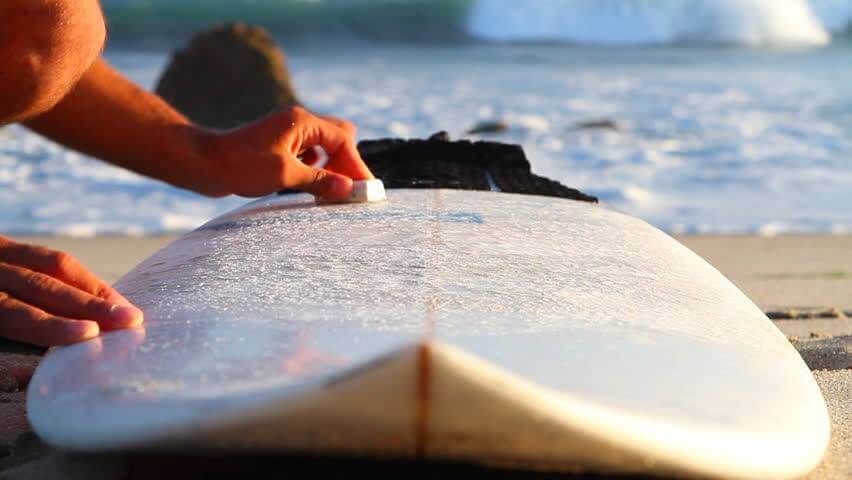
Environmental Impact Of Surfboard Wax
Traditional surfboard wax contains petroleum-based paraffin, which can harm marine life. As awareness grows, eco-friendly alternatives are becoming popular.
- Natural waxes: Made from beeswax, coconut oil, or soy.
- Biodegradable options: Break down safely in the ocean.
- No harmful chemicals: Better for reefs and wildlife.
If you care about the environment, look for wax brands that use sustainable ingredients. Some even support ocean conservation projects, so your choice can make a difference.
What Happens If You Don’t Wax Your Board?
Skipping wax is a mistake even experienced surfers rarely make. Here’s what to expect:
- Constant slipping: Even paddling becomes hard.
- Dangerous falls: Increased risk of injury, especially in bigger waves.
- Less control: Turns and tricks are nearly impossible.
In competitions, using the wrong wax (or forgetting to reapply) can ruin a surfer’s performance. For beginners, it can make learning frustrating and slow.

The Ritual And Community Of Waxing
Waxing your board is more than just a task. It’s a ritual that connects surfers to their gear and the session ahead. Many find it calming and meditative—a way to focus, check equipment, and prepare mentally. Some surfers even have favorite brands, scents, or “lucky” waxing patterns.
This ritual adds to the culture and community of surfing. Sharing wax, talking about brands, and helping a friend wax their board are common moments on beaches worldwide.
Surprising Insights Most Beginners Miss
- Wax wears off faster than you think. Even a few hours of surfing can flatten out your wax job. Bringing an extra bar to the beach is a smart move.
- Warm water melts cold water wax. If you travel, always check the local water temperature and buy the right type. Many travelers are caught out when surfing in new regions.
Small details like these can make a big difference in your surfing experience.
Scientific Perspective: How Wax Improves Friction
The science behind surfboard wax is about increasing friction. Water molecules create a thin film between your foot and the board. Wax fills in the tiny pores and irregularities on the board’s surface, reducing this slippery layer and allowing your skin (or wetsuit) to grip better.
Some research even suggests that the pattern you use (circular, cross-hatch, diagonal) can slightly change the grip and durability of your wax job. While not critical for beginners, it’s an example of how even small details matter in surfing.
For more on the science of friction and surfing, you can read about it on Wikipedia.
Frequently Asked Questions
Why Can’t You Use Candle Wax On A Surfboard?
Candle wax is not made for water or traction. It is too soft and melts quickly in the sun and surf. Real surfboard wax has special ingredients to stay sticky and durable in ocean conditions.
How Often Should I Re-wax My Surfboard?
You should add a fresh topcoat before every session, especially if you notice slippery spots. Remove old wax and apply a new basecoat every few weeks or if the wax is dirty.
Is Surfboard Wax Toxic?
Traditional wax can contain harmful chemicals. Most casual exposure is safe, but it’s better to choose non-toxic or natural wax, especially for children or if you surf in sensitive marine areas.
Can I Surf Without Wax If I Wear Booties?
Booties can add some grip, but they are not a substitute for wax. Boards are still too slippery, and you lose the “barefoot feel” that many surfers prefer.
What’s The Best Way To Remove Old Wax?
Leave your board in the sun for a few minutes to soften the wax, then use a wax comb or a piece of cardboard to scrape it off. Wipe with a cloth and a little coconut oil or eco-friendly cleaner for a fresh start.
Surfing is as much about preparation as performance. Waxing your board may seem small, but it’s essential to safety, control, and the overall experience. Next time you see a surfer waxing up on the shore, you’ll know it’s not just a ritual—it’s the secret to riding waves with style and confidence.
