When you watch surfers glide across waves, it looks smooth and effortless. But there’s an unseen detail that makes it possible: surfboard wax. For non-surfers, this sticky substance might seem strange or unnecessary. Why do surfers use wax on surfboards? The answer is more interesting—and more important—than you might expect.
Surf wax is more than a tradition. Without it, most surfers would spend more time slipping off their boards than riding waves. The ocean’s surface is unpredictable, and surfboards are usually made with slick materials like fiberglass or epoxy. Wax solves a problem every surfer faces: how to stay firmly on the board, especially when turning or paddling hard. But that’s just the start. Let’s dig deeper into why surf wax matters, how it works, and what many beginners miss about this essential tool.
The Main Purpose: Traction And Grip
The most important reason surfers use wax is for traction. Surfboards, by design, have smooth surfaces to glide over water. But that same smoothness makes it nearly impossible to stand up or paddle without slipping.
When a surfer applies wax, it creates a grippy layer on the board. This stickiness helps feet (or hands, when paddling) stay in place. Just a thin layer can make the difference between catching a wave or wiping out. Wax acts almost like the rubber soles on shoes: it allows for control, balance, and fast reactions.
Without wax, a surfer’s foot can slip even in calm conditions. Add the rush of a moving wave, water splashing, and shifting body weight, and things get much more difficult. Many beginners discover this the hard way—one push, and they slide right off.
How Wax Works On A Surfboard
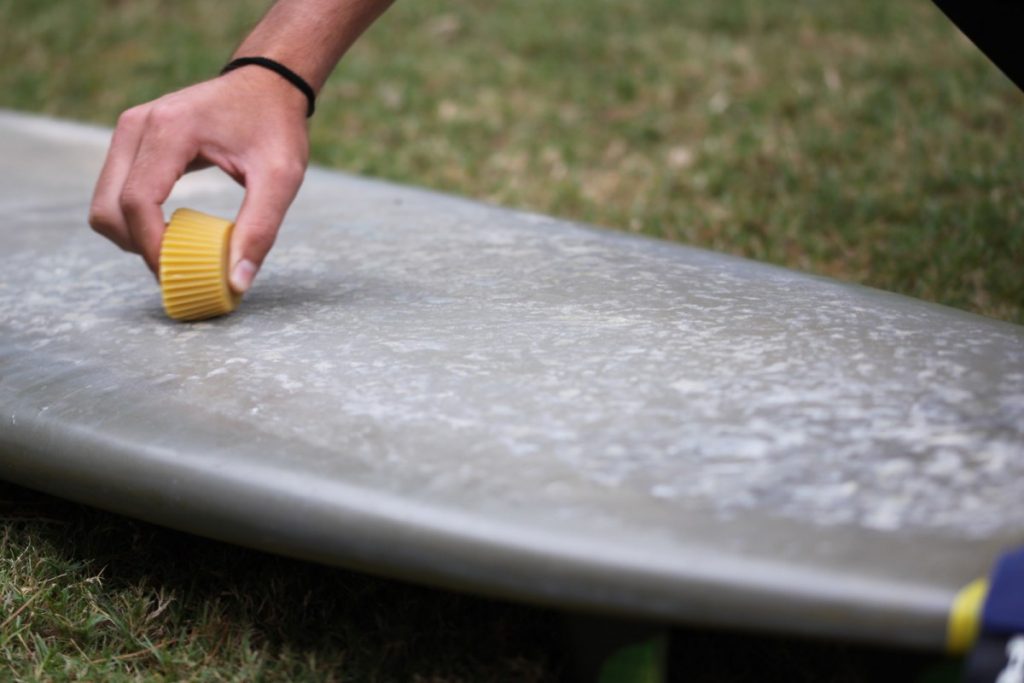
At a simple level, surf wax is made from natural or synthetic waxes. Popular ingredients include paraffin, beeswax, coconut oil, and sometimes sticky resins. When pressed and rubbed onto the board, the wax forms small bumps or beads. These create friction between the surfer’s skin and the board.
But there’s a science to it. The wax’s texture, temperature, and thickness all matter. Warm water wax, for example, is harder so it won’t melt in the sun. Cold water wax is softer and stickier, helping grip in chilly conditions.
Surfers pick their wax based on where they’ll surf, the water temperature, and their own style.
More Than Just Grip: Other Benefits
1. Protection For The Surfboard
Wax can give a thin protective layer over the board’s deck. While it’s not a full shield, it helps reduce small scratches and dings from sand, knees, and feet. Some waxes even include additives that fight UV damage.
2. Comfort For The Surfer
A bare surfboard can be rough or sticky in the wrong way. Wax adds a slightly cushioned feel, making it more comfortable to kneel, paddle, or pop up. Some waxes have added scents—coconut or bubblegum—that make long sessions more pleasant.
3. Marking The Board
Surfers often use wax to mark key spots on the board: where they should place their feet for the best control, or where they push up with their hands. This helps with muscle memory and learning.
Types Of Surf Wax And Choosing The Right One
Not all surf wax is the same. The main difference is based on water temperature. If you use the wrong type, your wax can become too hard and lose grip, or too soft and melt off.
Here’s a comparison of the most common types:
| Wax Type | Water Temperature Range | Main Features |
|---|---|---|
| Cold Water Wax | Below 15°C (59°F) | Very sticky and soft, grips in cold water |
| Cool Water Wax | 15–19°C (59–66°F) | Medium softness, grips in cool water |
| Warm Water Wax | 19–23°C (66–73°F) | Harder texture, resists melting |
| Tropical Wax | Above 23°C (73°F) | Very hard, best for hot climates |
Choosing the right wax depends on where you surf. For example, using tropical wax in cold water will give almost no grip. The wax is too hard, and your feet will slip. Using cold water wax in warm water will cause it to melt away, leaving a mess on your board and even on your wetsuit.
How To Apply Surf Wax Properly
Many beginners just rub wax in circles and hope for the best. But there’s a right way to get the best grip.
- Start with a clean board. Old wax, dirt, or sand reduces grip. Clean the board with fresh water and dry it.
- Basecoat layer. Use a harder basecoat wax first. Rub it in a crosshatch or diagonal pattern to create small bumps.
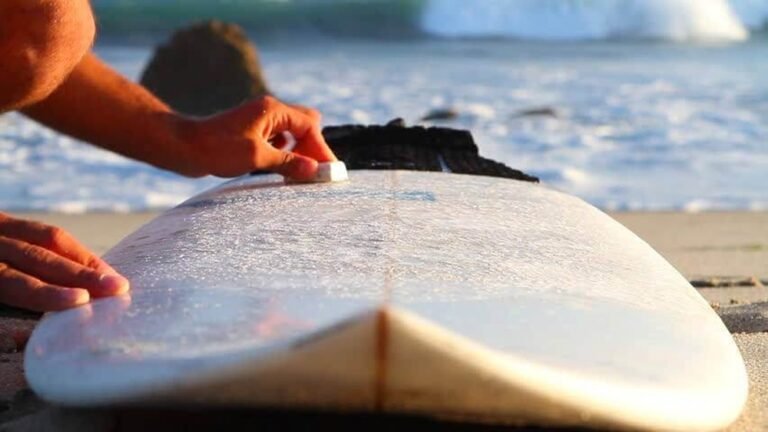
- Topcoat layer. Use the right temperature wax for your session. Rub gently in circles or diagonals until you see a textured layer form.
- Focus on key areas. Wax where your feet and hands will be—usually the middle to the back of the board.
- Check and reapply. Before each session, check for bald patches and reapply as needed.
A secret most beginners miss: Less is more. Too much wax creates a slippery layer that peels off. Aim for a thin, bumpy texture, not a thick cake.
How Often Do Surfers Wax Their Boards?
There’s no exact schedule, but most surfers reapply wax before every session. Some do quick touch-ups, others scrape off old wax and start fresh every few weeks. Here’s a simple guideline:
| Frequency | Reason |
|---|---|
| Before every surf | Quick touch-up for best grip |
| Once a week | Scrape off loose/dirty wax, apply fresh layer |
| Every few months | Remove all wax, deep clean, reapply basecoat and topcoat |
Weather, water temperature, and how often you surf will affect how long wax lasts. Hot sun or sand can melt wax fast.

Alternatives To Traditional Surf Wax
While wax is the traditional choice, there are other options:
- Traction pads: These are foam pads glued to the board, usually at the back. They don’t melt or need reapplying but cover only small areas.
- Grip sprays: Some companies make sprays that create a textured, grippy surface. These are less popular but growing.
- Waxless boards: A few brands sell boards with textured decks that claim to need no wax. Most surfers say they don’t work as well for all conditions.
A common mistake is to rely only on pads or sprays, especially for longboards or mid-length boards. Pads work best for the back foot, but for most of the board, wax is still king.
Environmental Impact Of Surf Wax
Most surf wax is made from petroleum-based paraffin, which is not eco-friendly. As awareness grows, more brands offer eco-friendly wax made with beeswax, soy, or plant oils. These alternatives work well, but can be a bit more expensive.
Here’s a look at traditional vs. eco-friendly wax:
| Type | Main Ingredients | Environmental Impact |
|---|---|---|
| Traditional Wax | Paraffin, synthetic additives | Non-biodegradable, made from oil |
| Eco-friendly Wax | Beeswax, soy, coconut oil | Biodegradable, less pollution |
If you care about the ocean, consider switching to eco wax. It’s a simple way to reduce your footprint and protect the waves you love.

Non-obvious Insights For Surfers
Most beginners focus only on buying wax and slapping it on. But experienced surfers know:
- Wax can affect your performance. Too much wax slows your pop-up (the move from lying to standing). Too little, and you’ll slip. Find your ideal amount through practice.
- Mixing wax types can help. Some surfers use a harder basecoat and a softer topcoat even within the same session, creating a custom grip for their style.
- Wax can hide damage. If your board has a crack or ding under the wax, you might not see it. Always check the board carefully during cleaning.
Cultural And Social Side Of Surf Wax
Surf wax brands are a big part of surf culture. Each has its own scent, feel, and even logo. Some surfers are loyal to one brand for life. Sharing wax is a friendly gesture in the lineup, and stories about lost or found wax are common.
Even the smell of surf wax triggers memories for many surfers. It’s a small detail that connects them to their first wave or favorite beach.
Frequently Asked Questions
Why Not Use Sandpaper Or Roughen The Board Instead Of Wax?
Sanding the board will damage the surface and reduce its lifespan. Wax is removable and doesn’t harm the board. Also, sandpaper can’t provide the same sticky, flexible grip that wax gives.
Is There A Difference Between Cheap And Expensive Surf Wax?
Often, yes. Higher-quality wax sticks better, lasts longer, and is less likely to melt off in the sun. Some cheaper waxes use more filler and can feel greasy or slippery. Read reviews or try different brands to find what works for your local conditions.
How Do You Remove Old Surf Wax?
Leave your board in the sun for a few minutes to soften the wax. Then, use a wax comb or plastic scraper to peel it off. For stubborn patches, apply a little coconut oil or specialized wax remover. Always clean the board fully before applying new wax.
Can I Surf Without Wax If I Wear Booties?
Booties add some grip, but most boards are still too smooth for safe surfing without wax. Booties are best for cold water but should be used with wax for maximum grip.
What Happens If You Use The Wrong Temperature Wax?
Using the wrong wax can ruin your session. Too hard (for cold water), and you’ll slide off. Too soft (for hot water), and the wax melts, becoming messy and useless. Always check the water temperature and choose accordingly.
Final Thoughts
Surf wax is a small detail, but it’s at the heart of every surf session. It’s what keeps surfers connected to their boards, lets them perform sharp turns, and gives them the confidence to ride bigger waves. From the science of stickiness to the culture of sharing wax on the beach, this simple product has a big job.
The next time you see a surfer applying wax, you’ll know it’s not just a routine—it’s essential for safety, performance, and even comfort.
For more on surf wax ingredients and the history of surf culture, check out the Wikipedia page on surfboard wax.
Understanding why surfers use wax on surfboards is a key step toward mastering the waves—or simply appreciating the sport on a deeper level.