
Snowboarding looks like fun and freedom on the snow, but if you’ve tried it, you know it’s a full-body workout. Each turn, jump, and even standing on the board uses many different muscles. If you’re curious about what muscles snowboarding works, you’re not alone.
Understanding how snowboarding shapes your body can help you prepare, avoid injury, and even improve your riding.
For beginners, some muscles may hurt after the first day. For advanced riders, the right training can help with speed, balance, and tricks. Whether you ride for fun or want to get better, knowing which muscles are involved is key.
Let’s dive deep into the world of snowboarding and find out which muscles work hardest—often in ways that might surprise you.
Core Muscles: The Hidden Engine Of Snowboarding
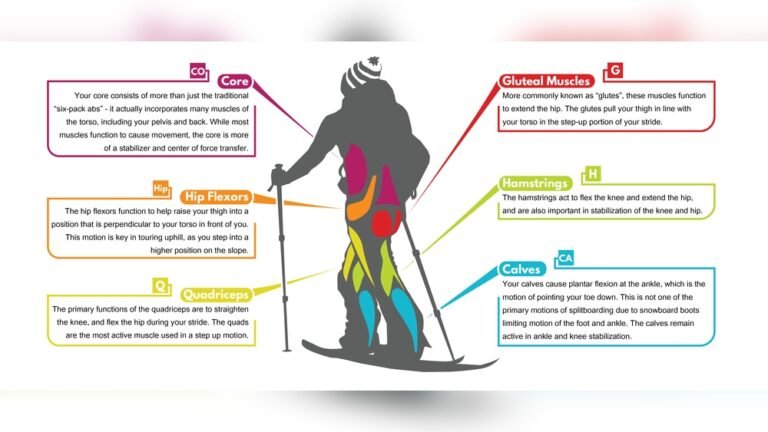
Many people think snowboarding is all about the legs, but your core muscles are the real engine. The core helps you balance, turn, and absorb shocks from uneven snow. It includes several main muscle groups:
- Rectus abdominis: This is the “six-pack” muscle. It helps you stay upright and controls your upper body as you twist and turn.
- Obliques: These muscles on the sides of your torso help with rotation. Every time you switch edges or spin, you use your obliques.
- Transverse abdominis: This deep core muscle acts like a belt, keeping your spine stable.
- Lower back muscles: Muscles like the erector spinae keep you from tipping over backward and help you recover from falls.
When snowboarding, your core is always engaged, even when you think you’re just standing still. For example, when you land after a jump, it’s your core that absorbs much of the shock and stops you from falling.
Non-obvious insight: Many beginners focus on legs but ignore core training. Weak core muscles often cause early fatigue and poor turning control, leading to falls.
Leg Muscles: Power For Every Turn And Jump
Most people feel the burn in their legs after a day on the slopes. That’s because snowboarding uses almost every muscle below the waist. Let’s break it down:
- Quadriceps: These are the big muscles at the front of your thighs. They work hard when you squat, absorb bumps, and control speed.
- Hamstrings: At the back of your thighs, these muscles help with balance and knee control, especially on uneven terrain.
- Gluteus maximus: Your glutes (butt muscles) help you stand up from a squat, push off the ground, and maintain power.
- Calves (gastrocnemius and soleus): These small but strong muscles keep you stable on your toes and heels, helping with edge control.
How Leg Muscles Work On The Slope
Let’s look at how each muscle group gets involved during a typical run:
| Muscle Group | Main Actions in Snowboarding | Fatigue Level (1-5) |
|---|---|---|
| Quadriceps | Squatting, absorbing bumps, turns | 5 |
| Hamstrings | Balance, knee flexion, landings | 4 |
| Glutes | Standing up, push-offs, edge control | 4 |
| Calves | Edge balance, micro-adjustments | 3 |
Non-obvious insight: The back leg often works harder than the front leg, especially in “regular” or “goofy” stance. This can lead to uneven muscle soreness.
Upper Body Muscles: More Important Than You Think
While snowboarding is lower-body heavy, your upper body muscles play a big support role. They help you steer, balance, and recover from slips.
- Deltoids (shoulders): Help with arm movement for balance and quick corrections.
- Latissimus dorsi (upper back): Supports posture and helps with carving turns.
- Trapezius and rhomboids: Keep your shoulders stable and help with pole use (if you use them).
- Forearms and grip: Important for carrying your board, getting up after a fall, and sometimes for grabs in freestyle tricks.
Example: How Upper Body Muscles Help
When you twist your shoulders to start a turn, your upper back and deltoids help lead the movement. If you fall, you use your arms and shoulders to protect yourself and push back up.
Practical tip: Many riders neglect upper body strength, but training these muscles can help prevent injuries, especially to the shoulders and wrists.
Stabilizer And Small Muscles: The Secret To Control
Snowboarding uses many small stabilizer muscles that you might not notice. These muscles are responsible for the tiny adjustments your body makes every second to stay balanced.
- Ankle stabilizers (peroneals, tibialis anterior): Help control the board’s edge and react to changes in snow.
- Hip flexors: Keep your knees up and help with quick movements.
- Foot muscles: Work hard to keep the board under control, especially when riding on one foot or in the park.
| Stabilizer Muscle | Role in Snowboarding | Common Overuse Issue |
|---|---|---|
| Peroneals | Edge control, ankle stability | Sprains, fatigue |
| Tibialis anterior | Foot lift, quick response | Shin splints |
| Hip flexors | Knee lift, rapid direction change | Strain, tightness |
Non-obvious insight: Weak stabilizer muscles often cause ankle pain or slow response on tricky terrain. Simple balance exercises (like standing on one leg) can improve these muscles fast.
Cardio And Endurance: The Invisible Workout
Snowboarding isn’t just about strength. It’s also a strong cardiovascular workout. You may not notice until you’re out of breath after a long run or hike up a slope.
- Heart and lungs: Riding at altitude, walking uphill, and constant movement all push your cardio system.
- Endurance muscles: Even though snowboarding uses quick bursts, you need endurance to last the whole day.
A 70-kg person can burn around 350–450 calories per hour while snowboarding, depending on speed and terrain. This is similar to running at a moderate pace.
How Snowboarding Compares To Other Sports
If you’re curious how snowboarding stacks up against skiing or skateboarding, here’s a quick look:
| Sport | Main Muscles Used | Upper/Lower Body Balance | Cardio Intensity |
|---|---|---|---|
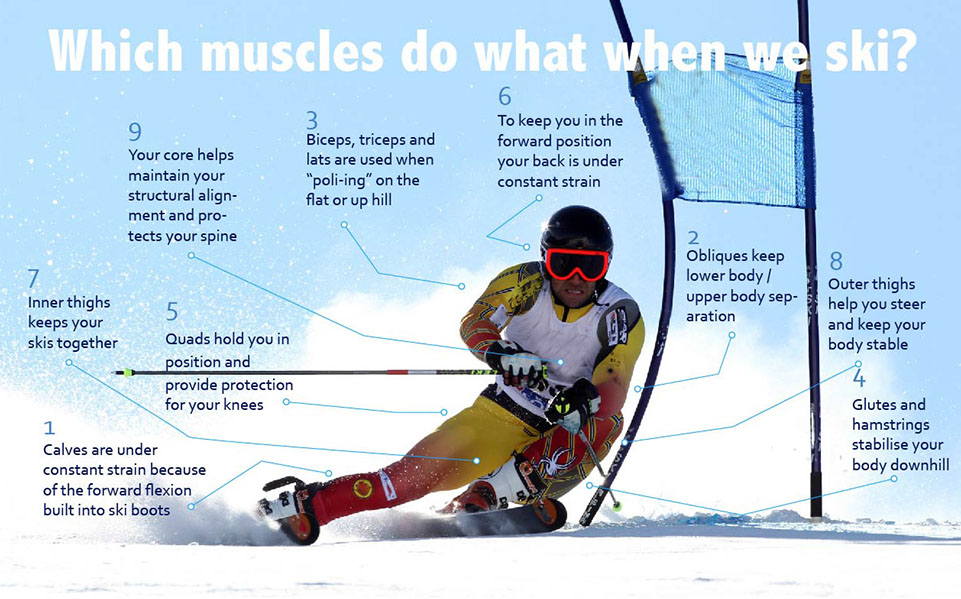
| Snowboarding | Core, legs, stabilizers | 80% lower, 20% upper | Medium-High |
| Skiing | Legs, core, arms (poles) | 70% lower, 30% upper | High |
| Skateboarding | Legs, core, some upper | 85% lower, 15% upper | Medium |
Muscle Use In Different Snowboarding Styles
Snowboarding comes in many styles, and each one works your muscles in unique ways.
Freestyle
Freestyle riders focus on jumps, tricks, and rails. This style uses:
- Explosive leg power for jumps.
- Strong core for spins and flips.
- Upper body for grabs and balance in the air.
Freeride
Freeride is all about natural terrain and powder. You need:
- Strong legs for deep snow.
- Core for stability on changing surfaces.
- Stabilizer muscles for quick reaction to bumps and drops.
Boardercross
This is a race with sharp turns and jumps. Key muscles:
- Quads and hamstrings for speed.
- Core for fast turns.
- Shoulders and arms for balance during collisions.
Splitboarding
Splitboarding involves hiking uphill before riding down. This adds:
- Glutes and hamstrings for uphill walking.
- Calves for long climbs.
- Extra cardio demand.
Extra tip: Training for your favorite style can help you ride longer, with less risk of injury.
Why Muscle Balance Matters
Many snowboarders develop strong legs but ignore other areas. This can lead to problems:
- Muscle imbalances: Overusing some muscles while ignoring others can cause knee or lower back pain.
- Injury risk: Weak core or stabilizer muscles make it easier to fall or twist an ankle.
- Better performance: Balanced training improves control, speed, and even fun.
A simple way to balance your training is to add exercises like planks (for core), squats (for legs), and single-leg balance moves.

Common Snowboarding Injuries And How Muscles Protect You
Snowboarding has a risk of injury, especially for beginners. But strong muscles can help protect you.
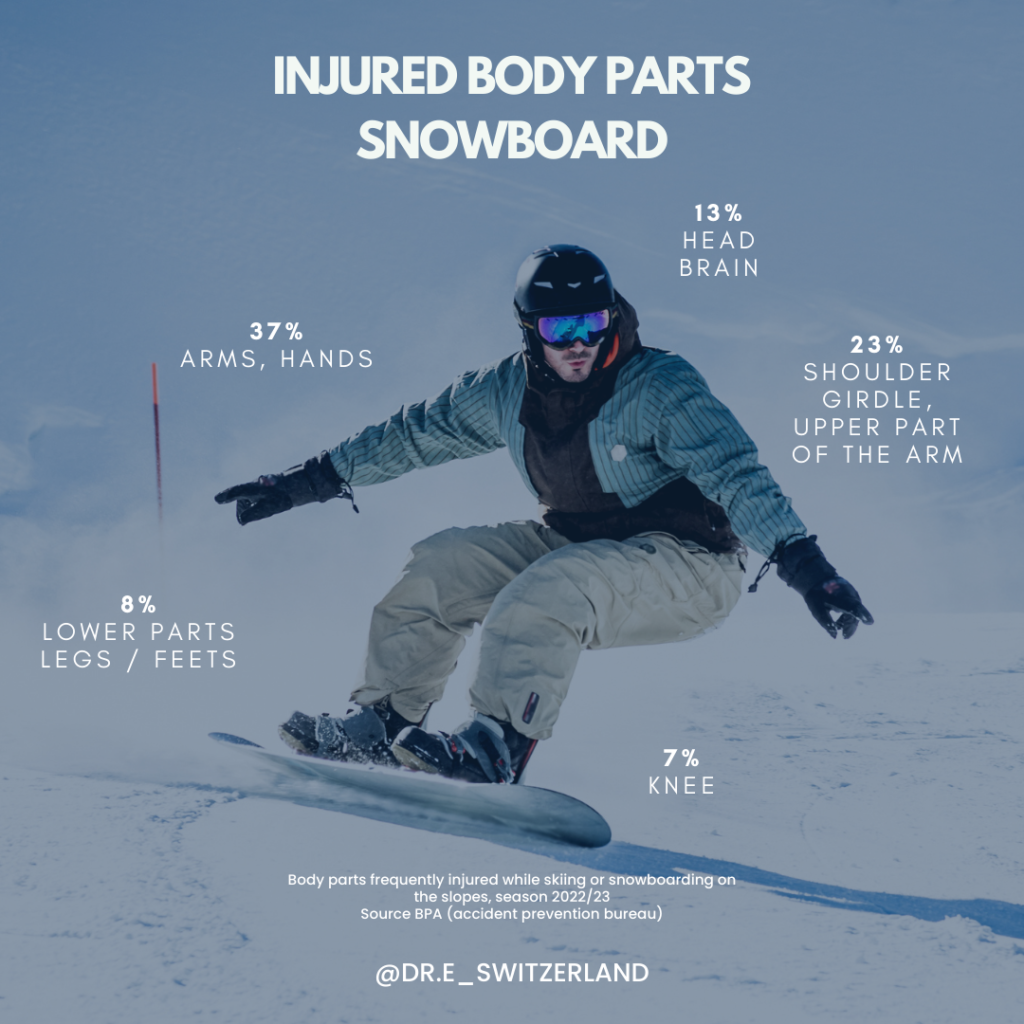
- Wrist and arm injuries: Strong shoulders and arms help catch you safely.
- Knee injuries: Strong quads and hamstrings support the knee joint.
- Lower back pain: Good core strength reduces strain on the spine.
According to a study on snowboarding injuries, most injuries happen during falls or jumps. Regular strength and balance training can cut your risk.
How To Train The Right Muscles For Snowboarding
If you want to get stronger for snowboarding, focus on:
- Core exercises: Planks, Russian twists, and leg raises.
- Leg workouts: Squats, lunges, and box jumps.
- Balance drills: Single-leg stands, wobble boards.
- Upper body moves: Push-ups, shoulder presses.
- Endurance: Cardio like cycling, running, or hiking.
Doing these 2–3 times a week before your trip will help you ride longer and recover faster.
Frequently Asked Questions
What Muscle Gets Sore First In Snowboarding?
For most beginners, the quadriceps (front of the thighs) get sore first. This is because you spend a lot of time in a squatting position, especially when learning to control your speed and stops. The core and calves can also get tired quickly, especially if your balance is off.
Is Snowboarding Better For Building Muscle Than Skiing?
Both sports build muscle, but snowboarding works the core and lower body more intensely because you use a sideways stance. Skiing adds more upper body work from using poles. For muscle growth, snowboarding focuses more on legs and core, while skiing spreads the effort a bit more.
Can Snowboarding Help With Weight Loss?
Yes, snowboarding is a high-calorie-burning activity. An average person can burn 350–450 calories per hour, which can help with weight loss if combined with healthy eating. The mix of cardio and strength work makes it effective for fat loss and muscle tone.
Should I Do Specific Exercises Before My Snowboarding Trip?
Yes, doing core, leg, and balance exercises a few weeks before your trip is smart. This prepares your muscles, reduces soreness, and lowers injury risk. Focus on squats, planks, lunges, and balance drills for best results.
Do I Need Strong Upper Body Muscles For Snowboarding?
While not as important as lower body, upper body strength helps with balance, getting up after falls, and preventing injuries. Shoulder and arm exercises are useful, especially for freestyle riders or anyone trying tricks.
If you’re planning to hit the slopes, remember that snowboarding is a total-body sport. Building strength in your core, legs, and even upper body will help you ride safer, longer, and with more style. Stay balanced, train smart, and enjoy every run down the mountain.
