Skiing is more than just a thrilling sport or a fun winter activity—it’s also a full-body workout that challenges many muscle groups. Whether you are gliding down gentle slopes or tackling steep terrain, your body works hard to keep you balanced, stable, and in control.
Many people wonder which muscles skiing actually works, and how it shapes your body and improves your fitness. Let’s explore the main muscle groups activated during skiing, how they work together, and why this sport is such a powerhouse for building strength and endurance.
The Main Muscle Groups Used In Skiing
When you ski, your body relies on a combination of lower body, core, and upper body muscles. Each group plays a unique role in maintaining posture, absorbing shock, and guiding your movements. Understanding these muscles can help you prepare better for skiing and even improve your performance.
Quadriceps
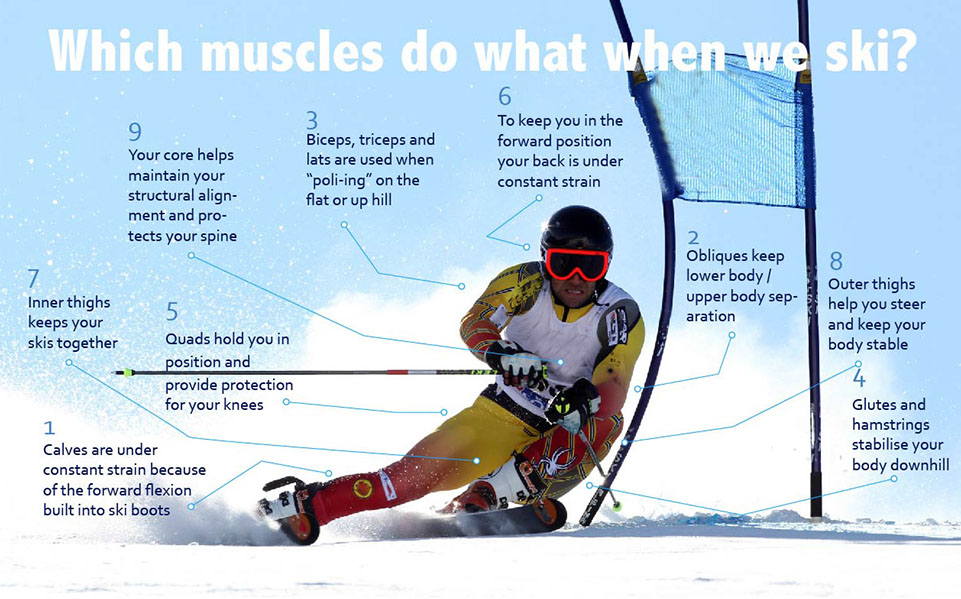
The quadriceps are among the most heavily used muscles in skiing. Located in the front of your thighs, these muscles extend your knee and support your body during squats and bends. When you ski, your knees are usually bent to help absorb bumps and keep your balance. This constant flexing and extending of the knee joint makes your quads work almost non-stop. Advanced skiers, especially those who enjoy moguls or jumps, will notice their quads burning after a long run.
Hamstrings
Behind your thighs are the hamstrings, which bend your knees and help control your speed as you ski. These muscles play a crucial role in stabilizing your legs and keeping your movements smooth. When you lean forward or flex at the hips, your hamstrings help counterbalance the forward motion, keeping you upright.
Gluteal Muscles
Your glutes—specifically the gluteus maximus, medius, and minimus—are the powerful muscles in your buttocks. They help extend your hips, push your body forward, and stabilize your pelvis as you turn and shift directions. Strong glutes help you maintain proper skiing form, especially when carving turns or controlling your speed.
Calves
The calf muscles (gastrocnemius and soleus) work hard during skiing to help you stay upright and to absorb shocks from uneven surfaces. These muscles flex your ankles and allow you to press into your ski boots, which is essential for steering and balance.
Hip Flexors
Your hip flexors connect your thighs to your pelvis and are used every time you lift your knee. On steep slopes or when you need to change direction quickly, your hip flexors help drive your knees up and forward. Overworking these muscles can sometimes lead to tightness, which is why stretching before and after skiing is important.
Adductors And Abductors
The adductors (inner thigh muscles) and abductors (outer thigh muscles) control the side-to-side movement of your legs. They are especially important for keeping your skis together, stabilizing your knees, and helping with turns. If you’ve ever felt soreness on the inner or outer thighs after skiing, these are the muscles at work.
Core Muscles: The Hidden Powerhouse
Many people overlook the role of the core muscles in skiing. However, the core is crucial for maintaining balance, transferring energy, and protecting your spine from twists and sudden movements.
Rectus Abdominis
The rectus abdominis, commonly known as your “abs,” helps stabilize your torso as you lean forward or twist. Skiing forces your core to remain engaged for long periods, especially when you’re making sharp turns or landing jumps.
Obliques
Your obliques (side abdominal muscles) are used every time you rotate your torso. They help you initiate and control turns, as well as keep your upper body stable while your legs move independently.
Erector Spinae
Running along your spine, the erector spinae muscles keep your back straight and help you resist the forward pull of gravity. Skiing in a crouched position puts a lot of demand on these muscles, which is why a strong lower back is vital for injury prevention.
Transverse Abdominis
Deep inside your core, the transverse abdominis acts like a natural weight belt, supporting your spine and internal organs. This muscle is less visible but plays a vital role in keeping you stable and reducing the risk of back pain.
Upper Body Muscles: Support And Balance
While skiing is mostly a lower-body activity, your upper body muscles are also involved. They provide balance, help with pole plants, and assist in controlling your movements.
Deltoids
The deltoids are the rounded muscles on your shoulders. They help lift and swing your arms as you use your ski poles to push, turn, or stabilize yourself.
Triceps And Biceps
Your triceps (back of the upper arm) and biceps (front of the upper arm) work together to extend and flex your elbows during pole plants or when pushing yourself along flat terrain.
Upper Back Muscles
Muscles like the latissimus dorsi, trapezius, and rhomboids in your upper back help keep your shoulders stable and your posture upright. They also work with your arms for efficient pole usage.
Forearms And Grip Muscles
Holding ski poles for extended periods uses your forearm muscles and grip strength. If you notice tired hands or wrists, it’s these smaller muscles working to keep your poles controlled.
How Different Skiing Styles Impact Muscle Use
Not all skiing styles work your muscles in the same way. Downhill, cross-country, and freestyle skiing each place unique demands on your body.
| Skiing Style | Main Muscles Used | Intensity Level |
|---|---|---|
| Downhill (Alpine) | Quads, Glutes, Core | High |
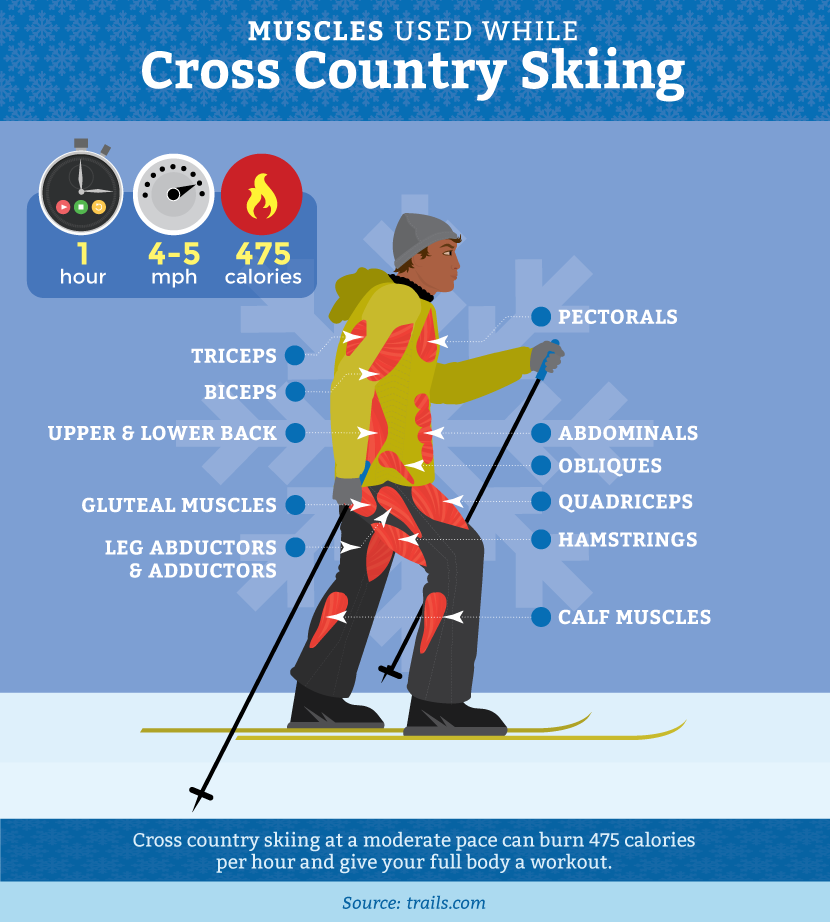
| Cross-Country | Quads, Hamstrings, Glutes, Arms, Shoulders | Very High (Full Body) |
| Freestyle/Park | Quads, Core, Glutes, Upper Body | High (Explosive) |
| Backcountry | Quads, Hamstrings, Core, Upper Body | Very High |
For example, cross-country skiing is famous for being one of the best full-body workouts. It uses your arms, shoulders, and core much more than downhill skiing, because you need to propel yourself over flat or uphill terrain. In contrast, alpine skiing focuses more on the legs and core, with the upper body playing a supporting role.
Muscle Endurance Vs. Explosive Power In Skiing
Skiing isn’t just about strength. Endurance and power matter, too. Let’s compare how skiing uses both.
| Muscle Type | Skiing Action | Example |
|---|---|---|
| Endurance | Holding a squat position, maintaining balance | Long runs down a slope |
| Explosive Power | Jumping, rapid turns, sudden stops | Freestyle tricks, carving turns, moguls |
Your slow-twitch muscle fibers are responsible for endurance—helping you hold positions and ski for longer. Fast-twitch fibers power explosive movements, like jumps and quick turns. Elite skiers train both, while casual skiers often notice muscle fatigue due to lack of endurance training.
Non-obvious Muscle Benefits Of Skiing
Skiing also strengthens muscles you might not expect. For example, stabilizer muscles in your feet and ankles get a workout as they help you adjust to changes in snow and terrain. These muscles are rarely used in daily life, so skiing can improve your overall balance and coordination.
Another hidden benefit: skiing can help correct muscle imbalances. Because the sport is symmetrical (both sides of your body work together), it encourages equal strength and flexibility, unlike sports that use only one side more.
Common Weak Points And Injury Risks
Many beginners focus only on their thighs and forget about the core and hip stabilizers. Weakness here leads to poor technique and a higher risk of falls or injuries, especially to the knees. The anterior cruciate ligament (ACL) is one of the most commonly injured ligaments in skiers because of weak glutes and poor core control.
It’s also easy to neglect the small muscles in the feet, which are important for balance. Skiing with stiff boots doesn’t mean your feet aren’t working—they’re still adjusting to micro-movements.
How To Prepare Your Muscles For Skiing
If you want to get better at skiing or avoid soreness, it’s smart to train the muscles you’ll use most. Focus on the following:
- Squats and lunges for quads and glutes
- Hamstring curls and bridges for the back of your legs
- Core exercises like planks and Russian twists
- Calf raises to strengthen the lower legs
- Balance drills (like single-leg stands) to train small stabilizer muscles
Stretching is just as important as strengthening. Tight muscles increase your risk of pulling or straining something on the slopes.
Real-world Examples: How Skiers Develop Their Bodies
Professional skiers have strong, lean legs and a powerful core. For example, Olympic skiers can squat more than twice their body weight and often include plyometric (jumping) exercises in their routines. Many also do yoga or pilates for flexibility and injury prevention.
Amateur skiers often notice their biggest improvements after adding leg and core exercises to their workouts. For instance, someone who started doing regular lunges and planks before ski season may find they can ski longer and recover faster.
Gender And Age Differences In Muscle Use
Men and women use similar muscle groups in skiing, but women are more prone to knee injuries due to differences in hip alignment and strength ratios between the quads and hamstrings. Older adults may need to focus more on balance and flexibility to prevent falls.
Children benefit from skiing, too. The sport helps develop coordination, balance, and full-body strength, which transfers to other activities.
Why Skiing Is A Unique Workout
Unlike cycling or running, skiing forces you to use almost every muscle at once, often in unpredictable ways. The constantly changing terrain means your body never moves exactly the same way twice. This variety is why many people find skiing both challenging and fun.
Skiing also burns a lot of calories. An average person can burn between 300 and 600 calories per hour while skiing, depending on the intensity. That’s comparable to running but with less impact on your joints.
Practical Tips For Building Skiing Muscles
- Start strength training at least 8 weeks before ski season.
- Mix endurance and explosive exercises (e.g., squats and box jumps).
- Don’t forget flexibility—yoga or dynamic stretching is great.
- Use balance tools like BOSU balls to mimic unstable surfaces.
- Gradually increase difficulty to avoid overtraining and injury.
If you’re looking for a more detailed exercise guide, check out advice from the Verywell Fit website.

Frequently Asked Questions
What Are The Main Muscles Used In Skiing?
The main muscles used in skiing are the quadriceps, hamstrings, glutes, calves, and core muscles. Your upper body also works, especially the shoulders and arms, for balance and pole use.
Does Skiing Work Your Abs?
Yes, skiing works your abdominal muscles—especially your obliques and rectus abdominis—as you twist, turn, and stabilize your body on the slopes.
Is Skiing Good For Building Muscle?
Skiing is excellent for building muscle endurance and strength, mainly in the legs and core. It may not build large muscles like weightlifting, but it creates lean, strong muscle that supports overall fitness.
Can Skiing Help With Weight Loss?
Skiing burns a high number of calories (300–600 per hour), making it a great activity for weight loss when combined with a balanced diet.
How Can I Prepare My Muscles For Skiing Season?
You can prepare by focusing on leg strength, core stability, balance, and flexibility. Exercises like squats, lunges, planks, and dynamic stretching are effective.
Skiing is more than just a fun activity—it’s a demanding workout that benefits nearly every muscle in your body. By understanding which muscles you use and how to strengthen them, you can ski longer, improve your technique, and enjoy the slopes with less risk of injury.
Whether you’re a beginner or an expert, paying attention to your muscle health will make your skiing experience safer and more enjoyable.
