Ice hockey is a fast, exciting game where small details matter. One detail that often confuses new fans is the crease. You may hear announcers say, “He was in the crease!” or see goals waved off because of crease violations. But what exactly is the crease, why is it important, and how does it shape the game? Understanding the crease is key to following action around the net and knowing what’s legal—and what’s not—on the ice.
What Is The Crease In Ice Hockey?
The crease is a special area on the ice, marked by blue paint, located right in front of each goal. It acts as a “safe zone” mainly for the goalie. The crease is there to protect goalies from interference and to keep play around the net fair and safe.
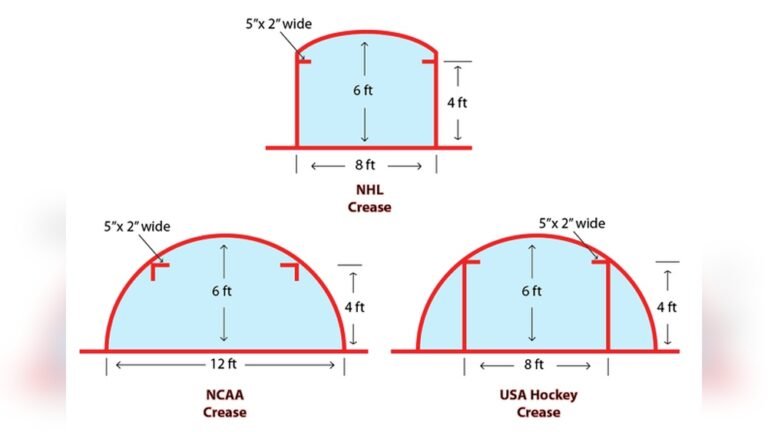
In the NHL (National Hockey League), the crease is a semi-circular area with a radius of six feet (1.83 meters) from the goal line and stretches out in front of the goalpost. The exact shape and size can change a bit in other leagues, but the main idea is always the same: protect the goalie and control the chaos near the net.
Here’s a basic look at the crease’s size in the NHL:
| Feature | Measurement |
|---|---|
| Radius | 6 feet (1.83 m) |
| Width | 8 feet (2.44 m) at opening |
| Color | Light blue |
Why Does The Crease Matter?
The area inside the crease is important for a few reasons:
- Goalie Safety: The crease gives the goalie space to move, dive, or stretch without worrying about being hit by opposing players.
- Fair Play: Only the goalie can stay in the crease freely. Other players can enter, but there are strict rules for what they can do.
- Goal Decisions: Many goals are reviewed to see if players were illegally in the crease. This can change the outcome of games.
The crease helps referees make clear decisions. For example, if an attacking player interferes with the goalie inside the crease, the referee can wave off a goal—even if the puck goes in.

Rules About The Crease
Several rules control what happens in and around the crease. Breaking these rules can lead to goals being disallowed or even penalties.
Who Can Enter The Crease?
- The goalie can move anywhere in the crease without restriction.
- Defenders can enter the crease to help the goalie but must not push attackers into the goalie.
- Attackers can enter the crease only if they do not interfere with the goalie’s ability to move or see the puck.
Interference And Goals
If a player from the attacking team is in the crease and blocks, bumps, or distracts the goalie, any goal scored might not count. For example, if a player’s skate is in the crease and prevents the goalie from making a save, the referee will usually wave off the goal.
Crease Violation Examples
- A player stands in the crease and the puck goes in—goal may be disallowed.
- A player bumps the goalie inside the crease—penalty for goalie interference.
- A defender pushes an attacker into the goalie—goal might still count, depending on the referee’s judgment.
How The Crease Has Changed
Crease rules have changed over the years. In the 1990s, the NHL had a “no skate in the crease” rule. Even if a player’s toe was barely in the blue, the goal would not count. This led to many controversial decisions, and fans were often frustrated.
Today, the rules focus more on goalie interference than just having a skate in the crease. If a player is in the crease but does not affect the goalie, the goal usually stands.
Here’s a look at how the rules have changed over time:
| Period | Main Rule | Impact |
|---|---|---|
| 1991–1999 | No attacking player in crease before puck | Many goals disallowed |
| 1999–Present | Focus on interference | More goals allowed if no contact |
Common Crease Situations
Let’s look at some real game moments where the crease is the focus:
- Goalie covers the puck in the crease: Play stops so the goalie can safely restart.
- Player crashes net: If an attacker runs into the goalie inside the crease, the goal is waved off.
- Scramble in front: In a wild scramble, referees watch closely for interference and crease violations.
One non-obvious fact: Sometimes a defender can cause an attacking player to be in the crease. If this happens and the attacker did not try to stay, the goal may still count. Another detail is that goalies cannot be hit even if they step just outside the crease—contact here often leads to penalties, too.
Differences In Other Leagues
While the NHL crease is standard, not all leagues are the same. For example, the International Ice Hockey Federation (IIHF) uses a crease that is slightly larger and has a different shape. The rules are similar, but sometimes allow more room for goalies.
Here is a quick comparison of crease sizes in the NHL and IIHF:
| League | Crease Radius | Crease Width |
|---|---|---|
| NHL | 6 feet (1.83 m) | 8 feet (2.44 m) |
| IIHF | 6.56 feet (2.0 m) | 11.48 feet (3.5 m) |
This difference means international goalies have a bit more space, which can change how teams play in front of the net during tournaments.
:max_bytes(150000):strip_icc()/Hockey_goal_84872184-56a77fb65f9b58b7d0eb0e19.jpg)
Crease And Goalie Rights
Goalies have special rights inside the crease. For example, they can freeze the puck without being challenged. If an attacker tries to knock the puck loose while the goalie is covering it, referees may call a penalty.
Another insight: Some goalies use the crease border as a guide for positioning. They know exactly where they are in the net just by feeling the edge with their skates.
Why Understanding The Crease Is Essential
Knowing the crease rules helps you understand why some goals count and others do not. It also helps explain fights in front of the net, why referees blow the whistle, and why players are careful when skating near the goalie.
The crease is a small area, but it has a big impact on the game’s flow and fairness.

Frequently Asked Questions
What Happens If A Player Stands In The Crease?
If an attacking player stands in the crease and interferes with the goalie, any goal scored may be disallowed. If there is no interference, the goal can count. It is up to the referee to decide.
Can Defenders Stay In The Crease?
Yes, defenders can enter and stay in the crease. They are allowed to help their goalie, but they must not push attackers into the goalie or commit penalties.
Are Crease Rules The Same In All Leagues?
No, different leagues like the NHL and IIHF have slight differences in crease size and enforcement. But the main purpose—protecting the goalie—remains the same.
What Is Goalie Interference In The Crease?
Goalie interference means any action by an attacking player that affects the goalie’s ability to defend the net while in the crease. This includes bumping, blocking, or distracting the goalie.
Where Can I Learn More About The Official Crease Rules?
You can read the official NHL rulebook for full details at the NHL Official Rules.
Understanding the crease will help you enjoy ice hockey even more. The next time you see a controversial goal or a whistle near the net, you’ll know exactly what’s going on—and why the crease matters so much in this thrilling sport.
