Surfing is more than just a sport—it’s a lifestyle that attracts people to the ocean for excitement, challenge, and connection with nature. For anyone looking to start surfing or upgrade their gear, the first big question is, “What is the average cost of a surfboard?
” The answer is not simple because surfboard prices vary widely. They depend on the type of board, materials, brand, size, and whether you buy new or used. Understanding these details can save you money and help you find the perfect board for your needs.
This guide breaks down everything you need to know about surfboard prices. Whether you’re a beginner or a seasoned surfer, you’ll discover what affects the cost, how to spot a good deal, and what to expect in different surfboard categories.
You’ll also learn about common mistakes to avoid and get answers to popular questions. Let’s dive in and help you make a smart choice for your next surfboard.
What Shapes Surfboard Prices?
A surfboard is not just a piece of foam or wood—it’s a carefully designed tool. Several key factors decide how much you’ll pay:
- Board type: Different shapes, like shortboards or longboards, have different prices.
- Construction materials: Foam, fiberglass, epoxy, carbon, and wood all cost different amounts.
- Brand reputation: Popular brands often charge more.
- Size and volume: Bigger boards usually cost more.
- Custom vs. stock: Custom-made boards are pricier than factory-made ones.
- New vs. used: Used boards are cheaper but may have wear and tear.
Let’s look at each factor in detail.
Average Cost By Surfboard Type
The type of surfboard you choose is the biggest price factor. Here’s what you can expect for the most common surfboard types:
Shortboards
Shortboards are the go-to for advanced surfing and high-performance moves. They are usually 5’6” to 6’6” long.
- Average price: $500–$900 new
- Why: Complex shapes and quality materials add cost.
- Example: A Channel Islands shortboard often starts around $700.
Longboards
Longboards are bigger (8’–10’), stable, and easier for beginners.
- Average price: $700–$1,200 new
- Why: Extra materials and size raise the price.
- Example: A new Bing longboard might cost $1,100.
Funboards
Funboards (mid-length, 6’6”–8’) are a compromise—easier than a shortboard but more maneuverable than a longboard.
- Average price: $500–$800 new
- Why: Medium size and simple designs keep prices moderate.
- Example: A Torq funboard is often $600.
Fish Boards
Fish surfboards are short, wide, and thick, ideal for small waves.
- Average price: $500–$800 new
- Example: A Lost RNF Fish can be $750.
Soft-top Surfboards
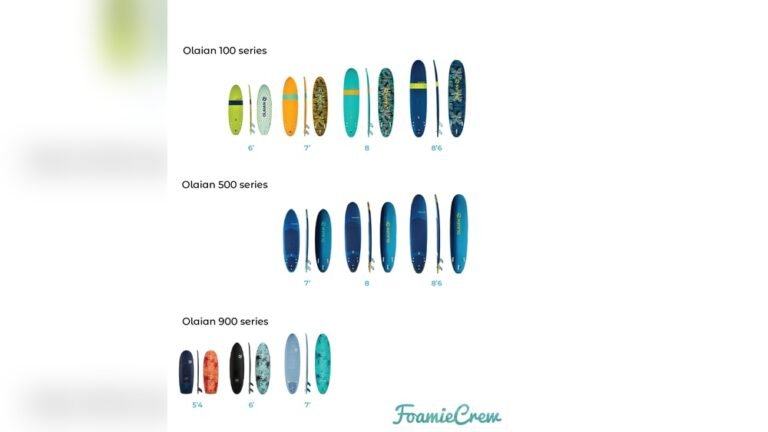
Soft-tops are foam boards, great for beginners and kids.
- Average price: $200–$500 new
- Why: Cheaper foam construction.
- Example: A Wavestorm 8’ soft-top is about $250.
Specialty And Alternative Boards
- Gun boards: For big waves, $900–$1,300 new.
- Mini Simmons: Wide and short, $600–$900 new.
- Retro shapes: $700–$1,000 new.
New Vs. Used Surfboards: Price Comparison
Many surfers consider used boards to save money. Here’s a look at how prices compare:
| Surfboard Type | New Price Range | Used Price Range |
|---|---|---|
| Shortboard | $500–$900 | $200–$500 |
| Longboard | $700–$1,200 | $350–$700 |
| Funboard | $500–$800 | $250–$500 |
| Soft-top | $200–$500 | $100–$300 |
Used boards can be a bargain, but check for dings, repairs, or water damage. Sometimes, a well-cared-for used board is as good as new.
How Construction Materials Affect Cost
What your surfboard is made of matters for price and performance. Here’s a breakdown:
Polyurethane (pu) And Fiberglass
- Most common for traditional surfboards.
- Average price: $500–$1,000.
- Pros: Smooth ride, classic feel.
- Cons: Heavier, less durable than epoxy.
Epoxy
- Stronger and lighter than PU.
- Average price: $600–$1,100.
- Pros: Floats better, resists damage.
- Cons: Slightly more expensive.
Soft-top Foam
- Beginner-friendly and cheap.
- Average price: $200–$400.
- Pros: Safe, durable, light.
- Cons: Less performance for advanced surfers.
Wood And Carbon Fiber
- Premium materials for special boards.
- Average price: $900–$2,000.
- Pros: Unique look, eco-friendly (wood), super light (carbon).
- Cons: High price, sometimes fragile.
Brand Reputation And Pricing
A well-known surfboard brand can add $100–$300 to the price. For example:
- Firewire and Channel Islands are top brands with higher prices.
- Local shapers or less-famous brands often offer similar quality for less.
But, a top brand may offer better resale value and proven designs.
Custom Vs. Factory-made Boards
A custom surfboard is shaped to fit your size, skill, and local waves. This personal touch costs more:
- Custom shortboard: $700–$1,200.
- Custom longboard: $1,000–$1,800.
- Wait time: 2–8 weeks, depending on the shaper.
Stock (factory) boards are mass-produced and often cheaper. They’re a good choice for most surfers unless you need something unique.

Regional Price Differences
Surfboard prices are not the same everywhere. A few reasons why:
- Shipping costs: Boards are big and expensive to ship.
- Local demand: Surf hubs like California or Australia have more options and better prices.
- Import taxes: In some countries, taxes add 20–40% to prices.
For example, a board that costs $700 in California might be $1,000 in Europe due to shipping and taxes.
Essential Accessories And Their Costs
A surfboard alone is not enough. You’ll need a few more items:
- Fins: $50–$150 for a set (some boards include them).
- Leash: $20–$40.
- Wax: $2–$5 per bar.
- Board bag: $40–$150.
These small costs can add $100–$300 to your total.

Typical Price Breakdown For A Beginner
Let’s say you’re a beginner buying your first surfboard. Here’s a realistic budget:
| Item | Cost |
|---|---|
| Soft-top surfboard | $250 |
| Fins (included) | $0 |
| Leash | $25 |
| Wax | $4 |
| Board bag | $50 |
| Total | $329 |
This is the minimum you need to get in the water. If you want a fiberglass or epoxy board, expect to pay $500–$800 for the board alone.
Common Mistakes When Buying A Surfboard
Beginners often make avoidable mistakes. Here are the most common:
- Choosing the wrong size: A board that is too small makes learning hard.
- Ignoring used boards: You can get better quality for less if you buy used.
- Overpaying for brands: A famous logo does not guarantee the right board for you.
- Not checking for damage: Used boards with hidden water damage can be a waste of money.
- Skipping accessories: Forgetting fins or a leash means you can’t surf safely.
- Buying for looks: A board’s shape and volume matter more than color or graphics.
One non-obvious insight: Volume (liters) is more important than length for beginners. More volume means easier paddling and more waves caught.
Another tip: If you are not sure, ask a local surf shop for advice. They often let you demo boards before buying.
How To Find The Best Surfboard For Your Budget
You don’t need to spend a fortune to start surfing. Here’s how to maximize your money:
- Set your budget first. Decide how much you can spend, including accessories.
- Buy used if possible. You may get a better board for the same price.
- Check local surf shops and online marketplaces. Look for deals or sales.
- Ask for advice. Local surfers and shop staff know what works in your area.
- Start simple. Upgrade later as your skills improve.
If you want more info on board types and design, the Wikipedia Surfboard page is a good resource.
Are Expensive Surfboards Worth It?
A high price does not always mean a better surfboard for you. Here’s what you get with a more expensive board:
- Better materials: Lighter, stronger, sometimes more eco-friendly.
- Advanced shapes: For high performance in specific wave types.
- Brand reputation: Resale value and proven designs.
- Custom fit: Tailored for your size and style.
But for most beginners, a mid-priced or even used board is perfect. Invest in a high-end board only after you know what you like.

Frequently Asked Questions
How Much Does A Surfboard Cost For Beginners?
A beginner surfboard (usually a soft-top) costs $200–$400 new. Used boards can be found for $100–$250. Add about $50–$100 for a leash, wax, and basic accessories.
Why Are Surfboards So Expensive?
Surfboards are expensive because they are handmade or use high-quality materials like fiberglass or epoxy. Shaping a board takes skill and time. Import costs, shipping, and brand reputation also add to the price.
Is It Better To Buy A Used Or New Surfboard?
Used surfboards are great for saving money, especially if you’re new to surfing. Just check for damage before buying. New boards are best if you want the latest design or a custom fit.
What Is The Lifespan Of A Surfboard?
A surfboard lasts 3–10 years, depending on how often you surf and how you care for it. Epoxy boards last longer than traditional fiberglass boards. Keep your board out of the sun and repair dings quickly to extend its life.
Can I Rent Instead Of Buying A Surfboard?
Yes, renting a surfboard is a smart option for beginners or travelers. Rental costs are about $10–$30 per day. This lets you try different types before buying your own.
The right surfboard can make all the difference in your surfing journey. By understanding the average cost, what affects the price, and what to look for, you can make a smart purchase. With careful shopping, you’ll find a board that fits both your budget and your surfing dreams.
