

Tennis is a sport that captures attention across the world. From the green lawns of Wimbledon to busy public courts in city parks, people of all ages enjoy this fast-paced game. But what makes tennis unique, and how do you play it?
If you are new to tennis or want to understand it better, this guide will explain everything in clear, simple English. We will cover the basics of tennis, how to play, rules, equipment, scoring, and strategies. By the end, you’ll have a strong understanding of tennis and may even feel ready to pick up a racket yourself.
What Is Tennis?
Tennis is a racket sport played by two players (singles) or four players (doubles). The players use a stringed racket to hit a small, yellow ball over a net. The goal is to send the ball into the opponent’s side of the court in a way that they cannot return it. Tennis is played on different surfaces: grass, clay, hard, and sometimes even carpet.
Tennis has a long history. It started in France in the 12th century as a game called “jeu de paume. ” The modern version, played with rackets, began in England in the late 19th century. Today, tennis is an Olympic sport and one of the most popular games worldwide.
The Tennis Court And Equipment
Understanding the court and the equipment is essential before you start playing tennis. Each part has its own purpose, and using the right equipment can make a big difference in your game.
Tennis Court Layout
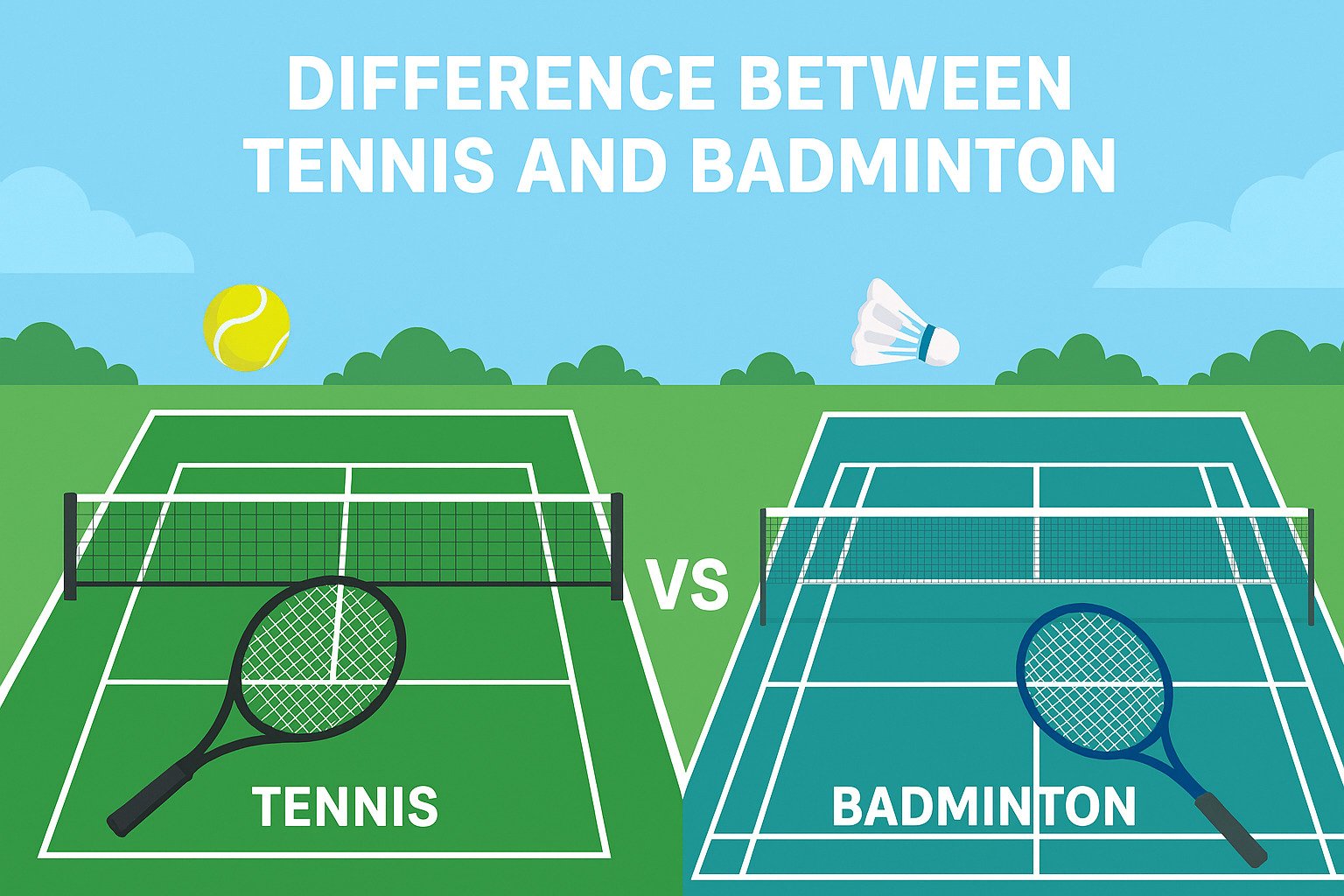
A tennis court is rectangular and divided by a net. The court has markings for singles and doubles matches. Here is a comparison of court sizes:
| Type of Match | Width | Length |
|---|---|---|
| Singles | 8.23 meters (27 ft) | 23.77 meters (78 ft) |
| Doubles | 10.97 meters (36 ft) | 23.77 meters (78 ft) |
Key areas on the court:
- Baseline: The line at the back of the court.
- Sidelines: The lines marking the sides of the court. There are different sidelines for singles and doubles.
- Service boxes: The areas on each side of the net where a serve must land.
- Net: Stretches across the middle of the court, 0.91 meters (3 ft) high at the center.
Tennis Equipment
To play tennis, you need the following equipment:
- Racket: Made of lightweight materials like graphite or aluminum. Rackets have a grip, a frame, and strings.
- Tennis balls: Usually yellow and made of rubber with a felt covering.
- Tennis shoes: Special shoes that provide grip and support for fast movement.
- Clothing: Comfortable clothes that allow free movement. Many clubs require white clothing, but this is not a rule everywhere.
- Accessories: Sweatbands, hats, and water bottles are common extras.
How To Choose A Racket
Choosing the right racket is important for comfort and performance. Here are the main factors to consider:
- Grip size: Should fit comfortably in your hand.
- Head size: Larger heads are easier for beginners.
- Weight: Lighter rackets are easier to handle for new players.
- String tension: Affects power and control.
Many beginners make the mistake of choosing a heavy or professional racket. Start with a beginner-friendly model. This will make learning easier and prevent injuries.
Basic Rules Of Tennis
Tennis has clear rules that make the game fair and enjoyable. While some rules can seem complicated at first, most are simple and logical.
Starting The Game
A tennis match begins with a coin toss to decide who serves first and which side of the court each player will start on. The server stands behind the baseline and serves the ball diagonally into the opponent’s service box.
How To Serve
- The server must stand behind the baseline.
- The ball must be hit into the opposite service box.
- If the first serve misses, the server gets a second chance (second serve).
- If both serves miss, it’s called a double fault, and the opponent wins the point.
A common beginner mistake is stepping on or over the baseline before hitting the serve. This is called a foot fault and results in a fault.
Playing The Point
After the serve, players hit the ball back and forth. The ball must land inside the court lines. If the ball goes out or into the net, the other player wins the point.
- The ball can only bounce once before being returned.
- Players can hit the ball before it bounces (volley), except on the serve.
- The point ends when the ball bounces twice, goes out, or hits the net and does not go over.
Scoring System
Tennis uses a unique scoring system. Instead of simple numbers, the points go as follows: 0 (love), 15, 30, 40, game.
Here is an example of how scoring works in a single game:
- Both players start at 0 (called “love”).
- First point: 15
- Second point: 30
- Third point: 40
- Fourth point: Wins the game (unless both players reach 40, called “deuce”).
If the score is 40-40, a player must win two points in a row to win the game (first “advantage,” then the game).
A set is won by the first player to win six games, with at least a two-game lead. A match is usually the best of three or five sets.
Example Of Scoring
Let’s say Player A and Player B are playing. Here is how a game might go:
- Player A wins the first point: 15-0
- Player B wins the next: 15-15
- Player A wins two more: 40-15
- Player A wins the next point: Game won by Player A
If the score reaches 6-6 in games, a tiebreak is played to decide the set.
Let, Fault, And Out
- Let: If the serve touches the net but lands in the correct box, it is called a “let” and the serve is replayed.
- Fault: A missed serve or a serve that lands outside the service box.
- Out: If the ball lands outside the court lines during play.
How To Play Tennis: Step-by-step
If you want to learn tennis, it helps to follow a step-by-step process. Here’s a simple guide:
1. Get The Right Equipment
Choose a beginner racket and comfortable tennis shoes. Wear light, flexible clothing.
2. Learn The Grip
There are three main grips:
- Continental grip: Good for serves and volleys.
- Eastern grip: Common for beginners; good for forehands.
- Western grip: Used for topspin shots.
Hold the racket comfortably, not too tight. Many new players grip too hard, which makes it difficult to swing smoothly.
3. Practice The Basic Strokes
Tennis has several basic strokes:
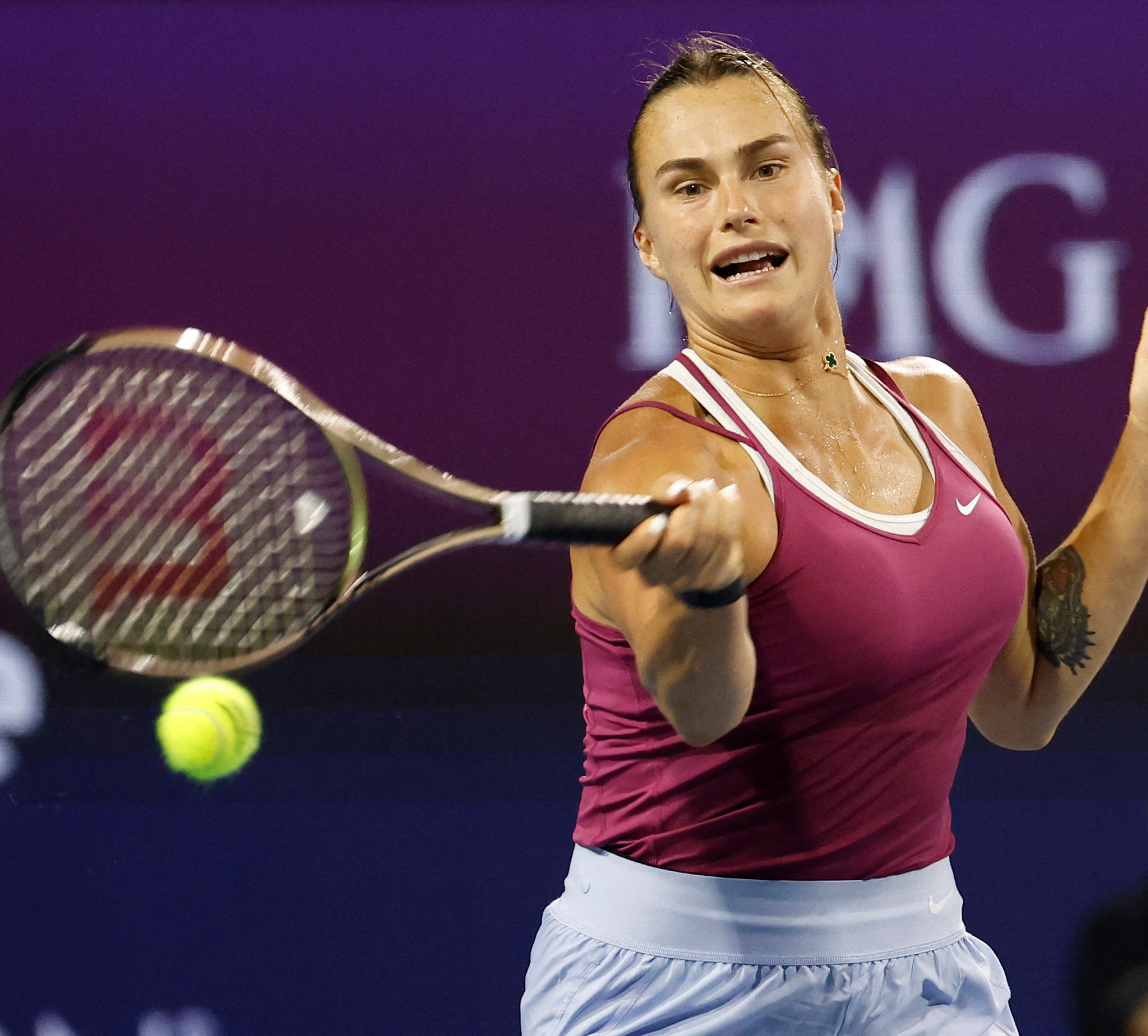
- Forehand: Swing the racket across your body, hitting the ball with your palm facing forward.
- Backhand: Swing the racket with the back of your hand facing the net.
- Serve: Toss the ball up and hit it into the service box.
- Volley: Hit the ball before it bounces, usually near the net.
- Overhead smash: Like a serve, but used to return high shots.
Start slowly and focus on control, not power.
4. Master Footwork
Good footwork is key to reaching the ball and hitting it well. Always stay light on your feet and ready to move. Beginners sometimes stand still, making it hard to reach the ball in time.
5. Understand The Rules
Review the basic rules, especially where to stand, how to score, and how to serve.
6. Play Practice Games
Start with simple rallies (hitting the ball back and forth). When comfortable, play short games with a friend.
7. Learn Basic Tactics
Try to hit the ball deep into your opponent’s court. Mix up your shots: some fast, some slow. Watch your opponent and aim for the empty spaces.
Types Of Tennis Matches
Tennis can be played in different formats. Each type has its own rules and strategies.
Singles Vs. Doubles
The main difference is the number of players:
- Singles: One player on each side. The court is narrower.
- Doubles: Two players per team. The court is wider, and teamwork is important.
Here’s a quick comparison:
| Feature | Singles | Doubles |
|---|---|---|
| Players per side | 1 | 2 |
| Court width used | Narrow | Wide |
| Strategy focus | Personal skill | Teamwork |
| Serve order | Alternates each game | All four players rotate |
Mixed Doubles
In mixed doubles, each team has one male and one female player. The same court and most rules as regular doubles apply.
Team Competitions
Some tennis events, like the Davis Cup or the Fed Cup, are played between teams from different countries. Team matches combine singles and doubles games.
Tennis Surfaces And How They Affect Play
Tennis is unique because it is played on different surfaces, each with its own character.
Grass Courts
Grass courts are fast and the ball bounces low. Players need to react quickly. Wimbledon is the most famous grass-court tournament.
Clay Courts
Clay courts (like those at the French Open) are slower. The ball bounces higher, and rallies are longer. Sliding is common on clay.
Hard Courts
Hard courts (like at the US Open and Australian Open) are made of concrete or asphalt, covered with a thin layer of acrylic. The bounce is medium and consistent. This is the most common surface worldwide.
Carpet Courts
Carpet courts are rare, usually found indoors. They are fast, similar to grass.
Here is a comparison of surface types:
| Surface | Speed | Bounce Height | Main Tournament |
|---|---|---|---|
| Grass | Fast | Low | Wimbledon |
| Clay | Slow | High | French Open |
| Hard | Medium | Medium | US Open, Australian Open |
| Carpet | Fast | Low | Indoor events |
Many beginners do not realize how much the surface affects playing style. On grass, short rallies and quick reactions matter. On clay, patience and endurance are more important.

Key Tennis Skills And Techniques
To play tennis well, you need to develop several skills. Some are physical, while others are mental.
Essential Physical Skills
- Hand-eye coordination: Watch the ball closely and time your swings.
- Agility: Move quickly side-to-side and forward-back.
- Stamina: Matches can last several hours.
- Strength: Needed for powerful serves and groundstrokes.
Important Techniques
- Topspin: Brushing up on the ball to make it spin forward, causing it to dip.
- Slice: Hitting under the ball to make it spin backward, staying low after bouncing.
- Volley: Quick shots near the net, often without a bounce.
- Lob: Hitting the ball high over your opponent, useful when they rush the net.
- Drop shot: A soft shot that barely clears the net, forcing your opponent to run forward.
Non-obvious insight: Many new players focus only on hitting hard. In reality, control and placement are more important. Even professional players win points by moving the ball around, not just hitting with power.
Common Tennis Strategies
Tennis is not just about hitting the ball; smart strategy matters too.
Basic Strategies
- Consistency: Try to keep the ball in play. Wait for your opponent to make mistakes.
- Attack weak spots: Hit to your opponent’s weaker side (usually the backhand for beginners).
- Move your opponent: Hit to different parts of the court so they have to run.
- Net play: Come to the net for volleys, especially in doubles.
- Mix up your shots: Use different speeds, spins, and angles.
Advanced Strategies
- Serve and volley: Serve, then rush the net to put away the next shot.
- Baseline play: Stay at the back and use powerful groundstrokes.
- Counterpunching: Return fast shots with interest, using your opponent’s power.
Beginners often forget to watch their opponent’s position. A simple way to improve is to look up after you hit and decide where to place your next shot based on where your opponent is standing.
Tennis Etiquette And Sportsmanship
Tennis has a strong tradition of respect and fair play. Good etiquette makes the game enjoyable for everyone.
- Shake hands after the match.
- Call lines honestly if there are no referees.
- Wait quietly while your opponent serves.
- Don’t yell or throw your racket.
- Respect the court: Don’t walk across other courts during play.
Health Benefits Of Tennis
Playing tennis is good for your body and mind. Here are some reasons why:
- Cardiovascular fitness: Running and quick movements improve heart health.
- Muscle tone: Swinging, running, and lunging work many muscles.
- Coordination: Improves balance and reflexes.
- Stress relief: Physical activity and social play reduce stress.
- Mental sharpness: Tennis requires quick thinking and planning.
A study by the British Journal of Sports Medicine found that playing racket sports like tennis reduces the risk of death from heart disease by over 50% compared to people who don’t play. This shows tennis is not only fun but also a great way to stay healthy.
Famous Tennis Tournaments
Tennis has many famous tournaments, but the most important are the Grand Slam events:
- Australian Open (hard court, January)
- French Open (clay court, May–June)
- Wimbledon (grass court, June–July)
- US Open (hard court, August–September)
Winning all four in one year is called a “Grand Slam.” The sport also has the Olympics, Davis Cup, and many other pro events.
If you want to see the best players in action, you can watch matches online or visit official sites like ATP Tour for schedules and news.
Tips For Beginners
Starting tennis can feel challenging, but these tips can help you progress quickly:
- Take lessons: Even a few sessions with a coach make a big difference.
- Practice regularly: Consistency is key to improvement.
- Focus on technique: Good habits early on prevent problems later.
- Watch professionals: Learn by watching how top players move and hit.
- Play with better players: This helps you improve faster.
- Stay patient: Progress takes time. Celebrate small wins.
Two things beginners often overlook: (1) Warming up before playing to avoid injuries, and (2) Rest and recovery between matches. Tennis can be tough on the body, so listen to what you need.
Frequently Asked Questions
What Is The Difference Between Singles And Doubles In Tennis?
Singles is played with one player on each side of the court, using a narrower court. Doubles has two players per team and uses the full width of the court. Doubles also involves more teamwork and different strategies, especially at the net.
How Do You Win A Point In Tennis?
You win a point by making your opponent miss the ball, hit it out of bounds, or hit it into the net. You can also win a point if they double fault on their serve.
What Equipment Do I Need To Start Playing Tennis?
You need a tennis racket, tennis balls, proper shoes, and comfortable clothing. It’s helpful to have a water bottle and sweatbands, but these are optional.
Why Are Tennis Scores Called 15, 30, And 40?
The exact origin is not clear, but one theory is that it comes from an old French clock face that used increments of 15. The jump from 30 to 40 may be for easier calling during matches.
Can Children Or Older Adults Play Tennis?
Yes! Tennis is suitable for all ages. Children can start with smaller rackets and slower balls, while older adults can play at their own pace. Tennis is a lifelong sport with social and physical benefits.
Tennis is more than just a game; it’s a way to stay fit, challenge your mind, and connect with others. Whether you play for fun or dream of competing in big tournaments, learning the basics is the first step. Grab a racket, find a court, and discover why tennis is loved all over the world.
