
Scuba diving offers a window into a world few people experience. The beauty and silence of underwater life are truly unforgettable. Yet, diving also carries risks, and one of the most serious is decompression sickness (DCS), often called “the bends.” For both new and experienced divers, understanding this condition is not just smart—it can save lives. In this article, you’ll learn what DCS is, how it happens, who is at risk, and how to stay safe while exploring the deep.
What Is Decompression Sickness?
Decompression sickness is a condition that happens when dissolved gases—mainly nitrogen—come out of solution in your body during or after a dive. These gases form bubbles in your blood and tissues. This can cause pain, nerve problems, or even life-threatening emergencies. DCS can affect anyone who goes under pressure, such as scuba divers, freedivers, or even people working in pressurized environments.
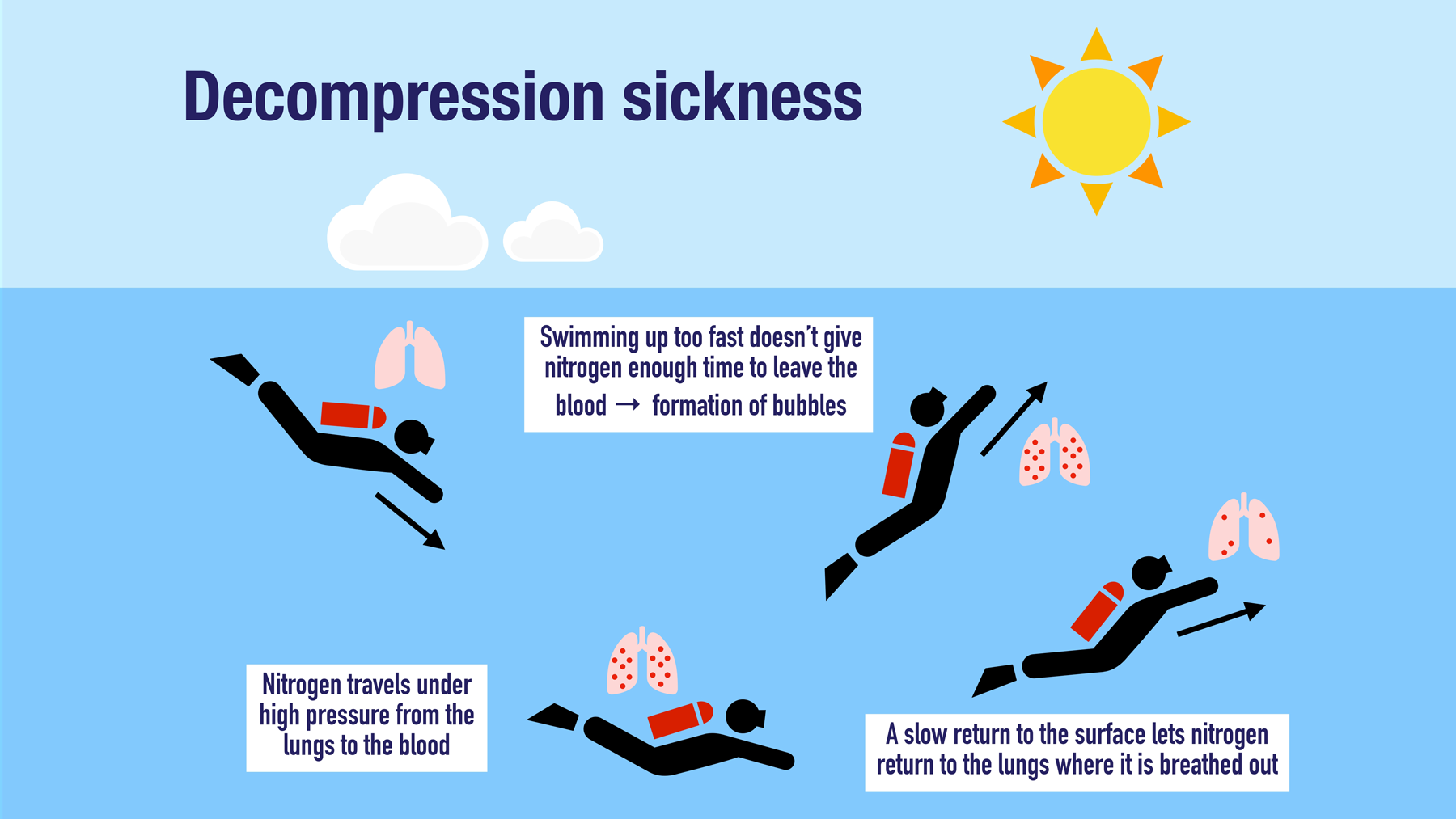
When you dive, you breathe air under higher pressure than at the surface. Your body absorbs more nitrogen from the air than it does on land. If you come up too fast, your body cannot release the nitrogen slowly enough.
Bubbles then form, causing the symptoms of DCS.
How Decompression Sickness Happens
To understand DCS, it’s helpful to think about a bottle of soda. When sealed, the carbon dioxide is dissolved in the liquid under pressure. Open the bottle quickly, and bubbles appear suddenly. The same happens in your body during a rapid ascent.
Here’s what happens step by step:
- Descent: You breathe compressed air. Nitrogen dissolves into your blood and tissues.
- Bottom Time: The longer you stay deep, the more nitrogen your body absorbs.
- Ascent: As you go up, pressure drops. If you ascend slowly, nitrogen leaves your body safely through your lungs.
- Rapid Ascent: If you rise too fast, nitrogen comes out quickly as bubbles.
These bubbles can block blood flow, irritate tissues, or damage nerves.
Common Symptoms Of Decompression Sickness
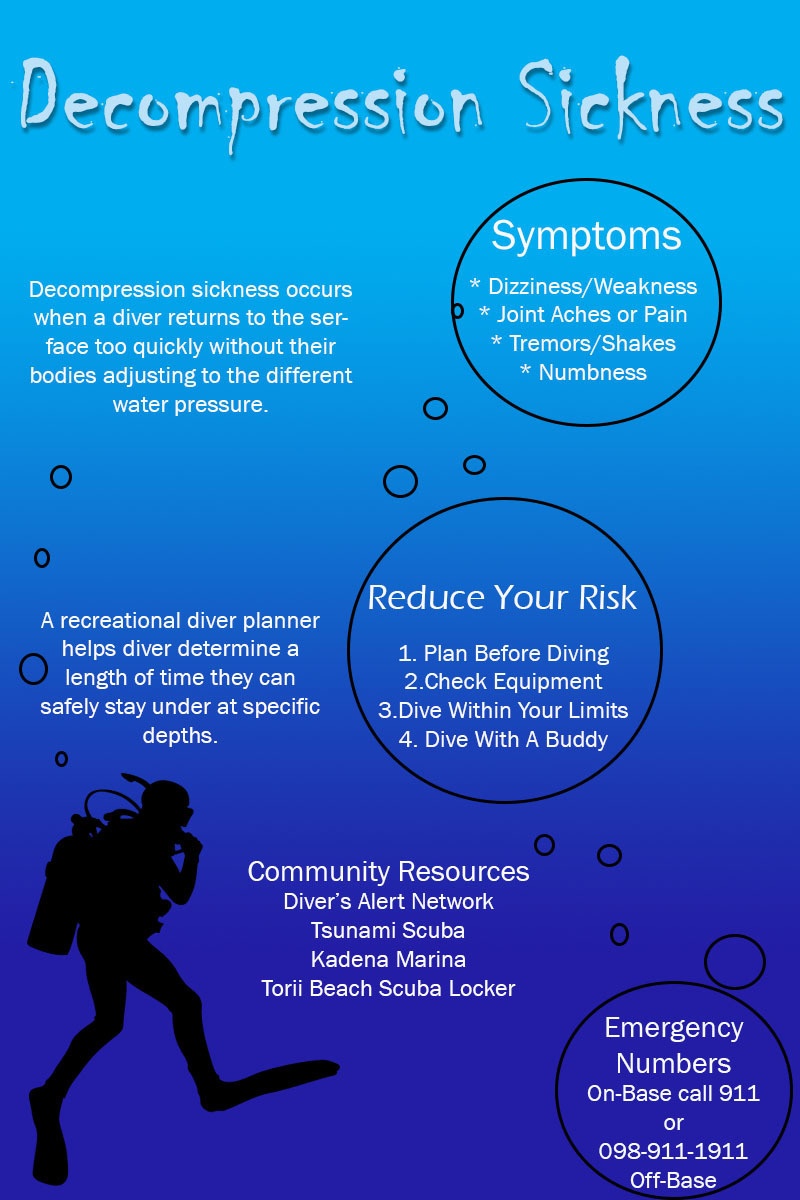
DCS symptoms can vary from mild to severe. They might appear within minutes or up to 48 hours after surfacing, but most cases start within 6 hours.
Some common symptoms include:
- Joint and muscle pain (often in the arms or legs)
- Skin rash or itching
- Weakness or numbness
- Dizziness
- Difficulty breathing
- Extreme fatigue
- Headache
- Chest pain
In serious cases, DCS can cause paralysis, unconsciousness, or even death. One non-obvious symptom is “chokes,” which is trouble breathing and a dry cough—a sign that bubbles have reached your lungs.
Types Of Decompression Sickness
Doctors and dive experts usually divide DCS into two main types:
Type 1 (mild)
- Involves joint pain, skin rashes, and mild swelling.
- Not usually life-threatening but needs quick attention.
Type 2 (serious)
- Affects the nervous system, lungs, or heart.
- Can cause paralysis, loss of bladder control, confusion, or collapse.
- Needs emergency treatment.
Here’s a simple comparison of the two:
| Type | Main Symptoms | Urgency |
|---|---|---|
| Type 1 | Joint pain, skin issues | Important but less critical |
| Type 2 | Nerve, lung, heart problems | Life-threatening, emergency |
Causes And Risk Factors
Many factors can increase your risk of getting DCS. The main cause is ascending too quickly after breathing compressed air. Other factors include:
- Deep or long dives
- Multiple dives in a short period
- Skipping safety stops
- Cold water
- Dehydration
- Fatigue
- Obesity
- Age (older divers are at higher risk)
- Alcohol consumption before/after diving
- Flying soon after diving
One less obvious risk is having a patent foramen ovale (PFO), a small hole in the heart that some people have from birth. This can allow bubbles to pass into the brain or spinal cord.
How To Prevent Decompression Sickness
Prevention is the best way to stay safe. Most cases of DCS can be avoided by following these guidelines:
- Ascend slowly: Never rise faster than 9-10 meters (30 feet) per minute.
- Make safety stops: Pause at 5 meters (15 feet) for 3-5 minutes before surfacing.
- Follow dive tables or computers: These help you track safe limits for depth and time.
- Stay hydrated: Drink water before and after dives.
- Rest between dives: Give your body time to release nitrogen.
- Avoid alcohol: Alcohol can dehydrate you and increase risk.
- Wait before flying: Wait at least 12-24 hours after diving before flying.
- Watch your health: If you’re sick or tired, skip the dive.
- Use proper equipment: Well-maintained gear can prevent emergencies.
Here’s a quick guide for safe diving intervals before flying:
| Dive Type | Minimum Wait Time Before Flying |
|---|---|
| Single dive | 12 hours |
| Multiple dives or multi-day diving | 18-24 hours |
A common beginner mistake is ignoring your dive computer’s warnings or rushing your ascent to save time. Always prioritize safety over schedules.
Diagnosing Decompression Sickness
Diagnosing DCS relies mostly on symptoms and diving history. There’s no single test that can prove DCS, but doctors may use these steps:
- Ask about recent dives: Depth, time, and ascent speed.
- Check symptoms: Pain, rashes, confusion, breathing problems.
- Physical exam: To find nerve damage or blood flow issues.
- Rule out other causes: Like heart attack, stroke, or infection.
Sometimes, doctors use imaging tests (like MRI), but these are not always helpful for DCS.
Treatment Of Decompression Sickness
If you suspect DCS, treat it as an emergency. Early treatment gives the best chance of full recovery.
First Aid Steps
- Stop diving immediately.
- Give 100% oxygen: This helps remove nitrogen from the body.
- Keep the person lying flat: This helps blood flow.
- Fluids: If alert, give water to stay hydrated.
- Seek emergency help: Call for evacuation to a hospital or hyperbaric chamber.
Hyperbaric Oxygen Therapy
The main treatment is hyperbaric oxygen therapy. The patient is placed in a special chamber and exposed to high-pressure oxygen. This helps shrink the nitrogen bubbles and lets the body remove them safely.
Most people recover well if treated quickly, but delays can lead to permanent damage.
Real-life Examples And Data
DCS is not as rare as some think. According to the Divers Alert Network, there are about 1,000 cases of DCS in the United States each year. Most cases are mild, but serious cases do occur.
A real-world example: In 2018, a diver in Florida surfaced quickly after a deep dive and began to experience severe joint pain and dizziness. Thanks to fast oxygen treatment and a hyperbaric chamber, he made a full recovery. This case shows why knowing the symptoms and acting fast is so important.
Non-obvious Insights For Divers
Many beginners believe that shallow dives are always safe. However, even dives to 10 meters (33 feet) can lead to DCS if you repeat them many times in a day.
Another point often missed: Dehydration increases your risk more than most people think. Blood becomes thicker when you’re dehydrated, making it harder for nitrogen to leave your body. Always drink water before and after diving, especially in hot climates.
Long-term Effects And Complications
If not treated quickly, DCS can cause long-term problems:
- Chronic joint pain
- Nerve damage
- Hearing loss
- Memory or concentration problems
- Lung damage
Some divers experience “post-dive fatigue” for days or weeks after a mild case of DCS. This is why even mild symptoms should be checked by a doctor.
Who Is Most At Risk?
While anyone can get DCS, some groups are more vulnerable:
- Technical divers (who go deeper than 40 meters/130 feet)
- Older adults
- People with heart defects (like PFO)
- Divers with poor fitness
- People who push limits on depth or time
Even experienced divers are not immune. Overconfidence can lead to shortcuts and mistakes.
How Dive Computers And Tables Help
Dive computers and tables are essential tools for preventing DCS. They calculate your exposure to nitrogen and recommend safe ascent rates and stops. A computer also adapts to changes during your dive, such as unexpected depths.
Here’s a simple comparison:
| Tool | Pros | Cons |
|---|---|---|
| Dive Computer | Real-time updates, easy to use | Needs batteries, can fail |
| Dive Table | No electronics, simple backup | Not flexible, less precise |
Smart divers always have a backup plan in case their computer fails.
The Role Of Training And Certification
Proper training is one of the best ways to avoid DCS. Certified dive courses teach you about:
- Safe ascent rates
- How to use dive tables/computers
- Emergency procedures
- Recognizing symptoms
A good course will also stress the importance of planning your dive and diving your plan. Never skip training, even if you have dived before.
Why Medical Checkups Matter
A regular medical checkup is important for divers. Some health conditions—like lung disease, heart defects, or diabetes—can increase your risk of DCS or make it harder to recover.
If you have any health issues, talk to a dive doctor before you start diving. This is especially true if you are over 40 or have a history of chest pain, shortness of breath, or fainting.
Useful Resources
For up-to-date information, visit the Wikipedia page on Decompression Sickness. It offers a detailed overview for those who want to dive deeper into the science.

Frequently Asked Questions
What Should I Do If I Think I Have Decompression Sickness?
Stop diving, breathe 100% oxygen if possible, keep still, and seek emergency medical help right away. Early treatment can prevent long-term damage.
Can You Get Decompression Sickness From A Single Dive?
Yes. Even one dive can cause DCS if you stay deep too long or ascend too quickly. Always follow safe diving guidelines.
How Long After Diving Can Symptoms Of Dcs Appear?
Symptoms usually appear within 6 hours but can start up to 48 hours after surfacing. Always watch for warning signs after a dive.
Is Decompression Sickness The Same As Nitrogen Narcosis?
No. Nitrogen narcosis is a temporary effect of breathing nitrogen under pressure, causing confusion or “drunkenness.” DCS is caused by nitrogen bubbles during ascent and can lead to lasting harm.
Does Being Fit Or Young Protect You From Dcs?
Physical fitness helps, but it does not guarantee safety. Anyone can get DCS if they break safe diving rules.
Scuba diving is an amazing adventure, but safety must always come first. Understanding decompression sickness, its causes, symptoms, and prevention will help you dive smarter and enjoy the underwater world for years to come. Remember: plan your dive, follow the rules, and never take unnecessary risks.
