Most surfers remember their first wave, the rush of water and wind, and the thrill of standing up. But one small piece of gear is always there, keeping you connected to your board: the surfboard leash. It’s simple, but vital. Whether you’re a beginner or an expert, a leash can make the difference between a safe session and a dangerous one. Many people don’t think much about surfboard leashes until they lose their board or get tangled up. So what exactly is a surfboard leash, and why does it matter so much? Let’s break down the details, from how leashes work, to their history, types, and how to choose the right one.
What Is A Surfboard Leash?
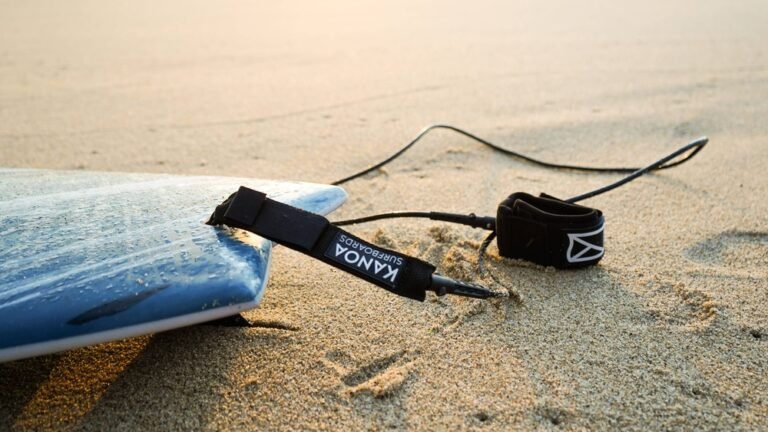
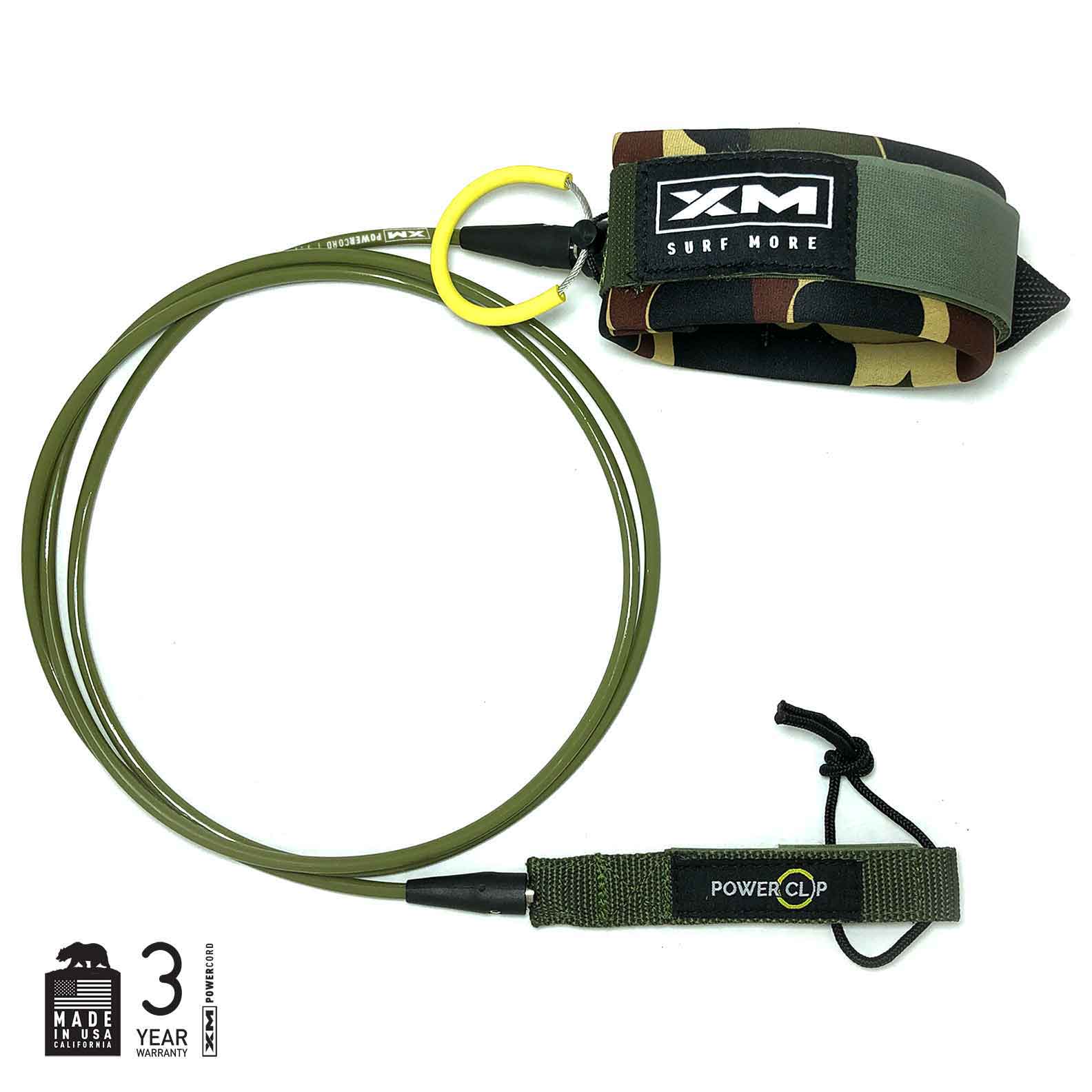
A surfboard leash is a strong, flexible cord that connects your surfboard to your ankle or calf. If you fall off the board, the leash keeps it from drifting away. Most leashes have a padded ankle strap, a urethane cord, a swivel to prevent tangling, and a rail saver to protect the board. Leashes are often called “leg ropes” in Australia and New Zealand. The main purpose is simple: keep the board close so you can get back on quickly, and protect other surfers by stopping your board from flying loose.
The leash might seem like a basic accessory, but it’s one of the most important pieces of safety gear in surfing. Without it, you could spend a lot of time swimming after your board, or risk losing it entirely in big waves.
History And Evolution Of Surfboard Leashes
Surfboard leashes haven’t always been part of surfing. In the early days, surfers simply swam after their boards. This was dangerous and tiring, especially in powerful waves. The first surfboard leash was invented in 1971 by Pat O’Neill, son of wetsuit pioneer Jack O’Neill. Pat attached a surgical tubing leash to his board, using a suction cup. This kept the board close but sometimes snapped back dangerously.
Over time, leashes improved. Urethane replaced surgical tubing for better strength and flexibility. Swivels were added to stop the cord from tangling. The rail saver was designed to protect the edge of the board from damage. Today, surfboard leashes are standard equipment, and almost every surfer uses one.
The leash changed surfing by making it safer. It also let surfers try bigger waves, knowing their boards wouldn’t drift far. According to a 2019 survey by Surfline, over 95% of surfers use a leash every session.
How Does A Surfboard Leash Work?
The leash is simple but effective. Here’s how it functions:
- Attachment: One end of the leash connects to the surfboard, usually at the tail, using a strong rope or cord through a leash plug.
- Strap: The other end has a padded strap with Velcro. This wraps around your ankle or calf.
- Cord: The cord is made of polyurethane or urethane, which is strong and flexible.
- Swivels: Most leashes have one or two swivels—metal joints that rotate to prevent the cord from twisting.
- Rail Saver: This wide, flat piece protects the rail (edge) of the board from the leash rubbing and causing damage.
When you fall, the leash stretches and absorbs shock, so your board doesn’t yank hard on your leg. The rail saver stops the cord from cutting into the board. Swivels let the cord spin, reducing tangles.
Types Of Surfboard Leashes
Leashes come in different styles and sizes. Choosing the right type depends on your board, wave size, and personal preference.
| Leash Type | Best For | Length Range | Features |
|---|---|---|---|
| Standard Leash | Most surfboards, everyday waves | 6-8 feet | Balanced thickness, ankle strap |
| Comp Leash | Small boards, small waves | 5-6 feet | Thinner cord, less drag |
| Big Wave Leash | Large boards, big waves | 10-12 feet | Thick cord, strong swivel |
| Knee/Calf Leash | Longboards, beginners | 9-10 feet | Strap for knee/calf |
| Coiled Leash | SUP, flatwater | 8-12 feet | Coiled cord, stays short |
Standard Leash
This is the most common type. It suits most boards and wave sizes. Standard leashes have a medium thickness, enough strength for most conditions, and work well for both beginners and experienced surfers.
Comp Leash
A comp leash is thinner and lighter. Designed for small waves and high-performance boards, it creates less drag in the water. It’s popular with surfers who want speed and agility, but it’s not as strong as standard leashes.
Big Wave Leash
Big wave leashes are longer and thicker. They’re made for powerful waves and larger boards, where more strength is needed. The extra length helps prevent the board from snapping back too quickly.
Knee/calf Leash
This leash attaches above the ankle, around the knee or calf. It’s often used with longboards and by beginners. It reduces the chance of stepping on the leash, but can feel bulkier.
Coiled Leash
Coiled leashes are mostly used for stand-up paddleboards (SUP) or in flatwater. The cord coils up, staying short and out of the way. This is useful for paddlers who don’t want the leash dragging behind.

Choosing The Right Surfboard Leash
Selecting a leash isn’t just about grabbing the first one you see. Here’s what matters:
| Factor | Why It Matters | Common Mistakes |
|---|---|---|
| Length | Should match board length | Too short = board hits you; too long = tangles |
| Thickness | Thicker for bigger waves, thinner for speed | Thin leash in big waves = breaks easily |
| Strap Comfort | Padded, snug fit prevents chafing | Loose or rough straps = discomfort |
| Swivel Quality | Prevents tangling | Cheap swivels = twists and knots |
| Rail Saver | Protects board from damage | No rail saver = board gets scratched |
Leash Length
Most surfers use a leash that’s about as long as their board. For example, a 7-foot board needs a 7-foot leash. If the leash is too short, the board can snap back and hit you. If it’s too long, it can tangle around your legs.
Thickness
Leashes come in different thicknesses. Thicker leashes are stronger and best for big waves. Thinner leashes are lighter and create less drag, but can break more easily. Beginners often use thicker leashes for safety.
Strap Comfort
Look for a padded strap that fits well. It should be snug but not tight. Cheap straps can cause rubbing or blisters, especially in long sessions.
Swivel Quality
A good leash has at least one swivel, ideally two. Swivels prevent the cord from tangling, which can cause frustration and even accidents.
Rail Saver
Make sure your leash has a rail saver. It’s a small but important piece that protects your board from damage.
Benefits Of Using A Surfboard Leash
A surfboard leash offers several advantages, beyond just convenience.
- Safety: Keeps your board close, reducing the risk of losing it or hitting other surfers.
- Efficiency: Saves energy—you don’t have to swim after your board every time you fall.
- Confidence: Lets you try bigger waves and new moves without worrying about losing your board.
- Board Protection: Rail saver reduces board damage from the leash rubbing.
- Better Surf Etiquette: Prevents your board from becoming a hazard in crowded lineups.
One non-obvious insight: Even experienced surfers can get caught without a leash and regret it. In powerful waves, the board can travel far, putting both you and others at risk.
Common Problems And Mistakes With Surfboard Leashes
Even though leashes are simple, mistakes happen. Here are some issues surfers face:
- Choosing the wrong length or thickness: This is the most common mistake. Beginners often buy a leash that’s too short or thin, leading to breakage or injuries.
- Not checking for damage: Leashes wear out over time. Small nicks or cuts can weaken the cord. Always check before surfing.
- Tangles and knots: Cheap leashes with poor swivels twist easily, causing tangles. This can distract you or even trip you up.
- Over-tightening the strap: Some surfers pull the strap too tight, causing discomfort or even cutting off circulation.
- Ignoring the rail saver: Using a leash without a rail saver can damage your board’s edge, leading to expensive repairs.
One overlooked tip: Always rinse your leash with fresh water after surfing. Salt can weaken the Velcro and cord over time.
Surfboard Leash Maintenance
A leash can last for years if you take care of it. Here’s how:
- Rinse after every session: Salt and sand can damage the cord and Velcro.
- Dry before storing: Never leave your leash wet or in direct sunlight for long periods.
- Check for wear: Look for nicks, cuts, or weak spots. Replace the leash if you see damage.
- Store properly: Don’t wrap the leash tightly around your board. This can cause kinks and weaken the cord.
Replacing your leash is cheaper than fixing a broken board or dealing with injuries. Most surfers replace their leash at least once a year, especially if they surf often.
Surfboard Leash Safety Tips
A leash is not just a convenience—it’s a safety device. Follow these tips:
- Always use a leash in crowded spots: Protect yourself and others.
- Practice leash removal: In emergencies, you may need to pull it off quickly.
- Avoid stepping on the leash: This can cause falls or tangles.
- Teach beginners about leash use: Many accidents happen when people don’t know how to use the leash properly.
Some advanced surfers argue that leashes can be dangerous in very big waves, where the board can pull you underwater. In these cases, quick-release leashes are helpful.
Surfboard Leash Statistics And Facts
- 95% of surfers use a leash every session (Surfline, 2019)
- Average leash lifespan: 6-12 months with regular use
- Standard leash length: 6-8 feet
- Leashes reduce board loss by over 90% compared to surfing without one
- The first commercial leash was released in 1971
- Most modern leashes are made from polyurethane, known for strength and flexibility
For more details on surfboard leash history, visit Wikipedia.

Frequently Asked Questions
What Is The Main Purpose Of A Surfboard Leash?
The main purpose is to keep your surfboard close after a wipeout, preventing it from drifting away or hitting other surfers. It’s an essential safety tool.
How Do I Choose The Correct Surfboard Leash Length?
Pick a leash that is as long as your board. For example, use a 7-foot leash for a 7-foot board. Avoid leashes that are much shorter or longer than your board.
Can A Leash Break In Big Waves?
Yes, leashes can break, especially in powerful waves or if the leash is old or damaged. That’s why big wave surfers use thicker, stronger leashes and check them often.
Is It Okay To Surf Without A Leash?
While some advanced surfers do surf without a leash, it’s not recommended for beginners or in crowded spots. It increases the risk of losing your board and can be dangerous for others.
How Often Should I Replace My Surfboard Leash?
Replace your leash at least once a year, or sooner if you see damage, stretching, or frayed spots. Regular replacement prevents accidents and keeps you safe.
Surfboard leashes are simple but critical. They keep you connected to your board, protect others in the water, and let you surf with confidence. Learning about leashes, choosing the right one, and maintaining it are key steps for safe, enjoyable surfing.
Whether you’re riding your first wave or chasing big swells, your leash is your silent partner—always there, ready to keep you safe.
