
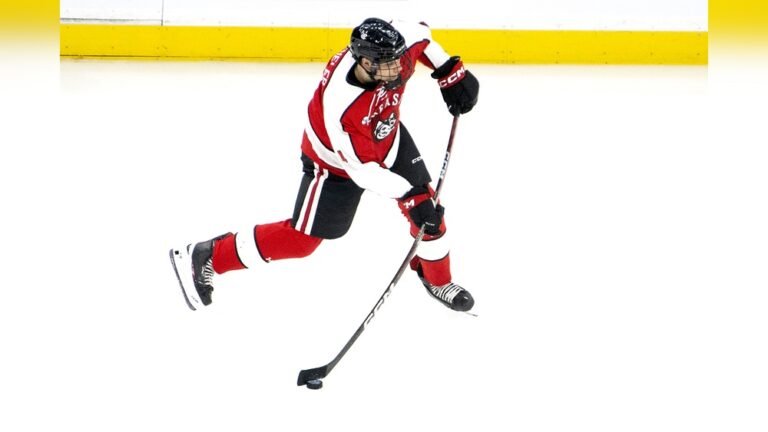
Ice hockey is a fast and thrilling sport, famous for its speed and physicality. One of the most exciting moments in a game is when a player takes a slap shot. Fans love the loud crack of the stick and the sight of the puck flying toward the goal. But what exactly is a slap shot in ice hockey? How is it different from other shots, and why do players use it? Let’s dive deeper into this powerful technique and understand its role in the game.
Defining The Slap Shot
A slap shot is a type of shot in ice hockey where a player swings their stick back, then forcefully brings it down to hit the puck at high speed. This technique is all about power. The stick usually strikes the ice just behind the puck, bending the stick. As the stick straightens, it releases a burst of energy, sending the puck flying with incredible velocity.
Slap shots are one of the hardest and fastest shots in ice hockey. Professional players can shoot the puck at speeds above 100 miles per hour (160 kilometers per hour). The world record, set by Zdeno Chára, is 108.8 mph (175.1 kph).
How To Perform A Slap Shot
The slap shot is not just about swinging hard. It requires proper form, timing, and practice. Here’s how players usually perform a slap shot:
- Positioning: The player stands with knees bent, feet shoulder-width apart, and body facing the puck. The lower hand grips the stick tightly, while the upper hand controls the top.
- Backswing: The stick is raised to about waist or shoulder height. The higher the stick, the more power can be generated, but accuracy may decrease.
- Downswing: The player swings the stick down toward the puck, hitting the ice just behind it. The stick flexes, storing energy.
- Contact: As the stick straightens, it snaps forward, striking the puck and launching it forward.
- Follow-through: The stick finishes high and towards the target, which helps control the direction.
Timing is crucial. Swinging too early or too late can cause a weak shot or miss the puck entirely.

Why Use A Slap Shot?
The main advantage of a slap shot is sheer power. When a player needs to shoot the puck from a distance or break through a strong defense, the slap shot is often the best choice. It’s especially common during:
- Power plays: Teams have more space and want to take shots from the blue line.
- Point shots: Defensemen shoot from the point, hoping for a rebound or deflection.
- One-timers: Players shoot the puck immediately after receiving a pass, catching the goalie off guard.
However, slap shots take more time to set up compared to other shots. Defenders can sometimes block them, and they are less accurate than wrist or snap shots.
Slap Shot Vs. Other Shots
Not all hockey shots are the same. Here’s a comparison of the main types of shots:
| Shot Type | Speed | Accuracy | Setup Time |
|---|---|---|---|
| Slap Shot | Very High | Moderate | Slow |
| Wrist Shot | Medium | High | Fast |
| Snap Shot | High | High | Very Fast |
| Backhand | Low | Low | Fast |
The slap shot is the fastest but not the most accurate. Players choose their shot based on the situation.

Famous Slap Shots In Nhl History
Some players are legendary for their slap shots. Al MacInnis was known for his booming shot, often feared by goalies. Bobby Hull was called the “Golden Jet” for his powerful slap shots in the 1960s and 70s. In modern hockey, Shea Weber and Zdeno Chára are famous for their record-breaking speeds.
These players could change the course of a game with a single slap shot. Their technique and power became a model for younger players.
The Science Behind The Power
The slap shot’s speed is not only from muscle strength. The flex of the stick is key. When the stick bends on the ice, it stores energy like a spring. Releasing that energy makes the puck fly faster than just swinging a stiff stick.
Stick technology has advanced a lot. Today, most players use composite sticks instead of wood. These sticks are lighter and flex more, giving even more power to slap shots. Proper stick selection and flex rating matter, especially for players who want to master this shot.
When Not To Use A Slap Shot
While the slap shot is powerful, it’s not always the best choice. Here are times when players avoid it:
- Close to the net: The wind-up takes too long, and defenders can block the shot.
- Crowded areas: The puck can hit another player and not reach the goal.
- Penalty killing: Teams short-handed focus on quick clears, not hard shots.
Beginners often try slap shots too often and lose control. Coaches recommend learning wrist and snap shots first for better accuracy and faster release.
Common Mistakes Beginners Make
Learning the slap shot takes time. Here are mistakes many new players experience:
- Improper grip: Holding the stick too tightly or incorrectly reduces power.
- Missing the ice: Not striking the ice before the puck means less flex and weaker shots.
- Poor balance: Not bending knees or keeping weight centered makes shots wild.
- Looking up too soon: Players sometimes look at the goal before hitting the puck, leading to missed shots.
Practicing the basics and watching skilled players can help avoid these errors.
Tips For A Better Slap Shot
To improve your slap shot, try these tips:
- Work on stick handling: A good feel for the puck helps with shot control.
- Strengthen your core and legs: Power comes from the whole body, not just arms.
- Practice follow-through: Aim where you want the puck to go.
- Use the right stick flex: Too stiff or too soft will hurt your shot.
- Watch professionals: See how NHL players set up and execute their shots.
Filming yourself can also reveal small mistakes and help track progress.
Impact Of The Slap Shot On The Game
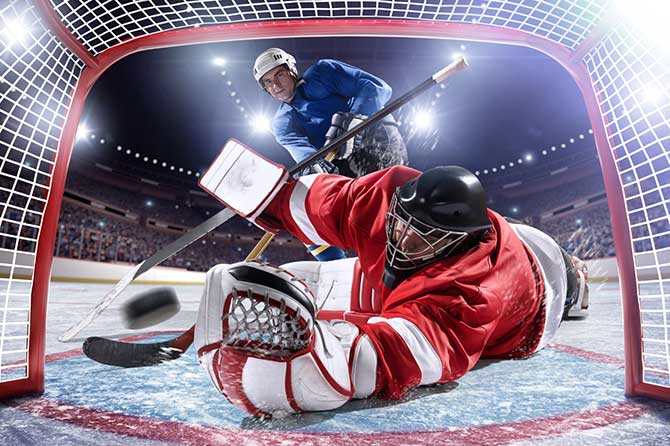
The slap shot changes how teams defend and attack. Goalies wear extra padding because of the shot’s speed. Teams set up defensive walls to block slap shots during power plays. The fear of a hard slap shot can make defenders hesitate, opening space for other plays.
Some leagues restrict slap shots for safety, especially in youth or recreational hockey. But at the highest levels, the slap shot remains a symbol of skill and strength.
Comparing Slap Shot Speed Records
Here’s a look at some of the fastest slap shots ever recorded:
| Player | Speed (mph) | Year |
|---|---|---|
| Zdeno Chára | 108.8 | 2012 |
| Shea Weber | 108.5 | 2015 |
| Al Iafrate | 105.2 | 1993 |
| Bobby Hull | 118 (unofficial) | 1960s |
These speeds show just how far players and equipment have come.
The Role Of Slap Shots In Modern Hockey
Today, the slap shot is still valuable but used more strategically. Players now focus on quick releases and accuracy. Coaches teach players to disguise their shot type, making it harder for goalies to guess. But when the moment is right, a well-timed slap shot can change the game instantly.
For those who want to see the slap shot in action or learn more about its history, the Wikipedia Slap Shot page offers more details.
Frequently Asked Questions
What Is The Main Difference Between A Slap Shot And A Wrist Shot?
A slap shot uses a big wind-up and focuses on power, while a wrist shot is quicker and more accurate but less powerful.
How Fast Can A Slap Shot Go?
Professional players can shoot over 100 mph. The world record is 108.8 mph by Zdeno Chára.
Is The Slap Shot Safe For Young Players?
In youth leagues, slap shots are sometimes restricted for safety. Coaches focus on teaching control and technique first.
What Equipment Helps Improve A Slap Shot?
A stick with the right flex rating, good skates for balance, and protective gear are important for a strong and safe slap shot.
Can A Slap Shot Be Used In Any Situation?
No. Slap shots are best from a distance or during power plays. They are not ideal close to the goal or in crowded spaces.
A slap shot is more than just a powerful swing—it’s a skill that combines technique, timing, and strength. Whether you’re a player, coach, or fan, understanding the slap shot adds a new level of appreciation for the speed and excitement of ice hockey.
