
What Is A Grand Slam In Tennis?
For tennis fans, few phrases create as much excitement as “Grand Slam. ” You might hear it during big matches, see it in headlines, or read about legendary players chasing this rare achievement. But what does a Grand Slam really mean in the world of tennis?
Why is it so important? And how does it shape the careers of the sport’s greatest athletes? Whether you’re new to tennis or just want a deeper understanding, this article will guide you through everything you need to know about the Grand Slam—its history, its tournaments, the records, and the stories that make it such a special part of the game.
The Meaning Of Grand Slam In Tennis
The phrase Grand Slam in tennis has two main meanings. First, it refers to the four most important and historic tennis tournaments: the Australian Open, the French Open, Wimbledon, and the US Open. These are called the Grand Slam tournaments. They represent the highest level of competition and prestige in the sport.
Second, “Grand Slam” can also describe the rare achievement of winning all four of these tournaments in a single calendar year. This is sometimes called a Calendar Grand Slam. Only a few players in history have managed to do this, making it one of the greatest accomplishments in tennis.
So, when someone says a player is going for the Grand Slam, they usually mean that the player is trying to win all four major tournaments in one year. However, winning any one of these events is also a major achievement.
The Four Grand Slam Tournaments
Each Grand Slam event has its own unique history, atmosphere, and playing surface. Let’s look at each tournament in detail.
Australian Open
The Australian Open is the first Grand Slam of the calendar year. It takes place every January in Melbourne, Australia. Known for its hot weather and electric crowds, the Australian Open is famous for its hard court surface, which offers a fast and fair playing field. The tournament began in 1905 and has grown into a global sporting event.
The Australian Open is sometimes called the “Happy Slam” because of its friendly atmosphere and modern facilities. In recent years, it has introduced innovations like retractable roofs on main courts, allowing play to continue even in rain or extreme heat.
French Open
Next comes the French Open, held in late May to early June at Roland Garros in Paris. This tournament is unique because it is played on red clay courts. Clay slows down the ball and makes it bounce higher, which creates longer rallies and favors players who are patient and physically fit.
The French Open started in 1891 and is the only Grand Slam event played on clay. Winning here requires special skills and a lot of endurance. Many great players have struggled to adapt to clay, making this tournament a true test of versatility.
Wimbledon
Wimbledon, played in London in late June and early July, is the oldest and most traditional Grand Slam. First held in 1877, it is played on grass courts. Grass is the fastest surface, making for quick points and favoring players with strong serves and volleys.
Wimbledon is famous for its traditions: players must wear all white, strawberries and cream are served to fans, and the event is attended by royalty. The atmosphere at Wimbledon is unmatched, and winning here is a dream for every tennis player.
Us Open
The US Open is the final Grand Slam of the year, held in New York City in late August and early September. Like the Australian Open, it is played on hard courts, but the surface is slightly different and often plays faster.
The US Open is known for its energetic New York crowds, night matches under the lights, and exciting atmosphere. It was first held in 1881 and has always embraced innovation, including the introduction of tiebreaks and electronic line-calling.
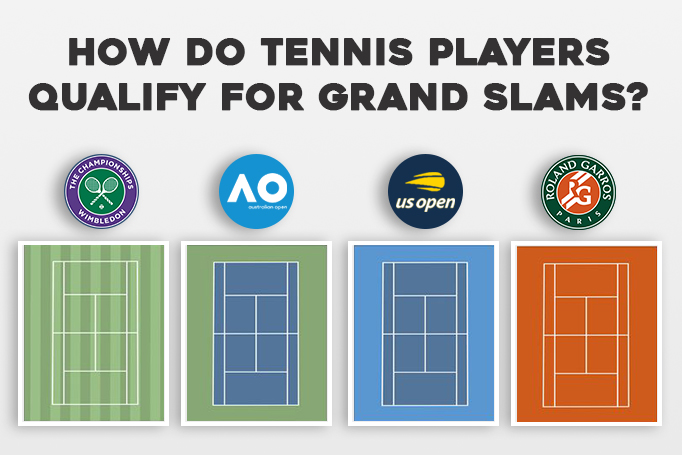
Below is a comparison of the four Grand Slam tournaments:
| Tournament | Location | Surface | Typical Dates | Founded |
|---|---|---|---|---|
| Australian Open | Melbourne, Australia | Hard court | January | 1905 |
| French Open | Paris, France | Clay court | May–June | 1891 |
| Wimbledon | London, UK | Grass court | June–July | 1877 |
| US Open | New York City, USA | Hard court | August–September | 1881 |
The History Of The Grand Slam Concept
The term “Grand Slam” did not start in tennis. It originally came from the card game bridge, where it means winning all the tricks in a hand. In tennis, the phrase was first used in the 1930s by American journalist John Kieran.
He described the achievement of winning all four major tournaments in a year as a “Grand Slam,” similar to a clean sweep in bridge.
Since then, the Grand Slam has become the ultimate goal for tennis players. While many have won multiple majors, winning all four in the same year is extremely rare.
Types Of Grand Slam Achievements
There are several ways the phrase “Grand Slam” is used in tennis. Let’s break them down:
- Calendar Grand Slam: Winning the Australian Open, French Open, Wimbledon, and US Open in the same calendar year. This is the highest achievement.
- Career Grand Slam: Winning each of the four Grand Slam tournaments at least once during a player’s career, but not necessarily in the same year.
- Golden Slam: Winning all four Grand Slams and the Olympic gold medal in a single year.
- Non-calendar Year Grand Slam: Winning four consecutive Grand Slam tournaments, but not all in the same calendar year.
- Double Career Grand Slam: Winning each Grand Slam at least twice in a career.
- Boxed Set: Winning all four Grand Slam titles in singles, doubles, and mixed doubles over a career.
Each of these is a rare and special achievement. For most players, winning just one Grand Slam title is a dream. Winning all four, even over a career, is a mark of tennis greatness.
Importance Of Grand Slam Tournaments
The Grand Slams are the most important events in tennis for several reasons:
- Ranking Points: Grand Slam tournaments offer the most ranking points, which are vital for a player’s world ranking.
- Prize Money: They have the highest prize money in the sport, with winners earning millions of dollars.
- Global Attention: These events attract the most fans, media coverage, and sponsors.
- Legacy: Grand Slam titles are the main way players are judged. Most tennis legends are remembered by their Grand Slam record.
- Level of Competition: All the top players compete, making the tournaments the toughest to win.
For fans, the Grand Slams offer drama, upsets, and unforgettable moments. For players, they are the measure of success.
Grand Slam Records And Statistics
Most Grand Slam Titles
The race for the most Grand Slam titles is followed closely by fans and media. Here are the all-time leaders in singles as of 2024:
| Player | Country | Grand Slam Titles | Active/Retired |
|---|---|---|---|
| Novak Djokovic | Serbia | 24 | Active |
| Rafael Nadal | Spain | 22 | Active |
| Roger Federer | Switzerland | 20 | Retired |
| Serena Williams | USA | 23 | Retired |
| Margaret Court | Australia | 24 | Retired |
| Steffi Graf | Germany | 22 | Retired |
Calendar Grand Slam Winners
Only a few players have won all four majors in the same year:
- Don Budge (1938, Men’s Singles)
- Maureen Connolly (1953, Women’s Singles)
- Rod Laver (1962 and 1969, Men’s Singles)
- Margaret Court (1970, Women’s Singles)
- Steffi Graf (1988, Women’s Singles and Olympic Gold—Golden Slam)
This shows just how rare the Calendar Grand Slam is, especially in the modern era with deeper competition and more demanding schedules.
Career Grand Slam Achievers
Many great players have completed the Career Grand Slam, including:
- Fred Perry
- Andre Agassi
- Rafael Nadal
- Roger Federer
- Novak Djokovic
- Serena Williams
- Chris Evert
- Martina Navratilova
Completing the Career Grand Slam proves a player’s ability to succeed on all surfaces.

Why Winning A Grand Slam Is So Difficult
Winning a Grand Slam tournament is considered the toughest achievement in tennis for several reasons:
- Best-of-Five Sets: In men’s singles, Grand Slam matches are played over five sets, not three. This requires more endurance and mental strength.
- Surface Differences: The four majors are played on different surfaces. Players must adapt their style and skills quickly.
- Tough Draws: The world’s best players all compete, making the path to the final full of difficult opponents.
- Pressure: The attention and expectations are much higher than at other tournaments. Nerves can affect even the best.
- Physical Demands: Matches can last over four hours. Recovery between matches is key, especially in the later rounds.
A single bad day, injury, or difficult opponent can end a Grand Slam dream. That’s why winning one, let alone all four in a year, is so rare.
How Grand Slam Tournaments Are Structured
Each Grand Slam has a similar structure, but there are some differences. Here’s what you can expect at each event:
- Singles Draw: 128 players in the main draw for men and women.
- Seeded Players: The top 32 players are seeded to prevent early matchups between the best.
- Qualifying Rounds: Players not ranked high enough can earn a spot through qualifying matches.
- Best-of-Five (Men): Men play best-of-five sets in singles. Women play best-of-three.
- Doubles and Mixed Doubles: Each tournament also has men’s doubles, women’s doubles, and mixed doubles events.
- Junior and Wheelchair Events: There are also competitions for juniors and wheelchair athletes.
Most matches are knockout style—lose one match, and you’re out. Only the winner survives all seven rounds.
Grand Slam Surfaces: How They Affect Play
The surface of a tennis court changes how the game is played. Here’s a closer look at each:
Hard Court (australian And Us Open)
- Speed: Medium-fast, consistent bounce
- Benefits: Favors baseline players, but rewards all styles
- Challenge: Can be tough on the body due to hard surface
Clay Court (french Open)
- Speed: Slow, high bounce
- Benefits: Favors patient players with strong defense
- Challenge: Points are longer, making matches physically demanding
Grass Court (wimbledon)
- Speed: Fast, low bounce
- Benefits: Helps serve-and-volley players and those with strong serves
- Challenge: Ball can skid and bounce unpredictably
Here’s a quick comparison of the surfaces:
| Surface | Main Tournaments | Speed | Bounce | Player Type Favored |
|---|---|---|---|---|
| Hard | Australian Open, US Open | Medium-Fast | Consistent | All-around |
| Clay | French Open | Slow | High | Defensive/Baseline |
| Grass | Wimbledon | Fast | Low | Serve-and-volley |
Many beginners don’t realize how much the surface can impact a match. For example, a player who dominates on clay might struggle on grass due to the speed and bounce.
The Impact Of Grand Slam Success On Tennis Careers
For most professionals, Grand Slam titles are the main measure of success. Sponsors, fans, and even future generations remember players based on their Grand Slam record. For example, Novak Djokovic’s rise to the top is closely linked to his Grand Slam tally.
Similarly, Serena Williams is often considered the greatest because of her 23 Grand Slam wins.
Players with many Grand Slam titles often have more influence, higher earnings, and long-lasting fame. Even a single Grand Slam victory can change a player’s career, bringing more opportunities and respect in the tennis world.
Non-obvious Insights About Grand Slams
While most fans know the basics, here are a few things beginners often miss:
- Surface Specialization: Some players are “surface specialists.” For example, Rafael Nadal is famous for his dominance on clay, especially at the French Open. Others, like Roger Federer, have found more success on grass or hard courts.
- Travel and Scheduling: Grand Slam tournaments require players to travel across continents, adjust to time zones, and adapt quickly. Managing travel and rest is a hidden challenge.
- Mental Resilience: Winning a Grand Slam is not just about skill. The mental challenge of playing seven tough matches in two weeks, with pressure building each round, is enormous. Many talented players never win a major because of nerves or mental fatigue.
- Changing Conditions: Weather, court speed, and even the type of tennis balls used can change from year to year, affecting performance. Players and coaches must constantly adjust their strategies.
How Grand Slam Tournaments Shape Tennis History
The Grand Slam tournaments are not just about winners and records. They have shaped the very history of tennis:
- Innovations: Grand Slams often lead the way in new technology, like electronic line calling (Hawk-Eye) and retractable roofs.
- Equality: These tournaments have played a role in advancing gender equality, with equal prize money for men and women at all four events.
- Globalization: The Grand Slams bring together fans and players from all over the world, making tennis a truly global sport.
- Legends Born: Most famous tennis moments—epic finals, great rivalries, breakthrough wins—happen at Grand Slams.
For more on the history and importance of Grand Slams, the Wikipedia page on Grand Slam tennis offers a detailed overview.
The Future Of Grand Slams
As tennis evolves, the Grand Slam tournaments continue to adapt. They attract new fans, test new ideas, and celebrate the best players. Technology may change how matches are watched or judged, but the drama of seven rounds, the challenge of different surfaces, and the prestige of lifting a Grand Slam trophy will always remain.
Younger players like Carlos Alcaraz and Iga Swiatek are now chasing their own Grand Slam dreams, showing that the magic of these tournaments is as strong as ever.
Frequently Asked Questions
What Is The Difference Between A Grand Slam And A Major Tournament?
In tennis, the terms Grand Slam and major tournament mean the same thing. Both refer to the four biggest events: the Australian Open, French Open, Wimbledon, and US Open. Sometimes, people use “Grand Slam” to describe winning all four in one year, but “major” always means one of the four tournaments.
Has Any Player Ever Won All Four Grand Slams In A Single Year?
Yes, but it is very rare. In men’s singles, Don Budge (1938) and Rod Laver (1962, 1969) did it. In women’s singles, Maureen Connolly (1953), Margaret Court (1970), and Steffi Graf (1988) achieved it. Graf also won the Olympic gold in 1988, a “Golden Slam.”
Why Are Grand Slam Matches Longer Than Other Tennis Matches?
Grand Slam tournaments use a best-of-five sets format for men’s singles, instead of best-of-three used in most other events. This tradition tests endurance, skill, and mental strength. Women’s singles matches are best-of-three sets, even at Grand Slams.
How Much Prize Money Do Grand Slam Winners Get?
The amount changes every year. As of 2024, winners of singles titles at each Grand Slam earn between $2 million and $3 million USD. Doubles and mixed doubles winners earn less, but still much more than at regular tournaments. Prize money also increases for each round a player advances.
Can A Player Win A Grand Slam In Doubles Or Mixed Doubles?
Yes. The term Grand Slam also applies to doubles and mixed doubles. A player who wins all four major tournaments in one year, or over a career, in these formats achieves a Grand Slam or Career Grand Slam. It is just as difficult in doubles due to strong competition.
From the prestige of the trophies to the drama of five-set finals, Grand Slams stand at the heart of tennis. Whether you’re watching for the first time or following every point, understanding the Grand Slam will give you a deeper appreciation for the sport’s greatest moments and champions.