
What Is A Faceoff Circle In Ice Hockey?
Fans of ice hockey often notice a set of circles painted on the rink, but many don’t know their real purpose. These are the faceoff circles, and they play a crucial role in every game. For beginners, understanding these circles is key to following the flow of play, the rules, and how teams compete for puck possession. The faceoff circle is much more than a simple marking on the ice—it’s a central part of ice hockey strategy and structure.
The Basic Structure Of A Faceoff Circle
A faceoff circle is a round marking on the rink, used to restart play after a stoppage. Each NHL-standard rink has five main faceoff circles, all identical in size and function.
Each circle is:
- 30 feet (9.1 meters) in diameter
- Outlined with a solid line
- Marked with hash marks for player positioning
At the center is a faceoff spot, a small dot where the puck is dropped. The lines around the circle guide players on where to stand, ensuring fair play.
Where Are Faceoff Circles Located?
Faceoff circles are not random. Their locations are carefully set to balance the game and keep play moving smoothly.
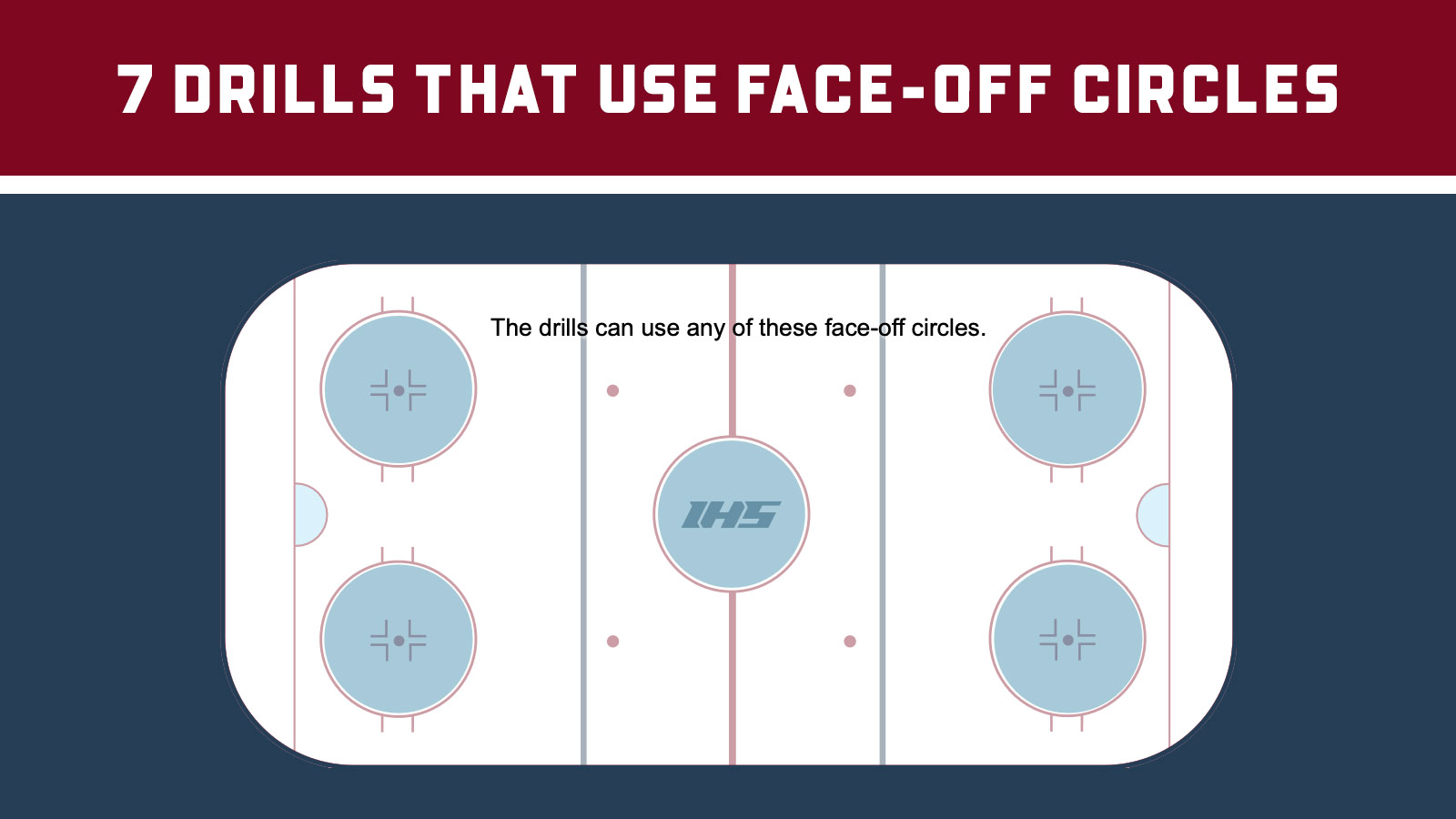
There are five main circles on the rink:
- One at center ice: Right in the middle, used for starting periods and after goals.
- Two in each offensive/defensive zone: Near each end, on either side of the goal.
- Two in the neutral zone: Closer to the blue lines, but not full circles—these have only the faceoff spot and a small circle.
Here’s a look at their positioning:
| Faceoff Circle | Location | Main Use |
|---|---|---|
| Center Ice | Middle of the rink | Start of game, periods, after goals |
| End Zone (x4) | Near each team’s goal line, left and right | Regular play stoppages |
| Neutral Zone (x2) | Between blue lines, each side of center | Offside, icing, or penalties |
Knowing where these circles are helps you follow the referee’s decisions and understand why the puck is dropped in certain places.

Why Are Faceoff Circles Important?
Faceoff circles do much more than mark a spot on the ice. They help ensure games are fair, organized, and competitive.
- Fairness: The circles make sure both teams start from equal positions during a faceoff.
- Safety: Proper spacing keeps players from dangerous hits right off the drop.
- Speed: Having clear spots for faceoffs means less confusion and faster restarts.
Most goals and key plays begin with a faceoff, so controlling the circle can change the outcome of a game. Teams often train their centers to win faceoffs, knowing how valuable puck possession is.
How Does A Faceoff Work?
A faceoff happens when the referee drops the puck between two opposing players (usually centers) in the circle. The players try to win the puck back to their teammates.
Here’s how it usually goes:
- Players line up: Each team’s center steps into the circle, sticks on the ice, toes behind the hash marks.
- Referee checks position: The official makes sure everyone is set and not cheating.
- Puck drop: The puck is dropped onto the spot, and the centers battle for control.
- Play resumes: The team that wins the faceoff usually gains first possession.
Faceoffs happen after goals, penalties, offside calls, icing, and when the puck is frozen by a goalie.
Faceoff Circle Rules You Should Know
Ice hockey has strict rules for faceoff circles. Breaking these rules leads to warnings or even penalties.
- Encroachment: Players (other than the centers) can’t enter the circle before the puck is dropped.
- Stick positioning: Centers must have the blade of their stick on the ice before the drop.
- Kicking or hand passes: Players can’t use their feet or hands to play the puck off the faceoff.
- False start: If a player moves too early, the referee can remove that center from the faceoff.
These rules keep the game fair and stop teams from gaining an unfair advantage.
Tactics Used In The Faceoff Circle
Winning a faceoff is a real skill. Teams use different tactics to gain an edge.
- Tie-up: The center tries to tie up the opponent’s stick, letting a teammate grab the puck.
- Clean win: A quick swipe to send the puck straight to a teammate.
- Body positioning: Using the body to shield the puck after the drop.
- Set plays: Coaches design plays that start right from the faceoff win, often leading to quick shots on goal.
Here’s how teams’ faceoff winning percentages can affect performance:
| Team | Faceoff Win % | League Ranking |
|---|---|---|
| Team A | 54.2% | 1 |
| Team B | 51.8% | 6 |
| League Average | 49.9% | – |
| Team C | 47.3% | 20 |
Teams with higher faceoff win rates usually control the puck more and create more scoring chances.
Common Mistakes Beginners Make
Many new fans or players don’t see how much the faceoff circle impacts the game. Here are two insights that are often missed:
- Not all faceoff circles are equal: Faceoffs in the offensive zone are more dangerous for the defending team. A lost faceoff here can lead to a quick goal.
- Faceoff specialists matter: Some players are kept on the ice mainly for their skill in the circle, especially during key moments or penalty kills.
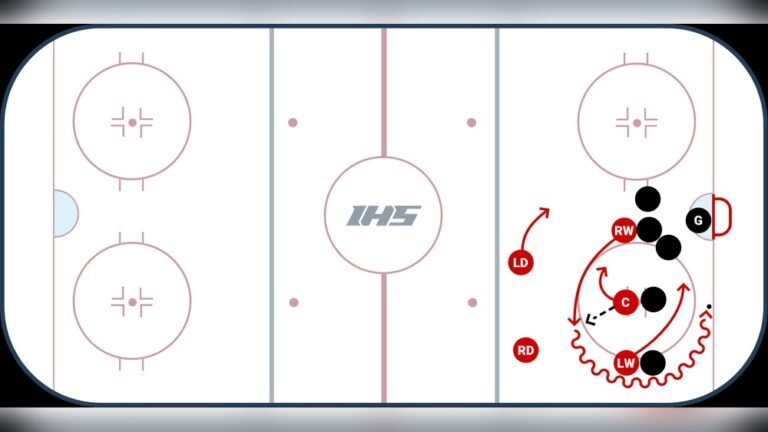
Also, beginners often think only the center is involved, but wingers and defensemen have set roles and responsibilities during every faceoff.
How Faceoff Circles Affect Game Strategy
The location of the faceoff changes how teams plan their next move. For example, a faceoff in the attacking zone means a quick scoring chance if the puck is won cleanly. Coaches may send out their best faceoff taker for these moments.
On defense, teams focus on clearing the puck or tying up their opponents to avoid a dangerous shot. In the neutral zone, the strategy is about gaining control and setting up an attack.

Faceoff Circles In Different Leagues
While NHL rinks have standard-sized circles, other leagues—like international or youth hockey—may have small differences in measurements or markings. However, the basic use and rules remain the same worldwide.
Here’s a comparison:
| League | Circle Diameter | Number of Circles |
|---|---|---|
| NHL | 30 ft | 5 main circles |
| IIHF (International) | 29.5 ft | 5 main circles |
| Youth Hockey | Varies | Usually 5 |
This shows that while there are small changes, the faceoff circle is a global part of the game.
Frequently Asked Questions
What Is The Main Purpose Of The Faceoff Circle?
The faceoff circle gives a clear, fair location for restarting play after a stoppage. It ensures players line up properly, and the game resumes safely and quickly.
Who Takes The Faceoff In The Circle?
Usually, the center from each team takes the faceoff. In some rare cases, if the center is removed for a rule violation, a winger will step in.
Can A Goal Be Scored Directly From A Faceoff?
Yes, but it’s rare. If the puck is shot directly off the faceoff and goes in without touching another player, it counts as a goal. This is called a faceoff win and goal.
Why Are There Hash Marks Inside The Faceoff Circle?
Hash marks show where players (usually wingers) must stand during a faceoff. This prevents early movement and keeps the play fair.
Where Can I Learn More About Ice Hockey Rink Markings?
You can find detailed diagrams and explanations of rink markings at the official NHL site or this Wikipedia page.
Faceoff circles are simple in design but powerful in their impact on the game. Next time you watch a match, pay attention to how much action and strategy begins inside those painted lines.
